

What Is the Core Muscle? Effective Pilates Exercises to Strengthen Your Core
22/12/2025In any training method, the core muscle always plays a central role in maintaining strength and stability throughout the body. But what is the core muscle, and why is it so important? To fully understand this essential muscle group, we need to explore its structure, functions, and the Pilates exercises that effectively strengthen it. The article below provides a detailed overview of what the core muscle is and introduces Pilates exercises that help you build a strong and sustainable core.
What Is the Core Muscle?
What is the core muscle, and why is it mentioned so frequently in fitness and workout programs? The core muscle refers to the group of central muscles located at the center of the body. These muscles work together to stabilize the spine, maintain balance, and support everyday movements.

What Is the Core Muscle?
The core muscle groups in the body include:
- Erector spinae muscles: Back muscles that help extend and bend the torso
- Rectus abdominis: Part of the abdominal core muscles, forming the foundation of the “six-pack” and supporting forward bending
- Internal and external obliques: Assist with twisting and rotating movements
- Transverse abdominis: Deep abdominal muscles that stabilize the spine
- Diaphragm: Moves the rib cage up and down during breathing
- Pelvic floor muscles: Help stabilize the spine and pelvis
- Multifidus muscles: Small muscles along both sides of the spine that form the second layer of deep back muscles, supporting spinal stability
- Gluteal muscles, latissimus dorsi, and trapezius: Also considered part of the core muscle system
The Importance of the Core Muscle
Understanding what the core muscle is helps you recognize its vital role in maintaining and improving overall health. Below are the key benefits of a strong core muscle.
1. Connecting Muscle Groups Throughout the Body
As the body’s central muscle group, the core muscle plays a crucial role in connecting different muscle tissues. A strong core muscle allows better movement control and balance. Core muscles are involved not only in sports activities but also in everyday movements.
2. Enhancing Strength and Endurance
The core muscle forms the foundation of overall strength and endurance. When the core is strengthened, the body becomes stronger and more flexible, effectively supporting both upper and lower body exercises. A strong core muscle is essential for optimal performance in all types of workouts.

A solid foundation of good health is the basis for performing any exercise routine optimally.
3. Reducing the Risk of Injury
Weak core muscles can lead to injury by increasing pressure on the lower back or spine. Strengthening the core muscle helps protect internal organs, stabilize the spine, and resist external impact forces.
4. Supporting Muscle Development
Most Pilates exercises directly engage the core muscle. Leg, glute, and abdominal movements strongly activate the core, promoting effective muscle development.
5. Improving Training Performance
A stronger core muscle enhances overall strength, increases muscular endurance, and reduces injury risk. These benefits help optimize performance in fitness and sports training, allowing you to achieve desired results more efficiently.
How Should You Train the Core Muscle?
Training the core muscle plays a vital role in improving overall health, enhancing body stability, and maintaining a healthy lifestyle. To achieve optimal results, follow these principles:

Principles and guidelines for core muscle training.
- Exercise variety: Include a wide range of exercises targeting the back, glutes, and spinal stabilizers to develop balanced core muscles
- Use supportive equipment: Incorporate exercise balls, resistance bands, or weights to increase challenge and stimulate core muscle activation
- Train consistently: Maintain regular practice without overtraining; patience and consistency are key
- Combine with proper nutrition: Support training with a balanced diet rich in protein, fiber, and healthy fats to aid muscle recovery and development
- Listen to your body: If pain or injury signs appear, stop exercising and consult a medical professional or qualified instructor
Effective Pilates Exercises to Strengthen the Core Muscle
To improve your core muscle, you can practice the following Pilates exercises. They help build strength and stability in the core region.
1. Core Strengthening Exercise – Hundred
Often used as a warm up, the Hundred helps coordinate movement with breathing while stabilizing the torso and activating the abdominal muscles.
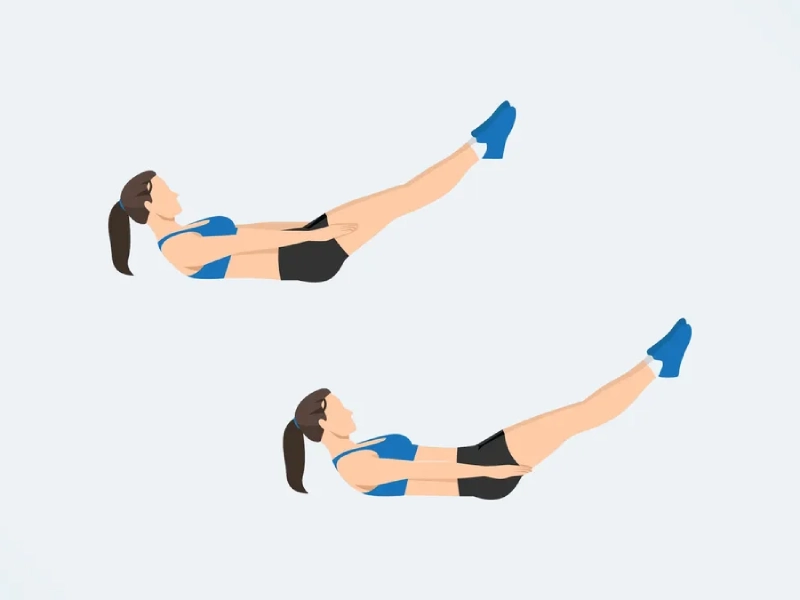
Hundred exercises.
How to perform:
- Lie on your back with your lower back pressed into the floor
- Squeeze your thighs together and lift your legs to a 45-degree angle, toes pointed forward
- If this strains your lower back, keep your legs bent
- Engage your core, lift your head and shoulders off the mat, forming a C-curve through the neck Extend your arms alongside your body
- Pump the arms up and down for 100 counts: inhale for 5 counts, exhale for 5 counts
2. Core Strengthening Exercise – Bridge
Bridge is a simple yet effective exercise targeting the abdomen, glutes, hips, and thighs.
How to perform:
- Lie on your back with arms extended along your sides
- Bend your knees and place your feet close to the glutes
- Lift the hips, forming a straight line from shoulders to knees
- Slowly lower back down to the starting position
3. Core Strengthening Exercise – Rotating Planks
This exercise targets the oblique muscles along the sides of the abdomen through side plank rotation.
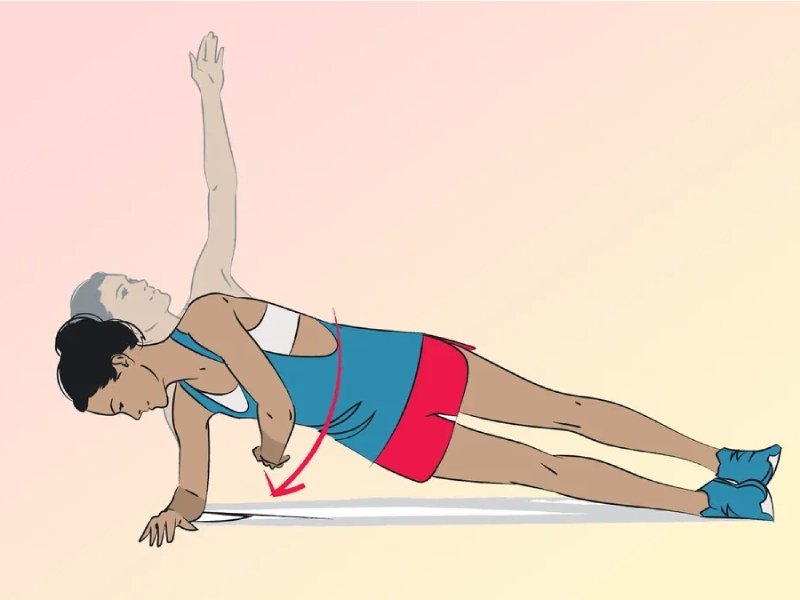
Rotating Planks exercises.
How to perform:
- Start in a side plank position, stacking your feet if advanced, or bending the lower knee for beginners
- Stack your hips and raise your top arm toward the ceiling
- Thread the arm under your torso, rotating the body
- Return to the starting position
- Perform 15 repetitions on each side with slow, controlled movement
4. Core Strengthening Exercise – Bicycle Crunch
Bicycle crunches target the rectus abdominis, hips, and obliques while engaging the lower core.
How to perform:
- Lie on your back with knees bent and feet hip width apart
- Place hands behind the head, elbows open
- Engage the core, lift knees to 90 degrees, and raise the upper body
- Exhale and rotate, bringing the right elbow toward the left knee while extending the right leg
- Inhale to return, then switch sides
- Keep the lower back pressed into the mat and rotate from the core, not the neck
5. Core Strengthening Exercise – Toe Taps
Toe taps are a classic Pilates movement that targets deep stabilizing muscles, the rectus abdominis, and the transverse abdominis.
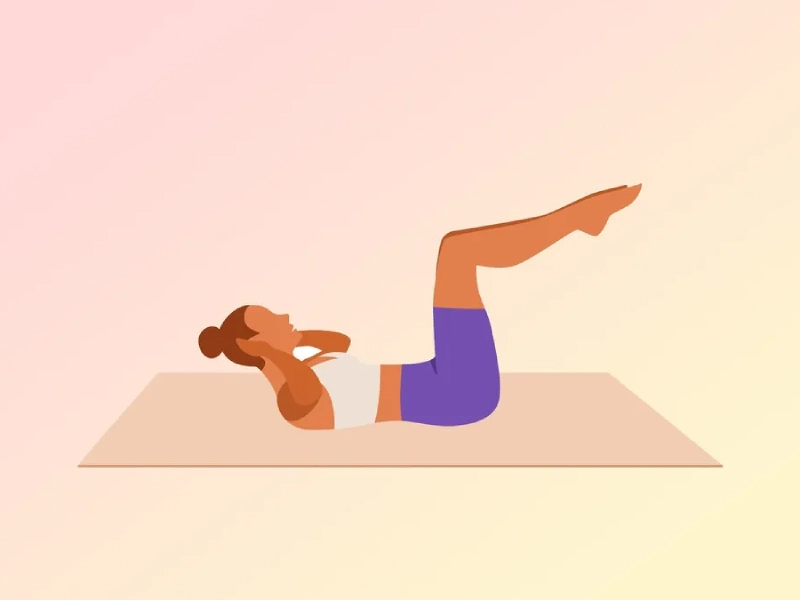
Toe Taps exercises.
How to perform:
- Begin in a tabletop position with knees bent
- Engage the core and lower the right foot to tap the floor
- Keep the left leg stable
- Return and repeat on the opposite side
- Perform 15 repetitions per side with slow, controlled movement
6. Core Strengthening Exercise – Plank
Plank is an effective core muscle exercise suitable for all levels.
How to perform:
- Start in a push up position with forearms on the mat
- Align the legs and balance on the toes
- Hold the position as long as possible
7. Core Strengthening Exercise – Single Leg Stretch
This Pilates exercise targets the lower core muscles while lightly engaging the glutes and legs.
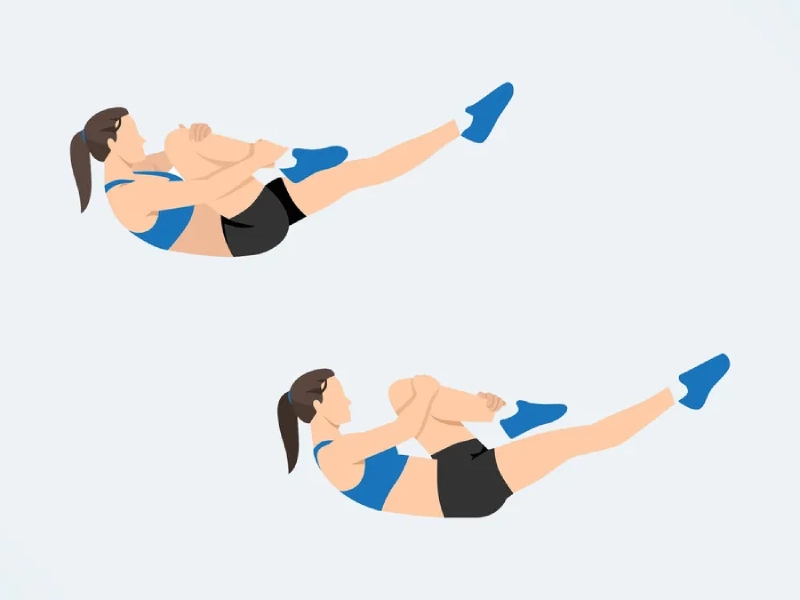
Single Leg Stretch exercises.
How to perform:
- Lie on your back with the lower back pressed into the mat
- Lift head and shoulders, bringing both knees toward the chest
- Place hands on the shins
- Extend one leg at a time, alternating sides
- Maintain slow, controlled movement for 30 repetitions (15 per side)
8. Core Strengthening Exercise – Mountain Climber
Mountain climbers engage the abdomen, glutes, thighs, and lower back.
How to perform:
- Begin face down, push up with straight arms, toes on the floor
- Align the body in a straight line from shoulders to feet
- Bring the left knee toward the right arm, then switch sides
9. Pilates Core Strengthening Exercise – Hip Dips
This lateral hip movement targets the oblique muscles along the outer abdomen.
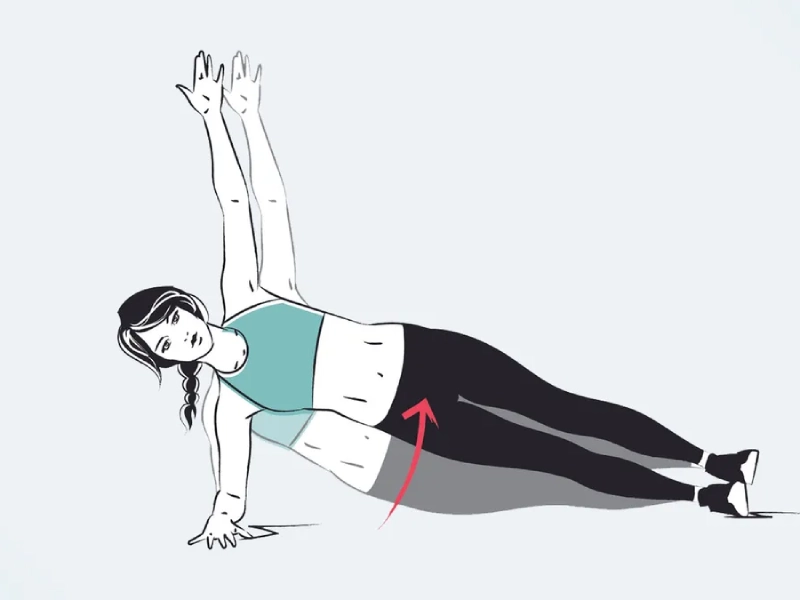
Hip Dips exercises.
How to perform:
- Start in a side plank position with hips stacked
- Stack both legs for added challenge, or keep the lower knee on the mat for beginners
- Lower the hips toward the floor, then lift back to the starting position
10. Core Strengthening Exercise – Side Plank
Side plank effectively improves core muscle strength and stability.
How to perform:
- Start in a basic plank position
- Rotate to the left, lifting the right arm upward
- Stack the feet and keep the body aligned from shoulders to feet
- Breathe evenly, hold as long as possible, then switch sides
11. Core Strengthening Exercise – Dead Bugs
Dead bugs stabilize the core muscles, spine, and back, all essential for proper posture.
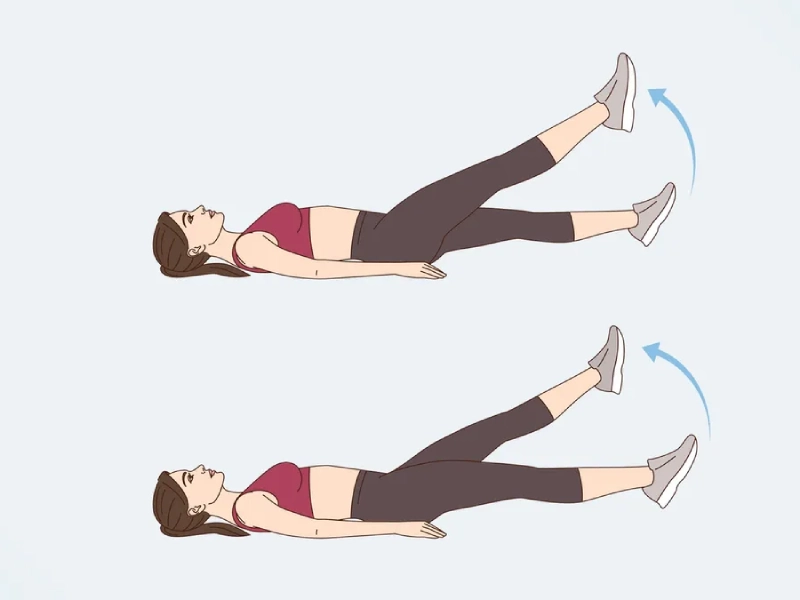
Dead Bugs exercises.
How to perform:
- Lie flat with back and shoulders heavy on the floor
- Extend arms upward and position legs in tabletop
- Inhale, then exhale as you lower the left leg and right arm toward the floor
- Inhale to return, then switch sides
12. Core Strengthening Exercise – Scissor Kicks
Scissor kicks activate the core muscles while also engaging the glutes, quadriceps, and adductors.
How to perform:
- Lie on your back with the lower back pressed into the floor
- Lift head and neck off the mat
- Lower the right leg while lifting the left
- Hold the lifted leg as if pulling it toward the chest
- Switch sides continuously
13. Pilates Core Strengthening Exercise – Mountain Climbers
This movement can be described as running in a plank position, emphasizing slow and controlled motion.
How to perform:
- Begin in a plank position with hands shoulder width apart
- Engage the core by drawing the navel toward the spine
- Bring the left knee toward the chest, pause, then extend
- Switch to the right knee and continue alternating
- Applying these exercises to your daily routine will help strengthen and stabilize the core muscle, contributing to improved overall health.
Understanding What is the core muscle and its importance is the first step toward building an effective training program. Hopefully, this article has provided a comprehensive view of the core muscle and effective Pilates exercises. Start your training journey today to achieve a strong and well balanced body.