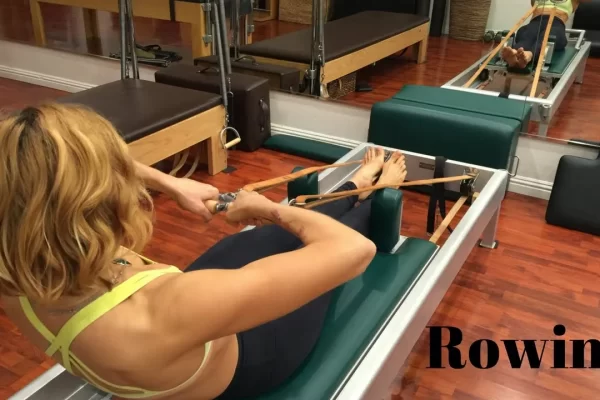


The Differences Between Pilates Reformer and Pilates Wunda Chair
15/12/2025Pilates is not only a popular fitness method but also a system of unique equipment, among which the Pilates Reformer and Pilates Wunda Chair stand out with their distinct features and functions. While both are designed to support improvements in strength, flexibility, and balance, they differ significantly in usage and training effectiveness.
Overview of Pilates Reformer
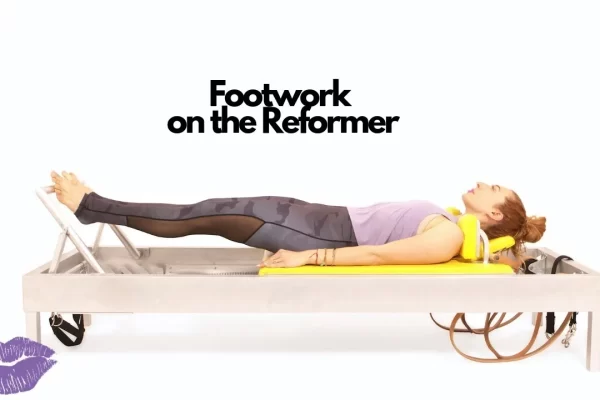
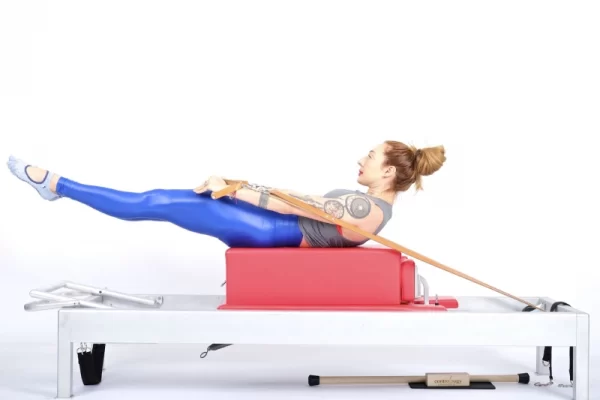
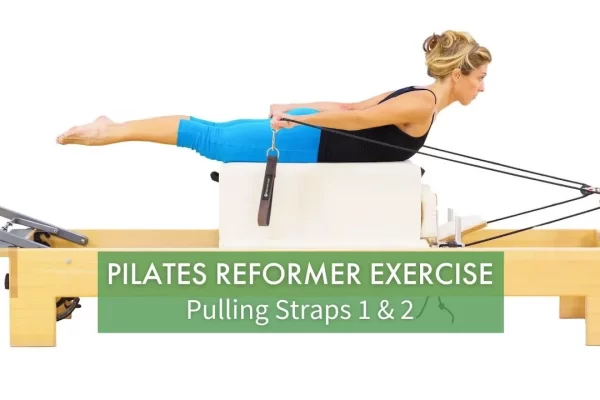
The Pilates Reformer is one of the most popular and essential pieces of equipment in the Pilates system. Although its structure is relatively complex, it delivers highly effective training results.
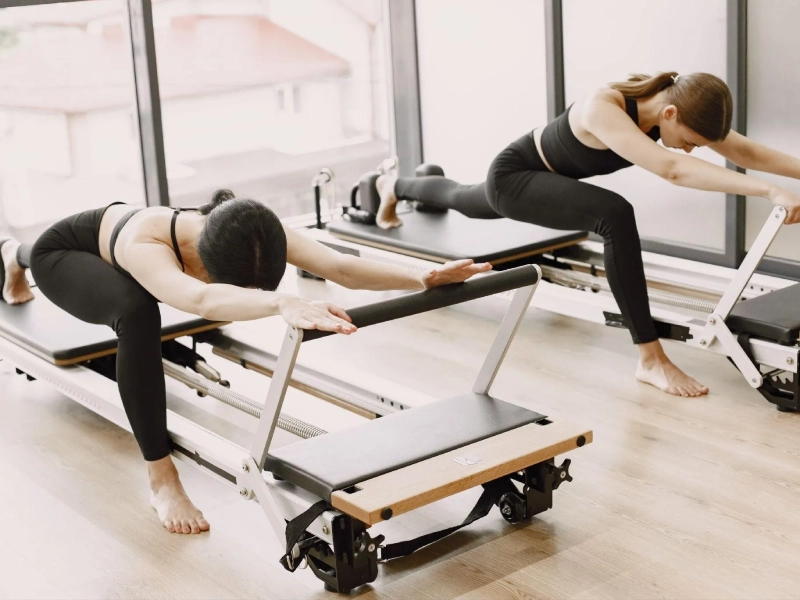
The Pilates Reformer is one of the most popular and important pieces of equipment in Pilates.
Specifically, it includes:
- Frame: The Reformer is built with a sturdy frame, typically made of wood or metal.
- Carriage: The carriage is connected to the Reformer frame through wheels or bearings and functions as a sliding platform. It is also attached to springs with varying resistance levels, allowing users to adjust workout intensity.
- Cables and handles: One of the standout features of the Reformer is its cable system, enabling smooth pulling and pushing movements during exercises.
- Spring resistance system: These springs are attached to one end of the frame and play a crucial role in providing adjustable resistance throughout training.
- Shoulder blocks and footbar: The Reformer also includes shoulder blocks and a footbar to help stabilize the body during exercises.
Overview of Pilates Wunda Chair
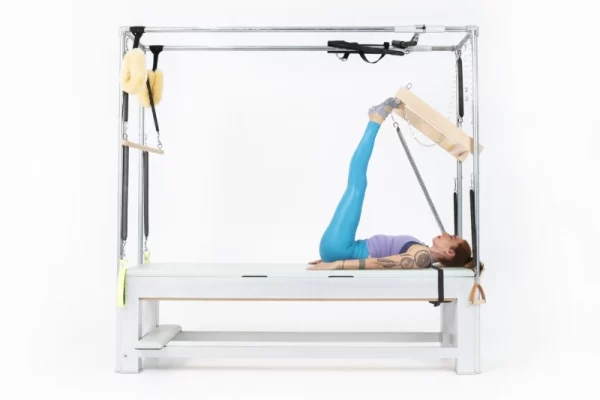
In contrast to the Reformer, the Pilates Wunda Chair has a much more compact design. It consists of a square frame, usually made of solid wood, along with a flat seating surface. The defining feature of the Wunda Chair is its movable pedal, which is connected to springs with varying resistance levels, creating different challenges for exercises.
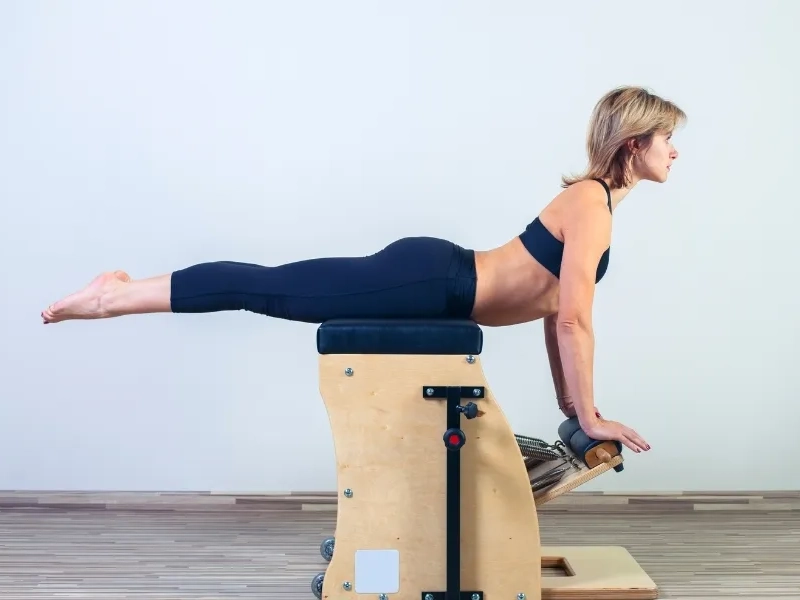
The Pilates Wunda Chair is a compact piece of equipment, suitable for small spaces.
One of the main advantages of the Wunda Chair is its portability and flexibility in placement. Thanks to its compact size, it does not take up much space and can easily be used at home without extensive setup. Its simple yet effective design allows for exercises in multiple positions, including standing, seated, and lying down.
Comparison Between Pilates Reformer and Pilates Wunda Chair
Pilates Reformer and Pilates Wunda Chair are two essential pieces of equipment in the Pilates system, each offering distinct experiences and benefits. Before diving into specific details, the quick comparison below provides a general overview.
| Criteria | Pilates Reformer | Pilates Wunda Chair |
| Structure | Sliding carriage, cables, handles, springs, shoulder blocks, and footbar | Compact wooden chair, pedal, springs |
| Size | Large, requires a spacious training area | Compact, suitable for small or limited spaces |
| Exercise variety | Highly versatile, supports full body training | Focuses on core strength, balance, and lower body strength |
| Suitability level | Suitable for all levels, especially beginners and rehabilitation | Best suited for intermediate to advanced practitioners, requires good balance |
| Training goals | Improves overall strength, flexibility, and rehabilitation | Enhances balance, stability, and core strength |
| Portability | Difficult to move, usually fixed in one place | Easy to move; some models can be folded or used as a regular chair |
Differences in Design and Structure
Both Pilates Reformer and Pilates Wunda Chair play important roles in Pilates training, but they differ clearly in design and structure.
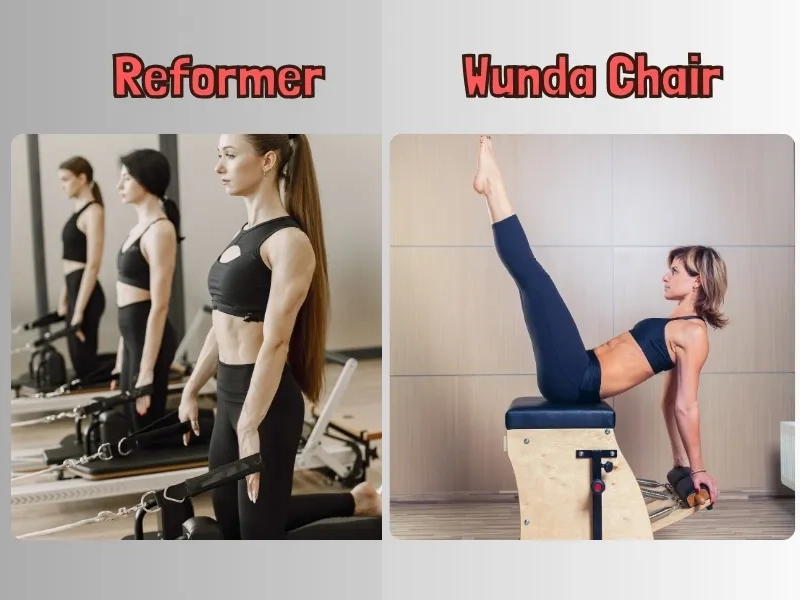
Comparison between Pilates Reformer and Pilates Wunda Chair.
The Reformer is larger and more complex, featuring a long frame, carriage, cables, and springs. It requires a spacious area and is typically used in professional Pilates studios.
In contrast, the Wunda Chair has a compact and simple design with a square frame and a movable pedal. Its small size makes it easy to relocate and suitable for limited workout spaces, even for home use.
Differences in Exercises and Target Muscle Groups
Both Reformer and Wunda Chair offer a wide variety of exercises, but they engage muscle groups in different ways. The Reformer primarily focuses on lengthening and dynamic movements, targeting large muscle groups such as the core, back, legs, and arms. Reformer exercises often involve pulling, pushing, and continuous motion, helping improve overall flexibility and muscular strength.
On the other hand, the Wunda Chair specializes in strengthening the core and enhancing stability. Exercises on the Wunda Chair challenge balance and body control, targeting smaller stabilizing muscles to improve precision and coordination. The Wunda Chair also supports standing and seated exercises, offering versatility across different training positions.
Differences in Training Goals
Training goals with the Reformer typically focus on improving flexibility, muscle strength, and overall balance. The Reformer is an ideal choice for those who want to strengthen large muscle groups while improving posture and reducing tension. Its exercises help lengthen muscles and enhance spinal mobility, making it suitable for individuals seeking a balanced and flexible body.
In contrast, the Wunda Chair is commonly used to build core strength and improve body stability. The primary goal of Wunda Chair training is to develop a stronger, more controlled, and stable body, especially through exercises that require high levels of coordination and control. It is well suited for those looking to challenge themselves with more advanced and focused workouts.
Differences in Difficulty Level and Practical Application
The Reformer is generally considered more accessible for beginners, as the spring and cable system provides support that makes exercises easier to perform. However, it can also be adapted for advanced users by increasing resistance and complexity.

Reformer is suitable for beginners.
Although the Wunda Chair has a simpler design, it presents a higher level of difficulty, particularly in exercises that demand balance and precise body control. Its practical application is highly flexible, making it especially suitable for home workouts or limited spaces. However, Wunda Chair exercises require strong focus and control, making it an excellent option for practitioners aiming to advance their Pilates practice.
Should You Choose a Reformer or a Wunda Chair?
Choosing the right Pilates equipment depends on your personal needs and training goals. If you are a beginner looking to improve overall body shape, posture, and flexibility, the Pilates Reformer is likely the more suitable option. However, if you already have Pilates experience and are seeking new challenges to strengthen your core and enhance body control, the Wunda Chair is certainly worth considering.
Of course, combining both pieces of equipment in a training program is an ideal approach. They complement each other and support more comprehensive development within Pilates practice.
Rather than guessing which equipment is right for you, the most effective approach is to seek advice from qualified Pilates instructors. With practical experience and in depth understanding of different body types, they can help you choose the most suitable equipment based on your goals and current physical condition. A short but well informed consultation can make a significant difference in your training journey.
Pilates Reformer and Pilates Wunda Chair are both unique and valuable pieces of equipment within the Pilates system, each offering distinct benefits depending on individual goals and needs. The choice between them depends on factors such as personal objectives, training experience, and individual preference. Whether you choose the Reformer or the Wunda Chair, both can help you achieve a strong, flexible, and well balanced body.