

Pilates Rowing on the Reformer: Benefits, Techniques, and How to Practice Effectively
07/01/2026If you are looking for a Pilates exercise that combines strength and flexibility, Pilates Rowing on the Reformer is an ideal choice. In this article, we will guide you through how to perform Rowing on the Reformer in detail from its benefits to proper execution helping you make the most of this exercise in your workout routine.
What Is the Pilates Rowing Exercise on the Reformer?
Pilates Rowing on the Reformer is one of the most popular exercises in the Pilates system, performed on the Reformer machine. This is a full body exercise that focuses on strengthening the back, shoulders, and arms while improving posture and overall flexibility.
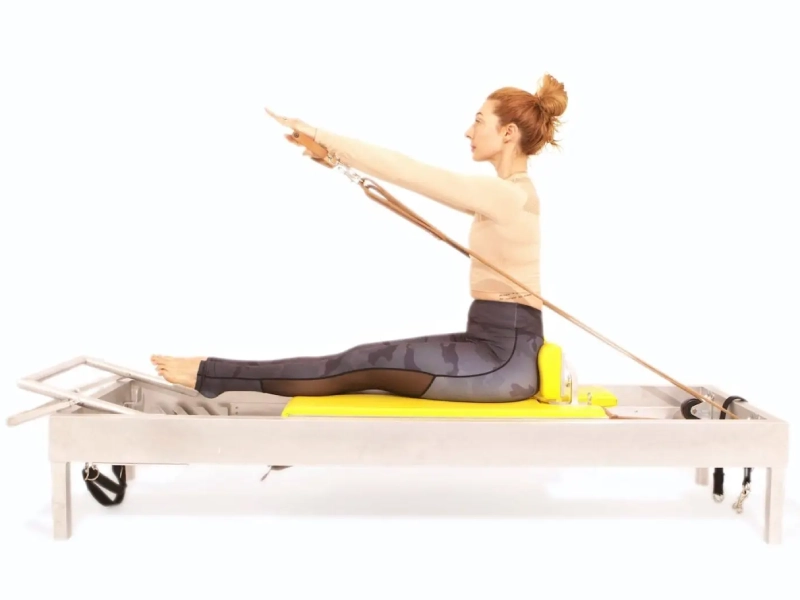
Pilates Rowing Exercise on the Reformer.
The Reformer is a specialized Pilates apparatus consisting of a moving carriage attached to springs, cables, and handles. The Rowing exercise is designed to take advantage of spring resistance, allowing practitioners to better control their movements while activating multiple muscle groups throughout the exercise.
Benefits of the Pilates Rowing Exercise on the Reformer
When practiced regularly and correctly, Pilates Rowing on the Reformer offers numerous benefits for the body, including:
1. Building Muscle Strength
The Rowing exercise on the Reformer is an effective way to strengthen major muscle groups, especially the back, shoulders, and arms. When pulling the straps on the Reformer, the back and shoulder muscles work intensively to draw the body backward, while the arms and chest support stability and movement control. Thanks to the spring resistance of the Reformer, the muscles must work harder, promoting strength development and muscular endurance.
2. Improving Posture and Flexibility
Rowing on the Reformer not only builds strength but also plays an important role in improving posture and flexibility.
When performing Pilates Rowing on the Reformer, practitioners must keep the spine upright and maintain correct alignment, helping to train and support the spine’s natural position. At the same time, the pulling and stretching actions enhance joint mobility especially in the shoulders and spine supporting better posture in daily activities.
3. Enhancing Body Control and Balance
One of the key strengths of the Rowing exercise on the Reformer is its requirement for precise and fluid body control. The combination of pulling the straps and moving on the Reformer carriage helps develop coordination and control, thereby improving balance and stability. This not only enhances performance in other Pilates exercises but also provides long-term benefits for maintaining balance in everyday life, reducing the risk of injury, and improving overall well-being.
How to Perform the Pilates Rowing on the Reformer
Reformer setup:
Begin with a medium spring tension. You can increase or decrease the resistance depending on your strength level and training goals.
Starting position:
Sit upright facing the back of the Reformer, about a hand’s distance from the edge. Extend both legs straight forward in one of two positions: ankles crossed or legs together. Hold the straps firmly with both arms extended parallel to the floor, palms facing each other.
Movement:
– Rowing Back 1:
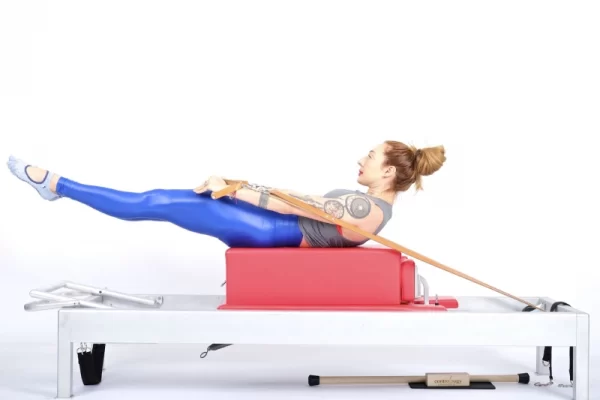
Bend the arms and bring the hands toward the sternum. Roll back into a C-curve, keeping the hands close to the chest, then rotate the arms inward and extend them out to the sides. Sweep the arms back as the body bends forward, then lift the arms to circle forward again. Roll the spine up to a seated position and return to the starting point. Repeat two or three times.
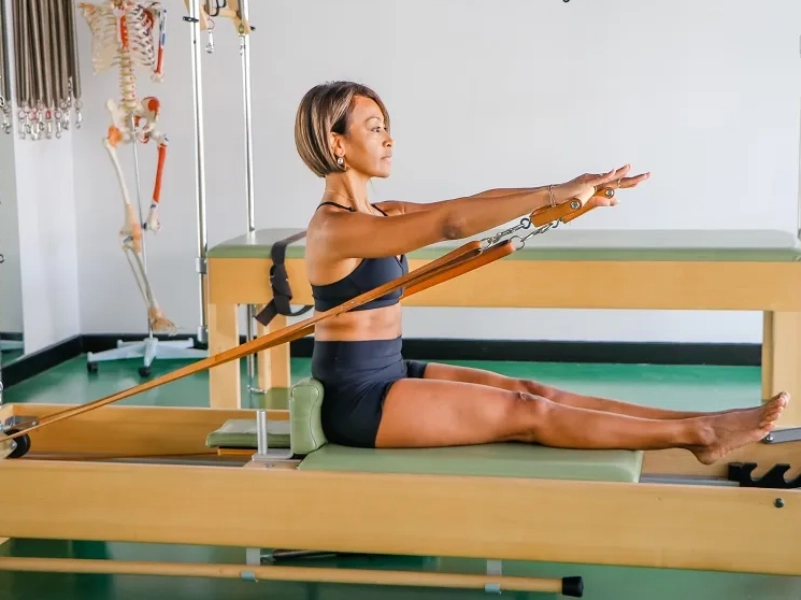
How to perform Pilates Rowing on a Reformer.
– Rowing Back 2:
Start with the arms parallel to the floor and bent at a 90-degree angle. Maintain the arm shape as you roll back and lower the arms down along the torso. Increase the spinal curve slightly, then reach the arms forward and lengthen the spine. Finish by sitting upright and returning the arms to the starting position. Repeat two or three times.
– Rowing Front 1:
Face the front of the Reformer, sitting tall with the legs together and extended forward. Place the thumbs into the straps and start with the hands just outside the sternum. Reach the arms forward, then lower them so the hands touch the frame. Rotate the arms inward as they lift, then open them out to the sides as they lower. Bend the arms back to the starting position and repeat two or three times.
– Rowing Front 2:
Begin in the same position as Rowing Front 1, rounding the spine forward. Reach the arms forward and rotate them inward as the spine lengthens to a flat-back position. Sit upright as the arms open out to the sides, then return to the starting position. Repeat two or three times.
Important Notes When Performing the Rowing Exercise on the Reformer
To achieve optimal results and avoid injury when practicing Pilates Rowing on the Reformer, maintaining proper technique and posture is essential. Keep the following points in mind:
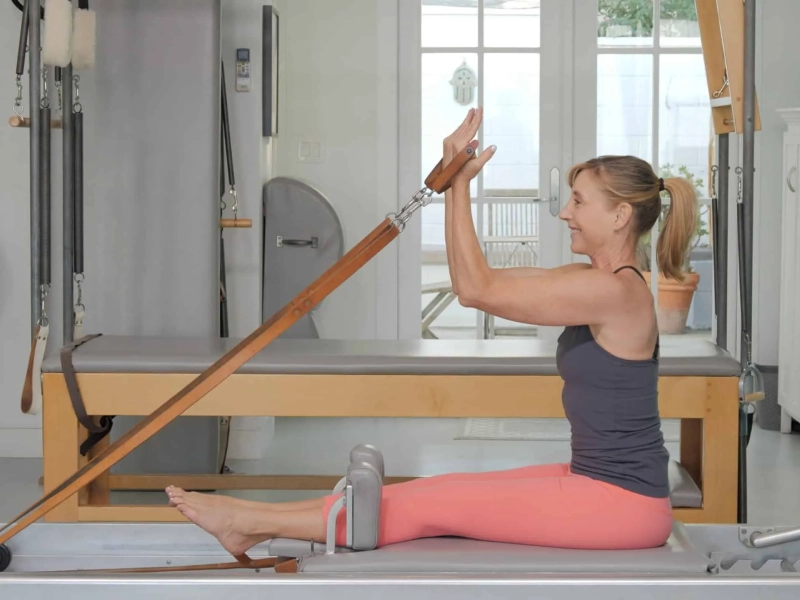
Things to keep in mind when performing the Rowing on the Reformer exercise.
- Seated posture: Sit upright on the Reformer carriage with the spine maintained in a neutral position. Ensure the legs are stable on the padding or footbar and not excessively bent.
- Hands and straps: Hold the straps with both hands, palms facing down or toward each other depending on the variation. When pulling the straps, keep the elbows close to the body and avoid excessive tension in the shoulders.
- Pulling and returning movements: Pull the straps toward the body using the back and shoulder muscles while maintaining core stability. When returning to the starting position, move slowly and with control to maximize effectiveness.
- Breathing: Inhale to prepare and exhale during the pulling phase. Maintain steady, relaxed breathing throughout the exercise without holding your breath.
Incorporating Pilates Rowing on the Reformer into your daily training routine is an excellent way to enhance strength, flexibility, and body control. Be sure to practice with proper technique and attention to detail to maximize benefits and reduce the risk of injury. With consistency and dedication, you will soon notice positive changes and improved workout performance.