

Pilates Roll Up Exercise: How to Perform, Variations, and Common Mistakes to Avoid
24/12/2025The Pilates Roll Up exercise not only strengthens the abdominal muscles but also improves flexibility and refined body control. With its signature spinal articulation, this movement delivers noticeable results in a short time when performed correctly. Discover a detailed guide and practical tips to practice the Roll Up effectively and achieve optimal results.
What Is the Pilates Roll Up Exercise and How Does It Work?
Roll Up is a classic Pilates exercise that can deliver remarkable benefits for your body. So, what exactly is the Pilates Roll Up? Simply put, it is an exercise that involves lying on your back, extending your arms toward the ceiling, and slowly articulating the spine one vertebra at a time until you arrive in a seated position. This movement targets the abdominal muscles as well as the back, hips, and legs.
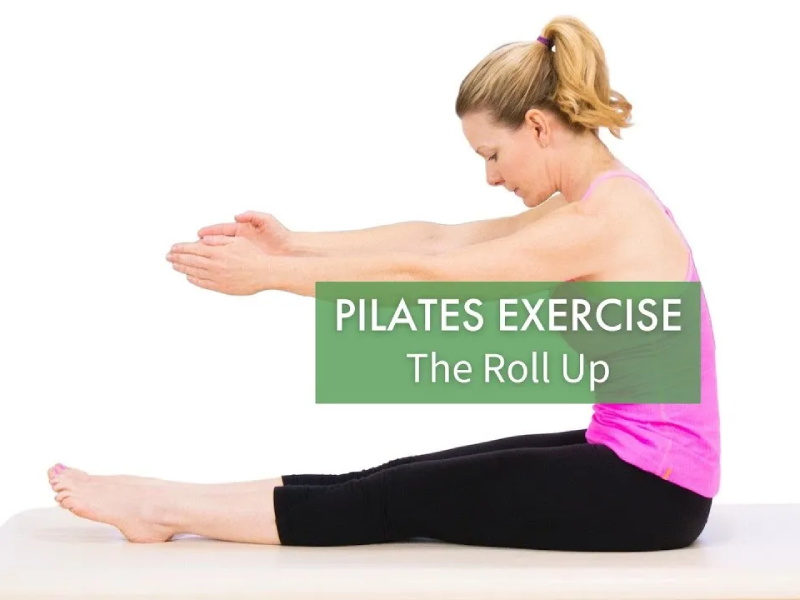
Learn about the Roll Up exercise in Pilates.
But how does it work? The Pilates Roll Up challenges the core by requiring you to initiate the movement using your abdominal muscles. As you roll up, you also lengthen the spine and stretch the hamstrings. This combination of contraction and lengthening enhances overall flexibility and mobility.
In addition, the slow, controlled nature of the Pilates Roll Up forces you to engage the deep abdominal muscles, which are often neglected in traditional abdominal exercises. This helps improve posture and stability, leading to better overall body alignment.
Now that you understand what the Pilates Roll Up is and how it works, you can incorporate it into your workout routine to build a stronger, more flexible body.
How to Perform the Roll Up Exercise
Step by step instructions for the Roll Up:
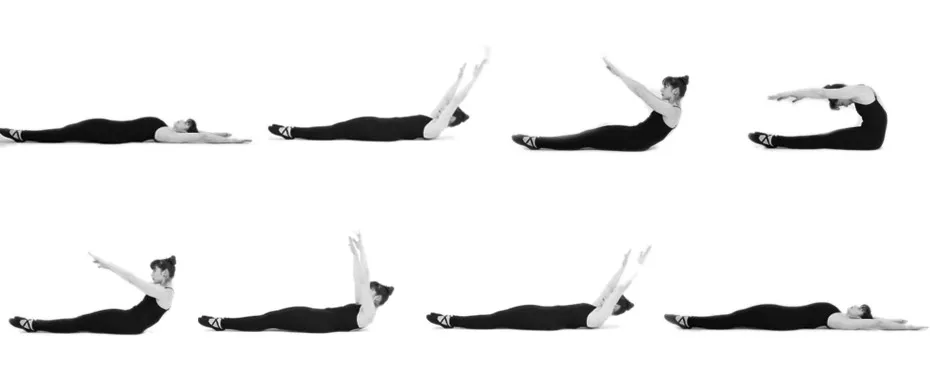
Steps to perform The Roll Up pose.
- Sit upright on your sit bones, legs together and extended straight, toes pointing forward. Extend both arms forward at shoulder height and inhale deeply.
- As you exhale, draw the abdominals inward by pulling the pubic bone toward the navel. Maintain a C-shaped curve through the spine with arms extended, then slowly lower your back to
- the mat one vertebra at a time, starting from the lumbar spine (lower back) and finishing with the head, bringing the arms overhead.
- Inhale deeply, and on the next exhale, extend your arms forward at shoulder height as you lift the head and tuck the chin toward the chest. Draw the navel toward the pubic bone and slowly peel the back off the mat, one vertebra at a time.
- Return to an upright seated position and immediately begin the next repetition.
Tips for Performing the Pilates Roll Up Exercise
Proper form and mechanics ensure you gain the full benefits of the Roll Up while minimizing the risk of injury. Keep the following tips in mind:
- Move slowly enough to articulate each vertebra individually.
- If you find yourself swinging the arms forward or lifting the legs off the floor while rolling up,
- you may be relying too much on momentum instead of true core engagement.
- Lifting the arms overhead and lowering them to the mat requires significant shoulder mobility and core strength. If you notice your rib cage flaring as you roll down, keep your arms at chest height or only slightly overhead.
Variations and Modifications of the Pilates Roll Up Exercise
You can perform this exercise in several different ways depending on your skill level and goals.
1. Bent Knee Roll Up
If you struggle with rolling up, one of the best modifications is to bend the knees. This reduces excessive hip flexor involvement, allowing you to better engage and coordinate the transverse abdominis and other abdominal muscles.
- Perform the Roll Up using the basic form above, but with the knees slightly bent. Keep the heels away from the glutes, as bringing them closer will make the exercise more challenging.
- Bend the knees more as you roll up.
- Hold behind the knees with your hands to assist yourself in coming up and to support the remainder of the roll-up/roll-down if needed.
2. Banded Roll Up
Another tool you may want to try when practicing the Pilates Roll Up is a resistance band.
- Loop the band around the arches of your feet and lie down.
- Hold the ends of the band with your hands at your sides.
- Adjust the tension of the band to provide gentle assistance as you roll up and down.
3. Magic Circle Roll Up
A variation of the Roll Up involves using a magic circle.
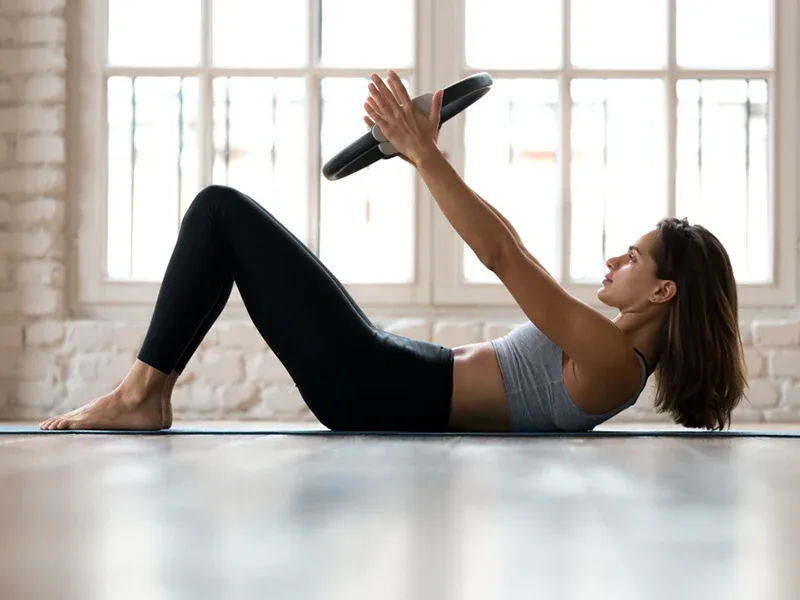
Magic Circle Roll Up – Another variation of The Roll Up.
- Begin by holding the magic circle above your chest.
- Gently squeeze the circle as you roll up and roll down. Using it can help you focus on the segmented movement of the spine.
5 Common Mistakes to Avoid When Performing the Pilates Roll Up
Have you been practicing the Pilates Roll Up but not seeing the results you expect? You may be making some common mistakes.
Mistake 1: Holding Tension in the Neck
When performing the Pilates Roll Up, it is important to pay attention to your neck. A common mistake is holding tension in the neck, which can lead to pain and discomfort. To avoid this, focus on keeping the neck long and relaxed throughout the exercise. Imagine a string gently lifting the crown of your head toward the ceiling as you roll up and down.
This helps maintain proper alignment and prevents unnecessary strain on the neck muscles. Remember, Pilates is about working smarter, not harder. Take your time to find a comfortable neck position and breathe deeply as you move. Your neck—and your entire body-will thank you.
With that said, another common mistake in the Pilates Roll Up is failing to engage the core. Let’s explore how to fix this next.
Mistake 2: Not Engaging the Core
During the Pilates Roll Up, it is easy to get caught up in the flow of the movement and forget to engage the core muscles. Without proper engagement, you may lose stability and control throughout the exercise.
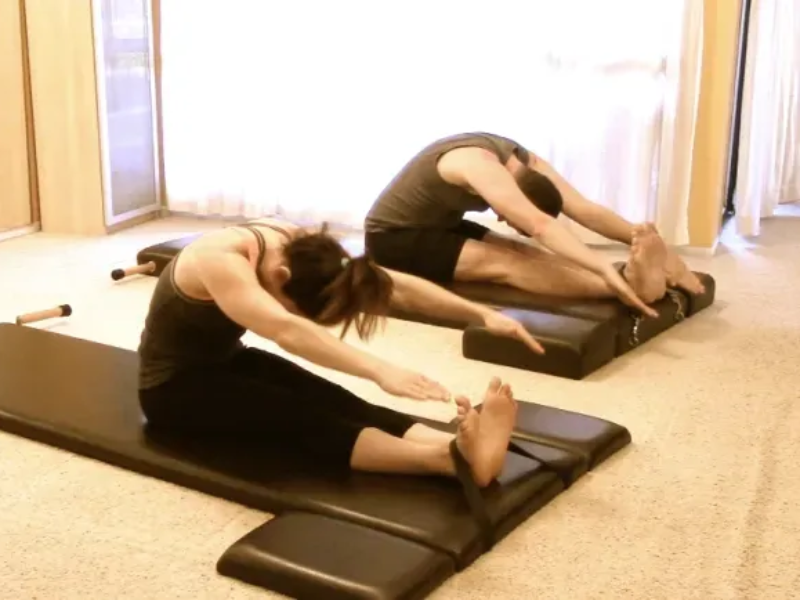
Common mistakes when performing the Pilates Roll Up exercise.
To activate the core correctly, focus on drawing the navel toward the spine as you roll up and exhale fully. This activates the deep abdominal muscles and creates a stable foundation for the movement. Maintain this engagement throughout the entire exercise, and you will notice a significant improvement in your Pilates practice.
Mistake 3: Rushing Through the Exercise
When it comes to the Pilates Roll Up, taking your time is essential. Rushing through the exercise can lead to poor form and limited benefits.
Instead, slow down and focus on each segment of the Roll Up, using the core muscles and controlled breathing to move with intention. Remember, Pilates emphasizes quality over quantity, and rushing will only prevent you from reaching your full potential.
Mistake 4: Rounding the Lower Back
It is easy to fall into the habit of rounding the lower back during the Pilates Roll Up, especially if you have tight hip flexors or weak core muscles. This mistake can cause strain and discomfort in the lower back, negating the benefits of the exercise.
To avoid this, focus on maintaining a neutral spine as you roll up. As you lift your head and shoulders off the mat, engage the abdominal muscles and think about initiating the movement from the center of the body rather than the lower back. Use the core to control the motion, and if you notice excessive rounding, pause and adjust your position before continuing. Mistake 5: Overusing the Hip Flexors
While engaging the core during the Pilates Roll Up is crucial, overusing the hip flexors can place unnecessary strain on these muscles and lead to discomfort or even injury.
To prevent excessive hip flexor involvement, focus on initiating the Roll Up from the abdominals rather than pulling with the legs. As you lift your head and shoulders off the mat, keep the legs relaxed and think about pressing the lower back gently into the mat. This helps keep the hip flexors more neutral and prevents them from taking over the movement.
The Roll Up is a simple yet highly effective Pilates exercise that offers numerous benefits for the body. By practicing proper technique and staying consistent, you will notice clear improvements in core strength and flexibility. Incorporate the Pilates Roll Up exercise into your daily routine to achieve the best results. Wishing you success and a strong, healthy body!