

Pilates Reformer Footwork Exercise: Benefits and Proper Execution
08/01/2026The Pilates Reformer Footwork exercise is considered one of the foundational movements in Pilates. It helps build leg strength and improve overall body stability. In this article, we explore the Pilates Reformer Footwork exercise in depth, including proper execution and the outstanding benefits it offers for the body.
What Is the Pilates Reformer Footwork Exercise?
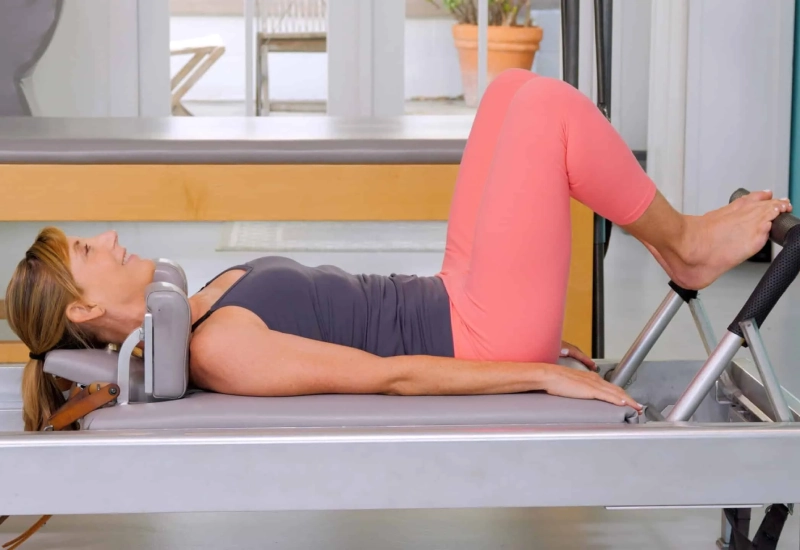
The Pilates Reformer Footwork exercise is a movement similar to a squat position. However, instead of performing a standing squat, this exercise is done while lying on the Reformer machine. Specifically, you lie on your back on the carriage, place your feet on the footbar, and rest your head on the headrest.
The main action of Footwork is pressing the feet firmly into the footbar to fully extend the legs. Then, you bend the knees and return to a squat like position, allowing the carriage to glide back to its starting point.

Pilates Reformer Footwork Exercise.
This is an excellent exercise for beginners who are new to Pilates and the Reformer, especially for those who struggle with standing squats. Thanks to the support of the sliding carriage, you can adjust foot, knee, and leg positions flexibly without the influence of gravity, making it easier to improve balance, alignment, and body awareness.
Benefits of the Pilates Reformer Footwork Exercise
Footwork on the Reformer offers far more than a simple warm-up. It is considered a core and essential exercise within the Pilates system.
1. Strengthens the Legs
The Pilates Reformer Footwork exercise focuses on toning and strengthening major leg muscle groups, including the calves, thighs, and glutes. When pushing against the footbar, the entire leg musculature works to generate force and maintain control, effectively building muscular strength. Stronger legs not only support daily activities but also enhance performance in sports and other physical activities.
2. Improves Flexibility
One of the standout benefits of the Pilates Reformer Footwork exercise is improved flexibility in the knees and ankles. Repeated leg extension and flexion on the Reformer stretches muscles and tendons while increasing joint mobility. This reduces injury risk and enhances performance in more complex Pilates movements and other forms of exercise.
Footwork exercises on the Reformer offer many benefits to the body when practiced regularly.
In addition, the exercise promotes healthy hip mobility without placing stress on the pelvis or lower back. This creates a foundation for efficient, natural movement in everyday actions such as walking, standing, and sitting.
3. Protects the Lumbar Spine
Footwork on the Reformer also helps protect the lumbar spine by reducing pressure on the lower back especially important for individuals with back issues. Maintaining pelvic stability throughout the exercise activates and strengthens deep stabilizing muscles, which are essential for posture improvement, full-body support, and long-term injury prevention.
4. Enhances Stability and Balance
The Pilates Reformer Footwork exercise requires consistent stability and balance. As you push and return the feet on the footbar, the body must remain aligned and controlled. This develops core stability and improves overall balance, making Pilates movements more effective and supporting functional movement in daily life.
5. Improves Blood Circulation
Practicing Pilates Reformer Footwork stimulates blood circulation, particularly in the lower limbs. Continuous leg activation helps pump blood back toward the heart, improving circulation and reducing the risk of vascular issues such as varicose veins. Better circulation also delivers oxygen and nutrients to muscles, supporting recovery after workouts.
How to Perform the Footwork Exercise on a Pilates Reformer
Footwork on the Reformer is a basic and foundational Pilates exercise, often used to prepare the body for more advanced movements. However, this does not mean it is easy or suitable only for beginners.
Below are common Footwork positions on the Pilates Reformer:
1. Pilates V Position
- Place the heels together with toes pointing upward.
- Knees are aligned at hip-width.
- Inhale to extend the legs, exhale to bend and return.
- Emphasize engagement of the hamstrings more than the quadriceps. Avoid knee hyperextension.
2. Extended Position (Prehensile or Arches Position)
- Place both feet parallel, weight distributed through the arches.
- Keep the toes relaxed and pointing forward.
- Inhale while extending the legs, exhale when bending.
- Maintain even weight distribution between both feet.
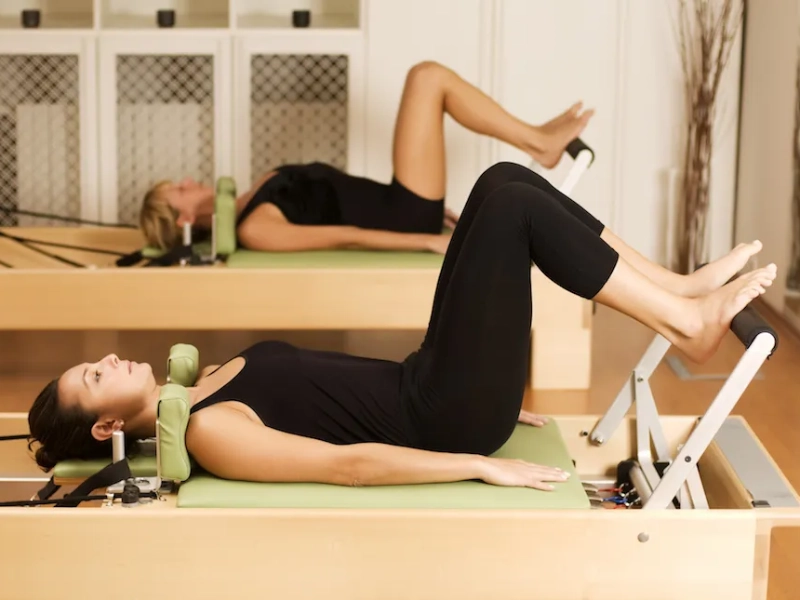
How to perform Footwork exercises on the Reformer.
3. Heels Position
- Place both heels on the footbar.
- Toes point straight up toward the ceiling.
- Inhale to extend, exhale to return.
- Keep the ankles stable and avoid excessive movement.
4. Achilles Tendon Stretch (Heel Lower)
- Place weight on the balls of the feet with toes lightly touching the footbar.
- Lift the heels as high as possible while maintaining balance.
- Inhale while extending, exhale as you slowly lower the heels.
- Lower the heels with control.
- Avoid dropping the heels abruptly.
Variations of the Pilates Reformer Footwork Exercise
Although the Pilates Reformer Footwork exercise may appear simple, it offers significant variety through adjustable foot positions and spring settings based on individual goals and abilities. One variation involves changing foot placement on the footbar. Placing the forefoot or heels on the bar shifts the exercise focus.
When pressing through the forefoot, the movement mimics functional patterns used in walking or running, activating the calves more intensely.
In contrast, pressing through the heels increases glute activation and may feel more comfortable for individuals with foot discomfort.
Feet can be placed close together, parallel, or wide on the footbar. A wide-stance heel position effectively activates the glutes and hamstrings, simulating a wide squat. This variation is ideal for warming up or practicing squat mechanics when full weight-bearing is not possible due to injury or post-surgery recovery.
Placing the feet in a “V” shape on the bar adds an extra challenge for the inner thighs, as they work to draw the legs toward the midline.
Variation also comes from adjusting spring tension. Different spring combinations change resistance levels on the Reformer. Heavier springs challenge leg strength, while lighter springs reduce leg load and require greater abdominal engagement to stabilize the body and support leg movement.
Tips and Precautions When Performing Footwork on the Reformer
1. Training Frequency and Duration
For optimal results from the Pilates Reformer Footwork exercise, practice it two to three times per week alongside other Pilates exercises. Each session should last 30-45 minutes, depending on experience and goals. Beginners should start with fewer repetitions and gradually increase as strength improves.
2. Injury Prevention
To prevent injury, pay close attention to posture and technique:
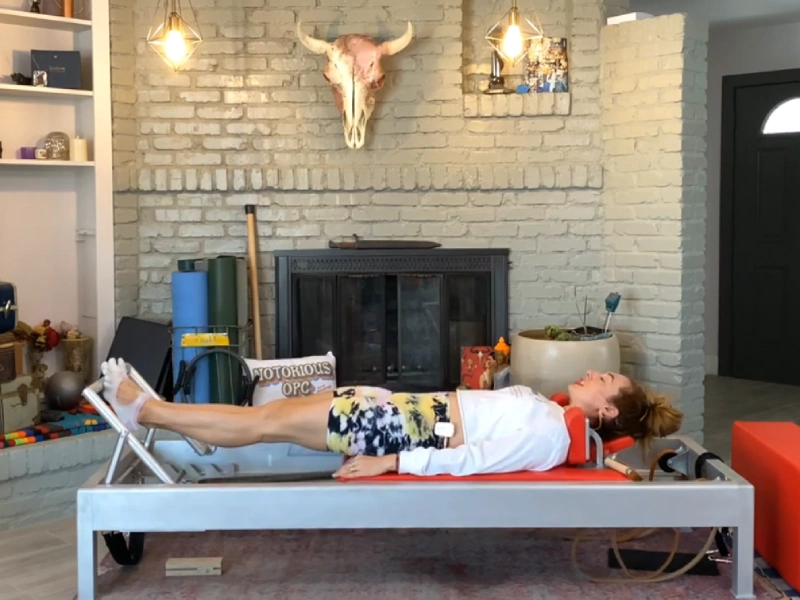
Always keep your back straight when performing footwork exercises to avoid injury.
- Maintain a neutral spine: Keep your back supported and avoid arching or rounding during leg presses to protect the spine.
- Control the movement: Perform all actions slowly and with control, avoiding sudden or jerky motions.
- Adjust spring tension: Choose resistance appropriate for your strength level to prevent excessive stress on muscles and joints.
3. Seek Professional Guidance
If you are new to Pilates or unfamiliar with the Reformer, working with a professional Pilates instructor is recommended. They can correct alignment, refine technique, and design a balanced program that integrates Footwork with other Pilates exercises.
4. Listen to Your Body
Always listen to your body during practice. If you experience sharp pain, excessive strain, or discomfort, stop immediately and adjust. Mild muscle soreness can be normal, but sharp pain may indicate injury.
5. Coordinate with Proper Breathing
Breathing is essential in Pilates, especially in the Footwork exercise. Inhale to prepare and exhale as you press through the legs. Proper breathing enhances focus, improves exercise efficiency, and reduces unnecessary muscle tension.
The Pilates Reformer Footwork exercise is an essential component of any Pilates program, helping build a strong foundation of strength and stability. By following these guidelines, you can maximize the benefits of the Pilates Reformer Footwork exercise while minimizing injury risk and achieving safe, effective results.