

Pilates Push Up Exercise: What It Is, How to Do It and Key Benefits
06/01/2026Have you ever felt bored with traditional push ups? The Push Up in Pilates offers a completely new experience. Not only does it help build muscle strength and improve posture, but it also promotes relaxation and stress reduction. Let’s explore the Pilates Push Up exercise together.
What Is the Pilates Push Up Exercise?
The Push Up is one of the few exercises that Joseph Pilates developed specifically for functional spinal movement. This exercise has remained unchanged since it was first recorded in his second publication, Return to Life Through Contrology, published in 1945.
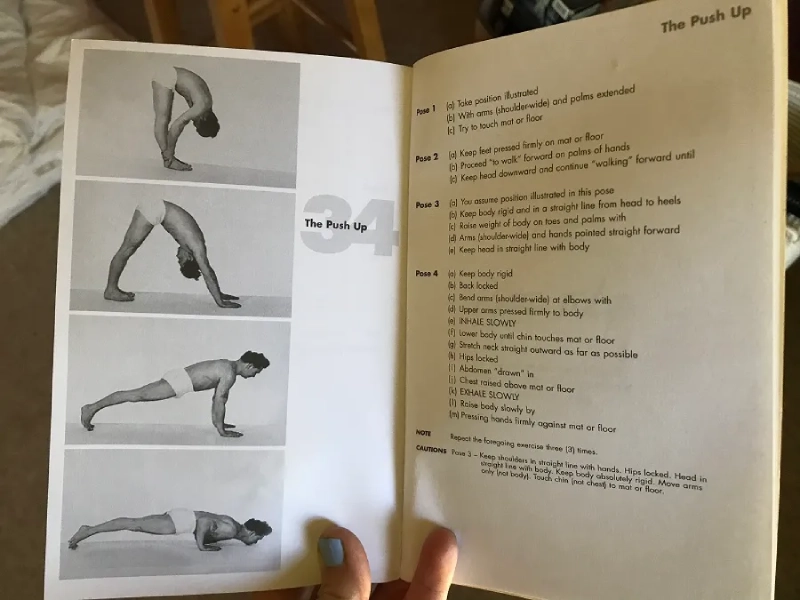
Push ups are one of the few exercises that Joseph Pilates developed for functional spinal health.
The Pilates Push Up exercise is a variation of the traditional push up, designed to emphasize deeper muscular engagement. Unlike standard push ups, the Pilates Push Up focuses on movement control and the mind body connection, helping you build a strong and stable foundation for the entire body.
This exercise not only strengthens the chest, shoulders, and arms but also improves posture, flexibility, and balance. With various modifications available, the Pilates Push Up is suitable for all fitness levels, from beginners to experienced practitioners.
How to Perform the Pilates Push Up
Purpose: The Pilates Push Up exercise targets the shoulders, chest, arms, and upper back. At the same time, it stretches the hamstrings and increases the challenge for the abdominal muscles.
Steps to Perform the Push Up
- Stand upright with your heels at the back edge of the mat. Turn your toes slightly outward into a small V position, a signature Pilates stance.
- Inhale, keeping your hips stacked over your heels. Draw the abdomen in (pull the navel toward the spine), then slowly roll down toward the mat. Place your hands on the mat slightly wider than shoulder width apart. (Bend your knees slightly if needed.)
- Exhale and slowly walk your hands forward until your palms are under your shoulders and your heels align over your toes. Your body should form a straight line from head to ankles in a Plank position.
- Perform three push ups, keeping the elbows close to the body.
- Finish: Fold the body into an inverted V shape, bringing the chest toward the thighs. Press firmly through the hands and heels, drawing the navel inward to create a gentle stretch through the body.
- Inhale and slowly walk the hands back toward the feet, keeping the legs as straight as possible.
- Exhale and roll up through the spine to return to standing.
Note: Gradually work up to completing three sets, with three push ups in each set.
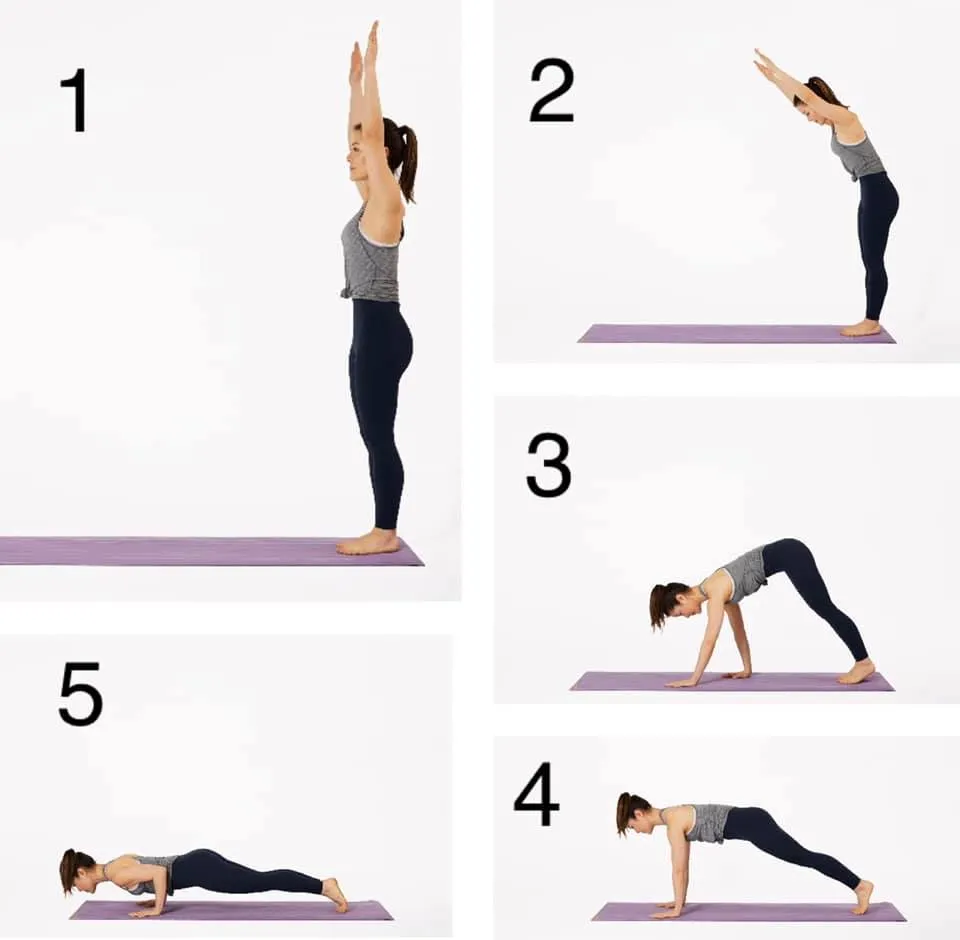
How to perform the Push Up pose.
Tip: To make the exercise easier, imagine your body as a strong, stable bridge that does not collapse, even when weight is placed on it during the movement.
For an advanced challenge, perform the entire Push Up sequence while balancing on one leg. The steps remain the same for the Single Leg Push Up, but be sure to keep the lifted leg raised throughout the exercise. Remember to repeat on the other leg.
Important Notes for Performing the Pilates Push Up Effectively
To maximize the benefits of the Pilates Push Up exercise and prevent unnecessary injuries, it is essential to maintain proper alignment from the beginning. The following key points will help you control your body and build strength safely, especially in the shoulders, chest, and abdominal area:
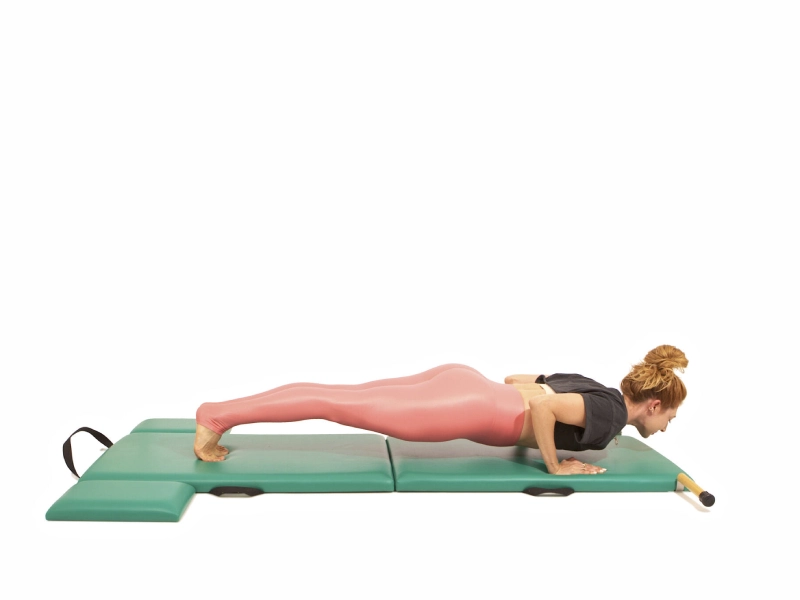
The benefits of the Pilates Push Up pose.
- In the Plank position, the body should form a straight line. Keep your gaze down toward the mat, lengthen the neck, place the hands under the shoulders, engage the glutes, and keep the heels aligned over the toes.
- Maintain a stable center by drawing the navel inward. Avoid letting the midsection sag, as this can overload the shoulders.
- During the Push Up, keep the elbows close to the ribs, the hips aligned with the body, and the legs together.
- Skip this exercise if you experience wrist or shoulder pain.
Key Benefits of the Pilates Push Up Exercise
The Push Up position offers the following benefits:
- Helps maintain neutral alignment while promoting effective engagement of all abdominal muscles and the scapular stabilizers (most commonly the serratus anterior and pectoralis minor). Strengthens the shoulder flexors (including the anterior deltoids and pectoralis major), which are used for forward arm movements in daily activities and sports.
- Builds strength in the elbow extensors (primarily the triceps), essential for pushing and overhead lifting in both daily life and athletic performance.
- Dynamic movement into and out of front support provides additional core challenges, encouraging coordinated transitions from spinal flexion to extension and back to flexion.
- The starting position offers potential functional benefits for the hamstring muscles.
The Pilates Push Up exercise is more than just a simple exercise, it is a powerful tool for building a strong, toned, and flexible body. With benefits such as improved muscular strength, better posture, and reduced back discomfort, the Pilates Push Up deserves an important place in your workout routine.