

Pilates Jackknife Exercise: Complete Overview, Benefits, and Proper Execution
05/01/2026Have you ever heard of the Pilates Jackknife exercise one of the most challenging and distinctive movements in the Pilates system? Known for its ability to test and enhance muscular strength, Jackknife is not just a physical exercise but also an excellent method to improve flexibility and balance. In this article, we will explore its benefits, proper execution, and essential precautions so you can fully maximize what the Pilates Jackknife exercise has to offer.
What Is the Pilates Jackknife Exercise?
The jackknife is one of the original Pilates exercises, well known for its ability to build strength and flexibility throughout the body. This exercise requires strong engagement of the core muscles especially the abdominal muscles and lower back to maintain control and balance throughout the movement.
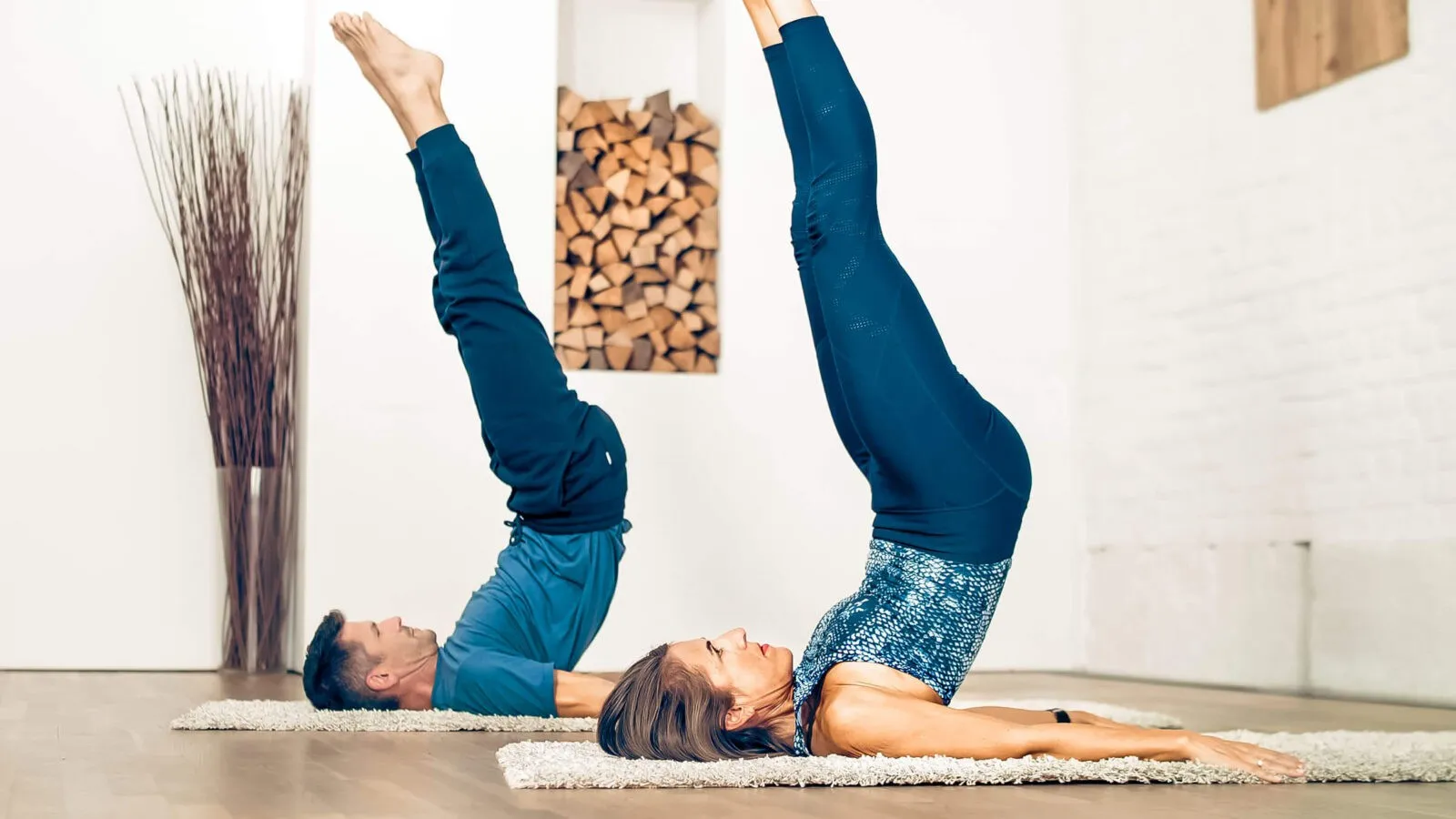
The jackknife is one of the signature exercises in the Pilates system.
Beyond improving muscular strength, Jackknife also enhances coordination and balance. It is an ideal exercise for those who want to challenge themselves and advance their Pilates practice.
Because it demands high concentration and precise body control, Jackknife is not only a physical exercise but also a mental one, helping practitioners develop patience and determination. Maintaining correct alignment and steady breathing throughout the movement is essential to ensure maximum effectiveness and prevent unwanted injuries.
Comprehensive Benefits of the Pilates Jackknife Exercise
The Jackknife exercise offers a wide range of benefits, supporting not only physical health but also confidence in training. Below are its most notable advantages:
Strengthening Core Muscles
One of the most significant benefits of the Pilates Jackknife exercise is its ability to deeply activate the abdominal muscles particularly the transverse abdominis, lower abdominals, and the entire core system, including the back and pelvic muscles. This provides visible toning effects and strong support for the spine.
Improving Spinal Health
The Pilates Jackknife exercise is especially effective in lengthening and strengthening the spine. During execution, the spine moves through controlled flexion and extension in a gentle yet effective manner, helping to improve spinal mobility and flexibility.
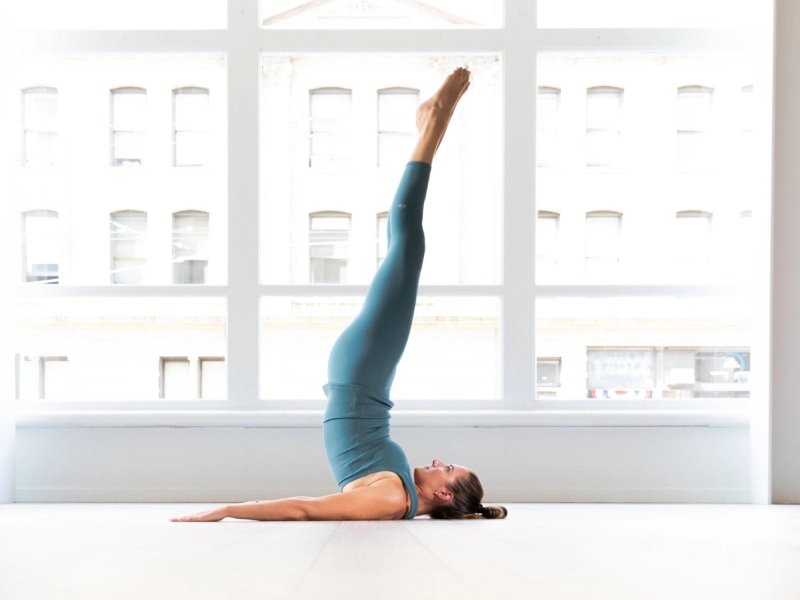
The Jackknife exercise is particularly effective in improving spinal health.
Enhancing Posture and Reducing Back Pain
As the abdominal and lower back muscles become stronger, standing and sitting posture improves while pressure on the spine decreases. This helps reduce back pain and joint stiffness. Maintaining proper alignment in daily activities keeps the spine balanced and stable. Additionally, improved body integration through Pilates training helps lower the long term risk of joint misalignment and disc herniation.
Developing Body Control and Balance
Performing the Jackknife exercise requires a precise combination of muscular strength and balance, enhancing body control with each movement. It also improves flexibility in the hips, thighs, and shoulders, keeping joints and muscles supple and reducing injury risk in daily activities.
Improving Breathing and Reducing Stress
In Pilates, synchronized breathing with movement is essential. When practicing the Pilates Jackknife exercise, controlled breathing helps increase lung capacity, improve oxygen circulation, and enhance mental focus. Deep breathing also helps relieve stress, promoting relaxation and mental clarity.
Basic Pilates Jackknife Exercise Instructions
Target focus: Jackknife is an advanced mat exercise that strengthens the abdominal muscles while stretching the back and shoulders.
Execution Steps:
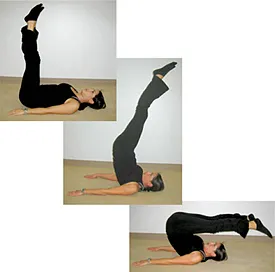
How to perform the Jackknife exercise.
- Lie on your back on the mat with arms extended alongside the body, palms facing down. Lift both legs to a 60-degree angle, keeping them slightly externally rotated.
- Inhale and raise the legs to 90 degrees. Arms remain long and shoulders grounded. Use your abdominal strength to roll over, bringing the legs overhead and lifting the spine off the mat. Keep the legs together and no lower than parallel to the floor. Weight should rest on the shoulders, not the neck.
- Exhale and extend the legs straight toward the ceiling, engaging the glutes to support the position. At the peak, your feet should be higher than your eyes. Keep the neck long and arms pressing firmly into the mat.
- Inhale to begin rolling down one vertebra at a time against gravity. Exhale to finish, lowering the body back to 90 degrees and returning the legs to the starting position. Repeat 3 times.
Advanced Variations of the Pilates Jackknife Exercise
Once you have mastered the basic Jackknife, you can progress to equipment based variations to increase difficulty, improve control, and enhance training effectiveness.
Pilates Jackknife on the Wunda Chair
Introduction to the Jackknife on the Wunda Chair
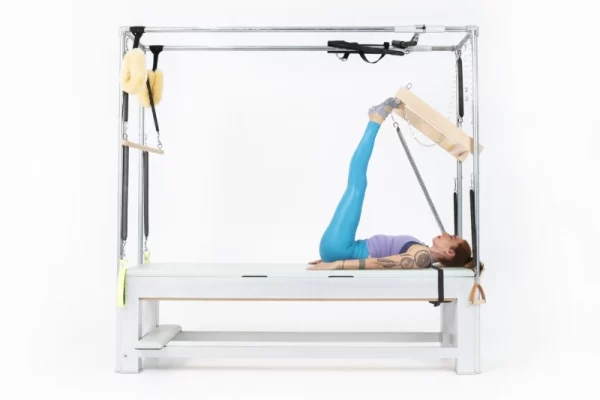
The Wunda Chair is a versatile Pilates apparatus featuring a seat and spring loaded pedal. When performing the Pilates Jackknife exercise on the Wunda Chair, practitioners use pedal resistance to lift the body, providing both challenge and controlled support.
This is considered an advanced Pilates movement designed to challenge balance, strength, and coordination. The exercise requires lifting the hips high to form a straight line from shoulders to feet while maintaining stability on the Wunda Chair.
How to Perform the Pilates Jackknife on the Wunda Chair
Preparation
- Body position: Lie on your back on the floor with your head approximately 2–3 cm away from the pedal edge. Place your hands on both sides of the pedal, stabilizing it using arm and shoulder strength. Extend both legs toward the ceiling, heels together, toes slightly turned out in a small V shape.
- Equipment setup: Set one spring at a medium or high resistance level.
- Starting posture: Keep the spine long and chest open, gaze directed upward throughout the exercise.
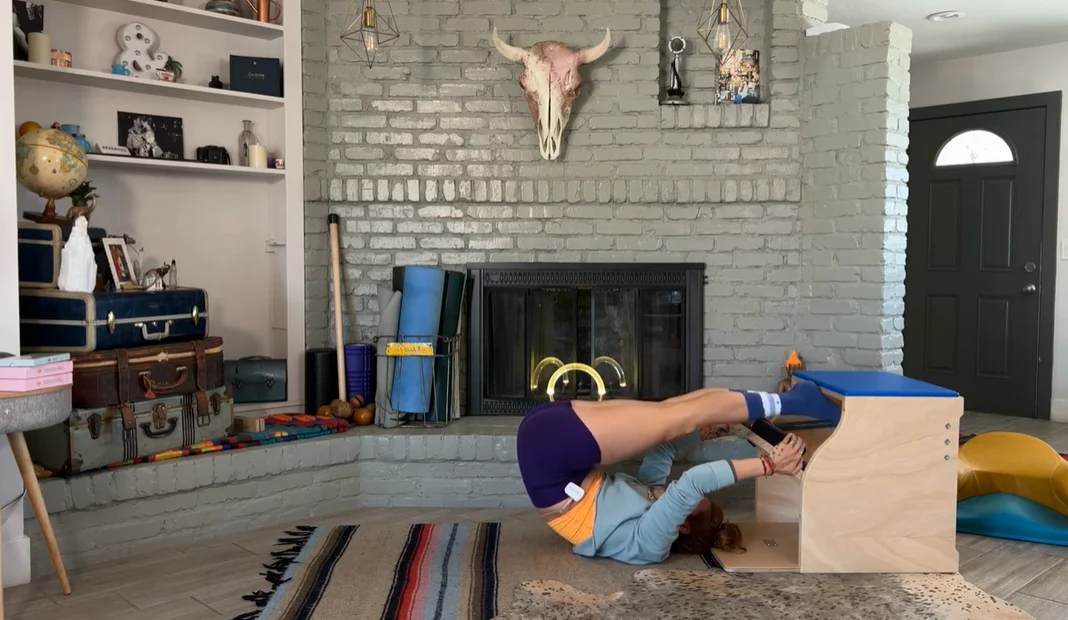
Pilates Jackknife exercise on Wunda Chair.
Execution:
- Step 1: Lift the hips. From the supine position, engage the abdominal muscles to lift the hips upward. Legs remain straight, toes reaching toward the ceiling as the hips rise over the top of the Wunda Chair.
- Step 2: Lower the waist slightly. Maintain lifted hips while gently lowering the waist toward the floor, feeling spinal lengthening.
- Step 3: Pass the legs between the pedal and chair. Slowly move the legs through the space between the pedal and chair, keeping them straight and heels together.
- Step 4: Return to the starting position. As you extend the legs away, carefully roll the spine back down onto the floor. Extend the legs upward, then slowly lower them to the mat.
- Step 5: Repeat. Repeat the full sequence 5–8 times, maintaining steady breathing and controlled movement.
Note: Always keep your gaze upward to maintain spinal stability. Avoid forcefully pulling the pedal down; instead, use abdominal strength to control the movement. Focus on the connection between arms, shoulders, and back while stabilizing the pedal.
Pilates Jackknife on the Spine Corrector
Introduction to the Jackknife on the Spine Corrector
The Spine Corrector is designed to support spinal alignment with its natural curved shape, assisting spinal extension and flexion. Performing the Pilates Jackknife exercise on the Spine Corrector is ideal for improving abdominal strength, spinal flexibility, and body control.
This variation is suitable not only for experienced practitioners but can also be adjusted for beginners, offering exceptional benefits for spinal support and overall health.
How to Perform the Pilates Jackknife on the Spine Corrector
Follow these step by step instructions to execute the movement correctly:
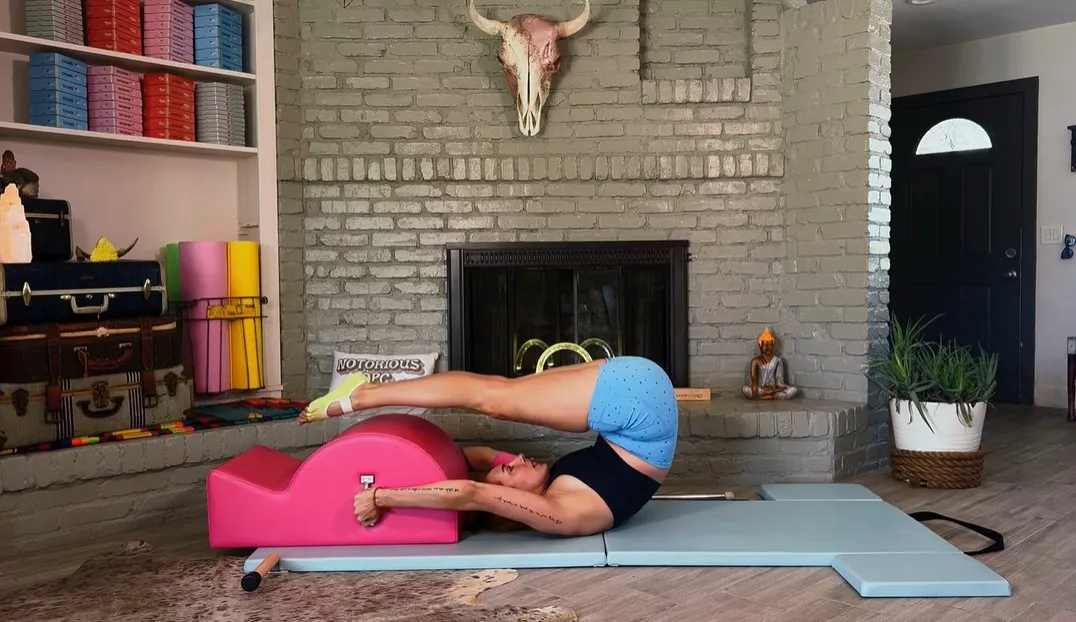
Steps to perform the Pilates Jackknife exercise on a Spine Corrector.
- Begin seated on the Spine Corrector, ensuring your hips rest at the highest point and your lower back is supported by the curved surface.
- Place your arms alongside your body or hold the support handles if available. Keep shoulders relaxed and hips open.
- Extend both legs toward the ceiling, feet pointed upward, forming a 90-degree angle with the torso.
- Engage the abdominal muscles to lift the hips off the Spine Corrector, raising the legs higher. Ensure the lift originates from the core rather than the shoulders or neck.
- The spine gently flexes as the hips and legs reach upward, forming the characteristic Jackknife position.
- At the highest point, hold briefly, focusing on steady breathing and balance. Feel the abdominal engagement and lower back support from the Spine Corrector.
- Inhale as you slowly lower the hips, articulating the spine one vertebra at a time back to the starting position. Keep the legs straight and movement controlled.
- Perform 5-8 repetitions per session, maintaining breath control and precision.
Note: The entire Jackknife exercise relies on core strength. Always ensure the abdominal muscles remain engaged during both lifting and lowering. Avoid placing pressure on the neck keep the shoulders relaxed and focus on controlled core activation.
Inhale during preparation and lowering phases, and exhale as you lift the hips. Move slowly and articulate the spine carefully to maximize benefits and protect spinal health.
Important Considerations When Performing the Pilates Jackknife Exercise
Safety and Injury Prevention
- Warm up before training: Warming up increases blood flow, prepares muscles, and reduces injury risk.
- Maintain proper alignment: Keep the spine neutral and avoid excessive arching or collapsing.
- Control your breathing: Inhale during preparation and exhale during lifting to enhance efficiency and stability.
- Listen to your body: Avoid pushing through pain or discomfort. Adjust intensity or stop if necessary.
- Use supportive equipment if needed: Beginners may use mats or resistance tools to reduce joint strain and maintain form.
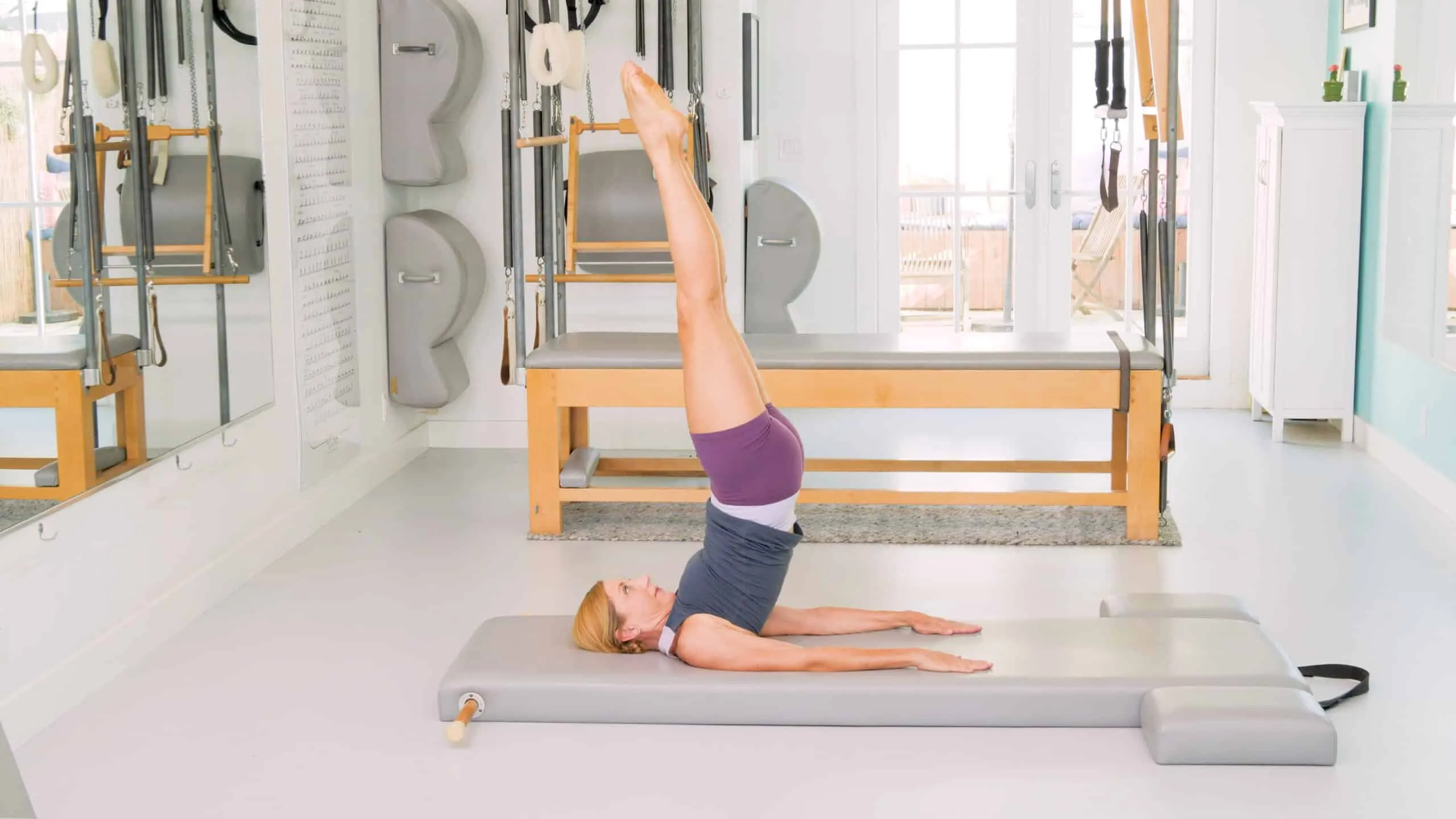
Things to keep in mind when performing the Pilates Jackknife exercise.
Training Time and Frequency
- Start gradually: Beginners should practice 2-3 times per week to allow adaptation and recovery. Increase intensity progressively: Gradually raise repetitions and duration while maintaining proper technique.
- Combine with other exercises: Pair the Pilates Jackknife exercise with other Pilates movements, cardio, yoga, or strength training for balanced development.
- Rest and recovery: Adequate rest between sessions is essential for injury prevention and optimal results.
The Pilates Jackknife exercise is not only an excellent method for building strength and flexibility but also for improving balance and body control. With its comprehensive benefits, Jackknife deserves a permanent place in your Pilates routine. Practice consistently and with proper technique to experience the positive transformations it brings to your health and physique. Start today and feel the difference.