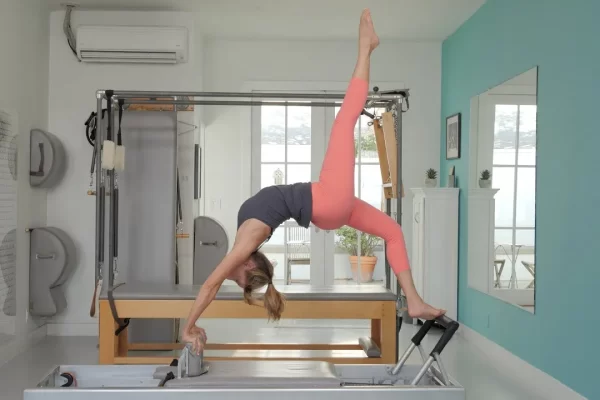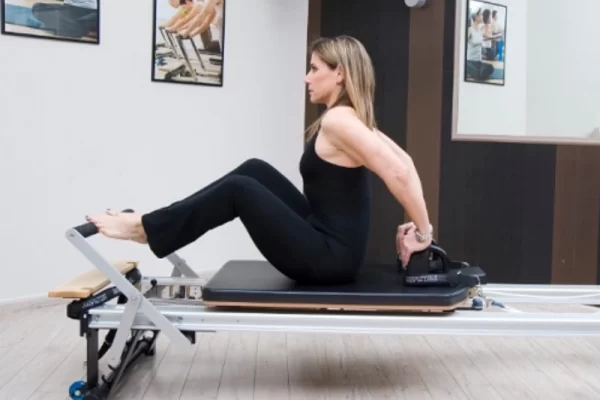


Pilates Headstand with Straps on Reformer: Advanced Core Strength and Balance Training
29/01/2026The Pilates Headstand with Straps on Reformer offers numerous benefits for both health and physique, helping strengthen the core, improve balance, and enhance flexibility. Whether you are a beginner or an experienced practitioner, this exercise is well worth trying and experiencing.
What Is Pilates Headstand with Straps on Reformer?
Pilates Headstand with Straps on the Reformer is an advanced Pilates exercise that combines a headstand position with the use of supportive straps. This movement requires the practitioner to maintain full-body stability and control while performing an inverted position, with the straps helping reduce pressure on the arms and shoulders.
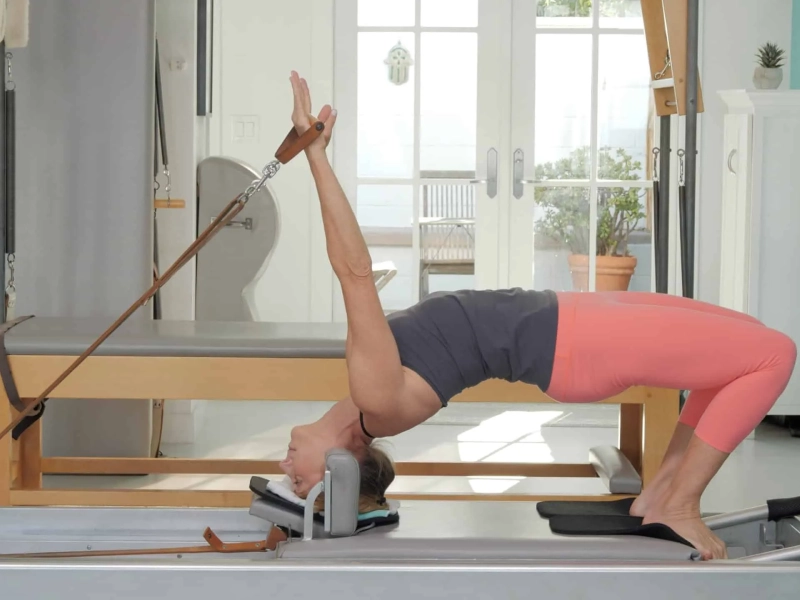
Pilates Headstand with Straps on Reformer.
This exercise not only improves core and shoulder strength but also enhances balance, flexibility, and posture. For those who are already familiar with Pilates and seeking a new challenge, practicing the Pilates Headstand with Straps on Reformer is an excellent way to develop strength, mobility, and body control at a higher level.
The straps play a supportive role by helping practitioners maintain balance in the inverted position without placing excessive stress on the joints or spine. This makes the exercise safer and more suitable for those who want to explore headstands while still needing additional support.
Key Benefits of Pilates Headstand with Straps
The Headstand with Straps on the Reformer provides a wide range of benefits:
1. Strengthens Core and Shoulder Muscles
Pilates Headstand with Straps requires full-body stability during inversion, effectively strengthening the core and shoulder muscles while improving overall body control in advanced Pilates exercises.
2. Improves Flexibility and Balance
When performing the Headstand with Straps, the body becomes more flexible thanks to the comprehensive stretch of the spine and major muscle groups. Maintaining an inverted position also enhances balance, a crucial factor in developing precision and control in Pilates practice.
3. Enhances Posture and Body Alignment
Headstand with Straps helps correct posture and improve natural body alignment. The Pilates Headstand with Straps on Reformer opens the chest, lengthens the spine, and ourages proper alignment, reducing issues related to poor posture.
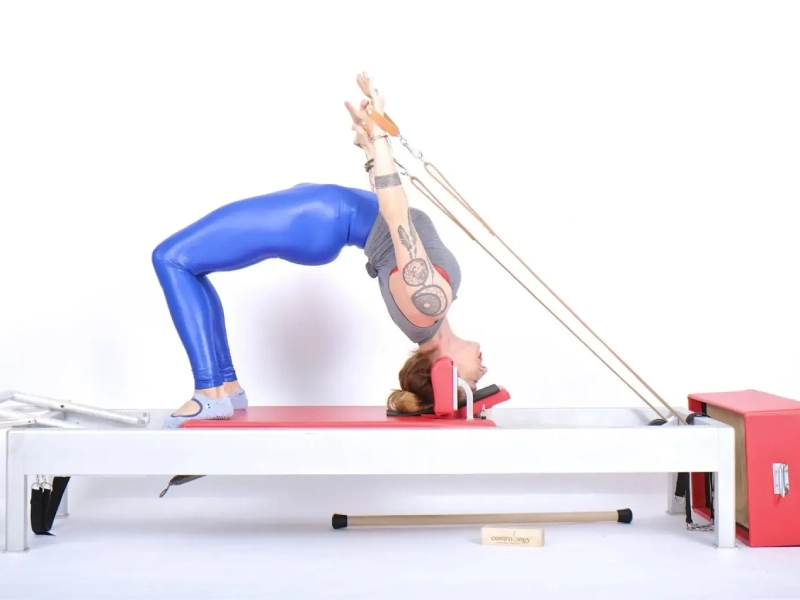
The main benefits of a Headstand with Straps.
4. Reduces Stress and Improves Blood Circulation
Inverted positions promote relaxation and stress relief while increasing blood flow to the brain. This not only boosts energy levels but also improves focus and mental clarity, helping practitioners feel refreshed and revitalized after each session.
5. Safer Practice with Strap Support
Using straps reduces pressure on the neck and shoulders, making the movement safer than unsupported headstands. This is especially beneficial for those new to inverted exercises or looking to challenge themselves while minimizing injury risk.
How to Perform Pilates Headstand with Straps on Reformer
Steps to Perform Pilates Headstand with Straps on Reformer:
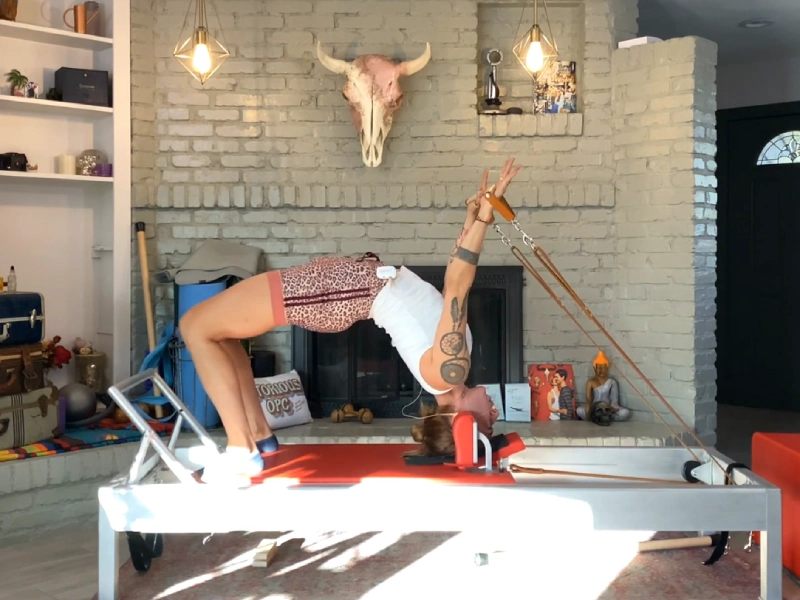
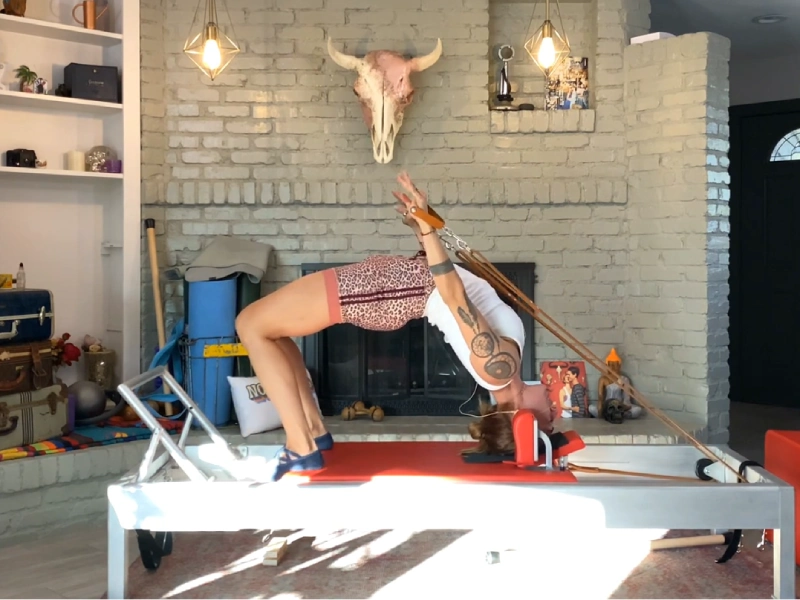
Instructions for performing Pilates Headstand with Straps on a Reformer.
- Sit on the Reformer facing away from the straps, place your feet on the footbar, and slowly transition into a supine position.
- Place your feet into the straps, ensuring they are securely wrapped around your feet or ankles. The straps should feel firm enough to support your body during the inversion.
- From a supine position, engage your core and legs to lift your body upward, raising the hips off the Reformer. Keep your legs straight while maintaining spinal and lower-back stability.
- Once you reach an upright position, focus on maintaining balance and core engagement. Ensure your shoulders, hips, and legs are aligned, avoiding arching or leaning.
- Hold the position for several breaths, breathing slowly and deeply to maintain stability. ·
- When ready to exit, slowly lower your legs and bring your hips back onto the Reformer. Use core control to avoid dropping too quickly and placing stress on the lower back.
- Once fully supine, gently remove your feet from the straps and rest briefly before standing up.
Important Notes When Performing Pilates Headstand with Straps on Reformer
- Ensure you perform this exercise under the guidance of an experienced Pilates instructor, especially if you are new or have neck or shoulder concerns.
- Avoid performing this movement if you have injuries or feel uncomfortable with inverted positions.
Common Mistakes to Avoid When Performing Pilates Headstand with Straps on Reformer
Below are common mistakes and how to correct them:
1. Arching the Back or Neck
Arching the back or neck can place unnecessary stress on the joints and spine. Focus on engaging the core to keep the spine and neck properly aligned.
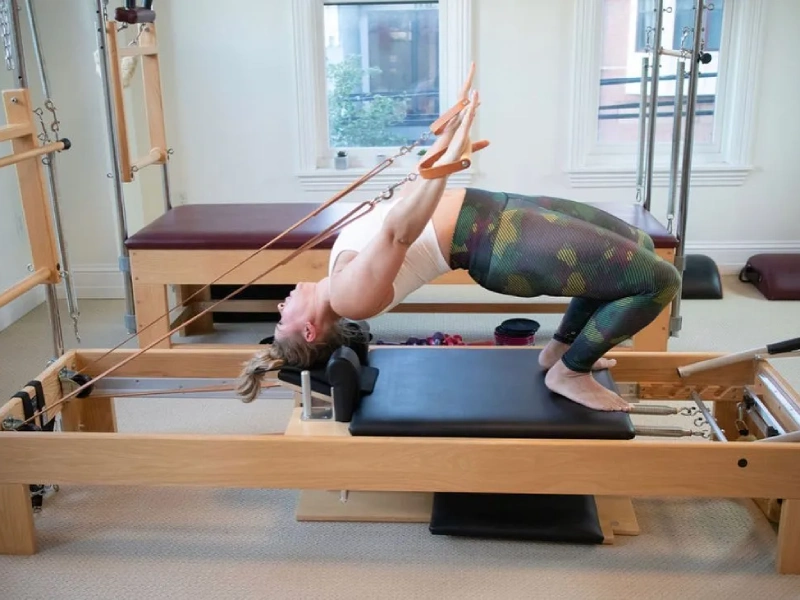
When performing the Headstand with Straps exercise on the Reformer, keep your back and neck aligned.
2. Incorrect Strap Usage
Straps should be adjusted correctly to provide effective support. Straps that are too tight or too loose can reduce stability. Ensure proper positioning and suitable length for your body.
3. Placing Too Much Weight on the Shoulders and Neck
Shifting excessive body weight onto the shoulders and neck instead of distributing it through the core and legs can cause tension and discomfort. Maintain even weight distribution and strong core engagement.
4. Poor Balance Control
Losing balance increases injury risk, especially in inverted positions. Focus on core activation and posture control, using the straps for additional support as needed.
5. Moving Too Quickly or Abruptly
Fast or sudden movements can cause instability and injury. Perform each phase slowly and with control when lifting and lowering the body.
6. Skipping Warm Up and Stretching
Skipping preparatory exercises reduces effectiveness and increases injury risk. Always warm up and stretch properly before performing the Headstand with Straps.
In summary, the Pilates Headstand with Straps on Reformer is an ideal exercise for developing strength, flexibility, and balance. With strap support, this advanced Pilates movement can be performed safely and effectively, helping practitioners elevate their practice to a higher level.