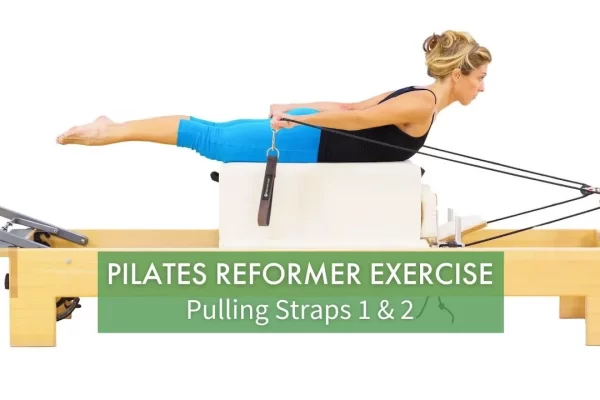


Pilates Exercises for People with Spinal Degeneration
22/12/2025Pilates has long been recognized as a holistic exercise method that improves overall health. For people with spinal degeneration, Pilates not only helps relieve pain but also enhances flexibility and muscle strength. This article introduces effective Pilates exercises for people with spinal degeneration, helping improve symptoms and enjoy a more comfortable, active life.
What Is Spinal Degeneration?
Spinal degeneration is a form of osteoarthritis that occurs in the spine, affecting structures such as intervertebral discs, cartilage, facet joints, and ligaments. Over time, this degenerative process reduces elasticity and the spine’s natural protective function. As a result, patients often experience pain, stiffness, and limited mobility especially during intense movement or sudden posture changes.

Spinal senescence is a condition characterized by the aging of the spinal structures.
Degeneration can occur in any part of the spine, but it is most common in the cervical (neck) and lumbar (lower back) regions, which bear the greatest daily mechanical load.
Common causes include:
- Aging and natural wear and tear
- Sedentary lifestyle or incorrect movement patterns
- Spinal injuries
- Improper heavy lifting
- Genetic factors or underlying joint-related conditions
Spinal degeneration not only causes discomfort but also significantly affects mobility, work, and daily activities. Without proper intervention, it may lead to serious complications such as herniated discs, spinal stenosis, or even paralysis.
Why Is Pilates Suitable for People with Spinal Degeneration?
Pilates is a mind-body exercise system that combines controlled breathing, slow and precise movements, and deep core activation. Developed in the early 20th century by Joseph Pilates, this method was designed to build strength, improve posture, and support spinal function safely.
Unlike high-impact cardio exercises, Pilates places minimal stress on joints and the spine. Its gentle, controlled movements strengthen the back and abdominal muscles, increase spinal flexibility, improve balance, and reduce muscle tension and pain.
Thanks to its slow, mindful approach and strong focus on core stability, Pilates is considered an ideal form of exercise for people with spinal degeneration provided that appropriate Pilates exercises for people with spinal degeneration are selected and performed correctly.
Principles for Practicing Pilates with Spinal Degeneration
Before starting Pilates exercises for people with spinal degeneration, keep the following guidelines in mind:
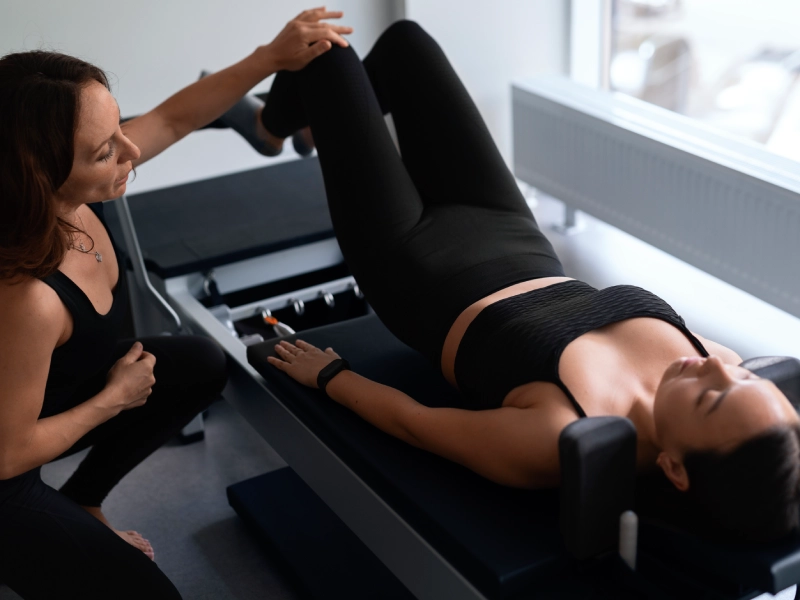
People with spinal degeneration should consult with professionals before starting Pilates.
- Consult a doctor or specialist before training: This is essential for anyone with musculoskeletal conditions.
- Start at a beginner level: Avoid advanced movements. Begin with gentle exercises focusing on breath control and body awareness.
- Maintain proper breathing and technique: Deep, rhythmic breathing helps activate the core and reduces spinal pressure.
- Avoid movements that stress the spine: Strong spinal flexion, twisting, or heavy lifting should be avoided. Only perform exercises recommended for spinal conditions.
Pilates Exercises for Lumbar Spinal Degeneration
Lumbar spinal degeneration can cause persistent pain and restrict daily activities. With appropriate Pilates exercises, symptoms can be reduced while improving lower back strength and mobility. Pilates focuses on strengthening muscles, improving flexibility, and enhancing balance to support and protect the lumbar spine.
1. Bird Dog Exercise
The Bird Dog is a full-body exercise that effectively reduces pain. It challenges balance while engaging the entire core, including the glutes, hamstrings, and back muscles.
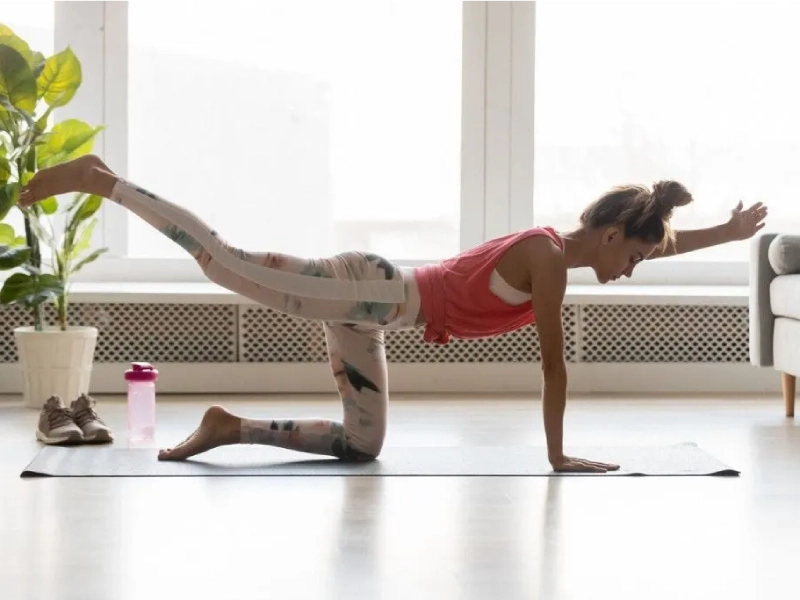
Bird Dog Exercise.
How to perform:
- Start in a quadruped position with wrists under shoulders and knees under hips.
- Extend one arm forward at shoulder height.
- If stable, extend the opposite leg backward at hip height.
- Create a straight line from fingertips to toes.
- Draw the abdomen toward the spine by pulling the front ribs toward the back ribs.
- Hold briefly, then return to the starting position.
2. Side Lying Hip Exercise (Clam)
This Pilates exercise for people with spinal degeneration strengthens the hip abductors, helping stabilize the pelvis during walking and daily movements.
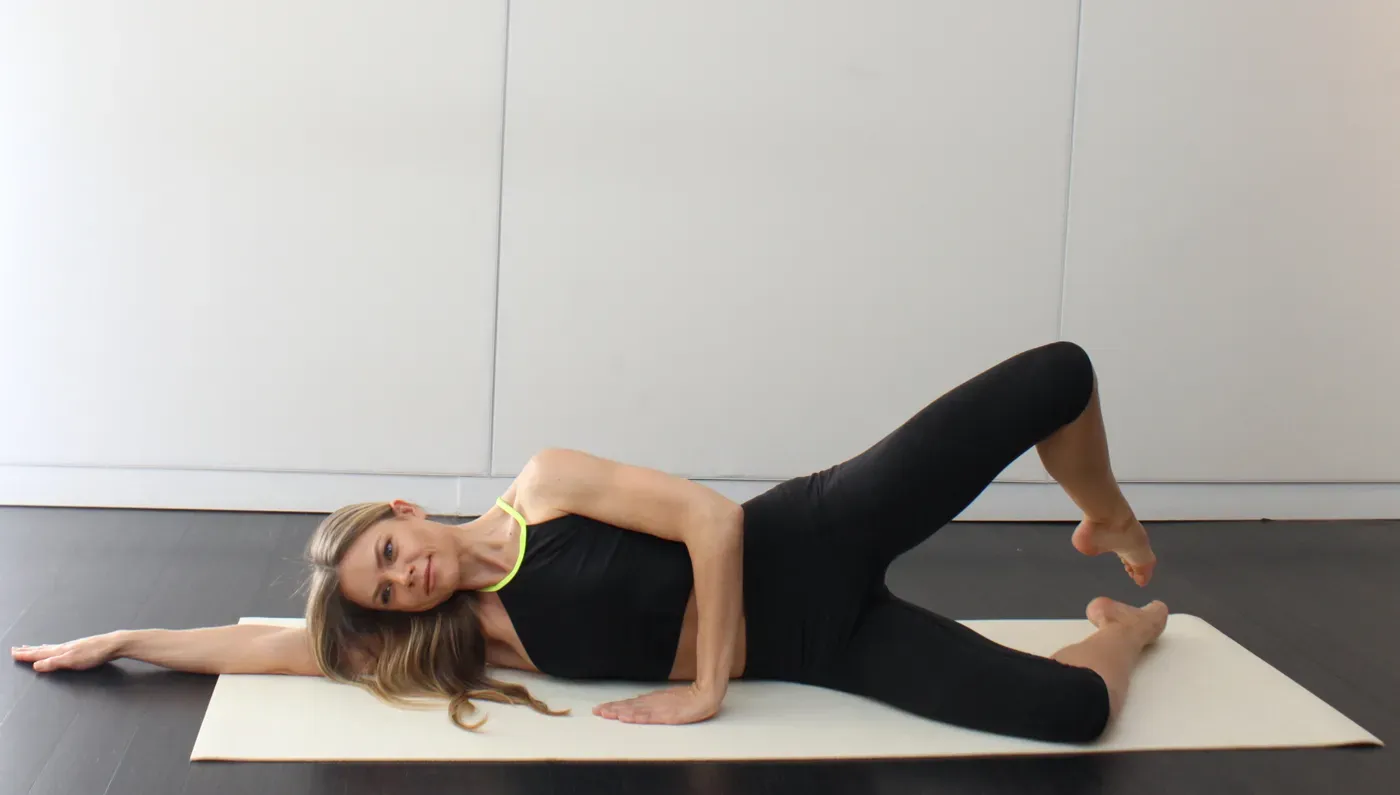
Side Lying Hip Exercise.
How to perform:
- Lie on your side with your head resting on an extended arm or a pillow.
- Bend knees at a 90-degree angle, keeping hips and shoulders aligned.
- Lift the top knee while keeping feet together, forming a diamond shape.
- Avoid rolling the hips forward or backward.
3. Figure Four Stretch
Tight hip and glute muscles can contribute to lower back pain. This Pilates exercise for people with spinal degeneration helps release tension in these areas.
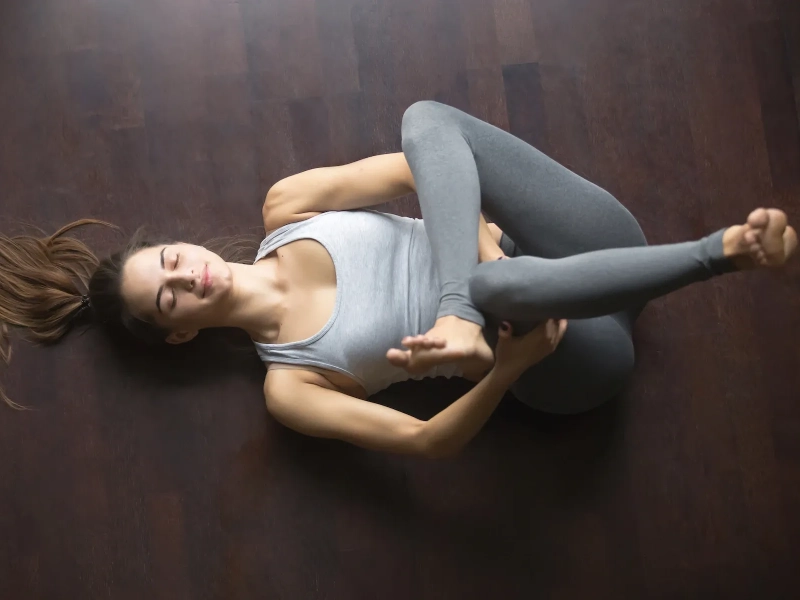
Figure Four Stretch exercise.
How to perform:
- Lie on your back with knees bent and feet flat on the floor.
- Lift one leg and place the ankle on the opposite thigh, forming a “4” shape.
- Interlace hands behind the supporting thigh or hold the shin of the raised leg for a deeper stretch. Hold for 30-60 seconds, then switch sides.
4. Modified Swan Exercise
This Pilates exercise for people with spinal degeneration strengthens the muscles along the spine and helps prevent lower back pain.

Modified Swan Exercise
How to perform:
- Lie prone with elbows bent and palms flat on the mat, legs hip-width apart. Inhale, press the pubic bone and hands into the mat, lifting the upper body.
- Gaze forward as if “taking flight,” lengthening the spine.
- Exhale and slowly lower the torso and head back down.
>> Read more: Pilates for Beginners: What You Need to Know and the 10 Most Basic Exercises
Pilates Exercises for Cervical Spinal Degeneration
The cervical spine is one of the most sensitive and injury-prone areas, especially in people with cervical spinal degeneration. Common symptoms include neck pain, muscle tension, and limited mobility.
Pilates, with its focus on flexibility and muscle strengthening, can effectively reduce these symptoms. Below are Pilates exercises particularly beneficial for people with cervical spinal degeneration, helping relieve pain, improve posture, and support neck health.
1. Neck Rolls
Neck rolls are simple daily exercises that relieve stiffness and neck pain. This Pilates exercise for people with cervical spinal degeneration gently stretches neck muscles and releases tension.
How to perform:
- Stand upright with feet shoulder-width apart.
- Engage the abdominals and relax the shoulders.
- Tilt the left ear toward the left shoulder, then repeat on the right.
- Slowly roll the head in a small semicircle, chin toward chest, moving side to side.
- Perform larger circles only if comfortable, starting slowly and gently.
- Use hands to lightly support the head if needed.
- Keep the spine upright without rounding or slouching.
2. Bridge Pose
Bridge pose is a simple Pilates exercise that releases tension along the spine. Props may be used to create a more restorative variation.
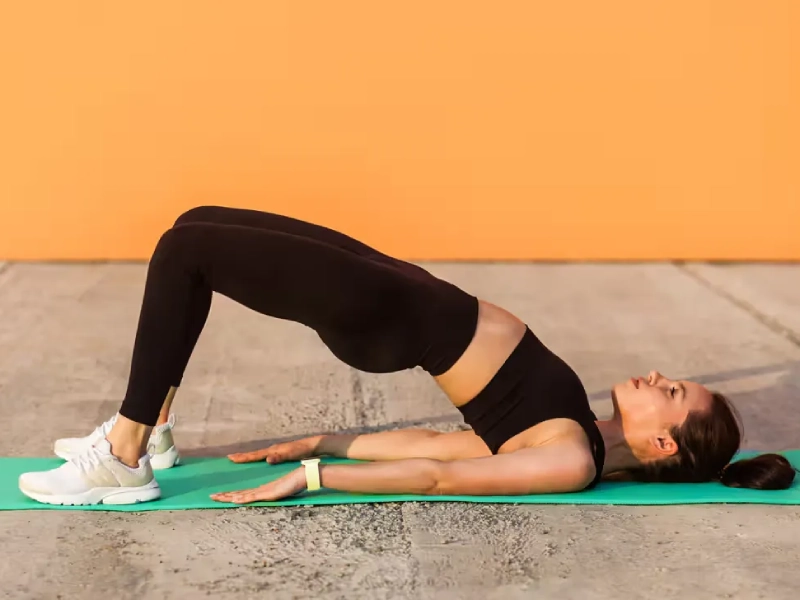
Bridge Pose exercise.
How to perform:
- Lie on your back with knees bent and feet flat on the floor.
- Use the glutes to lift the hips off the mat.
- Keep the spine relaxed and in a neutral position.
- Hold for approximately ten breaths.
- Slowly roll the spine back down, one vertebra at a time.
3. Side Plank
This Pilates exercise for people with spinal degeneration is an advanced variation of the basic plank. It challenges shoulder stability and emphasizes alignment of the head, cervical spine, and chest.

Side Plank exercise.
How to perform:
- Begin in a plank position, supporting the body on the elbows, elbows shoulder-width apart.
- Stabilize the shoulder blades by pressing them forward and downward.
- Shift weight to one side, lower the heels, and lift the opposite arm toward the ceiling.
- Engage the shoulder and intercostal muscles.
- Repeat on the other side, keeping the core engaged throughout.
4. Pelvic Tilt Exercise
The pelvic tilt activates deep core muscles, improves posture, and helps relieve neck and back pain.
How to perform:
- Lie on your back with knees bent and feet flat on the floor.
- Extend arms alongside the body, shoulders in a neutral position.
- Inhale deeply into the abdomen.
- As you exhale, gently draw the navel toward the spine, press the lower back into the mat, and tilt the pelvis upward.
- Hold for one breath, then relax.
- Repeat several times.
Pilates exercises for people with spinal degeneration not only help relieve pain but also improve overall strength and flexibility. Consistent, mindful practice is key to achieving the best results. Start with simple movements, listen to your body, and gradually increase intensity as you feel ready. Wishing you success and long-lasting spinal health.