

Pilates Double Leg Kick Exercise: Overview, Benefits, and Proper Technique
27/12/2025The Pilates Double Leg Kick exercise is one of the fundamental yet highly effective movements loved by many practitioners. Let’s explore this exercise in detail from its benefits for the body to the correct technique for achieving optimal results.
What Is the Pilates Double Leg Kick Exercise?
Double Leg Kick is exercise number 14 in the original 34 Mat exercises created by Joseph Pilates. It is considered one of the more complex choreographed movements in the series. While not overly difficult, it is challenging enough to cause confusion for many practitioners. This is the third of three exercises that introduce spinal extension for the first time in the Classical Mat sequence. Exercise number 12 is Swan Dive, number 13 is Single Leg Kick, followed by Double Leg Kick at position 14.
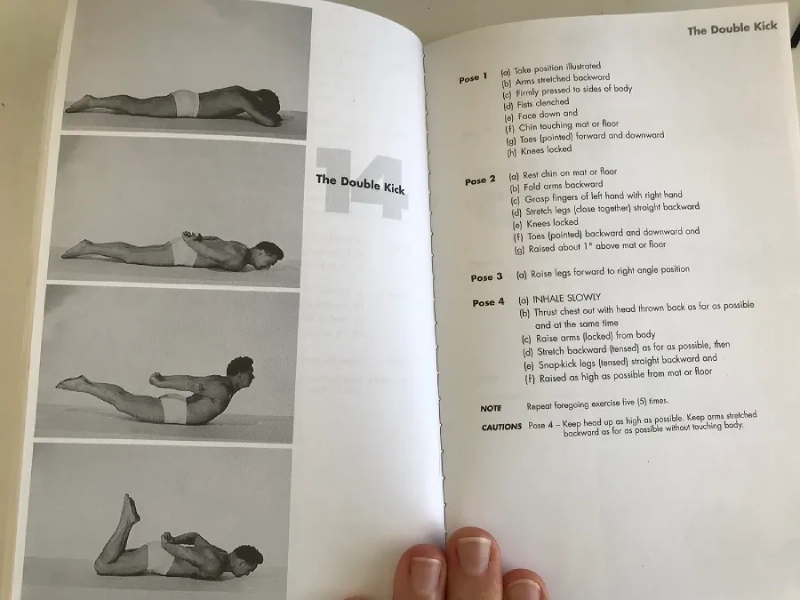
The Double Leg Kick is exercise number 14 out of the 34 original Pilates exercises.
The Pilates Double Leg Kick exercise targets lower-body muscle groups such as the quadriceps, hamstrings, glutes, and deep core muscles. Core engagement adds stability and helps improve overall posture. The controlled mat-based movement enhances joint flexibility and increases body awareness.
This exercise aligns closely with the core Pilates principles of concentration, control, precision, breath, and flow. It emphasizes functional movement, proper alignment, and controlled muscle activation.
How to Perform the Double Leg Kick Exercise
Steps to Perform the Pilates Double Leg Kick:
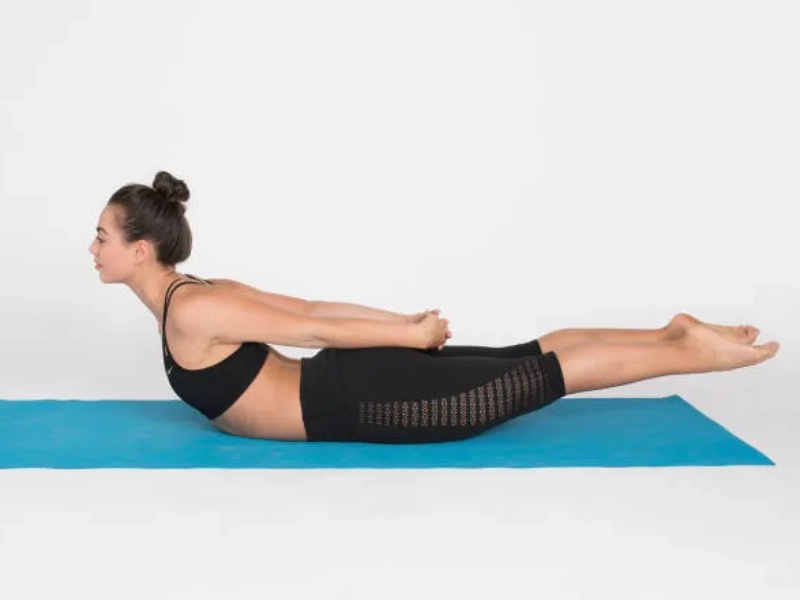
Raise your back, straighten your arms and legs.
- Step 1: Lie prone on the mat with both legs extended and pressed together. Interlace your fingers behind your back, relax your arms, and turn your head to one side, resting your cheek on the mat.
- Step 2: Exhale while bending both knees and perform three small, controlled heel kicks toward the glutes.
- Step 3: Inhale as you lift your upper body off the mat, bringing your head back to center. Extend both arms and legs backward, lifting the chest. Lower the body, turn the face to the opposite cheek, and repeat on the other side.
How to Perform Pilates Double Leg Kick with a Magic Circle
Double Leg Kick with a Magic Circle is an advanced variation within the Pilates system, combining controlled movement with the use of supportive equipment. This mat-based exercise emphasizes synchronization between movement and breath, delivering precision and optimal control.
Using the Magic Circle requires engagement of major muscle groups such as the legs, thighs, and core to stabilize the ring throughout the movement. This variation is suitable for practitioners with a solid Pilates foundation who are seeking greater challenge and enhanced technique.
Instructions for Pilates Double Leg Kick with Magic Circle:
1. Setup position:
- Lie prone on the mat with your head turned to one side, cheek resting on the mat.
- Extend and adduct the legs, ensuring the lower back lengthens without overarching. Imagine drawing the tailbone toward the heels.
- Place the Magic Circle on your back, holding it with the heels of your hands rather than gripping with fingers. The ring rests near the lower back depending on shoulder flexibility.
2. Execution:
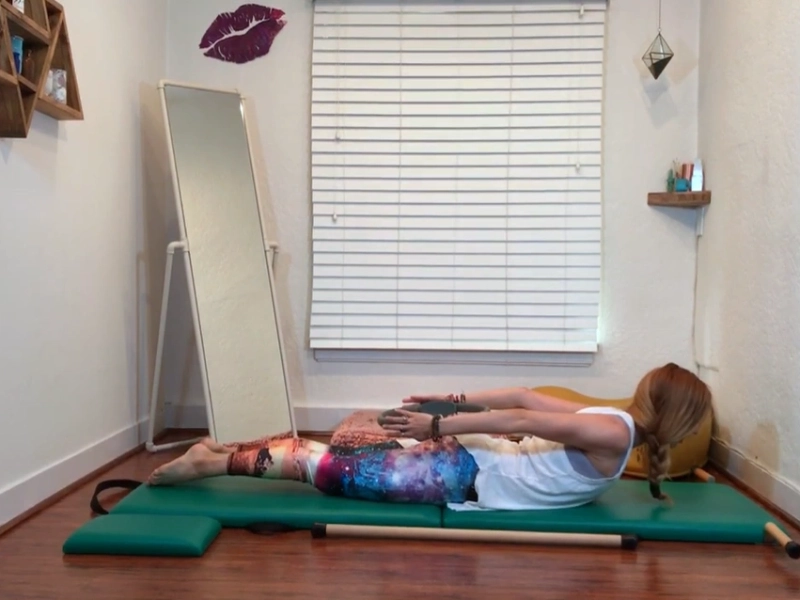
Perform Pilates Double Leg Kick with a Magic Circle.
- Step 1: Bend the knees and kick the heels toward the glutes three times, using hamstrings and glutes.
- Step 2: Exter oth legs ward the mat, keeping long grounded.
- Step 3: Squeeze the Magic Circle with the heels of your hands while lifting the ring up and back, activating the upper arms and upper back.
- Step 4: Draw the chest forward and slightly upward, then lower it down, switch head direction, and repeat the kicking sequence.
3. Repetitions:
Perform 2-4 repetitions based on your endurance and ability.
Notes:
- Maintain steady breathing; inhale during preparation and exhale during kicks or lifting the ring.
- Do not fully straighten the arms if shoulder flexibility is limited—focus on muscle activation rather than force.
- Keep movements smooth and controlled, avoiding momentum to maintain stability.
Benefits of the Pilates Double Leg Kick Exercise
Below are the key benefits of the Double Leg Kick exercise:
1. Stretching and strengthening
The Double Leg Kick is a versatile movement that stretches, strengthens, and lengthens lower-body muscles, including quadriceps, hamstrings, glutes, and calves. Working against resistance improves muscle strength and tone.
2. Flexibility and range of motion
Extending the legs against resistance stretches muscles, promoting flexibility in the quadriceps and calves. It also improves hip and knee joint mobility, supporting daily movement and joint health.
3. Chest, diaphragm, and breathing engagement
The Pilates Double Leg Kick activates the chest and diaphragm, encouraging deep breathing. This enhances respiratory capacity and breath control, benefiting other challenging positions such as backbends and inversions.
4. Awareness and focus
This exercise requires high concentration and body awareness, refining alignment essential for advanced poses such as yoga balances, flowing split stances, and tree pose variations. It strengthens the mind-body connection and improves coordination in other physical activities.
5. Postural alignment
Emphasizing proper alignment improves posture and overall body positioning. Correct posture supports better energy flow, reduces injury risk, and enhances core stability by engaging muscles that stabilize the pelvis and spine.
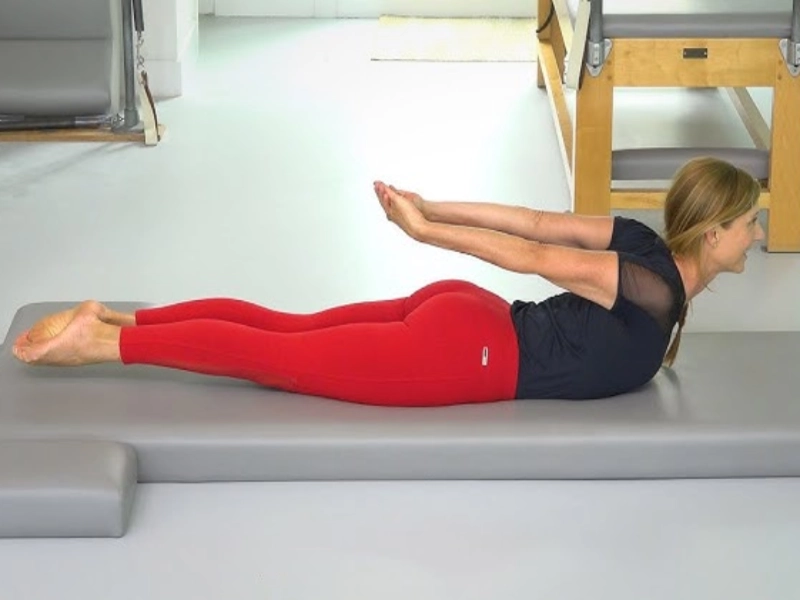
The Double Leg Kick works the core muscles to stabilize the pelvis and spine.
6. Energizing, stress reduction, and relaxation
Performed dynamically, this exercise energizes the body and refreshes the nervous system. When executed slowly and with control, it promotes relaxation, reduces stress, and calms the mind.
7. Organ stimulation
The Double Leg Kick stimulates muscles around the pelvis and abdomen, supporting digestive organ function and contributing to improved digestion and metabolic balance.
8. Therapeutic and health support
This exercise may complement treatment for various conditions by promoting relaxation and mindfulness, helping alleviate anxiety and depression. It can support blood pressure regulation, diabetes management, and sleep improvement within a holistic wellness program. Physical therapists often use it to aid rehabilitation of the knees, hips, and lower back.
9. Balance and emotional regulation
Practicing symmetrical leg movements helps balance the right and left sides of the body and brain, contributing to emotional equilibrium.
10. Additional benefits
Repeated practice builds muscular endurance, making it beneficial for activities requiring sustained lower-body strength such as walking, running, or prolonged standing. Athletes, dancers, cyclists, and runners can benefit from increased leg strength and flexibility, improving performance and reducing injury risk.
Contraindications of the Pilates Double Leg Kick Exercise
Although the Double Leg Kick may appear simple, it is not suitable for everyone. Key contraindications and precautions include:
1. Injuries and surgery
Individuals with severe back injuries such as herniated discs should avoid this exercise, as pressure on the lower back may worsen symptoms. Those recovering from knee surgery or with knee conditions should proceed cautiously due to repeated knee flexion and extension.
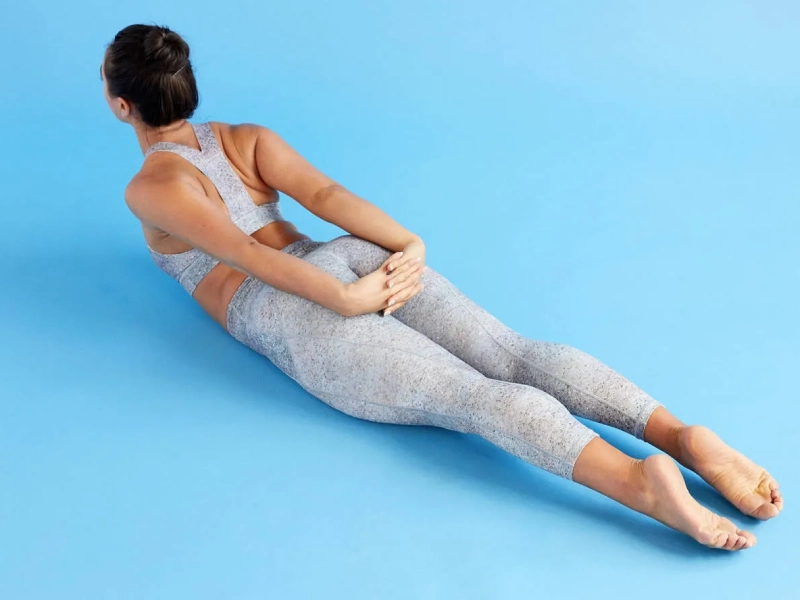
People with serious back injuries should avoid the Pilates Double Leg Kick exercise.
2. Poor breath movement coordination
Proper coordination of breath and movement is essential in Pilates. Without it, practitioners may lose control, adopt poor posture, and increase injury risk. Instructors should guide inhalation and exhalation at appropriate moments.
3. Limited strength and physical condition
Individuals with weak core strength may struggle to stabilize the spine, increasing the risk of lower back strain. This exercise may not be suitable for those experiencing injury-related symptoms or discomfort.
People with severe osteoporosis should avoid the Double Leg Kick, as repeated leg pressure may stress bones and increase fracture risk. Those with high blood pressure should exercise caution, as the movement may elevate blood pressure. Women in late pregnancy should avoid this exercise due to potential abdominal strain.
Other considerations
Older adults may need modifications to suit their physical capacity or medical conditions. Adolescents and children can perform the exercise under supervision but should avoid strong resistance to prevent injury.
Through this article, we hope you now have a comprehensive understanding of the Pilates Double Leg Kick exercise, including proper execution and its health benefits. For best results, always focus on correct technique and practice consistently.