

Pilates Backstroke Exercise: Effective Training on the Reformer and Cadillac
08/01/2026The Pilates Backstroke exercise is one of the classic movements designed to strengthen core control, improve posture, and enhance full body coordination. However, depending on the equipment used Reformer or Cadillac this exercise offers different experiences and benefits. In this article, we explore how to perform Pilates Backstroke on both devices and provide guidance on choosing the most suitable option for each practitioner.
What Is the Pilates Backstroke Exercise?
Backstroke is a classic exercise in the Pilates system, typically classified as intermediate to advanced. Its primary goals are to train the deep abdominal muscles, regulate breathing, and improve coordination between the upper and lower body.
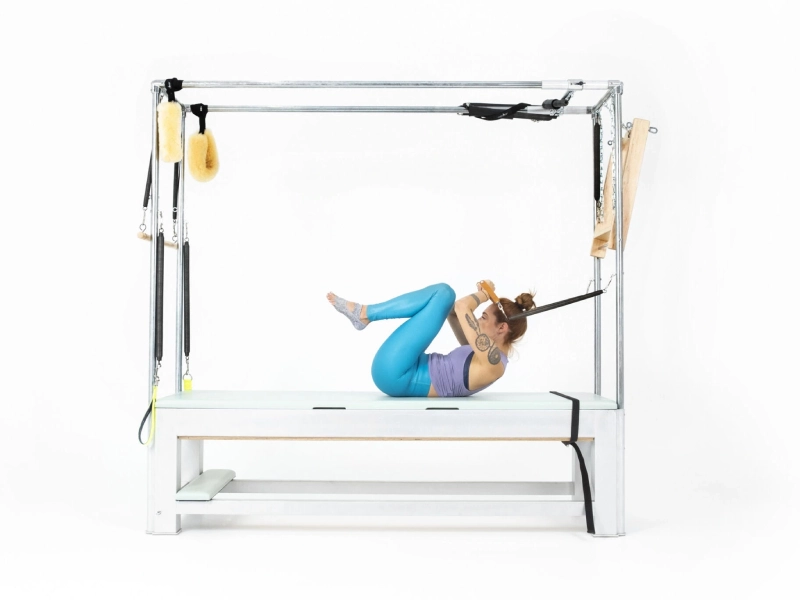
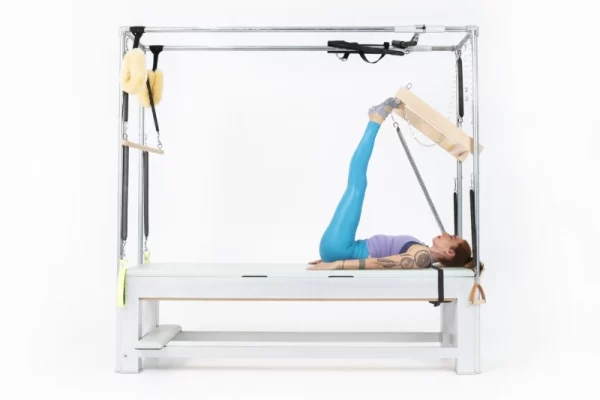
The Pilates Backstroke exercise was performed on a Cadillac.
The name “Backstroke” comes from the arm movements that follow a circular path similar to backstroke swimming. Instead of water resistance, practitioners use elastic straps on the Reformer or spring resistance on the Cadillac to create controlled, fluid movement through each phase.
Benefits of the Pilates Backstroke Exercise
The Pilates Backstroke exercise is well known for activating the entire core muscle group while improving flexibility, posture, and body control. Whether performed on the Cadillac or the Reformer, the following key benefits are maximized:
Strengthening the Core
This exercise primarily targets the abdominal muscles especially the lower abdominals, obliques, and lower back. Continuous contraction and controlled limb movement challenge the core, creating a strong foundation for daily activities and advanced sports performance.
Improving Posture and Alignment
When executed correctly, the exercise increases awareness of spinal alignment, helping correct rounded shoulders, excessive kyphosis, or exaggerated lumbar curves. As a result, posture becomes more natural and upright without excessive muscular tension.
Enhancing Breath Control
Backstroke requires synchronizing movement with breath inhale during expansion and exhale during contraction. This improves breathing regulation while enhancing focus, relaxation, and mind body connection.
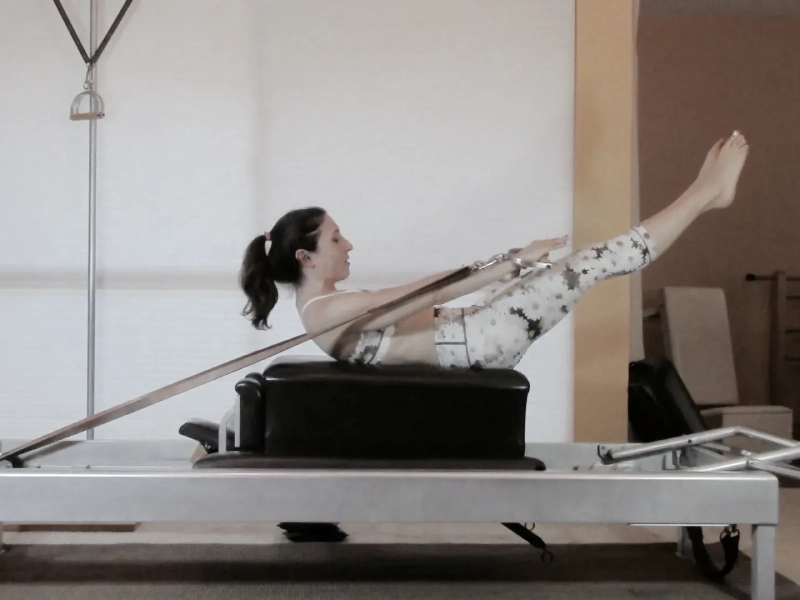
The Pilates backstroke exercise stands out for its ability to activate the entire core muscle group, improving flexibility, posture, and body control.
Increasing Spinal Flexibility
The reaching, lengthening, and circular limb movements gently decompress the spine. This improves flexibility and helps reduce stiffness or lower back discomfort caused by prolonged sitting or poor posture.
Better Coordination and Balance
The exercise demands coordinated action of the arms, legs, core, and breath, improving overall movement control. This is especially beneficial for older adults and athletes who require refined balance and body awareness.
Reducing Stress and Improving Mental Well Being
Like many Pilates movements, the Pilates Backstroke exercise connects deep breathing with mindful motion, calming the nervous system and reducing stress and anxiety. Even short daily practice can leave you feeling relaxed and energized.
Overview of the Reformer and Cadillac
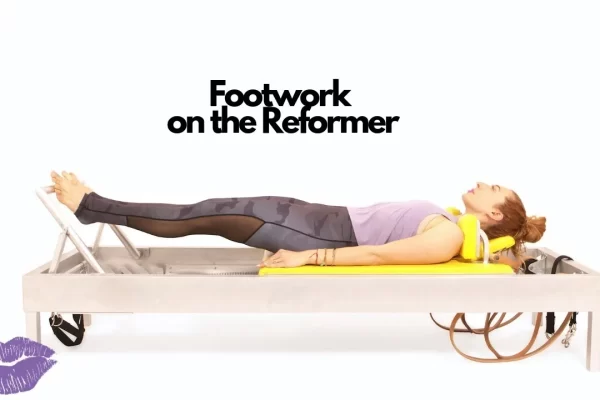
The Reformer is the most iconic Pilates apparatus, featuring a sliding carriage, elastic straps, foot bar, and adjustable spring resistance. Its versatility allows beginners to receive support while offering advanced practitioners greater challenges.
The Cadillac, also known as the Trapeze Table, is a larger apparatus with a surrounding metal frame, springs, and multiple accessories. It is often used for rehabilitation and advanced training due to its high stability and supportive structure.
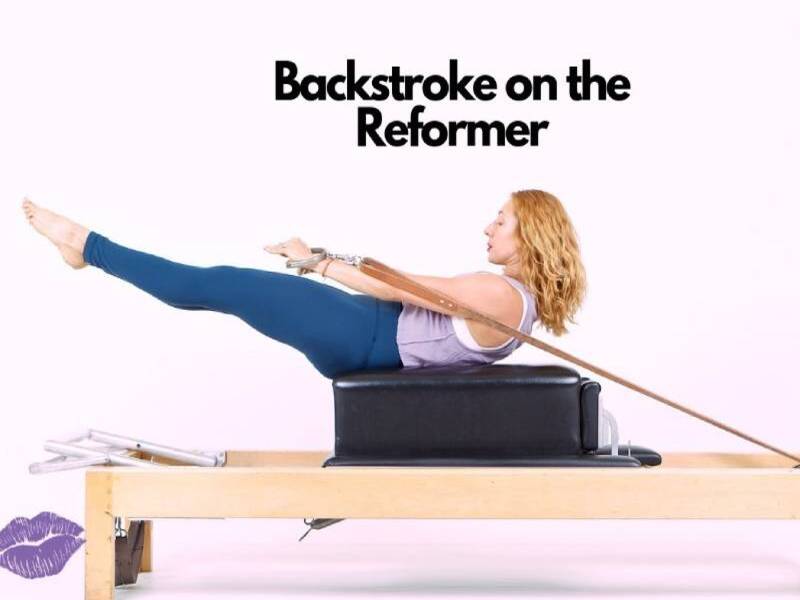
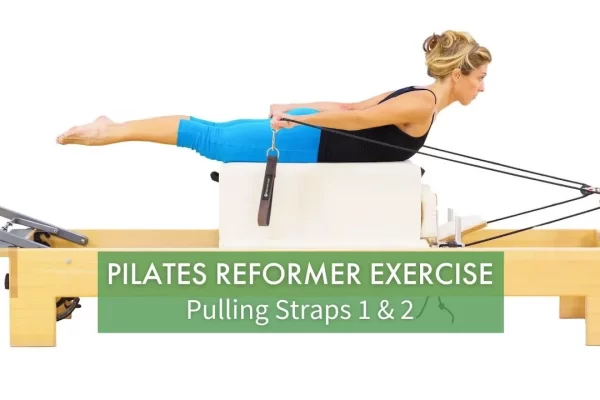
Perform the Pilates Backstroke exercise on the Reformer device.
Although the Pilates Backstroke exercise can be performed on both devices, each provides a distinct experience in terms of structure, support, and movement challenge. The choice depends on training goals, experience level, and physical condition.
| Criteria | Reformer | Cadillac |
| Structure | Moving carriage with springs providing resistance | Fixed bed with a metal frame and supportive accessories |
| Flexibility level | High – sliding carriage allows dynamic movement | Moderate – stable, fixed surface |
| Body control requirement | High-requires greater balance and core control | Lower – easier to maintain stable posture |
| Difficulty level | Intermediate to advanced | Moderate suitable for beginners |
| Application | Strength building, improving flexibility and balance | Developing control, flexibility, and supporting rehabilitation |
| Suitable users | Experienced Pilates practitioners seeking to strengthen the core | Beginners and individuals recovering from injury |
Pilates Backstroke Exercise on the Cadillac
When performed on the Cadillac, the Backstroke exercise offers a gentle, stable, and highly controlled experience. This makes it especially suitable for beginners or individuals in rehabilitation. The suspended spring system and solid frame allow practitioners to focus on technique, alignment, and smooth movement without concerns about balance or carriage instability.
How to Perform Pilates Backstroke on the Cadillac
Pilates Backstroke on the Cadillac requires coordinated arm, leg, and core movements to build full body strength. Follow these steps:
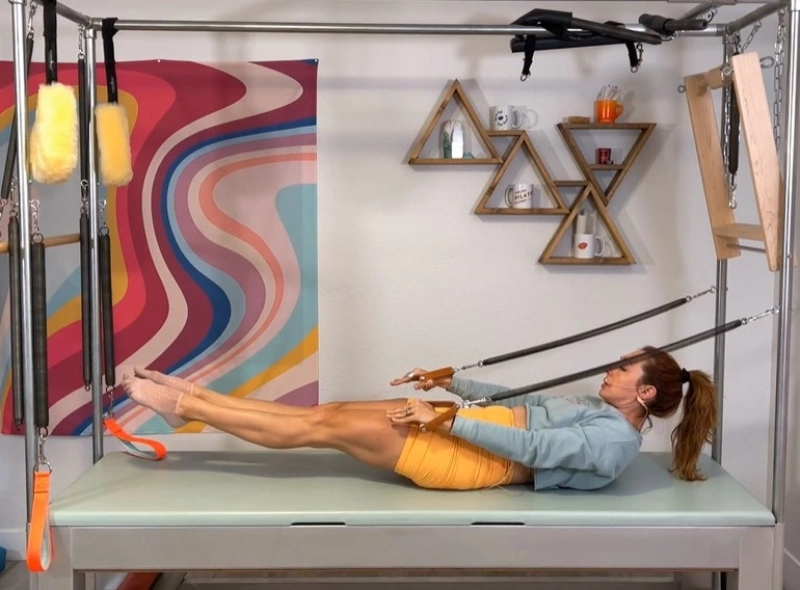
How to perform Pilates Backstroke on a Cadillac.
- Lie on your back on the Cadillac with your head supported on the padded headrest. Bend your knees to a 90-degree angle. Arms can rest in front of you or alongside your body.
- Hold the Cadillac straps, ensuring the tension allows controlled movement. Extend your arms straight and parallel to your body.
- Reach both arms overhead, then slowly circle them forward and down in front of you, forming an arc. Slightly lift your head and neck for controlled engagement.
- As your arms circle forward, extend both legs to a 45-degree angle from the floor, keeping the movement synchronized and the torso stable.
- Return slowly to the starting position by bending the knees back to 90 degrees and bringing the arms alongside the body.
- Repeat 5–8 times, depending on your capacity.
Important Notes
- Keep the head and neck relaxed throughout the exercise. When lifting the head, do so gently to maintain comfort.
- Perform each movement slowly and with control to avoid loss of stability or injury.
Pilates Backstroke Exercise on the Reformer
Performing the Backstroke on the Reformer introduces a higher level of challenge due to the moving carriage. This variation requires stronger core engagement to maintain balance and enhances proprioception and body awareness.
How to Perform Pilates Backstroke on the Pilates Reformer
Preparation:
- Adjust the springs to suit your strength level (typically two springs).
- Place the long box on top of the Reformer.
- Position the straps behind you, sit down, and slide toward the end of the carriage so your hips are close to the edge.
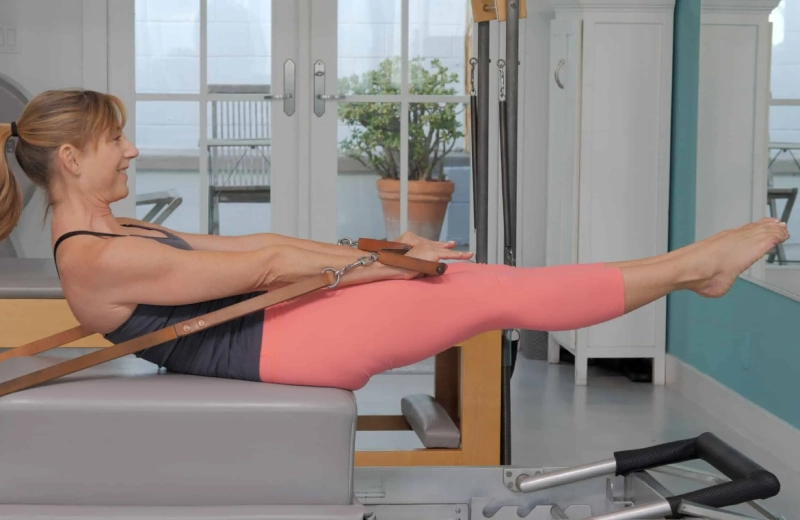
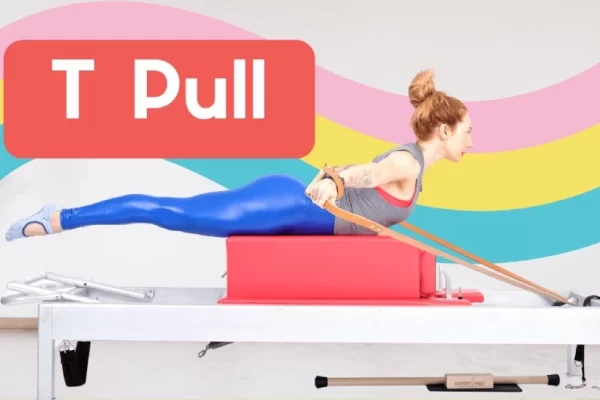
Pilates Backstroke Exercise on the Reformer.
Execution:
- Hold the straps behind you, legs together, toes pointing toward the ceiling.
- Lift both legs and arms simultaneously, keeping the chest open and lifted.
- Perform circular movements with the arms and legs, similar to a swimming motion.
- Maintain the lifted position while continuing the circular movement for five breaths.
- Slowly lower the arms and legs back to the starting position.
- Repeat according to your ability.
Common Mistakes and Corrections
- Poor alignment: Arching the back or lifting the neck too high places stress on the spine. Correction: Maintain a neutral spine, relax the neck, gently tuck the chin, and look forward.
- Breath holding: Forgetting to breathe increases tension and reduces effectiveness. Correction: Inhale to prepare, exhale as you extend. Keep breaths slow and deep.
- Rushed movement: Fast, uncontrolled motion leads to imbalance. Correction: Move slowly, feel muscle engagement, and maintain strong core control.
- Incorrect equipment setup: Poor spring or strap adjustments compromise safety. Correction: Always check settings before practice and seek instructor guidance if needed.
When to Choose the Reformer or the Cadillac?
Choosing the right equipment for the Pilates Backstroke exercise depends on experience level, training goals, and physical condition.
Choose the Reformer if you:
- Have Pilates experience and want to increase exercise intensity.
- Aim to improve balance and deep core control.
- Enjoy dynamic, full body, and challenging movements.
- Want to experience fluid motion combined with precise breath control.
Choose the Cadillac if you:
- Are a beginner and need a stable, supportive environment.
- Are recovering from injury or need to reduce spinal and joint load.
- Want to focus on technique and body awareness without carriage movement.
- Prefer supported positions with spring assistance for precise movement guidance.
Tip: The Pilates Backstroke exercise is a classic movement that deepens the connection between breath, control, and motion. Beginners should start on the Cadillac to build a solid technical foundation. Once confident, transition to the Reformer to expand strength, flexibility, and movement precision.
The Pilates Backstroke exercise, whether performed on the Reformer or the Cadillac, delivers exceptional benefits for core strength, breath regulation, flexibility, and overall body balance. The key is choosing the equipment that matches your physical condition, goals, and training stage. Begin your self care journey today with the Pilates Backstroke exercise to build a healthier, more energized version of yourself.