

The History and Development of Pilates
02/12/2025From hospital wards during World War I to today’s premium fitness studios, Pilates has undergone an extraordinary evolution. Created by Joseph Pilates to improve health and physical conditioning, this method has captivated millions around the world. This article explores the complete history and development of Pilates, highlighting key milestones and influential factors that shaped its success.
Origins of Pilates
Pilates is named after its creator, Joseph Pilates, a German physical trainer of Greek descent. Initially, the method was called “Contrology” before taking on his surname.
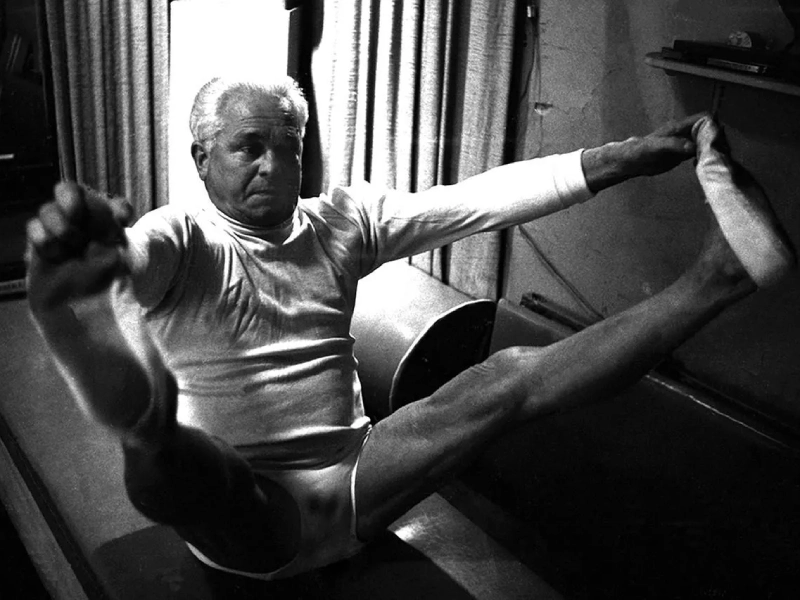
Joseph Pilates is Father of Pilates.
Joseph Pilates grew up with a frail physique and battled asthma, rickets, and rheumatic fever. These struggles fueled his determination to strengthen his body through exercise and athletics. He devoted years to studying different training systems and disciplines not only to expand his knowledge but also to “fight” the ailments that affected him. Through tireless effort, he eventually became a skilled skier, gymnast, diver, and passionate boxer.
Joseph Pilates believed deeply in the connection between physical and mental health. To him, Pilates was a discipline of both mind and body, empowering individuals to unlock the full potential of their physical abilities.
Many consider Joseph Pilates a pioneer in bridging Eastern and Western philosophies of health and movement. His approach drew from classical Greek and Roman fitness traditions, gymnastics, bodybuilding, martial arts, meditation, Yoga, and Tai Chi. He also studied anatomy and animal movement to develop precise exercises, meticulously modeling and recording every movement himself.
The classical Greek ideal of a balanced man strong in body, sharp in mind, and grounded in spirit was Joseph Pilates’ lifelong inspiration and the foundation for his method.
When describing the core principle of Pilates, Joseph Pilates often quoted his favorite line from Schiller: “It is the mind itself which builds the body.”
Early Foundations During World War I
The history and development of Pilates began during World War I (1914-1918), emerging from rehabilitation programs for injured soldiers unable to walk during the war.
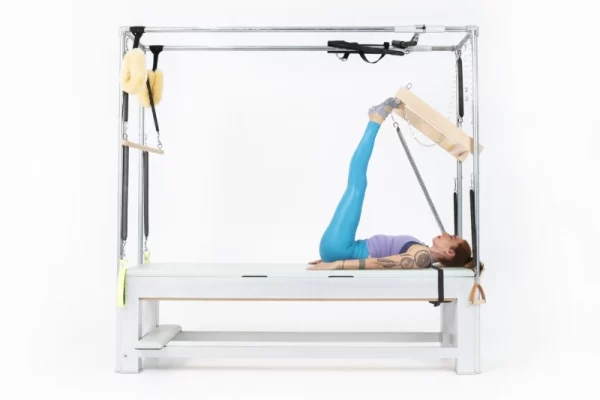
In 1912, shortly after the war began, Joseph Pilates was detained by the British as an “enemy alien.” During his internment, he refined his techniques and designed equipment to help injured, disabled, or weak prisoners rehabilitate. Here, he invented the first version of what is now the Pilates Cadillac, attaching springs to hospital beds so patients could exercise while lying down. Doctors were impressed by the rapid recovery of his patients.
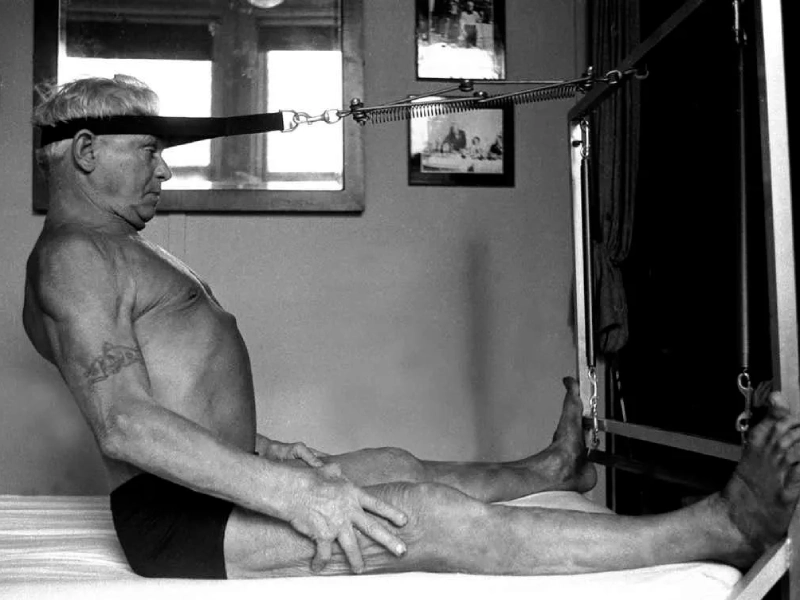
The Cadillac is the first version of the Pilates machine invented by Joseph Pilates.
After his release, Joseph Pilates continued developing his method alongside Rudolf von Laban a professional dancer and pioneer of modern movement techniques, who later created a widely used dance notation system.
Additionally, Hanya Holm one of the “Big Four” founders of modern American dance incorporated many of Joseph Pilates’ movements into her teaching method, now known as the “Holm Technique.”
The Evolution and Growth of Pilates
From its humble rehabilitation roots, Pilates has expanded dramatically, evolving from a small New York studio into a globally celebrated fitness system.
Pilates Expands in the United States
Joseph Pilates and Clara Zeuner moved to the United States in the early 1920s. By 1926, they had opened the first Pilates studio on Eighth Avenue in New York City. For years, they refined the method and taught students from various backgrounds. Their studio introduced innovative equipment designed to restore and rebalance the body. These tools quickly gained attention especially among professional dancers.
Pilates earned a strong reputation for improving technique, aiding injury recovery, and preventing future injuries. Famous dancers such as Ted Shawn, Jerome Robbins, Martha Graham, and George Balanchine became dedicated practitioners. Early on, more than 60% of Joseph Pilates’ clientele were men.
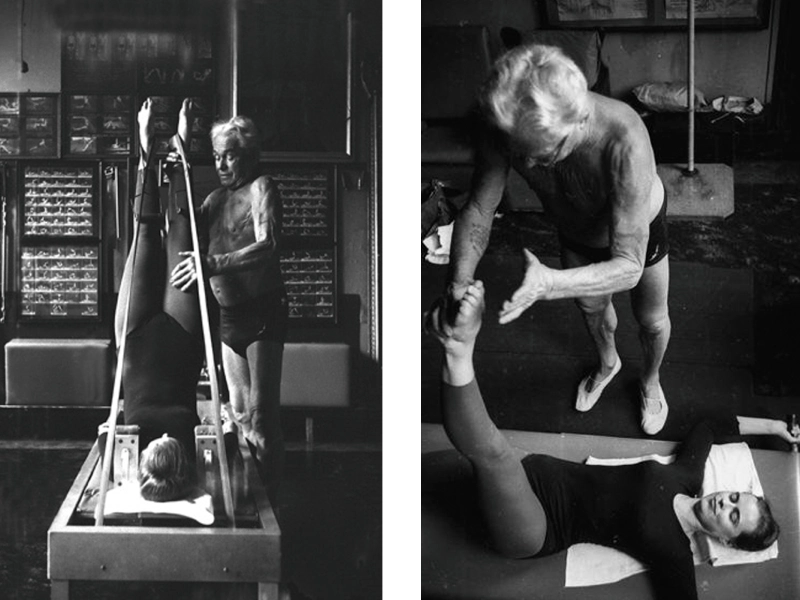
Pilates method and exercise equipment quickly became popular in America.
By the 1970s, Pilates grew in popularity in Hollywood. Ron Fletcher who had trained with Joseph Pilates since the 1940s-opened a studio in Beverly Hills, attracting many Hollywood celebrities. Pilates surged in popularity throughout the late 1980s, receiving widespread media coverage and rapidly expanding its user base. Studios flourished, and Pilates became a trusted training method for athletes in the NBA, NHL, NFL, and the Olympics.
Today, over 11 million Americans practice Pilates, and the number continues to rise.
The Invention of Pilates Equipment
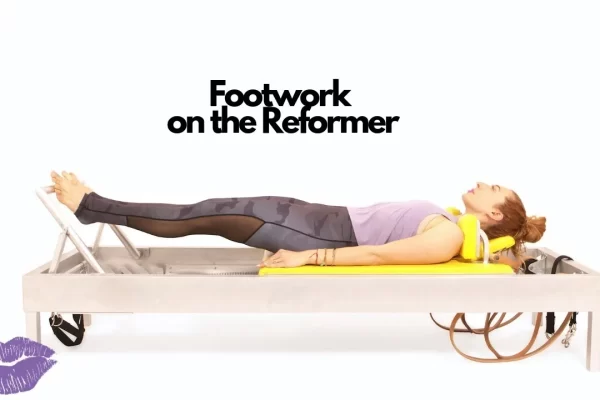
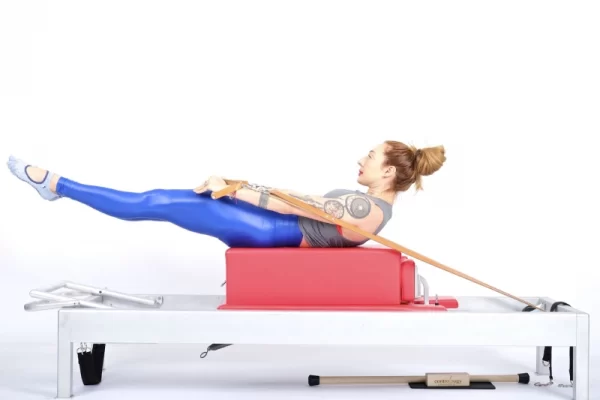
Throughout his career, Joseph Pilates designed over 600 exercises not only for matwork but also for specialized equipment such as the Cadillac, Reformer, Wunda Chair, and Spine Corrector. Guided by his philosophy of Contrology, he believed full body, integrated movement was key to optimal health.
All Pilates equipment uses spring based resistance and pulley systems to create progressively challenging movements. These designs allow practitioners to work their limbs while activating stabilizing muscles especially the body’s center, known in Pilates as the “Powerhouse” to maintain precise alignment and posture.
What truly distinguished Pilates from other training forms is that Joseph Pilates saw Contrology not merely as physical exercise but as a lifestyle a pathway to balanced strength, flexibility, and mental clarity.
Joseph Pilates’ Legacy in Today’s Pilates Practice
Joseph Pilates’ vision of whole body health is preserved in his publications, including two influential books:
- Your Health (1932)
- Return to Life Through Contrology (1945)
These works, combined with the instruction of his students, helped preserve and grow the Pilates method long after his passing in 1967 at age 83.
Clara Zeuner: The Devoted Partner Behind the Method
If Joseph Pilates is considered the “father” of Pilates, then Clara Zeuner is undoubtedly its “mother.” She played a vital role in spreading the method, teaching countless students at their New York studio. One student recalled Clara as the “steady force” who nurtured passion, inspired motivation, and supported Joseph wholeheartedly. Together, they built and refined a method that continues to benefit people worldwide.
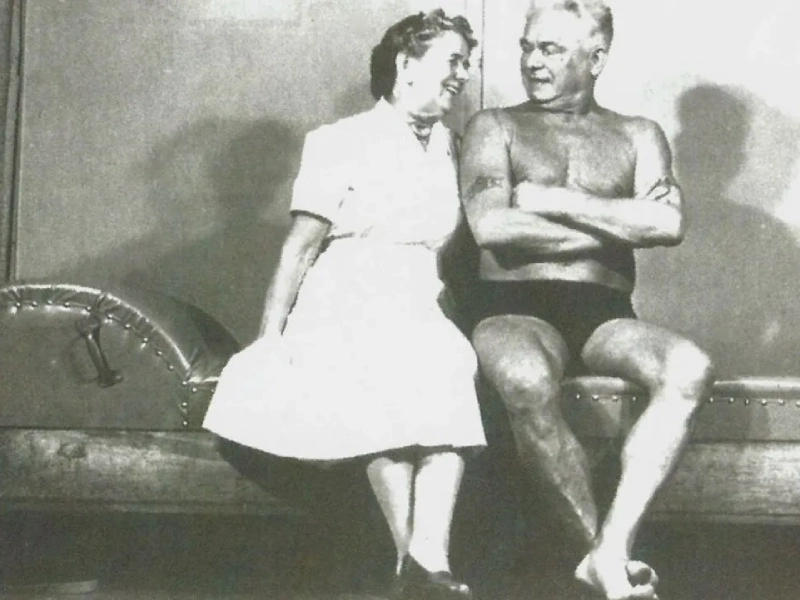
Clara is the “mother” who nurtures and develops Pilates.
Although no records confirm that Joseph and Clara ever married in the United States, she remained his lifelong partner until his death.
Today, Pilates has become a globally recognized fitness method embraced by people seeking strength, flexibility, and a sculpted, balanced physique.
The history and development of Pilates is an inspiring story of creativity, resilience, and passion. From Joseph Pilates’ early experimentation to today’s worldwide popularity, Pilates has become an essential part of many people’s wellness journeys. By looking back at its origins and core values, we deepen our appreciation for this method and feel motivated to preserve and advance it for future generations.