

The Differences Between Pilates Reformer and Pilates Tower
15/12/2025Reformer and Tower are two of the most popular Pilates apparatuses, each with distinct features and applications. This article analyzes the differences between Pilates Reformer and Pilates Tower, helping you gain a comprehensive understanding to choose the most suitable training method.
Overview of Pilates Reformer and Pilates Tower
1. Pilates Reformer
1.1. Structure and Design
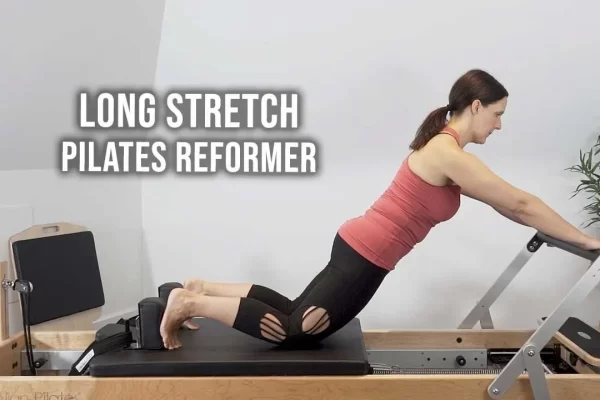
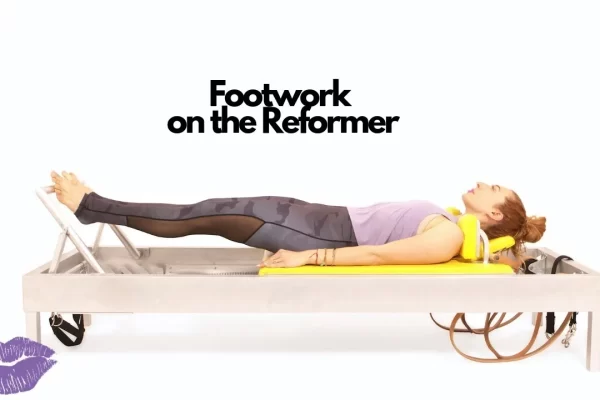
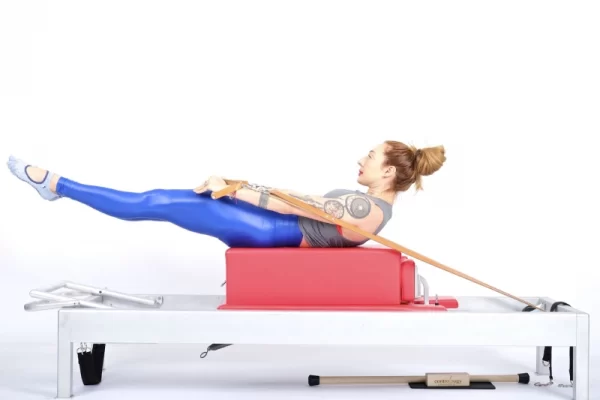
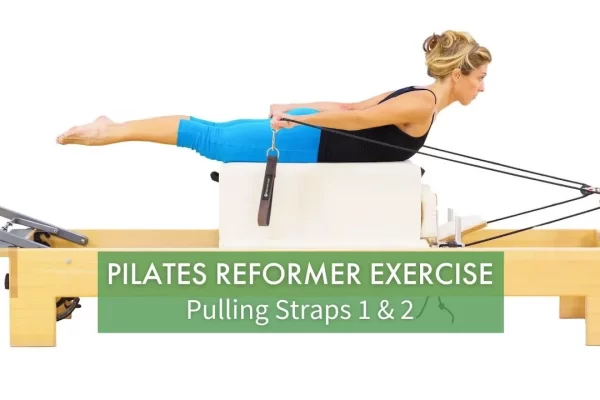
The Pilates Reformer is one of the core machines in the Pilates system, designed to support stretching, strength building, and overall body balance. Its structure consists of a long frame with a movable carriage mounted on rollers, allowing the carriage to glide smoothly along the frame. The machine is equipped with adjustable springs to provide resistance, hand and foot straps, a footbar, and sometimes shoulder rests.
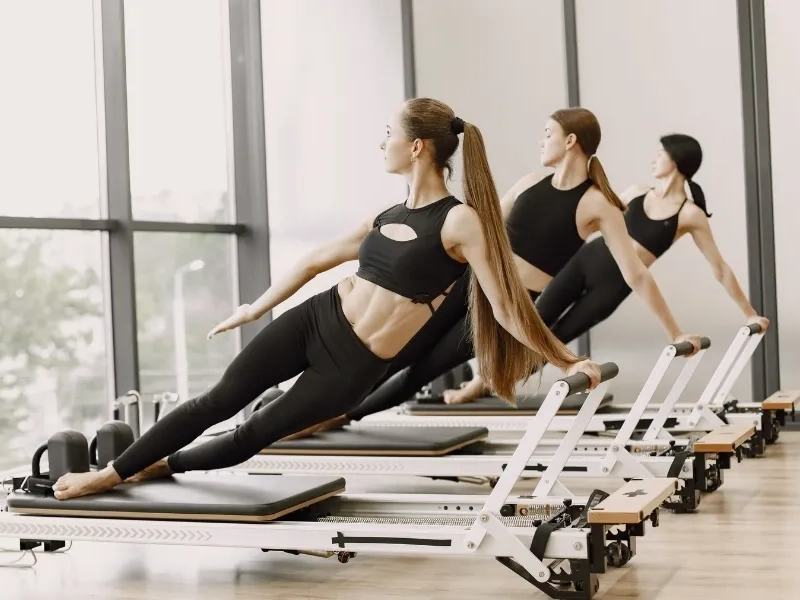
The Pilates Reformer is one of the main pieces of equipment in the Pilates program.
The moving carriage operates through the user’s pushing or pulling force combined with spring resistance, enhancing muscular strength and flexibility. This versatile design allows a wide range of exercises to be performed in various positions, such as lying down, sitting, or standing.
1.2. Functions and Benefits
The Pilates Reformer offers numerous benefits, from improving muscular strength to enhancing flexibility and balance. One of its most notable advantages is adjustable workout intensity. Users can modify spring tension to increase or decrease resistance, making it suitable for different fitness levels and training goals.
Thanks to the movable carriage and adjustable resistance, the Reformer enables effective stretching without placing excessive pressure on the joints. This is particularly beneficial for individuals recovering from injuries or dealing with joint related issues. Additionally, the Reformer helps improve posture, strengthen the core, and develop overall body coordination.
2. Pilates Tower
2.1. Structure and Design
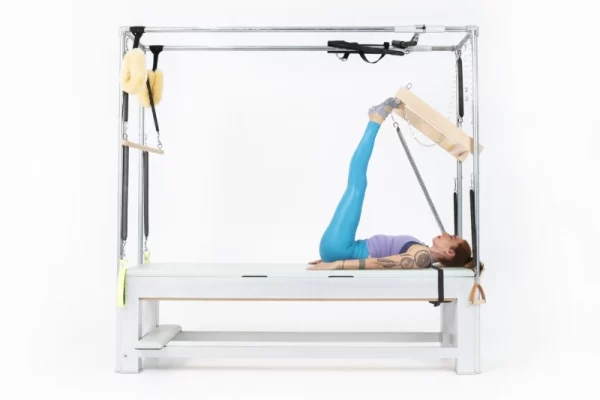
Pilates Tower is a specialized apparatus designed to support posture improvement, core strength, and flexibility. Its structure features a vertical frame, typically wall mounted or combined with a Mat bed. The frame includes bars, straps, and springs arranged to assist users in pulling, pushing, and stretching movements.
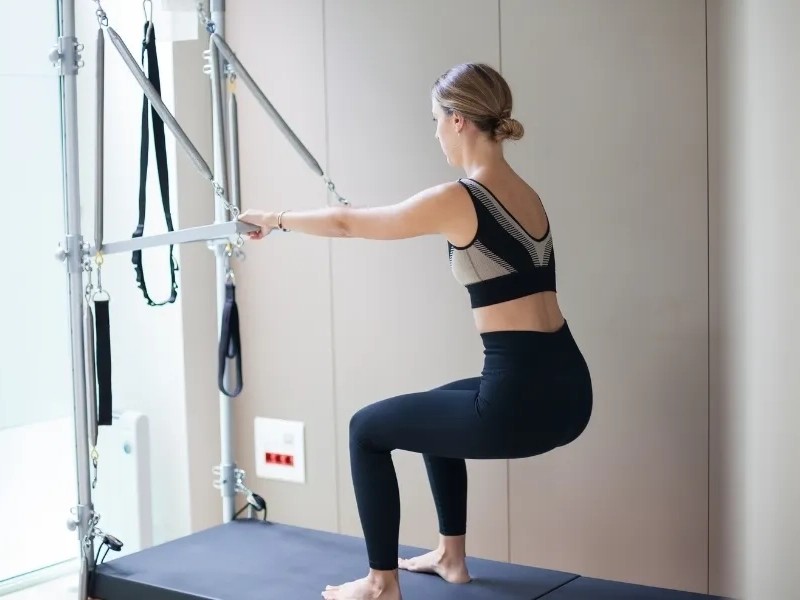
Pilates Tower.
The push through bar and straps on the Tower are height and tension adjustable, allowing workouts to be customized based on individual needs and fitness levels. This design makes the Tower an ideal tool for focusing on body stability and controlled movement, especially in low intensity exercises.
2.2. Functions and Benefits
Pilates Tower provides significant benefits, particularly for those aiming to improve flexibility, core strength, and posture. One key advantage is its ability to support correct alignment throughout each movement, which is essential for injury prevention and exercise effectiveness. The Tower is especially effective for targeting smaller muscle groups and enhancing body control. By using light spring resistance, practitioners can perform strengthening and stretching exercises without high intensity. This makes the Tower an excellent option for beginners, older adults, or individuals undergoing rehabilitation.
In addition, Pilates Tower helps increase overall flexibility. Exercises on the Tower often involve controlled, elongated movements that expand joint range of motion and improve muscular elasticity.
Differences Between Pilates Reformer and Pilates Tower
Both Pilates Reformer and Pilates Tower play important roles in Pilates training, but they differ in design, usage, target users, cost, and space requirements. Below are the main distinctions between these two Pilates machines:
Design and Structure
Pilates Reformer and Pilates Tower differ significantly in design. The Pilates Reformer features a moving carriage mounted on a frame, along with straps, springs, and a footbar, enabling a wide variety of stretching and strengthening exercises. Users can lie, sit, or stand on the carriage while using spring resistance for movement.
In contrast, the Pilates Tower is a vertical structure mounted on a wall or integrated with a Mat bed. It consists of bars, straps, and springs used for pushing, pulling, and stretching movements. The Tower is primarily designed to support proper posture and enhance body stability.
Usage and Exercises
The biggest difference lies in how each apparatus is used and the types of exercises they support. Pilates Reformer allows for a wide range of exercises with adjustable intensity through spring resistance. Movements such as Footwork, Leg Circles, and Short Spine focus on full body strengthening and stretching, particularly targeting larger muscle groups.
Pilates Tower, on the other hand, is better suited for posture focused and stability based exercises. Movements such as Arm Springs, Roll Back, and Leg Springs mainly target smaller muscle groups and core control, helping improve alignment and flexibility. Tower workouts are generally lower in intensity but require high concentration.
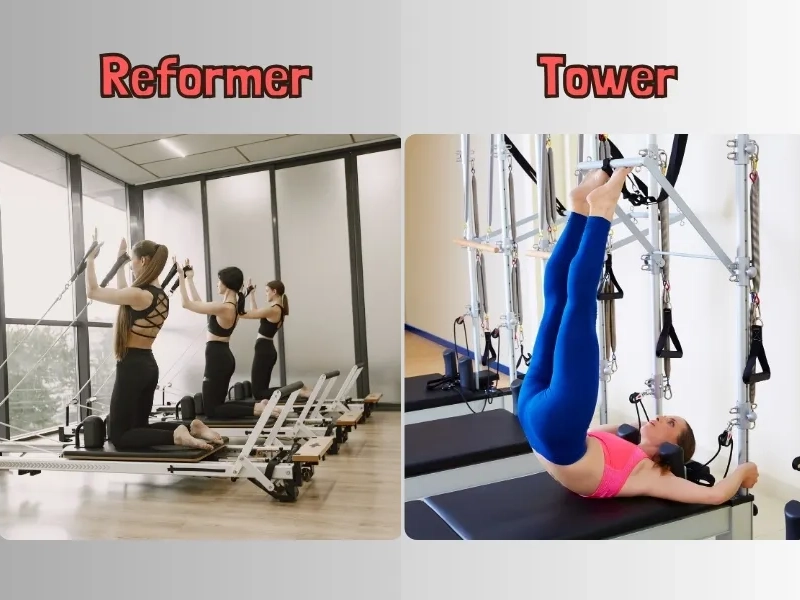
Comparison between Pilates Reformer and Pilates Tower.
Suitable Users
Pilates Reformer and Pilates Tower also differ in terms of ideal users. Pilates Reformer is suitable for those seeking a full body workout with easily adjustable intensity. Beginners and individuals recovering from injuries can take advantage of the Reformer’s flexibility to gradually build strength and mobility.
Conversely, Pilates Tower is more suitable for individuals with Pilates experience who want to focus on posture, stability, and body control. The Tower is an ideal choice for refining movement quality and strengthening the core without high training intensity.
Cost and Space Requirements
In terms of cost and space, Pilates Reformer typically requires a higher investment and more installation space. As a result, it is commonly found in professional studios or in well equipped home gyms.
Pilates Tower is more affordable and space efficient due to its compact design and wall mounted or Mat integrated installation. This makes it a practical choice for those who want quality Pilates equipment without occupying too much space.
Comparison Table: Pilates Reformer and Pilates Tower
To help you visualize the similarities and differences more clearly, below is a summary comparison table between Pilates Reformer and Pilates Tower.
| Criteria | Pilates Reformer | Pilates Tower |
| Training Goal | Strength building, flexibility, functional rehabilitation | Improve body control, stretching, increase flexibility |
| Main Structure | Sliding carriage, straps, springs, footbar | Fixed frame with springs, push through bar, elastic straps |
| Supported Exercise Types | Pulling, pushing, sliding movements – movement-oriented | Static movements, stretching, and controlled exercises |
| Range of Motion | Wide, many flexible positions (lying, sitting, standing, side-lying, etc.) | More limited due to fixed frame |
| Training Intensity | High, continuous movement with greater resistance | Lower intensity, focus on control and stretching |
| Suitable Users | All fitness levels, rehabilitation after injury | Beginners, older adults, people needing gentle exercise |
| Equipment Size | Large, requires more space | More compact, can be wall mounted or combined with a mat |
| Investment Cost | Higher | More cost effective |
| Training Versatility | High, allows hundreds of different exercises | More limited, focused on stretching and body stability |
| Application in Rehabilitation | Highly suitable, easy resistance adjustment, strong rehab support | Can be used, but not as specialized as the Reformer |
When you clearly understand the differences between Pilates Reformer and Pilates Tower, you will feel more confident in choosing the equipment that best suits your personal needs. Whether training in a professional studio or at home, selecting the right tool will help you maximize workout effectiveness and achieve your desired results. Don’t hesitate to explore both options to find the most suitable approach for yourself.