

The Difference Between Mat Pilates and Reformer Pilates
16/12/2025Mat Pilates and Reformer Pilates are two popular forms of Pilates training. Each has its own distinct characteristics and offers unique benefits. The article below will help you better understand the differences between Mat Pilates vs Reformer Pilates, so you can choose the method that best fits your needs.
Overview of Mat Pilates
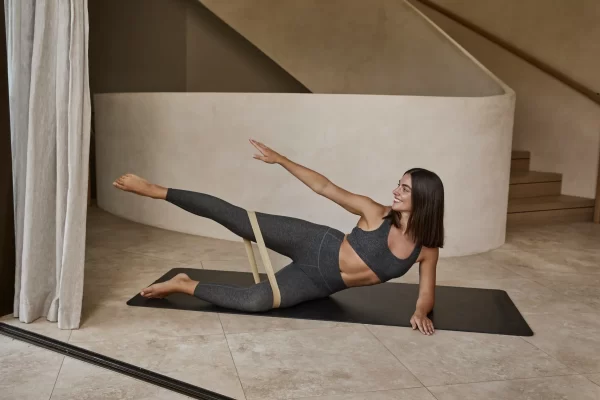
Mat Pilates is considered the true foundation of Pilates. Developed by Joseph Pilates, Mat Pilates exercises rely on body weight to create resistance, build strength, and improve endurance. Besides a mat, no equipment is required making Mat Pilates the most accessible form of Pilates.
Mat Pilates is easy to adapt for all ages and fitness levels. From beginners to advanced practitioners, Mat Pilates is a challenging, dynamic practice that delivers serious results.
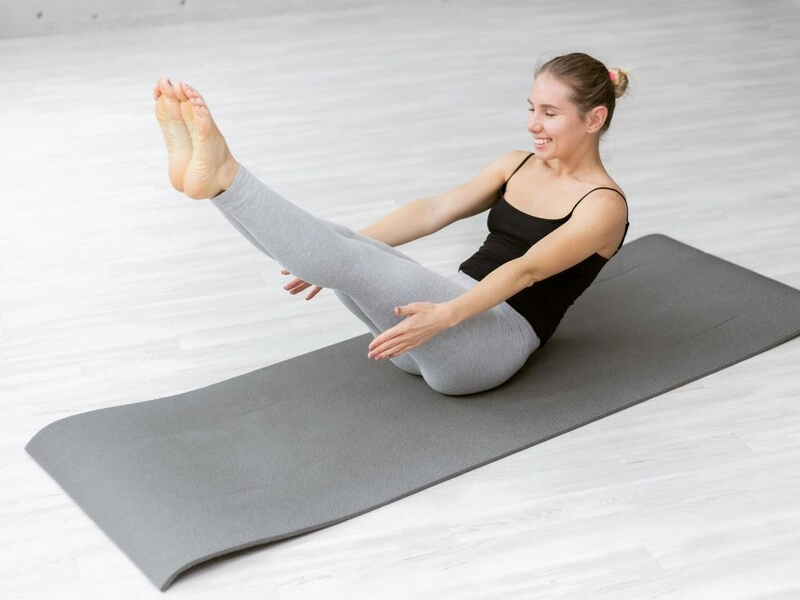
Mat Pilates exercises.
Benefits of Mat Pilates include:
- Suitable for everyone from beginners to advanced practitioners thanks to the wide range of modifications and variations available.
- The way core muscles are activated in Mat Pilates is very distinctive and can be difficult to replicate, even when training on a Reformer.
- No specialized equipment needed you only need a mat to get started.
- Muscle groups work continuously at full capacity while moving through multiple planes of motion, improving overall effectiveness.
- Improves strength, mobility, flexibility, posture, and overall coordination.
- Ideal for learning Pilates fundamentals, understanding exercise names, getting familiar with technical terminology, and practicing proper breathing techniques.
Overview of Reformer Pilates
Reformer Pilates uses a machine called a Reformer to add resistance and variety to traditional Pilates exercises. Although Reformer Pilates is low impact, it provides an extremely challenging full body workout from head to toe.
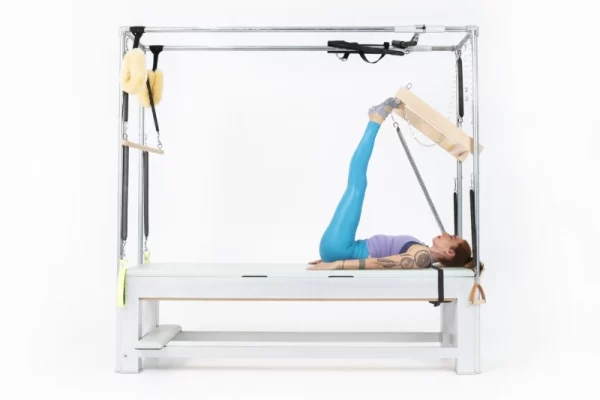
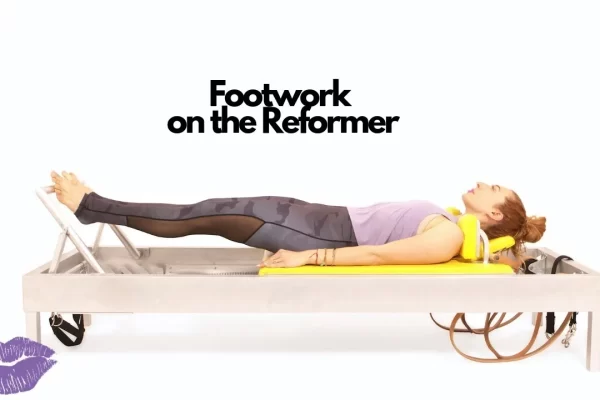
The Reformer includes a moving flat platform called a “carriage.” The carriage sits on a wooden or metal frame and connects to a system of springs, pulleys, and straps. Each component can be adjusted to provide more or less resistance and to fit different heights. The machine can be fully customized to meet each individual’s needs.
When using a Reformer, be prepared to work in many different positions, including standing, lying on your back, sitting on the footbar, lying face down, sitting upright, or lying on your side. If you get bored easily with workouts, we strongly recommend Reformer Pilates!
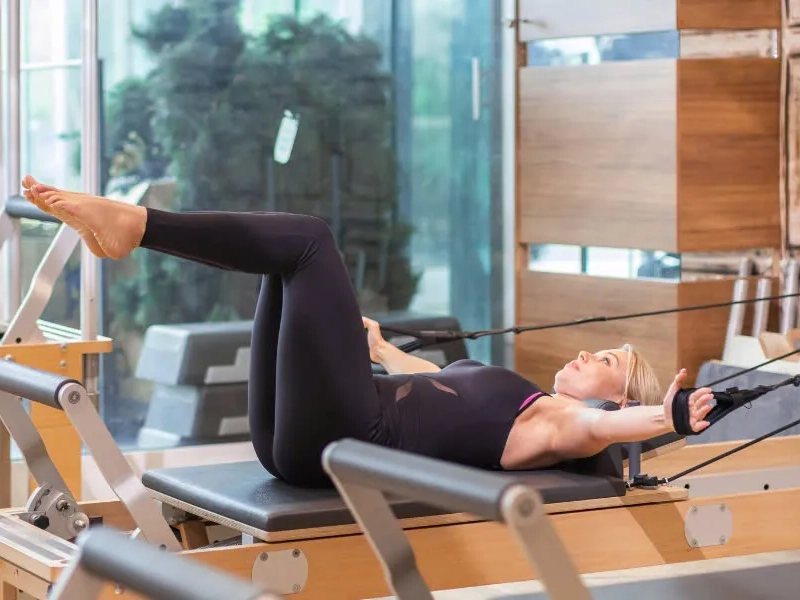
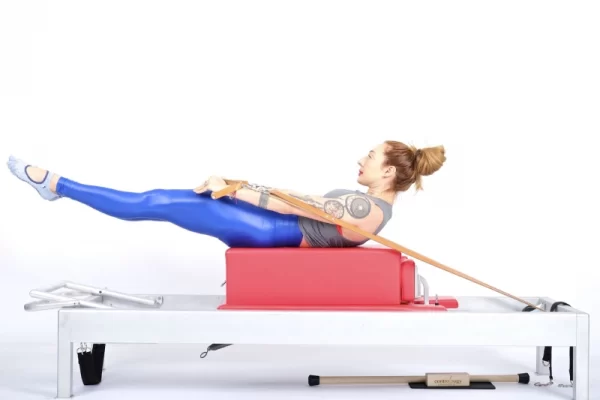
Exercises with Reformer Pilates.
Benefits of Reformer Pilates include:
- Rehabilitation support: Exercises can be performed in a horizontal position, reducing pressure on joints and the spine instead of bearing full body weight while standing.
- Balanced muscle development: Helps muscle groups work evenly without overloading a single area.
- Toned, lean muscles: Spring resistance is highly effective for building a firm body with long, lean lines.
- Trains both body and mind: Reformer Pilates requires intense focus from breathing to controlling every movement improving the mind body connection.
- Supports proper technique: The machine acts as a support system, helping you maintain correct alignment and avoid errors.
- Easy to increase difficulty: You can easily add springs to increase intensity, making it suitable for those wanting a bigger challenge.
- More exercise variety: Offers a wider range of movements than mat based Pilates, helping you avoid long term workout boredom.
What Do Mat Pilates and Reformer Pilates Have in Common?
Both Reformer Pilates and Mat Pilates focus on building strength, improving flexibility, and promoting balance. In addition, exercises such as Leg Circle and Hundred can be performed in both styles, and both forms tend to follow a structured sequence.
Mat Pilates and Reformer Pilates are also highly adaptable, making them suitable for all ages and fitness levels.
What Is the Difference Between Reformer Pilates and Mat Pilates?
The main difference between Mat Pilates and Reformer Pilates is how resistance is created: body weight versus springs and straps.
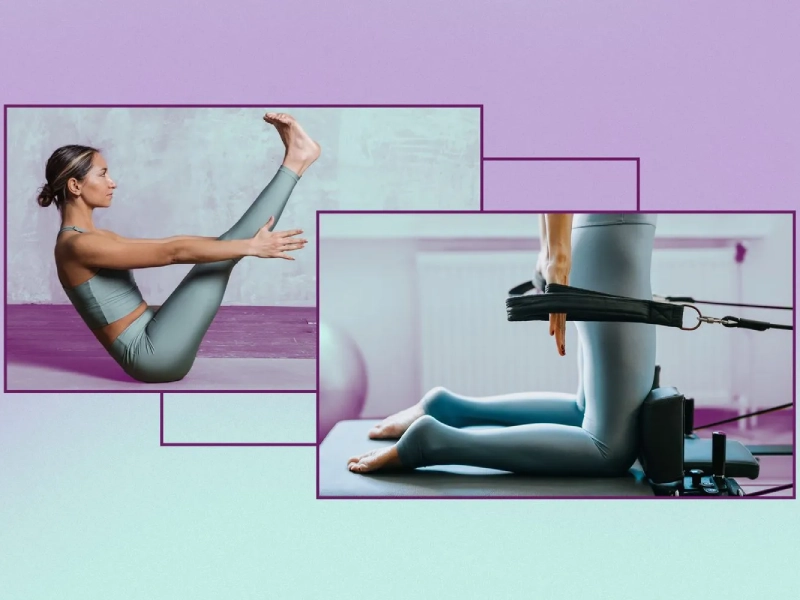
The difference between Reformer and Mat Pilates.
Mat Pilates is performed on the floor, using body weight through exercises that target core stability and endurance. Reformer Pilates uses the Reformer an apparatus with springs, straps, and a sliding carriage to create a controlled resistance environment. Mat Pilates requires no equipment beyond a mat, while Reformer Pilates involves machine based training.
Another difference is that Mat Pilates consists of ground based movements, while Reformer Pilates uses exercises performed on an elevated surface.
Because Mat Pilates involves only you and the mat, it doesn’t have the “intimidation factor” some people feel with the Reformer. Without springs, straps, and a footbar, some individuals feel more comfortable starting with Mat Pilates.
However, there’s no need to fear Reformer Pilates. The elevated surface can benefit beginners. Feeling the straps or holding the handles can help build a stronger mind body connection as you progress. The machine’s support can also help you feel more secure and maintain correct alignment.
Is Reformer Pilates Harder Than Mat Pilates?
One of the biggest misconceptions is that Mat Pilates is easier than Reformer Pilates. That’s not true. Both can be modified to challenge even experienced practitioners.
Reformer Pilates uses a spring based resistance system, allowing you to adjust intensity to suit many levels from beginner to advanced. Reformer exercises often provide additional movement support, but they can also become significantly more challenging than bodyweight only training, especially when increasing resistance.
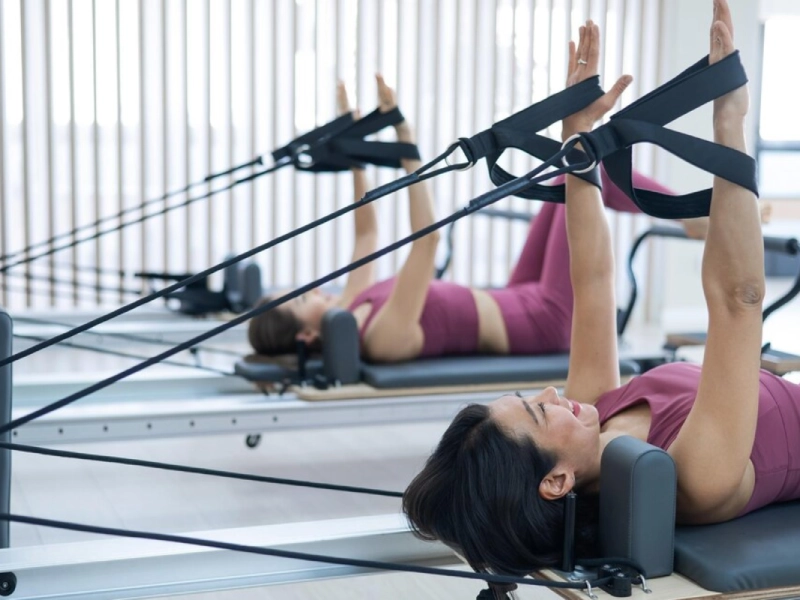
Reformer is suitable for those who are new to Pilates.
In contrast, Mat Pilates has no supportive equipment. You must rely entirely on body weight, requiring strong muscular control, balance, and core strength. For beginners, Mat Pilates can be a real challenge because holding alignment and controlling slow, precise movements is not easy.
Which Pilates Style Should You Choose: Mat Pilates or Reformer Pilates?
Both Mat Pilates and Reformer Pilates are excellent for improving strength, coordination, balance, flexibility, and mobility. Choosing between them depends on your goals and personal preferences, such as:
If you’re new to Pilates, you should start with Reformer Pilates. While Mat Pilates teaches the main Pilates techniques, movements, and terminology, the Reformer does too. After just a few sessions, you can build a strong foundation, understand terms like spinal articulation and the C-curve, and grasp the fundamental Pilates principles.
If you value convenience and prefer the simplicity of bodyweight training with minimal equipment, Mat Pilates may be the better choice. With a mat, you can practice almost anywhere with minimal setup time.
If you’re recovering from an injury, need posture modifications, are pregnant or postpartum, Reformer Pilates is an excellent place to start. Because the Reformer is elevated, it’s easier to get on and off than standing up from the floor. It also offers many adjustments and makes it easier to change positions or resistance levels.
If you’re an older adult, Reformer Pilates can support bone and joint health thanks to the machine’s gentle, adaptable resistance.
Mat Pilates and Reformer Pilates are both outstanding training methods, offering a balance of strength, flexibility, and mental focus. While they differ in approach and equipment, both share the same goal: improving health and enhancing body shape. Consider the benefits and challenges of each option carefully to choose the method that suits you best.