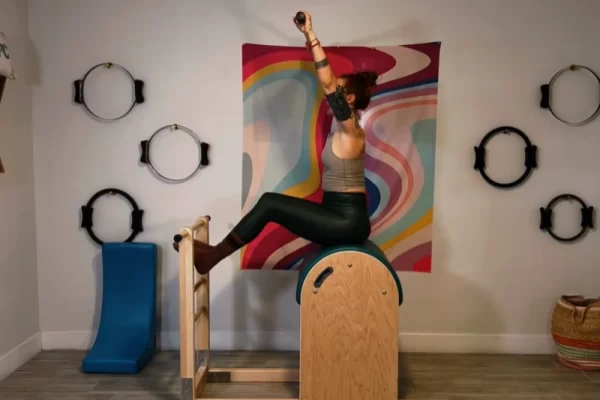


Pilates Up/Down Exercise: How to Perform Correctly and Choose the Right Equipment
03/02/2026If you’re looking for an exercise that helps stretch the spine, improve your posture, and strengthen your core muscles, the Pilates Up/Down exercise will surely surprise you. Not only is it suitable for beginners, but this exercise is also ideal for those with more experience when practiced on equipment like the Ladder Barrel and Spine Corrector. Let’s explore the proper way to perform it and how to choose the right equipment for your needs in the article below.
Introduction to Pilates Up/Down Exercise
The Pilates Up/Down exercise is a traditional Pilates movement that focuses on the up and down motion of the upper or lower body, depending on the equipment used and your fitness goals. This exercise helps activate the core muscles, improve movement control, and stretch areas prone to tension such as the hips, lower back, and neck.
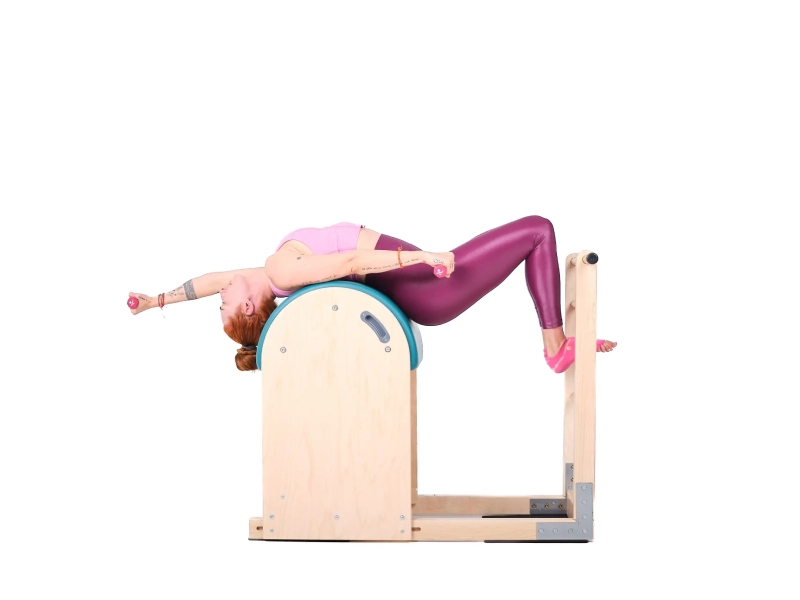
Pilates Up/Down exercises are performed on the Ladder Barrel.
Additionally, Pilates Up/Down can be practiced using equipment like the Ladder Barrel and Spine Corrector. When practiced with these tools, the exercise delivers greater results by supporting correct posture, enhancing stability, and improving movement control.
Both the Ladder Barrel and Spine Corrector are designed to fit the body structure, helping target muscle groups effectively while minimizing injury risk. As a result, whether you’re a beginner or more experienced, these tools make the Pilates Up/Down exercise accessible and beneficial.
Why Should You Practice Pilates Up/Down?
The Pilates Up/Down exercise is not just a basic movement in the Pilates method but also a valuable health tool for practitioners.
First, this exercise helps alleviate back pain and improve spinal health by stretching and strengthening the muscles surrounding the lower back, an area that frequently bears daily pressure. The smooth up and down motion also strengthens the core muscles, helps align posture, and supports natural balance improvement.
Moreover, the exercise promotes joint flexibility and muscle mobility, particularly in the hips and spine. For those recovering from injuries, Pilates Up/Down offers a gentle yet effective way to enhance mobility without applying excessive pressure.
Finally, like many Pilates exercises, Pilates Up/Down also provides significant mental benefits, such as reducing stress, increasing focus, and inducing deep relaxation. This is why it has become a favorite exercise for both beginners and those pursuing long term healthy living.
How to Perform Pilates Up/Down on the Spine Corrector
Performing Pilates Up/Down on the Spine Corrector requires focus and precision to achieve the best results. Here is a step by step guide to help you perform the exercise correctly and fully benefit from it:
Preparation:
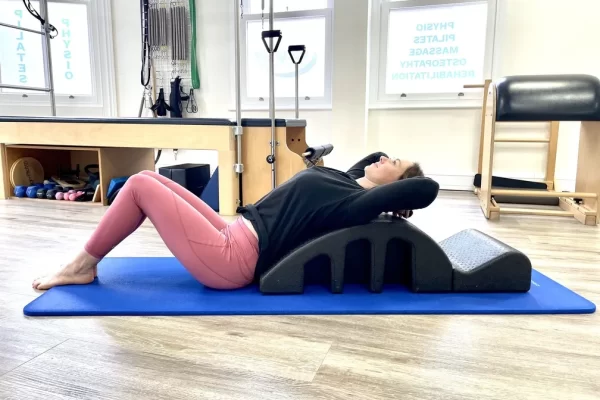
- Sit on the lower part of the Spine Corrector, ensuring that your sacrum is positioned at the base of the tool.
- Align your back with the curve of the Spine Corrector. Your spine will be fully supported, with your shoulders and head resting comfortably on the surface of the tool.
- Extend both legs forward, keeping them together and parallel. You can place your arms by your sides or gently touch the edges of the Spine Corrector to maintain balance.
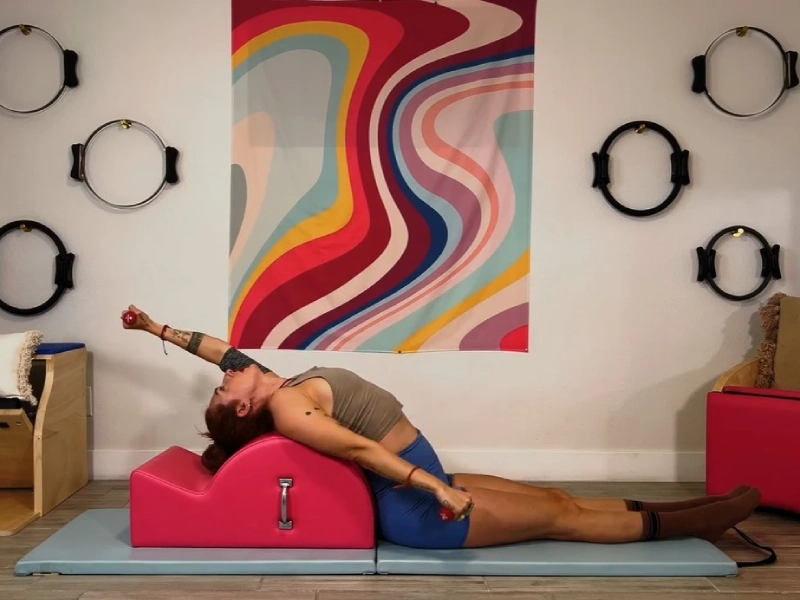
Perform Pilates Up/Down on the Spine Corrector.
Execution Steps:
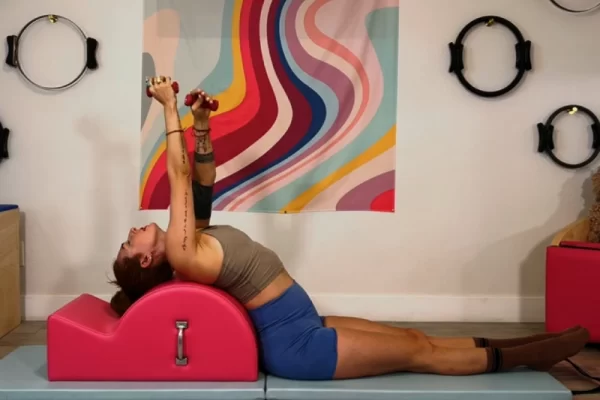
- Curve your back and melt into the shape of the barrel, reaching your hands towards the ceiling.
- Lower one arm while simultaneously lifting the other.
- Switch arms and repeat, lowering one arm while raising the other.
- Perform the exercise 10-12 times on each side.
How to Perform Pilates Up/Down on the Ladder Barrel
Step 1: Preparation and Positioning
- Place your feet on one of the rungs of the Ladder Barrel, typically the lowest rung for stability.
- Position your hips on the curved surface of the Ladder Barrel, gently arching your back over the barrel.
- Align your shoulders with the top of the barrel, keep your neck straight, and relax your head on the opposite side of the barrel.
Step 2: Preparing the Arms
- Extend both arms upwards towards the ceiling, keeping your collarbones wide.
- If using light weights (around 0.5-1kg), hold a dumbbell in each hand.
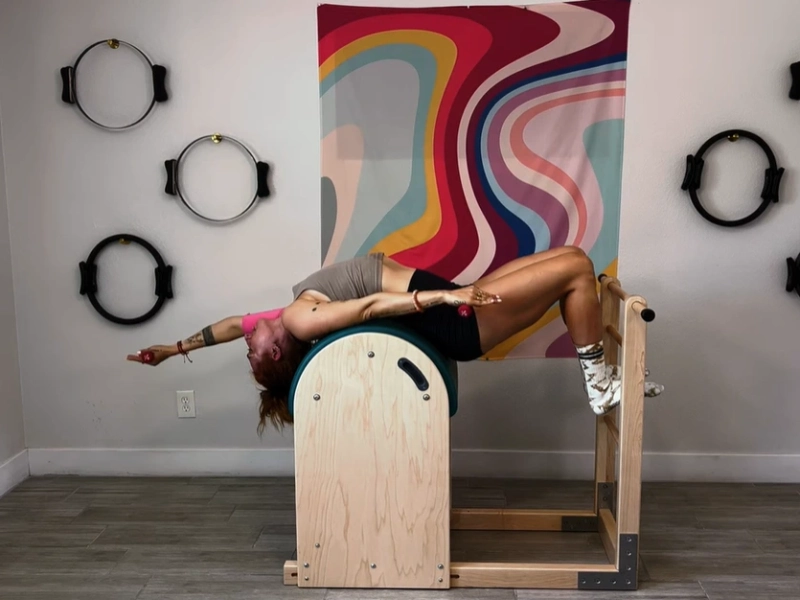
Perform Pilates Up/Down on the Ladder Barrel.
Step 3: Arm Movement
- Extend one arm over your head, while lowering the other arm towards your hip.
- Focus on moving from your back muscles (rather than just your arms) to maintain correct technique.
Step 4: Switching Arms
- Alternate arm movements: Lower the arm over your head to the hip and vice versa.
- As you perform the motion, feel the chest expansion on the lower arm and the smooth motion similar to swimming or reaching (Swimming/Swan) with the arm above.
Step 5: Repeat the Motion
Continue alternating arms for 8-10 repetitions, maintaining steady breathing and a stable back and hip.
Comparing Pilates Up/Down on the Ladder Barrel vs Spine Corrector
Differences Between Pilates Up/Down on the Two Tools
The Pilates Up/Down exercise can be effectively performed on both the Ladder Barrel and Spine Corrector, two standard tools in traditional Pilates. Each piece of equipment offers a unique experience suited to different fitness goals and physical conditions. Below are the key differences between practicing the exercise on each tool:
| Ladder Barrel | Spine Corrector |
| Large curved barrel combined with ladder rungs, supports deeper stretches, especially for the hips and lower back. | Compact design focused on naturally supporting the spine’s natural curve. |
| Increased challenge due to the height and curve of the barrel, helps improve strength and balance steadily. | Helps focus on stretching the upper back, shoulders, and hips without putting excessive pressure on the body. |
| Suitable for those with basic Pilates experience looking to advance to a higher challenge level | Easier to use, especially suitable for beginners or those in a rehabilitation phase. |
Which to Choose: Pilates Up/Down on the Spine Corrector or Ladder Barrel?
Regardless of the equipment used, the goal of Pilates Up/Down remains the same: to strengthen the core muscles, stretch the spine, increase flexibility in the hips, back, and legs, and improve posture. Both exercises incorporate deep breathing techniques in Pilates to enhance focus and reduce stress. However, deciding which tool to use depends on your specific goals and experience level.
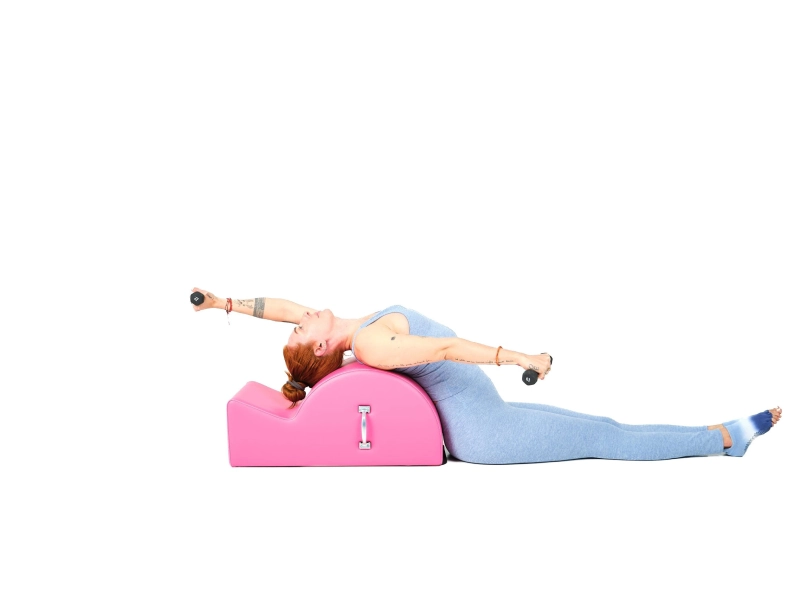
Whether you should practice Pilates Up/Down on a Spine Corrector or Ladder Barrel will depend on your personal goals and skill level.
Choose Pilates Up/Down on the Spine Corrector if:
- You are a beginner or recovering from an injury.
- You want to focus on posture correction and gentle back support.
- You need a portable, lightweight device that’s convenient for home use.
Choose Pilates Up/Down on the Ladder Barrel if:
- You are already familiar with basic Pilates exercises and want to increase the challenge.
- You aim to enhance flexibility further, improve balance, and gain better body control.
- You seek to refine your Pilates technique and take your practice to the next level.
Ultimately, the most important aspect is performing the exercise with the correct technique, aligned with your personal goals and physical condition. If you are new to this exercise, consult a Pilates instructor to optimize your practice for maximum benefit and safety.
The Pilates Up/Down exercise is an excellent choice for improving spinal health, strengthening the core, and enhancing mental well being. When performed correctly with the appropriate equipment, the exercise becomes more effective and easier to master. Consistent practice will bring positive changes to your body, enhancing flexibility, strength, and overall health.