

Pilates Thigh Stretch Exercise on the Reformer
13/01/2026The Pilates Thigh Stretch exercise on the Reformer is a simple yet powerful movement that addresses common issues such as muscle tightness and poor posture. Let’s explore how to perform the Pilates Thigh Stretch on the Reformer correctly and the outstanding benefits it can bring to your body.
Introduction to the Pilates Thigh Stretch Exercise on the Reformer
The Thigh Stretch exercise on the Reformer is an essential Pilates movement that focuses on stretching the thigh muscles and improving overall flexibility. This exercise not only lengthens muscles but also enhances balance and body control. In Pilates, flexibility and control are two core principles that help improve posture, reduce muscular tension, and support daily activities.
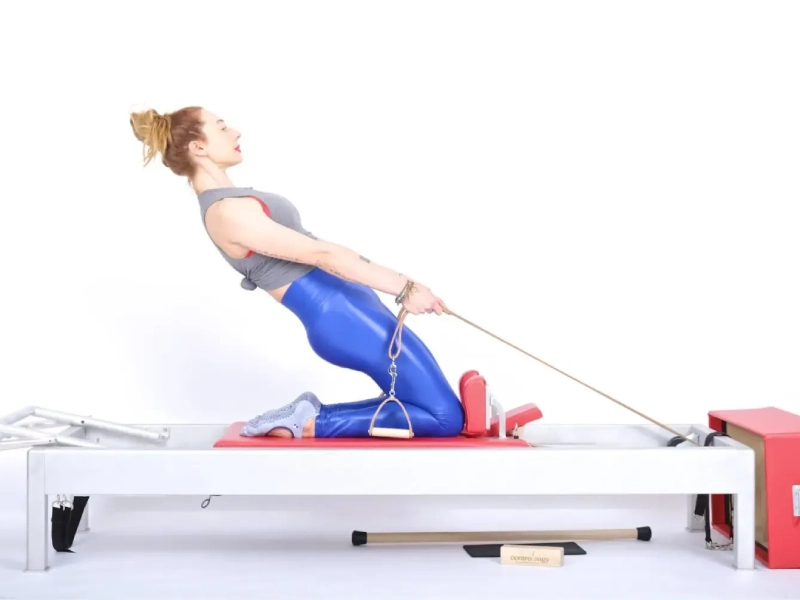
The Thigh Stretch exercise when performed on the Reformer machine.
The Thigh Stretch is particularly beneficial for individuals who frequently experience tightness in the thighs or muscular imbalances caused by prolonged sitting or habitual movement patterns. This exercise helps stretch key thigh muscle groups, reduces the risk of injury, and enhances overall movement performance.
Benefits of the Pilates Thigh Stretch Exercise on the Reformer
The Pilates Thigh Stretch on the Reformer offers significant benefits for the body, not only for Pilates practitioners but also for anyone seeking to improve health and flexibility. Below are the most notable benefits:
1. Enhanced flexibility
Thigh Stretch lengthens the thigh muscles, improves hip joint mobility, and reduces tension in the lower back. This is especially important for individuals who sit for long periods or engage in regular physical activity.
2. Improved posture and balance
When performed correctly, Thigh Stretch supports better posture by lengthening muscles and reducing pressure on the spine. This helps prevent back issues and promotes greater overall body balance.
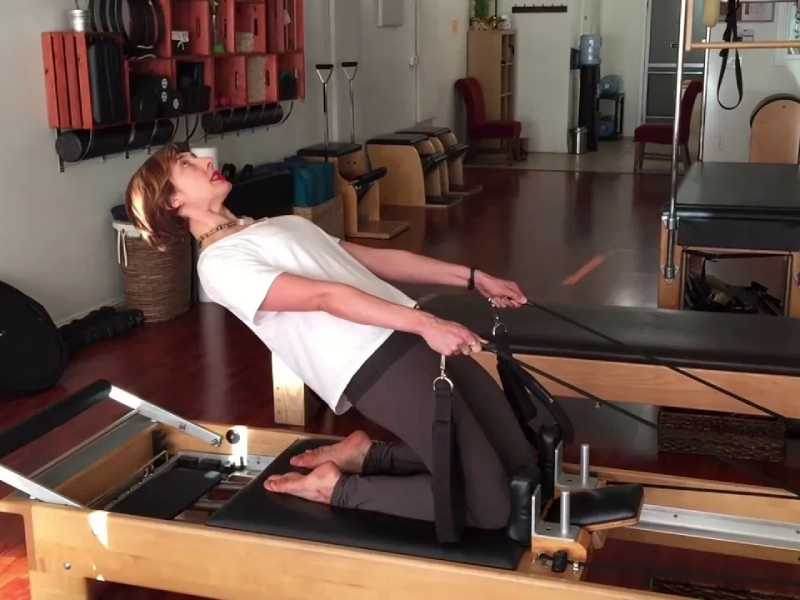
The Pilates Thigh Stretch exercise on a Reformer offers numerous benefits for the body.
3. Increased muscle strength
Although primarily a stretching movement, the Pilates Thigh Stretch on the Reformer also requires engagement from the core and thigh muscles to maintain proper alignment. This contributes to full body strength and improved functional stability.
4. Supports recovery
For individuals recovering from injury, the Thigh Stretch on the Reformer is a gentle yet effective exercise that helps reduce muscle stiffness and supports the recovery process.
How to Perform the Pilates Thigh Stretch Exercise on the Reformer
Preparation before starting
Before beginning the Thigh Stretch on the Reformer, proper preparation is essential to ensure safety and optimal effectiveness.
- Check the Reformer and body alignment: Make sure the Reformer is placed on a stable, flat surface. Check all straps and adjustable components to ensure they are correctly set and secure.
- Required settings: For the Thigh Stretch exercise, adjust the spring resistance and footbar height appropriately. The spring tension should match your strength level neither too light nor too heavy to avoid injury.
Step 1: Starting position
- Kneeling position: Begin by kneeling on the Reformer with both knees hip width apart. Place your feet against the shoulder blocks at the end of the Reformer, toes pointing downward. Keep your spine upright, shoulders relaxed, and arms resting naturally by your sides.
- Hold the straps: Lightly hold the straps or front bar for balance and stability, without creating unnecessary tension.
Step 2: Thigh Stretch movement technique
- Body movement: From the kneeling position, inhale and slowly press your hips forward, feeling a stretch along the front of the thighs. Keep the spine neutral and avoid arching or collapsing the back.
- Hold the position: Once you feel a comfortable stretch in the thigh muscles, hold the position for a few seconds. Avoid pushing too far if you feel pain or discomfort.
- Breathing control: Maintain steady breathing throughout the movement inhale as you move the hips forward and exhale as you return to the starting position.
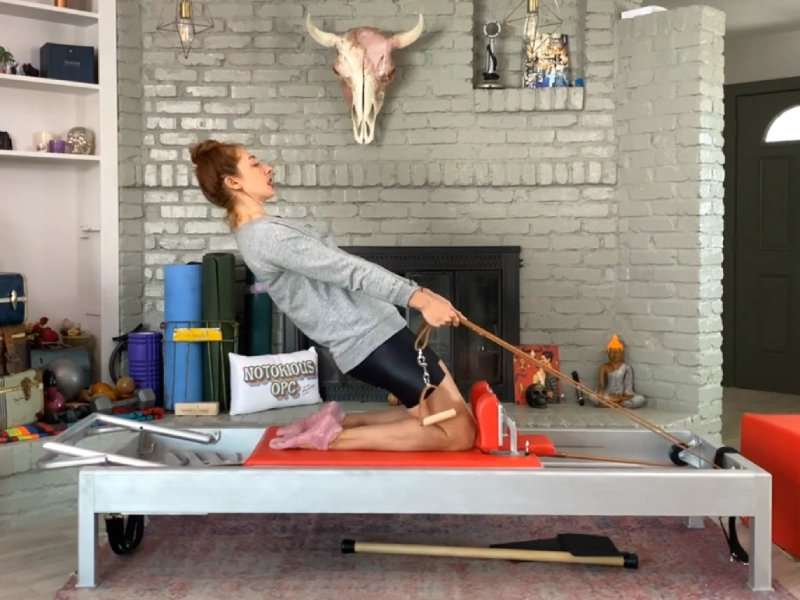
How to perform the Thigh Stretch exercise on a Reformer.
Step 3: Adjustments and optimization
- Adjust resistance: If the exercise feels too challenging or too easy, modify the spring tension to suit your strength level. Proper resistance enhances control and effectiveness.
- Engage the core: Activate the core muscles as you press the hips forward to stabilize the body and prevent excessive spinal arching. This improves exercise efficiency and protects the lower back.
Step 4: Proper completion
- Return to start: After holding the stretch for a few seconds, exhale and slowly bring the hips back to the starting position. Repeat the movement 5 to 10 times, depending on your comfort and endurance.
- Relax the body: After completing the Pilates Thigh Stretch on the Reformer, take a few moments to relax. Gentle additional stretches can help the muscles release and recover.
Common mistakes and how to correct them when practicing Thigh Stretch
Although the Thigh Stretch on the Reformer is excellent for improving thigh flexibility and strength, many people make common mistakes that reduce effectiveness and increase injury risk.
1. Common mistakes
- Rounded or misaligned spine: Allowing the back to round or lose alignment during the forward hip movement reduces effectiveness and places unnecessary stress on the spine.
- Pushing the hips too far: Overextending the hips in search of a deeper stretch can overload the thigh and hip muscles, leading to strain or injury.
- Lack of core engagement: Failing to activate the core causes instability and diminishes the overall benefits of the exercise.
- Incorrect breathing: Neglecting proper breathing disrupts focus and can lead to early fatigue.
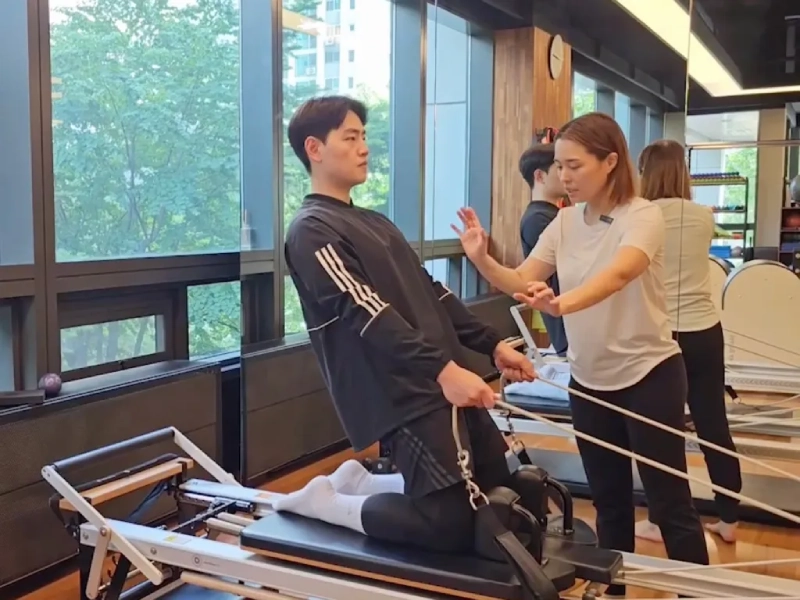
Common mistakes and how to fix them when performing the Thigh Stretch on the Reformer exercise.
2. How to correct them
- Maintain a neutral spine: Focus on keeping the spine upright, imagining a line extending from the crown of the head to the tailbone. Using a mirror or guidance from a Pilates instructor can help refine posture.
- Move within a comfortable range: Stretch only to a point that feels gentle and controlled. Gradually increase range as flexibility improves over time.
- Engage the core consistently: Activate the core muscles throughout the movement to support balance and spinal alignment. Placing a hand on the lower abdomen can help you feel engagement.
- Practice steady breathing: Inhale to prepare and exhale as you move into the stretch. Deep, even breathing supports focus and reduces tension during practice.
With detailed guidance and clear benefits, the Pilates Thigh Stretch exercise on the Reformer can effectively support your training goals. Begin incorporating this exercise into your routine to experience noticeable improvements in flexibility, posture, and overall strength. We hope this article has provided you with helpful information to perform the exercise correctly and maximize its benefits.