

Pilates Tendon Stretch on the Reformer: Benefits, Technique, and Key Safety Tips
16/01/2026Pilates Tendon Stretch on the Reformer is an excellent exercise that combines deep stretching with full-body strength, especially for the legs, core, and back. So how should you perform it correctly, and what should you pay attention to for the best results? Everything you need to know is covered in the article below-let’s explore together.
What Is Pilates Tendon Stretch on the Reformer?
Pilates Tendon Stretch on the Reformer is one of the standout advanced exercises in the Pilates system, offering a refined combination of strength, flexibility, and body control. Performed on the Reformer machine, this exercise not only develops major muscle groups but also enhances balance and overall posture.
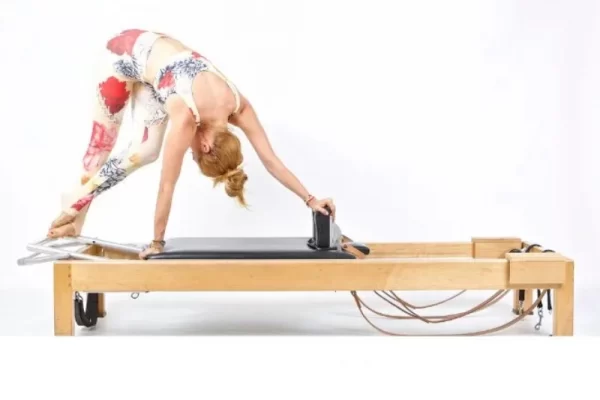
So what exactly is the Tendon Stretch on the Reformer? It is an exercise that focuses on lengthening and strengthening the Achilles tendon, calves, abdominal muscles, and lower back. The practitioner stands on the moving carriage while firmly holding the front footbar with both hands. By adjusting the springs and using precise muscular control, the body moves backward and returns to the starting position, creating an intense stretch through the tendons and muscles.
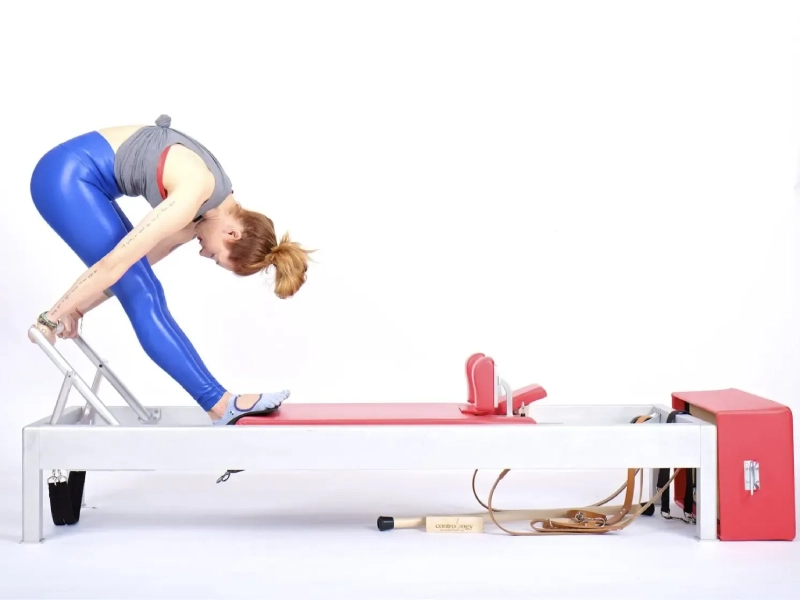
Pilates Tendon Stretch on the Reformer.
This exercise is typically classified as an advanced Pilates movement due to its technical demands and high level of body control.
Key highlights of Pilates Tendon Stretch on the Reformer include:
- Using the moving carriage and footbar to create resistance and support controlled movement.
- Requiring coordinated engagement of the arms, legs, back, and core.
- Presenting a greater challenge to balance and movement control compared to basic Pilates exercises.
Benefits of Pilates Tendon Stretch on the Reformer
Pilates Tendon Stretch on the Reformer offers a wide range of physical and mental benefits. Below are the main advantages of incorporating this exercise into your practice.
1. Builds overall muscle strength
Pilates Tendon Stretch on the Reformer is an ideal exercise for strengthening key muscle groups such as the calves, abdominal muscles, and back. Each time you draw the carriage back in, you can clearly feel the deep activation of the core and lower back.
With consistent practice, this exercise helps develop muscular strength, improve balance, and enhance overall endurance.
2. Improves flexibility and body control
Flexibility is a core element of Pilates, and the Tendon Stretch is one of the exercises that effectively enhances it. This movement lengthens muscles and tendons, especially in the legs and lower body, making the body more supple and mobile.
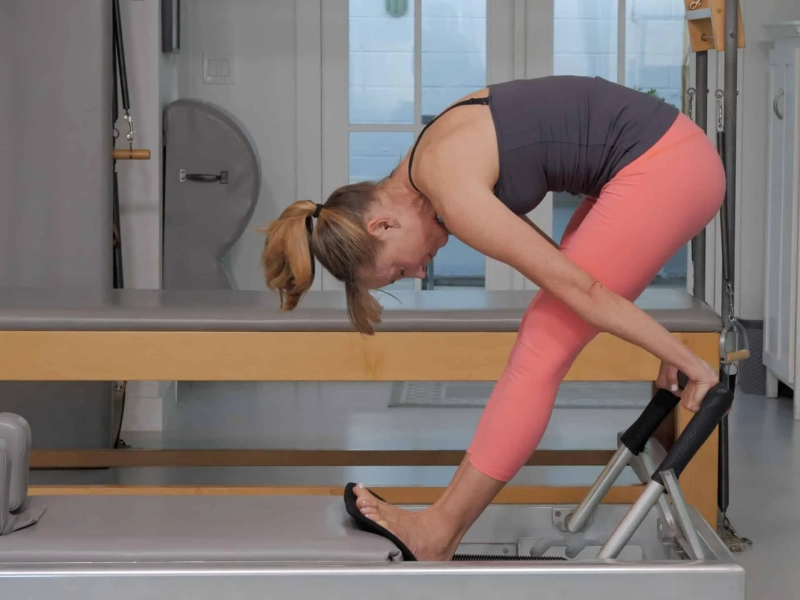
The Tendon Stretch exercise on the Reformer offers many benefits to the body.
In addition, the combination of flexibility and strength required in this exercise significantly improves body control, particularly in maintaining balance and executing complex movements.
3. Enhances stability and balance
One of the biggest challenges of Pilates Tendon Stretch on the Reformer is maintaining balance while the body is in motion. This requirement not only strengthens joint stability but also improves overall balance.
The exercise demands strong engagement of the core muscles to maintain stability, helping enhance coordination between muscle groups and increasing the overall effectiveness of training.
4. Reduces stress and supports mental well-being
Like many Pilates exercises, Tendon Stretch on the Reformer also provides mental health benefits. Focusing on breathing while controlling stretching movements helps reduce stress, improve mood, and enhance concentration.
This mindful practice not only strengthens the body but also promotes mental clarity, relaxation, and a sense of balance after each session.
How to Perform Pilates Tendon Stretch on the Reformer
Pilates Tendon Stretch on the Reformer requires concentration, precise technique, and strong body control. Below is a step-by-step guide to help you perform the exercise safely and effectively.
Setup position:
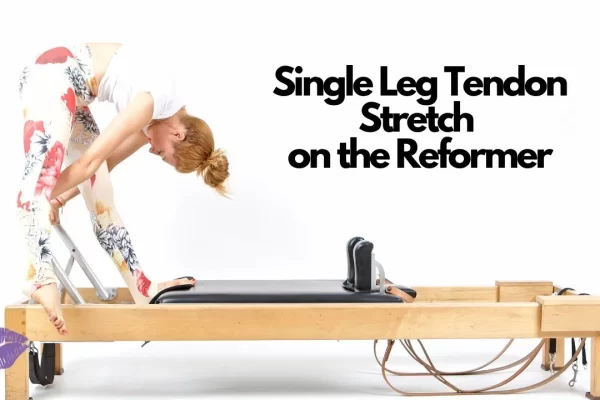
Stand on the Reformer carriage with feet hip-width apart, toes pointing forward. Firmly grip the front footbar with both hands to maintain balance. Keep the spine long and lightly engage the abdominals to activate the core.
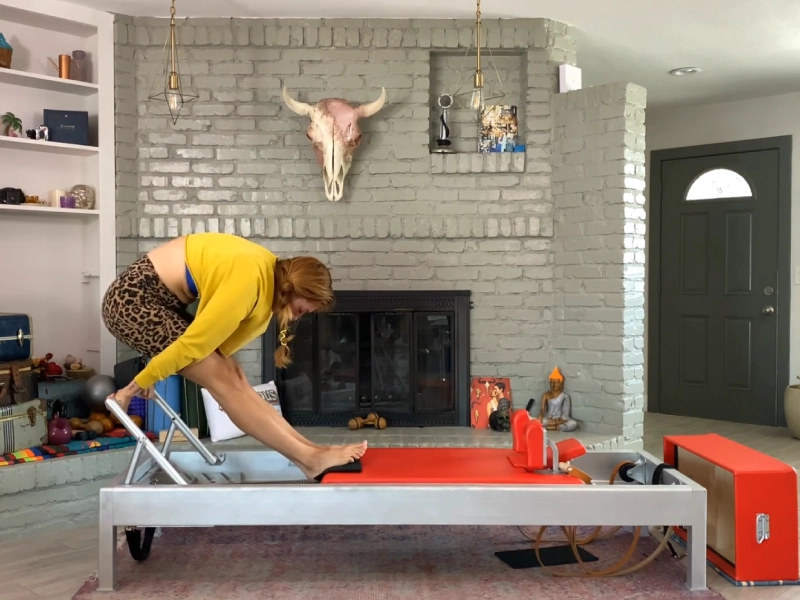
Perform Pilates Tendon Stretch on the Reformer.
Execution:
- Engage the core and keep the pelvis positioned in front of the footbar; do not allow the hips to pass over the bar. Let the head drop naturally, eves gazing between the legs.
- Inhale and use abdominal and leg strength to push the carriage backward, feeling a deep stretch through the Achilles tendons and calves. Keep the legs straight, heels pressing downward, toes lifting slightly to emphasize the stretch.
- Exhale and draw the carriage back in using the abdominals, maintaining heel connection downward, relaxing the neck, and keeping the shoulders away from the ears.
- Focus on lifting through the abdominals rather than pulling with the arms.
- Perform 3–5 repetitions with steady breathing, ensuring the outward and inward movements are equally controlled.
- Maintain a slow, stable tempo and avoid allowing the carriage to return too quickly.
Common Mistakes and How to Fix Them
Mastering correct technique is essential for maximizing benefits and preventing injury when performing Pilates Tendon Stretch on the Reformer. Even experienced practitioners can make common mistakes.
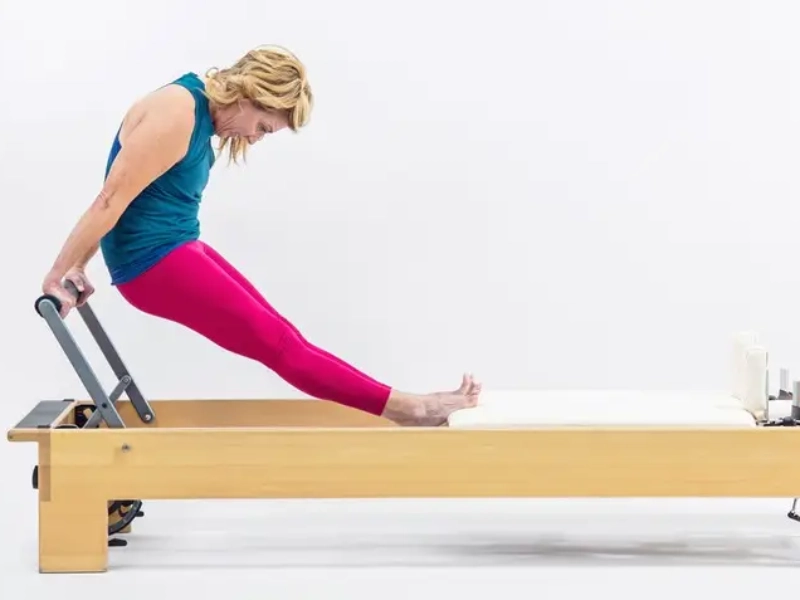
Performing Tendon Stretches on a Reformer requires proper technique to avoid injury.
Being aware of these errors will help you improve execution and fully benefit from the exercise.
- Moving the carriage too quickly: Pushing the carriage back too fast can lead to loss of control and reduced effectiveness. Always move with control and intention.
- Relying on the arms instead of the core: This exercise should be driven mainly by the abdominal and leg muscles. Overusing the arms reduces activation of the target muscles. Focus on core engagement and leg strength.
- Losing balance: If balance feels unstable, recheck foot placement, spring tension, and overall alignment to ensure safety and control.
- Holding the breath: Many practitioners tend to hold their breath during challenging movements, which decreases effectiveness. Maintain smooth, continuous breathing and stay present in each phase of the movement.
Safety Tips for Practicing Tendon Stretch on the Reformer
This exercise is best suited for individuals with a solid foundation in Pilates and stable overall health. Avoid practicing if you have serious lower-back, wrist, or shoulder issues. Beginners should start with simpler variations or practice under the guidance of a qualified instructor.
If you are new and find the full exercise challenging, you can modify it by practicing Tendon Stretch Prep: hold the correct position without moving the carriage, focusing on stretch sensation and balance control before progressing to the full movement.
Above is a detailed guide to performing Pilates Tendon Stretch on the Reformer. With consistent practice and proper technique, you will notice clear improvements in strength, flexibility, and body control. Always listen to your body, adjust the exercise to suit your level, and consult a professional instructor when needed to achieve the safest and most effective results.