

Pilates Swimming Exercise: Benefits and How to Perform It Correctly
02/01/2026The Pilates Swimming exercise is one of the most effective Pilates movements for improving muscle strength, flexibility, and overall body balance. In this article, we explore the key benefits of the Pilates Swimming exercise and provide detailed guidance to help you practice it safely and effectively.
What Is the Pilates Swimming Exercise?
The Pilates Swimming exercise is a fundamental yet highly effective movement in Pilates. The name “Swimming” comes from the image of alternating arm and leg lifts that resemble a swimming motion. This exercise focuses on strengthening the back, abdominal, and shoulder muscles, helping to stabilize the spine and improve posture.
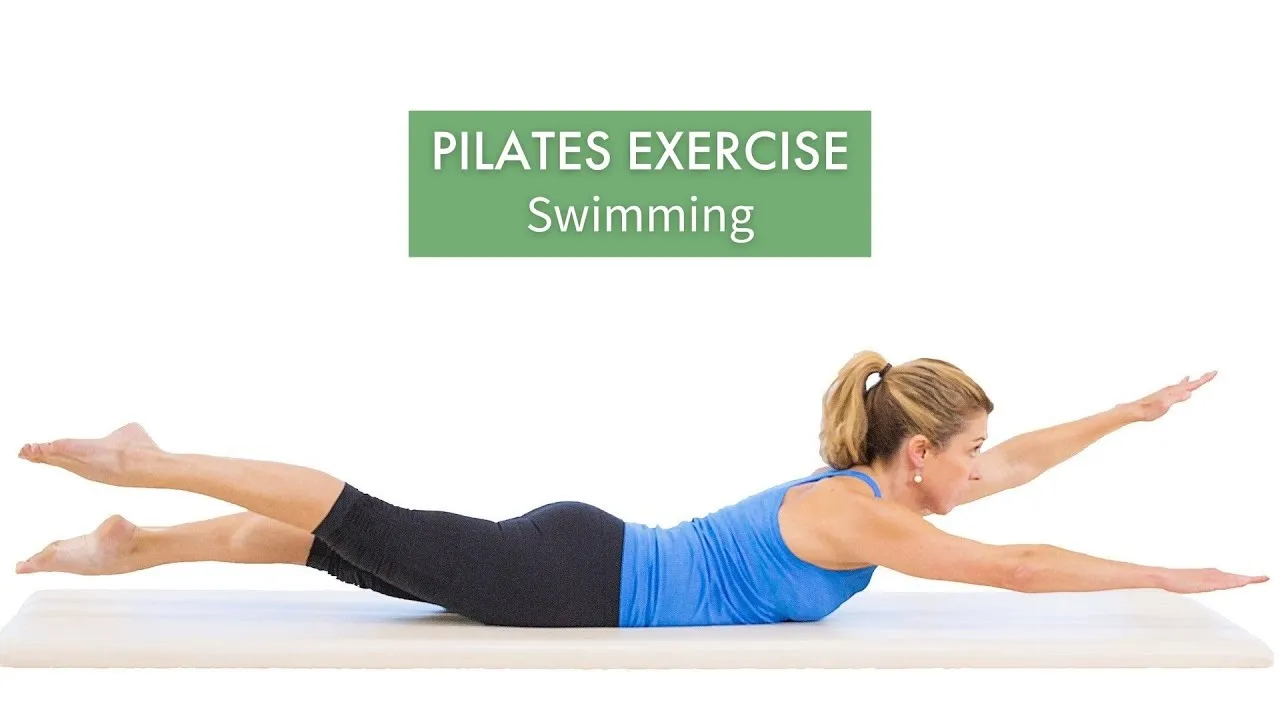
Swimming is a very effective exercise in Pilates.
Thanks to these benefits, the Pilates Swimming exercise not only supports a toned physique but also helps reduce the risk of back pain, making it especially beneficial for office workers. This Pilates swimming movement strengthens the muscles along the back of the body, including the glutes, thighs, and back muscles. The head and neck remain aligned as an extension of the spine without breaking the natural neck line. The shoulders stay relaxed throughout the movement, while the abdominal muscles are activated and lifted away from the mat.
Benefits of the Pilates Swimming Exercise
The Pilates Swimming exercise is more than just a physical movement it offers multiple health and fitness benefits. Let’s explore the most notable advantages below.
1. Improves Back Strength
The Pilates Swimming exercise activates and strengthens deep back muscles, including the multifidus, erector spinae, and quadratus lumborum. These muscle groups play a crucial role in supporting the spine and maintaining an upright posture.
As you lift opposite arms and legs, the back muscles work continuously to stabilize the body, enhancing strength and endurance. A stronger back helps reduce the risk of common injuries such as lower back pain and herniated discs.
2. Improves Posture
The extension and lengthening movements in the Pilates Swimming exercise help elongate the spine and relieve discomfort caused by poor sitting or standing posture.

The benefits of swimming exercises.
This exercise also balances strength between the front and back muscle groups, promoting an upright posture with open shoulders. Better posture can boost confidence and improve daily movement quality.
3. Reduces Back Pain
Gentle stretching during the Pilates Swimming exercise improves blood circulation, reduces inflammation, and alleviates tension in the back. A more flexible spine allows smoother twisting and bending movements, minimizing the risk of back pain.
4. Enhances Focus and Mind Body Connection
Pilates emphasizes the connection between body and mind. By concentrating on each movement, you become more aware of your body and reduce stress. Deep breathing combined with movements like the Pilates Swimming exercise increases oxygen flow to the brain, helping improve focus and mental clarity.
How to Perform the Pilates Swimming Exercise
Steps to Perform Pilates Swimming:
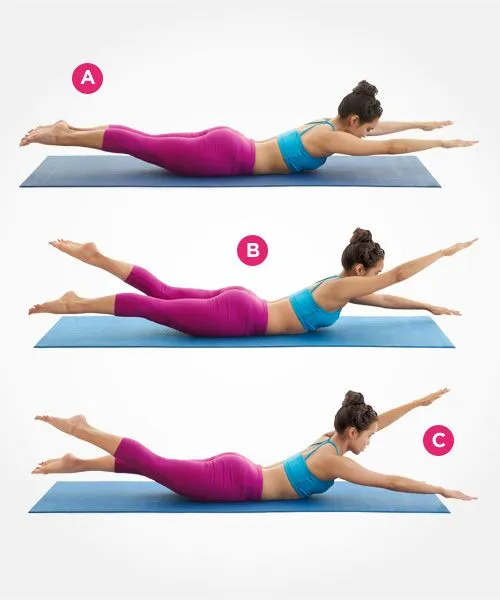
Instructions on how to perform the swimming exercise.
- Lie face down on the mat with both arms extended forward and legs stretched long behind you. Squeeze the inner thighs and heels together. If this position places too much strain on your lower back, slightly separate the legs while keeping the toes turned outward, heels together, and knees reaching away from each other.
- Maintain continuous breathing: draw the navel up off the mat and gently lift the head as you simultaneously lift the right arm and left leg. Engage the glutes and continue pressing the pubic bone into the mat.
- Switch arms and legs, creating a steady swimming rhythm by alternating sides. Focus on reaching the arms and legs long, extending the body as much as possible.
- Continue swimming for a total of 24 counts (6 full breath cycles). Aim for 4 beats while exhaling and 4 beats while inhaling.
- Finish by gently pushing back into a resting position, sitting on the heels to release the spine.
Performing the Pilates Swimming Exercise on Pilates Equipment
In addition to mat work, the Pilates Swimming exercise can also be performed on popular Pilates equipment such as the Reformer, Spine Corrector, and Ladder Barrel. Practicing on equipment increases challenge while improving control of the back, core, and glute muscles.
Pilates Swimming Exercise on the Reformer
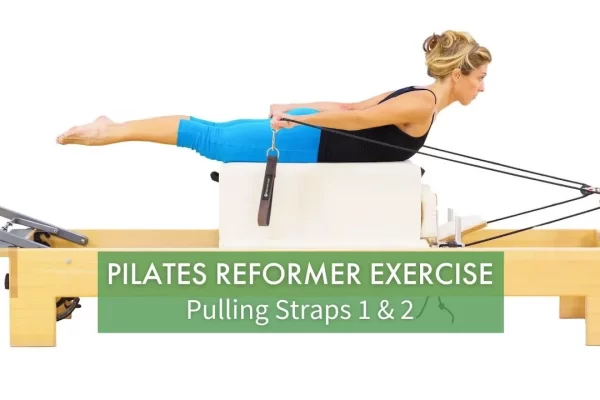
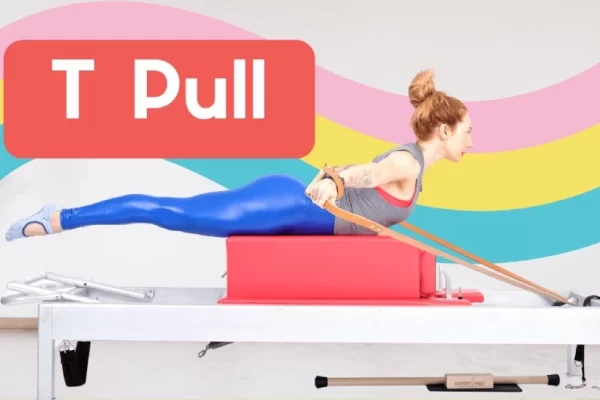
Pilates Swimming on the Reformer is one of the most effective variations for strengthening the back and improving spinal flexibility. The Reformer’s spring and strap system supports precise movement execution and better control throughout the exercise.
This variation offers significant benefits, particularly for the back muscles, spine, and overall body mobility.
How to Perform Pilates Swimming on the Reformer
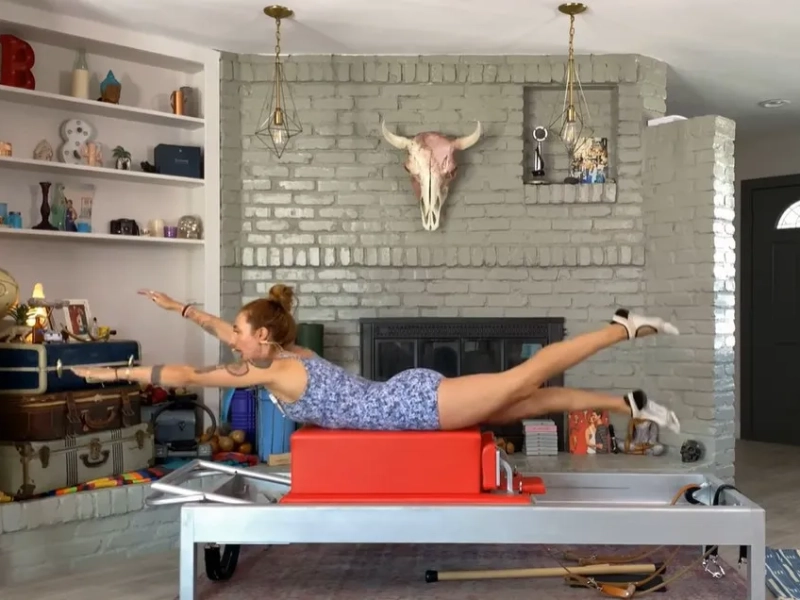
How to perform the Swimming exercise on the Reformer.
Starting position:
- Lie face down on the Reformer carriage, positioning the body so the torso is elongated and the spine remains neutral. Extend the arms forward and legs backward for balance.
- Ensure the head and neck stay aligned with the spine, avoiding excessive lifting or dropping of the head to prevent neck strain.
Movement steps:
- Inhale and slowly lift the right arm and left leg off the carriage, keeping both extended while maintaining a neutral spine.
- Exhale as you gently lower them, then lift the left arm and right leg in the same manner. Continue alternating sides with controlled breathing. Movements should be smooth and steady, avoiding jerky motions to protect the back and spine.
- After 10-15 alternating repetitions per side, lower both arms and legs and relax the body.
Pilates Swimming Exercise on the Spine Corrector
Pilates Swimming on the Spine Corrector is a variation of the traditional Pilates Swimming exercise performed with spinal support equipment. The Spine Corrector assists with stretching, posture correction, and improving spinal alignment while strengthening the back and core muscles.
Effects of Pilates Swimming on the Spine Corrector
- Back muscles: Strengthens the lower back and muscles surrounding the spine, improving posture and reducing spinal tension.
- Shoulders and arms: Tones the shoulder and arm muscles through controlled lifting movements. Core muscles: Requires continuous core engagement, enhancing abdominal strength and stability.
- Flexibility: Promotes muscle lengthening and increases joint range of motion.
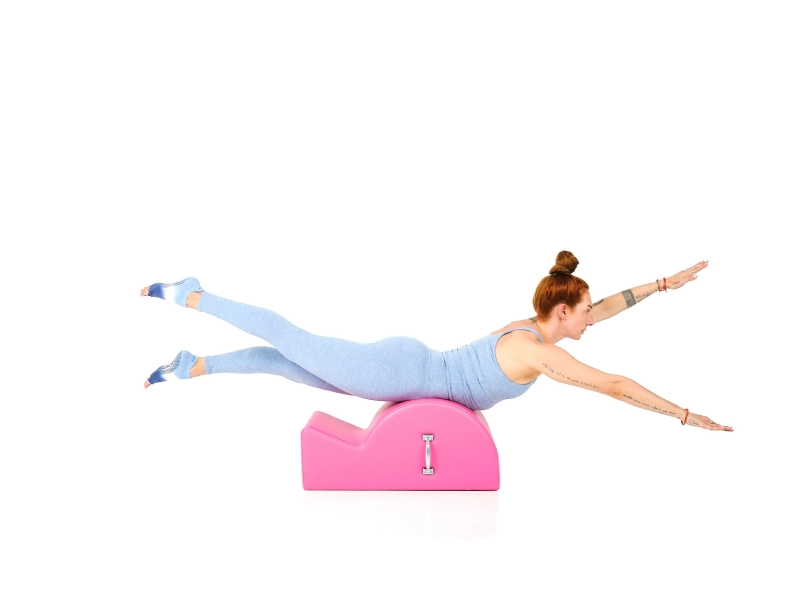
Swimming exercises on the Spine Corrector.
How to Perform Pilates Swimming on the Spine Corrector
- Lie face down on the Spine Corrector with the abdomen and pelvis resting on the apex of the equipment.
- Extend the legs straight back, keeping them parallel and lightly touching. Knees remain straight. Extend the arms forward with palms facing down. Keep the head in a neutral position.
- Inhale deeply, gently engaging the core to stabilize the spine.
- Lift the left arm and right leg, keeping them straight and the torso stable.
- Lower them and lift the opposite arm and leg, alternating with the breath while maintaining control.
- Continue for 5-10 deep breaths, then lower the limbs and return to the starting position.
Pilates Swimming Exercise on the Ladder Barrel
Pilates Swimming on the Ladder Barrel is an advanced variation that requires refined body control, coordinated breathing, and precise movement. This exercise simulates swimming in mid air while maintaining balance and stability on the Ladder Barrel.
How to Perform Pilates Swimming on the Ladder Barrel
Step 1: Starting position
- Lie face down over the curved apex of the Ladder Barrel, with the hips on one side and the chest on the other.
- Allow the pubic bone to lightly contact the apex to stabilize the lower body.
- Extend the arms forward and legs backward, lengthening the body. Step 2: Body alignment
- Rotate the inner thighs upward so the legs remain parallel and stable.
- Maintain a natural length in the lower back without excessive arching.
Step 3: Begin the swimming motion
- Lift the arms, chest, and legs off the Ladder Barrel while keeping the body long.
- Raise the right arm and left leg slightly higher while lowering the opposite side.
- Switch sides smoothly, maintaining control.
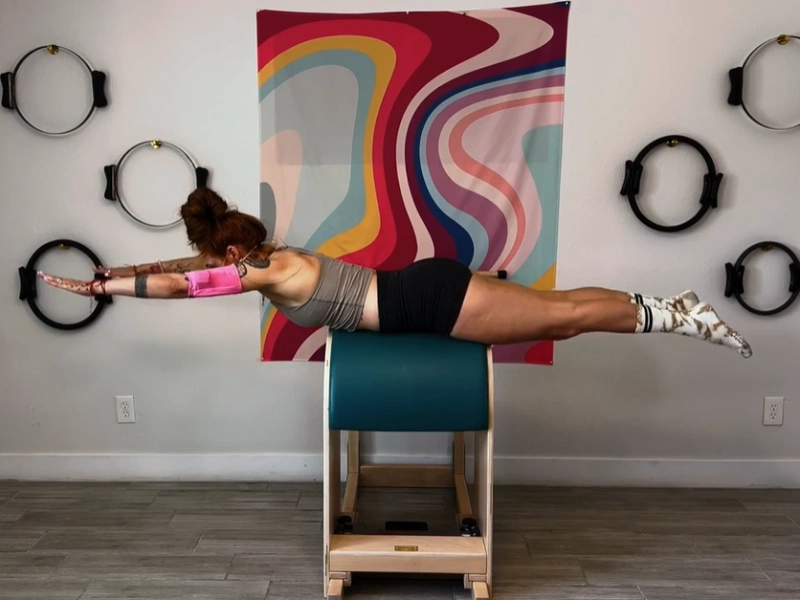
Pilates Swimming Exercise on Ladder Barrel.
Step 4: Continue swimming
- Alternate arm and leg lifts continuously, mimicking a swimming motion.
- Maintain steady, controlled breathing throughout.
Step 5: Finish the exercise
- Gently step down from the Ladder Barrel to the side.
- Perform a counter stretch to release the back muscles and recover.
Note: Move slowly and with control to maintain precision and avoid injury.
Important Notes When Performing the Pilates Swimming Exercise
The Pilates Swimming exercise is highly effective, but proper technique is essential for best
results and injury prevention.
1. Proper alignment
- Lie flat with the lower abdomen grounded on the mat.
- Keep arms and legs straight without bending elbows or knees.
- Engage the abdominal muscles to protect the spine.
- Relax the neck and maintain spinal alignment.
2. Breathing
- Inhale deeply to prepare.
- Exhale while lifting arms and legs.
- Inhale while lowering them.
- Maintain a steady breathing rhythm for better control.
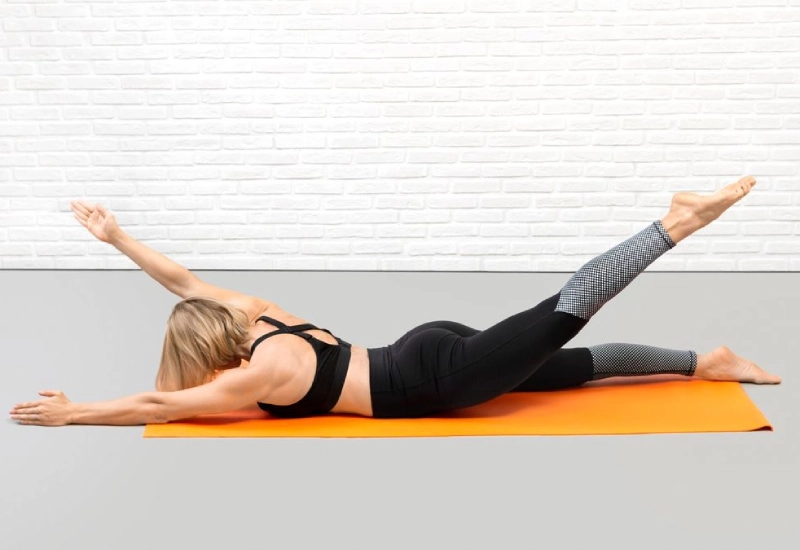
Pay attention to your breathing while performing the exercise.
3. Range of motion
- Start slowly with a small range of motion if you are a beginner.
- Avoid forcing the lift if the body is not ready.
4. Speed
- Move slowly and with control.
- Focus on correct technique rather than speed.
5. Listen to your body
- Stop immediately if you feel pain.
- Seek guidance from a Pilates instructor if unsure about proper execution.
6. Warm up and cool down
- Warm up thoroughly before exercising.
- Stretch gently after completing the workout.
Additional notes:
- Practice the Pilates Swimming exercise regularly, 2–3 times per week, for best results.
- Combine it with other Pilates exercises for a balanced workout.
- Wear comfortable, breathable clothing.
- Practice on a flat, stable surface.
Note: If you have any medical conditions, consult a healthcare professional before starting any exercise program.
With its outstanding benefits and simple execution, the Pilates Swimming exercise is an excellent choice for improving strength, posture, and overall fitness. Consider incorporating it into your Pilates routine today.