

Pilates Swan Exercise on Equipment: Benefits and a Complete Guide
15/01/2026If you are looking for an exercise that improves posture, stretches the spine, and strengthens the back muscles, the Pilates Swan exercise is an ideal choice. What makes this movement especially effective is practicing it on Pilates equipment, where you can clearly feel the difference in both results and body awareness. This article will help you understand the benefits of the Pilates Swan exercise and how to perform it on various Pilates apparatus safely and effectively.
What Is the Pilates Swan Exercise?
The Pilates Swan exercise is a classical spinal extension movement within the Pilates system, designed to strengthen the back muscles, improve posture, and enhance spinal flexibility. This movement is typically performed in a prone position, lifting the upper body off the surface, similar to the “Cobra” pose in yoga, but with the distinct control and precision characteristic of Pilates.
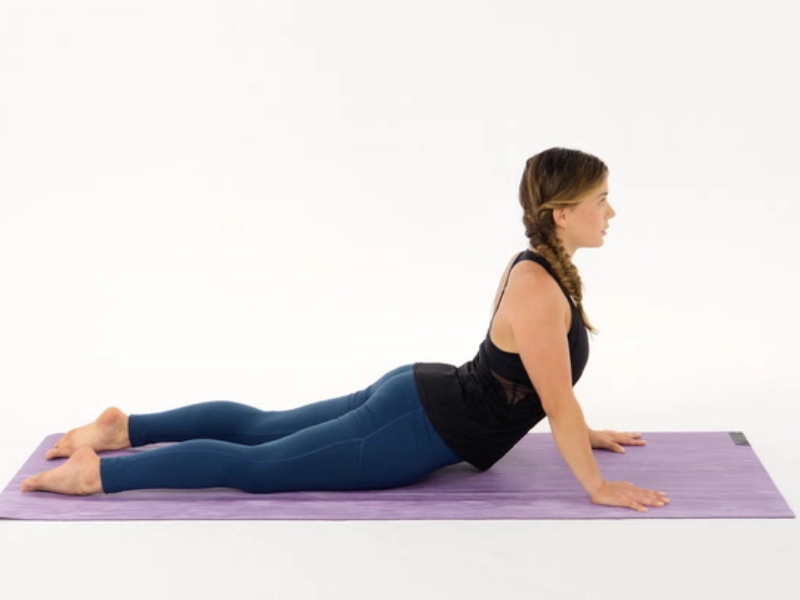
The Pilates Swan is a spinal extension pose within the Pilates exercise system.
The Pilates Swan exercise can be practiced on the mat or with supportive equipment such as the Reformer, Ladder Barrel, Spine Corrector, and Wunda Chair. Using these apparatuses allows for adjustments and increased effectiveness, making the exercise suitable for different fitness levels. However, to ensure safety and optimal results, practitioners should perform this exercise under the guidance of a professional Pilates instructor, especially if they have spinal or health related concerns.
Benefits of the Pilates Swan Exercise
The Pilates Swan exercise offers outstanding benefits for both physical and mental well being, particularly for the spine, back muscles, and abdominal muscles. When performed correctly, Swan not only improves posture but also helps reduce discomfort and enhances overall body control. Below are the key benefits of this exercise:
Strengthens the Back and Core Muscles
The lifting movement in the Swan exercise effectively activates the upper back, lower back, and core muscles. These muscle groups are essential for spinal stability, supporting daily activities, and reducing the risk of movement related injuries.
Improves Spinal Flexibility and Extension
The Pilates Swan exercise stretches the front of the body including the abdominal, chest, and hip muscles while safely extending the spine. This helps increase range of motion, improve flexibility, and support proper standing and sitting posture.
Supports Postural Alignment
Regular practice of Swan helps reshape posture by lengthening the spine, opening the shoulders, and reducing rounded upper back posture. This exercise is particularly beneficial for individuals who work long hours at a desk or sit in front of a computer.
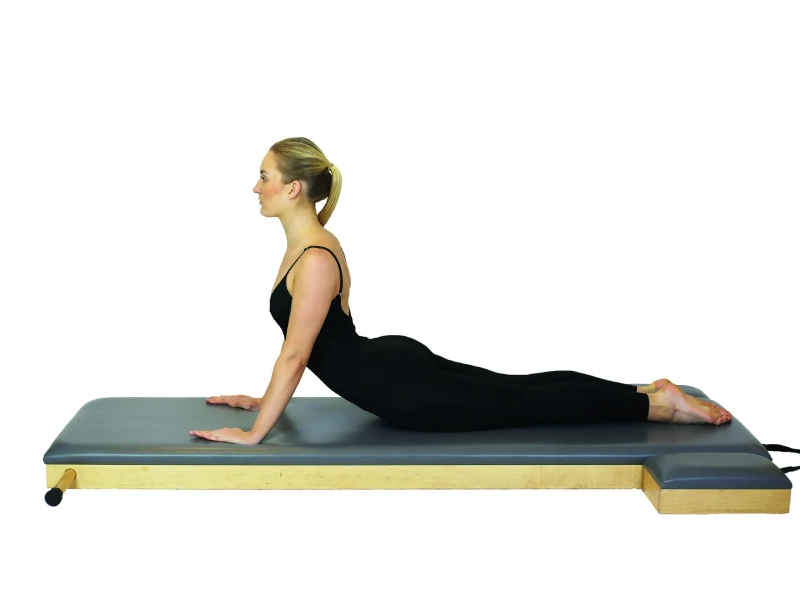
Performing Pilates Swan regularly will help improve posture.
Reduces Back Pain and Muscle Tension
Swan can help relieve mild back pain, especially in the lower back caused by poor posture or muscle tightness. By strengthening the back and mobilizing the mid and upper spine, the exercise supports tension release and physical recovery.
Engages the Arms and Shoulders
In addition to the back and core, this exercise also activates the arms and shoulders as they support body weight. This improves endurance, flexibility, and helps reduce shoulder tension an area prone to fatigue during prolonged sitting.
Enhances Breathing Control and Mind Body Connection
The coordination between movement and breath in the Swan exercise improves deep breathing capacity and body awareness. This enhances muscular control while promoting mental relaxation.
Suitable for Various Fitness Levels and Equipment
The Pilates Swan exercise can be performed on the mat or with equipment such as the Reformer, Ladder Barrel, Spine Corrector, or Wunda Chair. This versatility makes it suitable for beginners, experienced practitioners, and those in physical rehabilitation, with varying levels of difficulty.
How to Perform the Basic Pilates Swan Exercise
To achieve optimal results and avoid unnecessary strain on the lower back, proper technique is essential from the smallest movement. Below is a detailed guide to performing the basic Pilates Swan exercise:
Starting Position
- Lie prone on the mat with both legs extended, either together or hip width apart for comfort. Place your hands and forearms on the mat with elbows slightly bent, hands positioned near
- To achieve optimal results and avoid unnecessary strain on the lower back, proper technique is essential from the smallest movement.
- Below is a detailed guide to performing the basic Pilates Swan exercise:
Execution
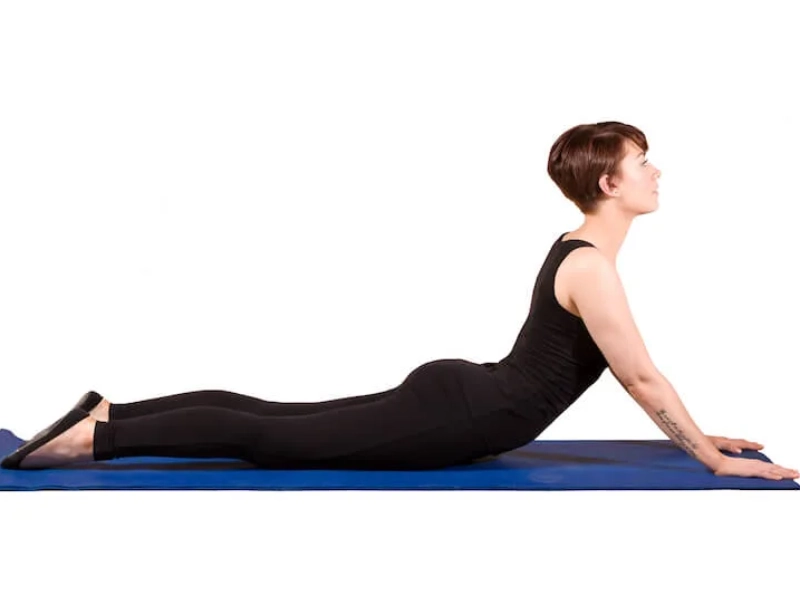
Perform the Pilates Swan exercise.
- Step 1: Gently lift your gaze forward (eyes only, not the head or neck).
- Step 2: Slowly lift the throat away from the mat.
- Step 3: Continue lifting the collarbones, followed by the sternum.
- Step 4: As the body rises, imagine the crown of your head reaching forward toward the wall in front of you, not upward toward the ceiling. Visualize lengthening each vertebra from the mid back toward the head the movement initiates from the mid back rather than the lower back. Avoid compressing or collapsing the lower back. If you feel stiffness or strain in the lumbar area, reassess your technique. Keep the rib cage contained and avoid flaring the ribs excessively.
- Step 5: Hold the lifted position for a few deep breaths, then slowly lower the body back to the mat with control, articulating the spine one vertebra at a time
Important Notes
- Do not aim to lift too high quality matters more than height. The goal is spinal length, not maximum arching.
- Beginners or those with back issues should start with a smaller Swan and gradually increase range of motion.
- Instructor guidance is recommended to ensure correct technique.
Pilates Swan Exercise on Specialized Equipment
Pilates Swan on the Reformer
Pilates Swan on the Reformer is an advanced variation of the traditional Swan exercise, performed with the support of the Reformer machine. With its sliding carriage, resistance springs, and support bars, the Reformer enhances safety, precision, and movement control.
This variation focuses on spinal extension through both length and height while engaging the back, abdominal, and core muscles comprehensively. Adjustable spring resistance allows practitioners to tailor the difficulty level, making it suitable for beginners and advanced practitioners alike.
How to Perform Pilates Swan on the Reformer
Performing the Swan exercise on the Reformer requires focus, body control, and adherence to proper technique for optimal results. Below is a detailed step by step guide to performing this exercise:
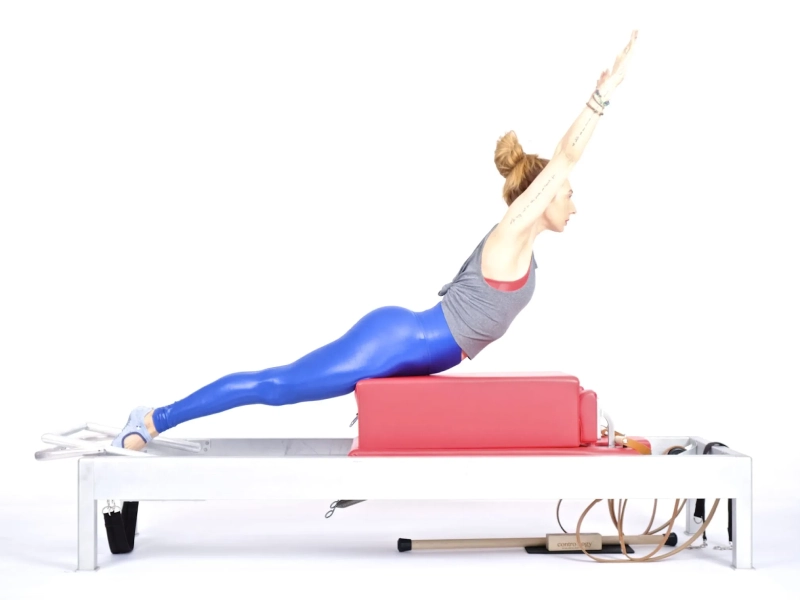
Pilates Swan on the Reformer.
- Position your pelvis at the edge of the carriage, legs extended straight behind you and parallel.
- Place your hands on the footbar, fingers pointing forward, arms shoulder width apart.
- Align your head with your spine and gaze downward, keeping the neck relaxed.
- Inhale, engage the abdominal muscles to protect the lower back.
- Press into the footbar and slowly lift the head, chest, and shoulders, extending the spine backward using back and core strength rather than the arms.
- Hold briefly at the top, keeping shoulders relaxed away from the ears.
- Exhale and slowly lower the body back to the starting position with control.
- Repeat 5–10 times, maintaining proper technique throughout.
Finish with a gentle stretch such as Child’s Pose to release the back and shoulders.
Pilates Swan on the Ladder Barrel
Pilates Swan on the Ladder Barrel is designed to enhance flexibility and control through supported spinal extension. The curved barrel combined with the ladder structure provides stable support, allowing optimal spinal opening.
This apparatus helps maintain correct alignment throughout the movement. The exercise requires both strength and concentration to achieve the best results.
How to Perform Pilates Swan on the Ladder Barrel
Preparation
- Foot placement: Place the balls of the feet on the lowest rung, feet about a fist width apart. Heels rest on the next rung.
- Body position: Lie prone with the thighs supported on the barrel, upper body draped over the curve.
- Alignment: Extend the arms alongside the body and gently direct the tailbone toward the knees to create length.
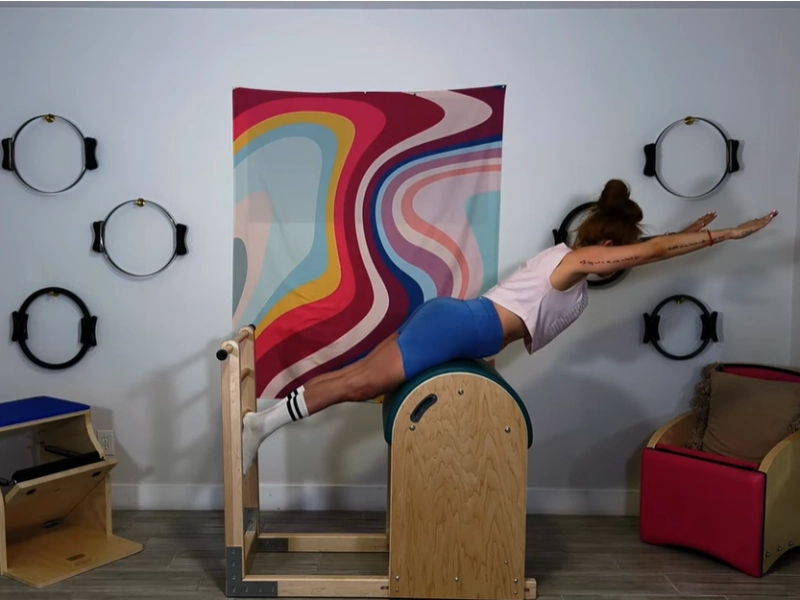
Pilates Swan pose on Ladder Barrel.
Execution
1. First back extension:
- Use core strength to lift the upper body toward the ceiling into a large spinal extension.
- Maintain pressure through the feet for support.
- Focus on lengthening the spine, avoiding excessive compression in the lower back.
2. Lengthening phase:
- Lower the upper body back onto the barrel smoothly.
- Extend the legs fully creating a long flying sensation.
3. Second back extension:
- Lift the chest again, finding natural extension in the upper back.
- Keep legs straight and stable.
4. Finish
- Activate the core, bend the knees, and return smoothly to the starting position.
- Repeat 3-5 times, depending on ability.
Pilates Swan on the Spine Corrector
Pilates Swan on the Spine Corrector is a specialized variation performed on a curved apparatus designed to support spinal alignment and extension. This equipment is ideal for improving posture and addressing back issues.
Unlike flat surfaces, the Spine Corrector supports the natural curve of the lower back, allowing safer spinal movement. This variation improves control of the back muscles, enhances thoracic and cervical mobility, and minimizes unnecessary lumbar pressure.
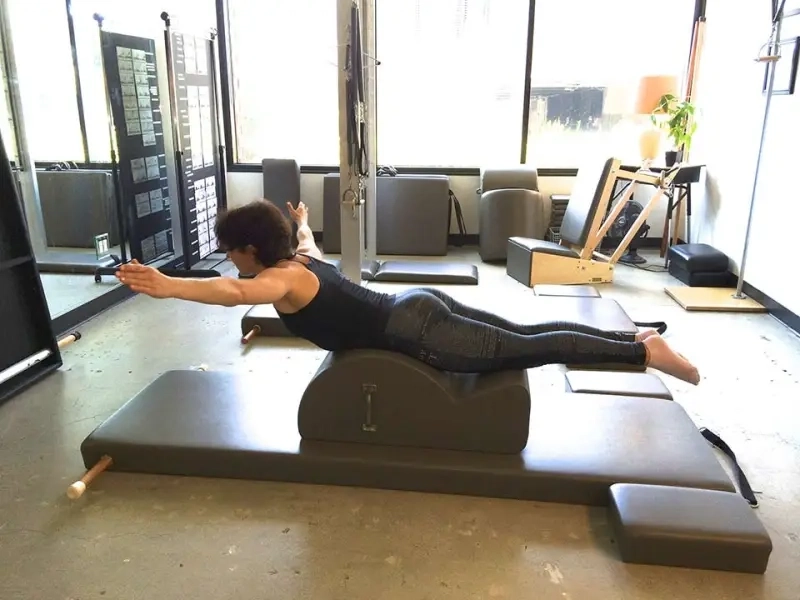
Pilates Swan on the Spine Corrector.
How to Perform Pilates Swan on the Spine Corrector
- Lie prone over the curve of the Spine Corrector, with the lower abdomen and pelvis supported.
- Place the legs hip width apart, extended behind you with toes touching the floor.
- Position hands under the shoulders, palms pressing into the floor.
- Inhale deeply, lengthening the spine from head to tail.
- Use arm and back strength to lift the chest while keeping the abdomen in contact with the Spine Corrector.
- Gaze forward, open the chest, and draw the shoulders back.
- Inhale during the lift, maintaining slow and controlled movement.
- Exhale and gently lower the chest back down with control.
- Repeat 6-8 times.
Pilates Swan on the Wunda Chair
Compared to the mat version, performing Swan on the Wunda Chair requires strong coordination between the core and upper body stability to balance while controlling the pedal with the legs.
The Swan on the Wunda Chair is typically performed with hands placed on the pedal. As the body lifts, the practitioner uses mid back and abdominal strength to lengthen the spine evenly while maintaining pedal control.
How to Perform Pilates Swan on the Wunda Chair
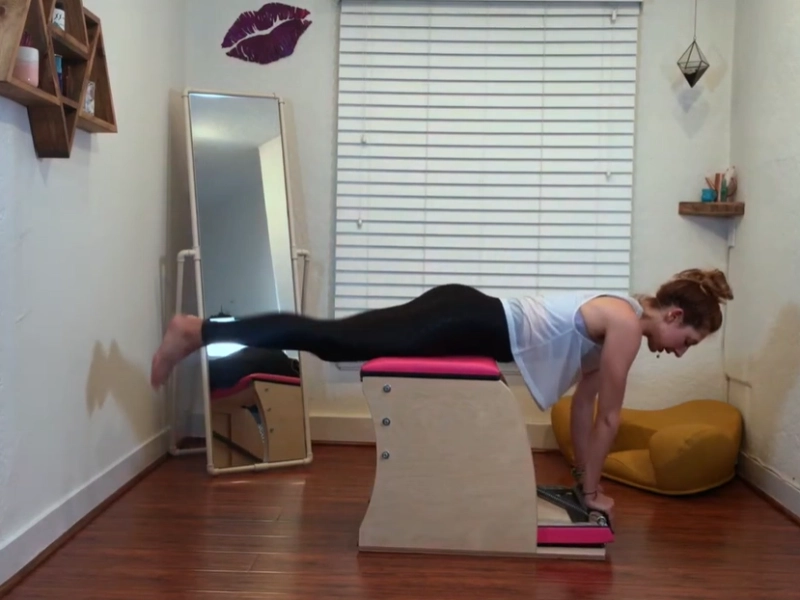
Perform Pilates Swan on the Wunda Chair.
Step 1: Setup
- Attach one spring in the middle position.
- Place the hips on the chair seat and hands on the pedal.
- Align shoulders over wrists, legs extended and together.
- Direct the tailbone toward the heels and draw the front ribs inward for a long body line.
- Engage the lower abdominals and connect the shoulders to the back.
Step 2:
- Pumping Maintain body length and pump the pedal three times by bending and straightening the arms.
- Keep the spine stable without collapsing as the pedal returns.
Step 3: Lift
- Draw the chest forward and press the pedal down, lifting the body with straight arms.
- Maintain maximum length without over arching or lifting the legs.
Step 4: Repeat
Lower with control and repeat the sequence two more times.
Tips to Avoid Back Pain When Practicing Pilates Swan
While the Swan exercise offers many benefits, incorrect execution may lead to back discomfort. Follow these essential tips to protect your back:
1. Always Engage the Abdominals
If the abdominals are relaxed, the spine lacks support, increasing lower back strain. Keep the abdominal muscles gently lifted throughout the exercise.
2. Avoid Over – Tightening the Glute
Excessive glute contraction creates unnecessary tension in the lower back. Maintain light, supportive activation instead.
3. Control Pelvic Alignment
Excessive posterior pelvic tilt can compress the lumbar spine. Keep the tailbone gently directed downward and maintain a neutral pelvis.
4. Lengthen the Entire Spine Evenly
Avoid concentrating movement only in the lower back. Imagine lengthening diagonally from the mid back toward the crown of the head to distribute extension evenly.
If you are looking for a gentle yet highly effective method to improve posture and reduce the risk of back pain, the Pilates Swan exercise is an excellent choice. Begin with basic variations and gradually increase difficulty using specialized equipment to achieve optimal results. Make the Pilates Swan exercise a regular part of your routine to build a strong, healthy foundation from within.