

Pilates Spine Twist Exercise: Benefits and Proper Technique
05/01/2026In today’s busy lifestyle, maintaining health and body balance has become more important than ever. The Pilates Spine Twist exercise not only helps you relax but also provides remarkable benefits for the spine and the entire body. With gentle rotational movements, this exercise helps release tension, improve circulation, and enhance spinal flexibility.
Overview of the Pilates Spine Twist Exercise
Spine Twist is the 19th movement in the list of original Pilates exercises created by Joseph Pilates in the early 1900s. It is a seated spinal rotation performed with the legs extended and together on the mat, designed to improve spinal mobility, core strength, and overall posture.
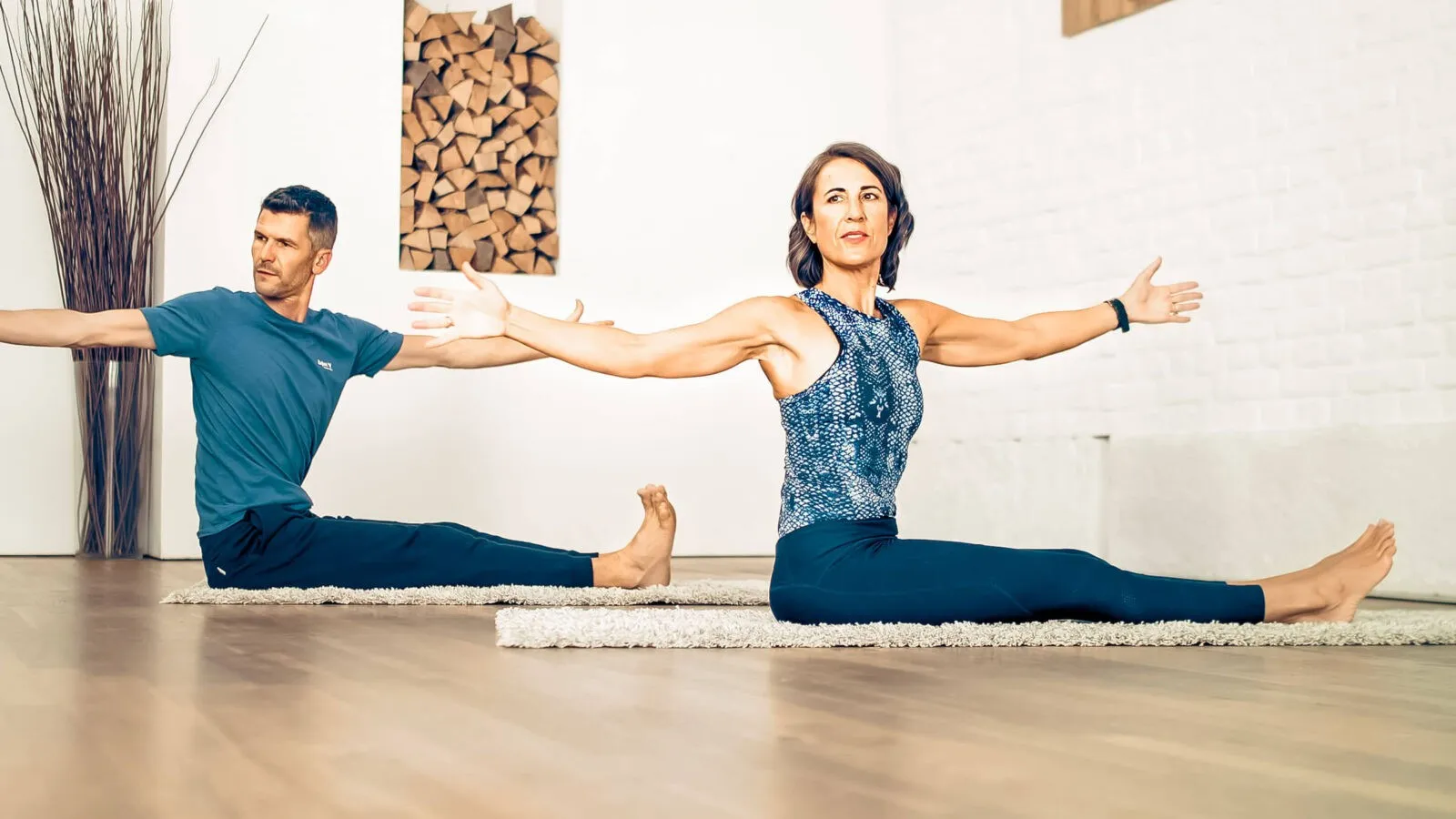
Spine Twist is the 19th exercise on the original list of mat exercises created by Joseph Pilates.
Benefits of the Pilates Spine Twist Exercise
The primary purpose of this movement is to improve the rotational range of the spine, particularly in the upper spine where the ribs attach, also known as the thoracic spine. In addition, there are several other reasons why you should practice this exercise regularly:
- Improves posture
- Develops core strength, not only in the abdominal muscles but also in the intercostal muscles and spinal back muscles
- Enhances hip flexibility
- Teaches pelvic stability
- Increases overall body awareness
Which Muscle Groups Does the Pilates Spine Twist Target?
The Pilates Spine Twist exercise focuses on improving spinal flexibility, upper body control, and rotational stability. When performing this exercise, the main muscle groups activated include:
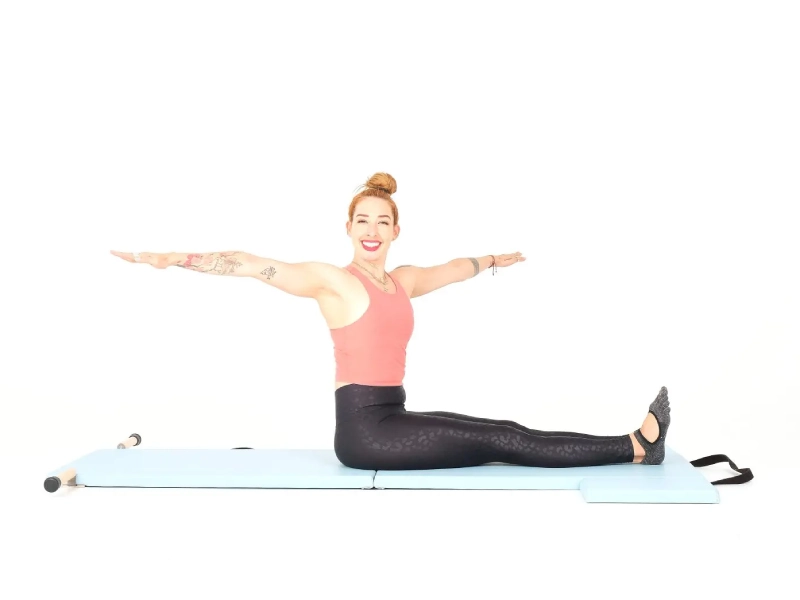
The Spine Twist exercise helps improve spinal flexibility and the ability to rotate the body’s axis.
- Deep abdominal muscles: The deepest layer of the abdominal region, playing a vital role in stabilizing the torso and protecting the lower back during rotation.
- Internal and external obliques: These muscles are primarily responsible for spinal rotation while helping maintain an upright posture and control the twisting range.
- Erector spinae muscles: Support spinal stability and length, helping the body maintain an upright seated position.
- Mid back muscles: Assist in coordinating each vertebra during rotation, allowing the movement to be smooth and precise.
The Spine Twist exercise not only strengthens the core but also enhances body awareness, control, and symmetry in movement key principles of the Pilates method.
How to Perform the Pilates Spine Twist Exercise
Follow these steps to perform the Spine Twist correctly:
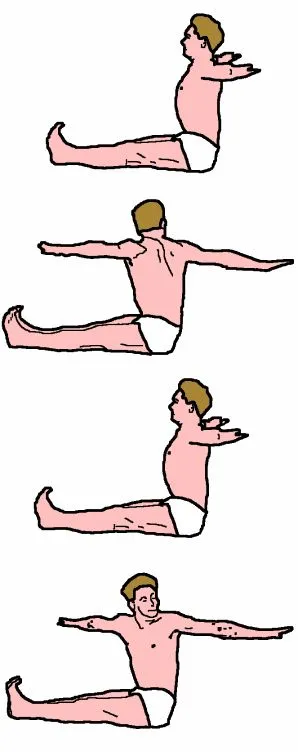
How to perform the Spine Twist exercise.
- Sit as tall as possible with both arms extended out to the sides; palms face downward and fingers lengthened. Extend both legs straight and press them together; toes point toward the ceiling.
- Inhale deeply, drawing the navel toward the spine as if the waist were being gently cinched.
- Exhale for a count of three and rotate the torso to the right. Sit taller and deepen the rotation over the next two breaths. You may maintain one long exhale or exhale slowly with each count.
- Turn your gaze toward the back arm as you rotate. Stay grounded on the sit bones, lift upward, and keep the body tall; engage the glutes and legs.
- Inhale deeply and return to center with the chest lifted. Keep the arms within peripheral vision and the shoulders relaxed downward.
- Repeat to the left side, lengthening upward through the waist, then return to center.
- Repeat 3-5 times on each side.
Common Mistakes When Performing Spine Twist and How to Avoid Them
Although each person has different physical limitations when performing spinal rotation exercises, there are several common mistakes often seen in the Pilates Spine Twist exercise, including:
Leaning Back at the Starting Position
The first mistake is failing to sit upright from the beginning. Make your best effort to sit as tall as possible and think about lifting the head upward.
If your hips and hamstrings are very tight, sitting upright on the floor with straight legs may not be realistic. In this case, you may temporarily bend your knees or elevate the hips by sitting on a folded mat. Over time, you can improve hamstring and hip flexibility with targeted exercises to support proper spinal rotation.
Looking Up Instead of Sitting Tall
This is a very common error. Instead of looking upward, make sure you look straight ahead and gently tuck the chin, similar to the posture used when someone is measuring your height.
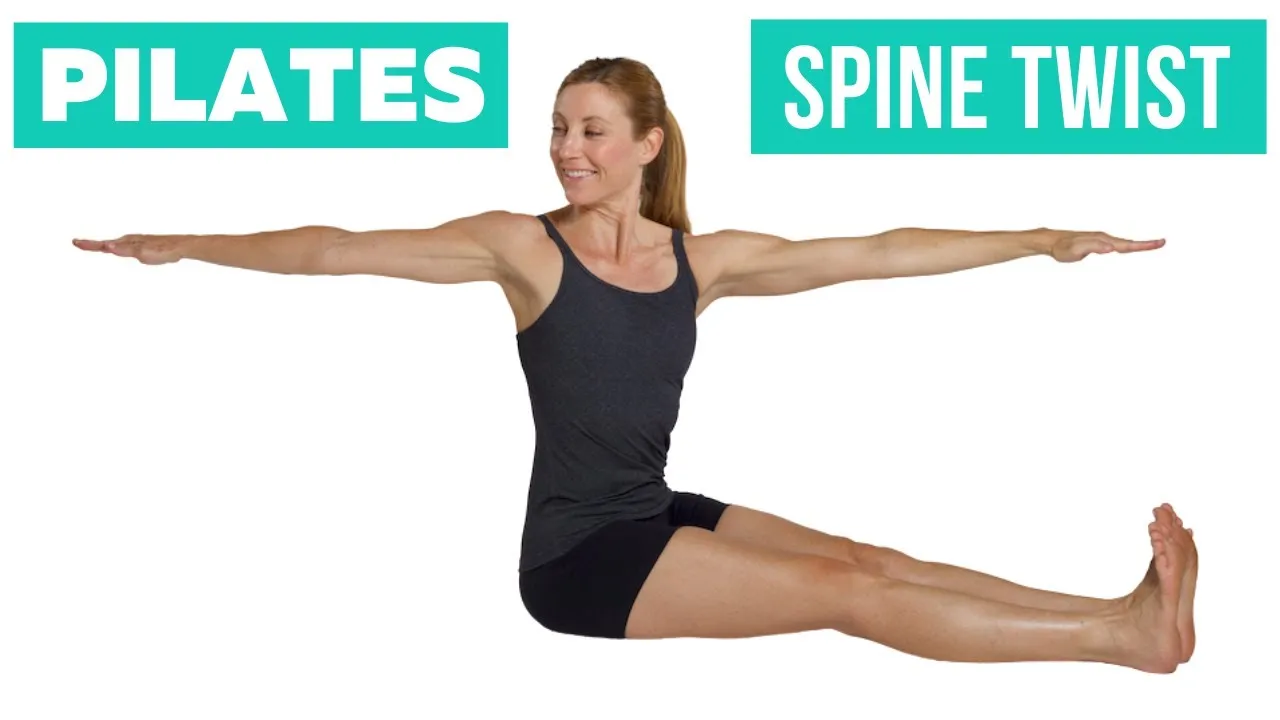
Common mistakes when performing the Pilates Spine Twist exercise.
Leaning to One Side Instead of Rotating Around the Central Axis
To compensate for limited rotational range, some people tilt to one side. An easy correction is to ensure both sit bones remain firmly grounded on the mat while twisting. You may also reduce the rotation range initially and gradually increase it as control improves.
Rounding the Back During the Twist
If you begin the exercise sitting tall, you will be more capable of maintaining length while rotating. This is challenging but is a crucial element of the movement that requires focused attention.
One effective way to improve this is by strengthening the spinal extensor muscles. Stronger back muscles make it much easier to stay upright and control the movement.
Legs Moving During the Twist
This indicates insufficient hip stability during rotation. Simply becoming more aware of what your hips and legs are doing can help prevent this issue.
The Pilates Spine Twist exercise is simple yet delivers significant benefits for spinal health and flexibility. By practicing this movement regularly, you can improve posture, reduce back discomfort, and strengthen your core muscles. Start practicing the Pilates Spine Twist today to experience positive changes in your body and enjoy a more active, balanced lifestyle.