

Pilates Snake and Twist on the Reformer: Advanced Technique, Benefits, and Proper Execution
17/01/2026Pilates has increasingly become a popular training trend thanks to its ability to promote a balanced physique, a refreshed mind, and overall well being. Among advanced exercises, the Pilates Snake and Twist on the Reformer stands out for its combination of physical challenge and refined movement control. Let’s explore in detail how to perform this exercise and the benefits it brings to the body.
Introduction to the Pilates Snake and Twist on the Reformer
The Snake and Twist on the Pilates Reformer is an advanced exercise that requires a harmonious blend of core strength, spinal flexibility, and precise body control. This movement incorporates bending and twisting actions that help improve spinal mobility while strengthening key muscle groups such as the abdominals, back, and shoulders.
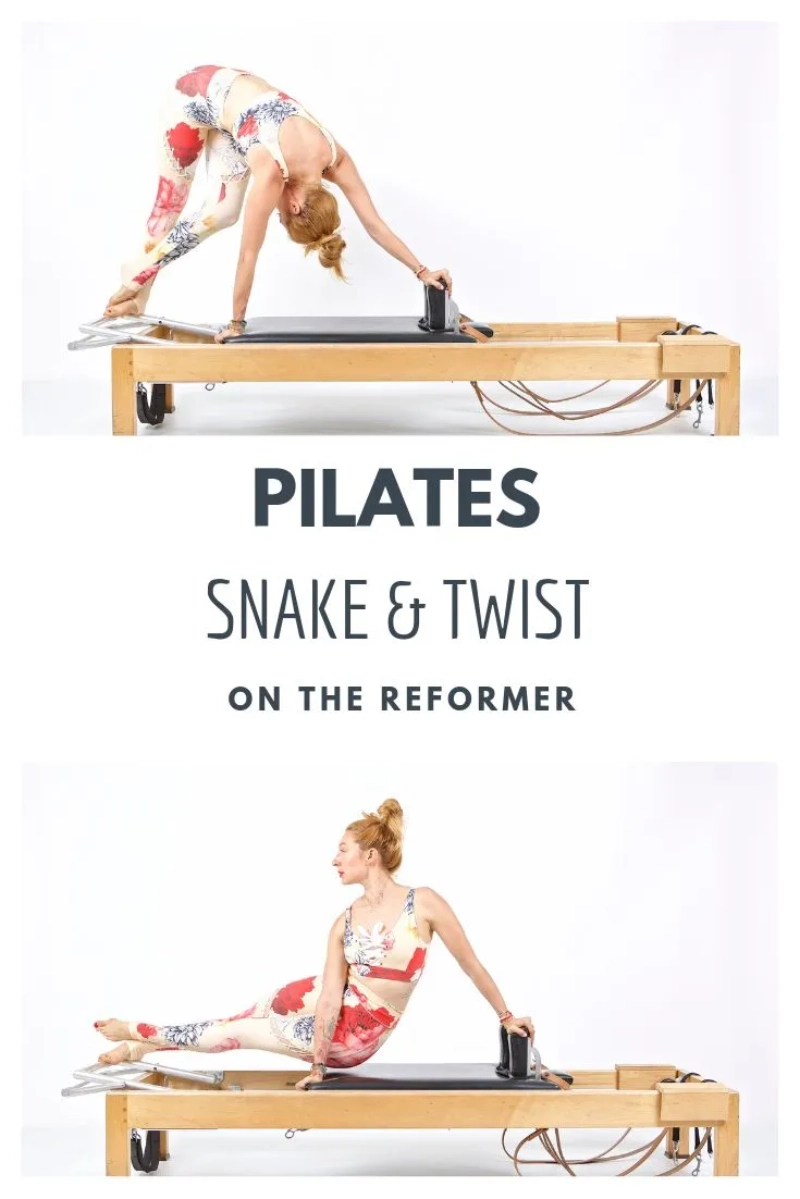
Pilates Snake and Twist exercise on the Reformer.
Snake and Twist is often considered a true test of advanced Pilates proficiency, as it integrates elements from foundational exercises like Up Stretch, Teaser, Elephant, and Spine Twist. When performed with proper technique, this exercise not only builds strength but also enhances posture, reduces spinal tension, and improves overall balance.
Benefits of the Pilates Snake and Twist on the Reformer
Regular practice of the Pilates Snake and Twist on the Reformer offers numerous outstanding benefits, especially for experienced Pilates practitioners:
- Strengthens and refines core control, helping to protect and stabilize the spine during all movements.
- Improves spinal flexibility and range of motion, particularly rotation and extension.
- Enhances full body coordination, requiring the shoulders, hips, legs, and abdominals to work together to maintain balance and control the carriage.
- Builds strength in the intercostal muscles and obliques, while opening the rib cage and improving breathing capacity.
- Supports better posture and reduces strain on the lower back, shoulders, and neck when performed correctly.
- Increases concentration, refined movement control, and confidence when mastering advanced Pilates exercises.
How to Perform the Pilates Snake and Twist on the Reformer
Below is a step by step guide to performing the Pilates Snake and Twist on the Reformer safely and effectively.
Preparation
- Set one heavy spring and lower the footbar (or raise it for a more challenging variation).
- Stand beside the Reformer, placing the outside hand on the shoulder block and the inside hand on the edge of the carriage.
- Place the outside foot on the footbar; cross the inside leg in front of the outside shin without hooking it onto the bar or the other leg.
Performing the Snake Movement
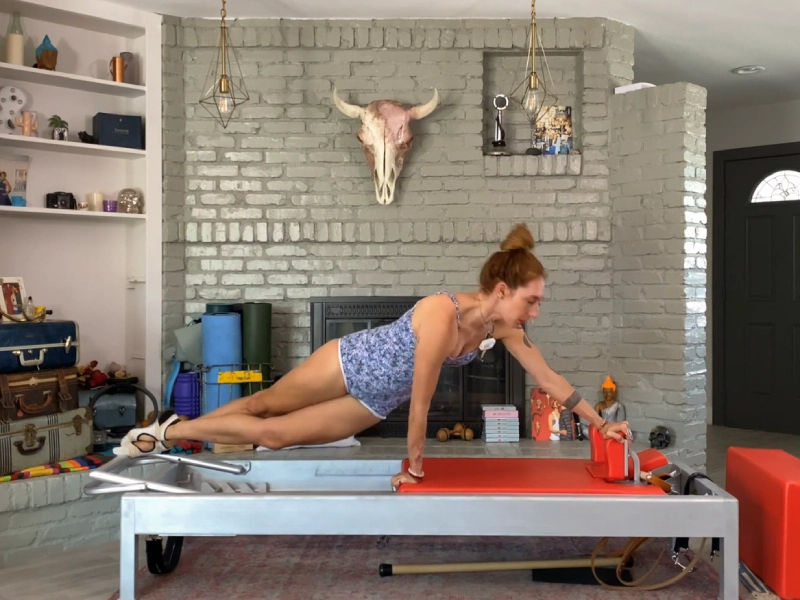
Performing the Snake Movement.
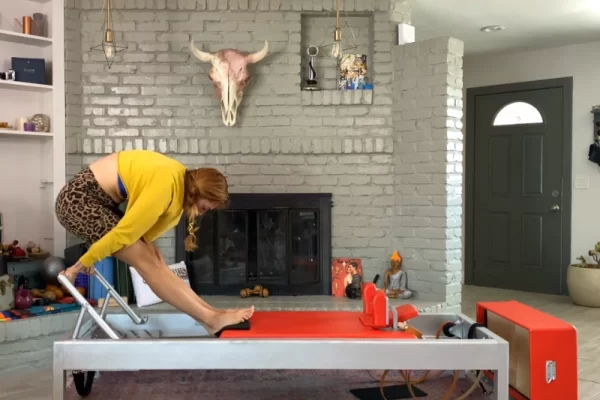
- Starting position: Head drops down, abdominals lift inward, spine gently rounded, with weight distributed through the foot on the footbar and both hands.
- Inhale: Press the carriage away using the leg on the footbar while undulating the spine forward, feeling length through the entire body. The head is the last part to leave the carriage, keeping the neck relaxed.
- Exhale: Lift the abdominals, raise the hips, and draw the carriage back to the starting position, keeping shoulders and wrists stable and avoiding pressure on the lower back.
Performing the Twist Movement
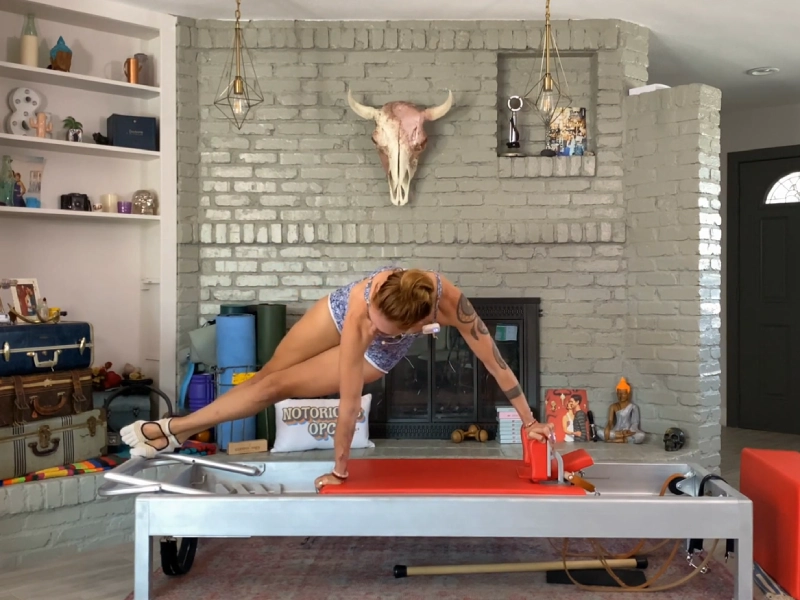
Performing the Twist Movement.
- From the extended Snake position, inhale and rotate the torso outward (for example, if the right foot is on the footbar, rotate to the right). Turn the gaze over the shoulder while keeping the carriage steady.
- Exhale: Return to neutral and draw the carriage back using abdominal and leg strength.
- Repetitions: Perform 1-2 repetitions on each side, then switch sides.
Who Should Practice the Pilates Snake and Twist on the Reformer?
Suitable Practitioners
- Individuals with a solid Pilates foundation and strong control of basic Reformer exercises.
- Those aiming to improve core strength, movement control, and spinal flexibility.
Who Should Avoid This Exercise?
- Individuals with current injuries or issues involving the lower back, shoulders, wrists, or neck.
- Beginners who have not yet mastered foundational Pilates movements.
- Pregnant women or individuals with balance concerns should consult a qualified professional before practicing.
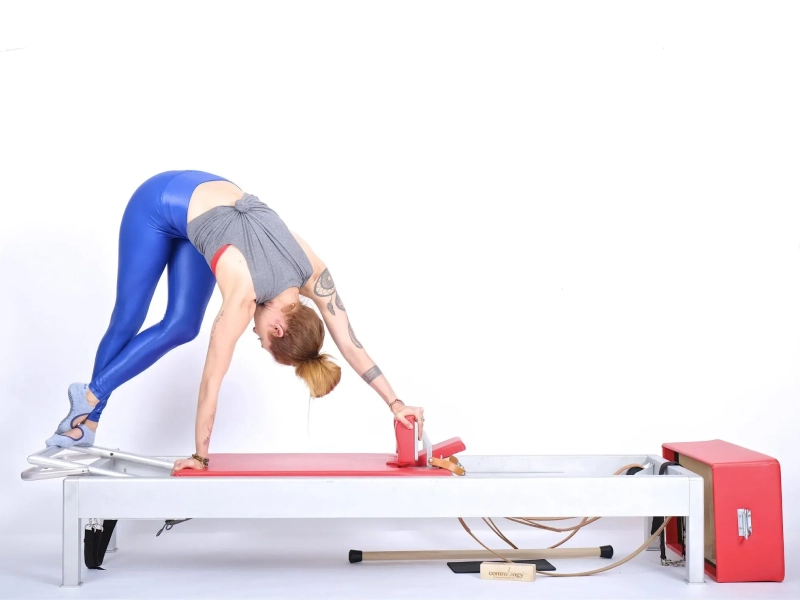
The Pilates Snake and Twist exercise on the Reformer is suitable for those with a solid Pilates background.
Common Mistakes and How to Correct Them
When first learning the Pilates Snake and Twist on the Reformer, practitioners often encounter the following issues:
- Pushing the carriage with the arms instead of the leg, leading to loss of control and increased risk of shoulder or wrist strain. Focus on initiating movement from the leg on the footbar and engaging the core.
- Allowing the lower back to collapse or shoulders to sink during extension, placing excess stress on the spine. Correction: keep shoulders stable and avoid dumping weight into the wrists or lower back.
- Lack of core connection, resulting in uncontrolled movement and imbalance. Perform the exercise slowly and with mindful engagement.
- Irregular or shallow breathing, which reduces effectiveness and increases tension. Maintain deep, steady breathing coordinated with movement.
- Over rotating or losing control of the carriage during the Twist. If needed, revisit preparatory exercises such as Up Stretch, Elephant, and Teaser before progressing to Snake and Twist.
Practicing the Pilates Snake and Twist on the Reformer consistently can deliver exceptional benefits, helping you become stronger, more flexible, and more balanced in everyday movement. Integrate this advanced exercise into your Pilates routine to experience its comprehensive impact on both body and mind.