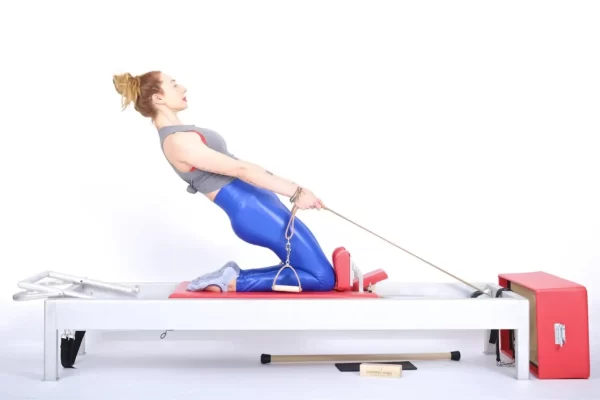


Pilates Single Leg Elephant Exercise on the Reformer
14/01/2026Are you already familiar with the Elephant exercise on the Reformer and looking to increase the challenge? The Pilates Single Leg Elephant exercise on the Reformer is the perfect next step to elevate difficulty and deepen control. Let’s explore why this movement is highly recommended by Pilates instructors once you have built a solid foundation.
Introduction to the Single Leg Elephant Exercise on the Reformer
If you are already comfortable with the Elephant exercise on the Reformer, it is time to progress to the Single Leg Elephant exercise on the Reformer. This exercise focuses on improving balance and overall body stability. In addition, Single Leg Elephant not only strengthens the legs but also enhances flexibility and coordination between muscle groups, especially the core.
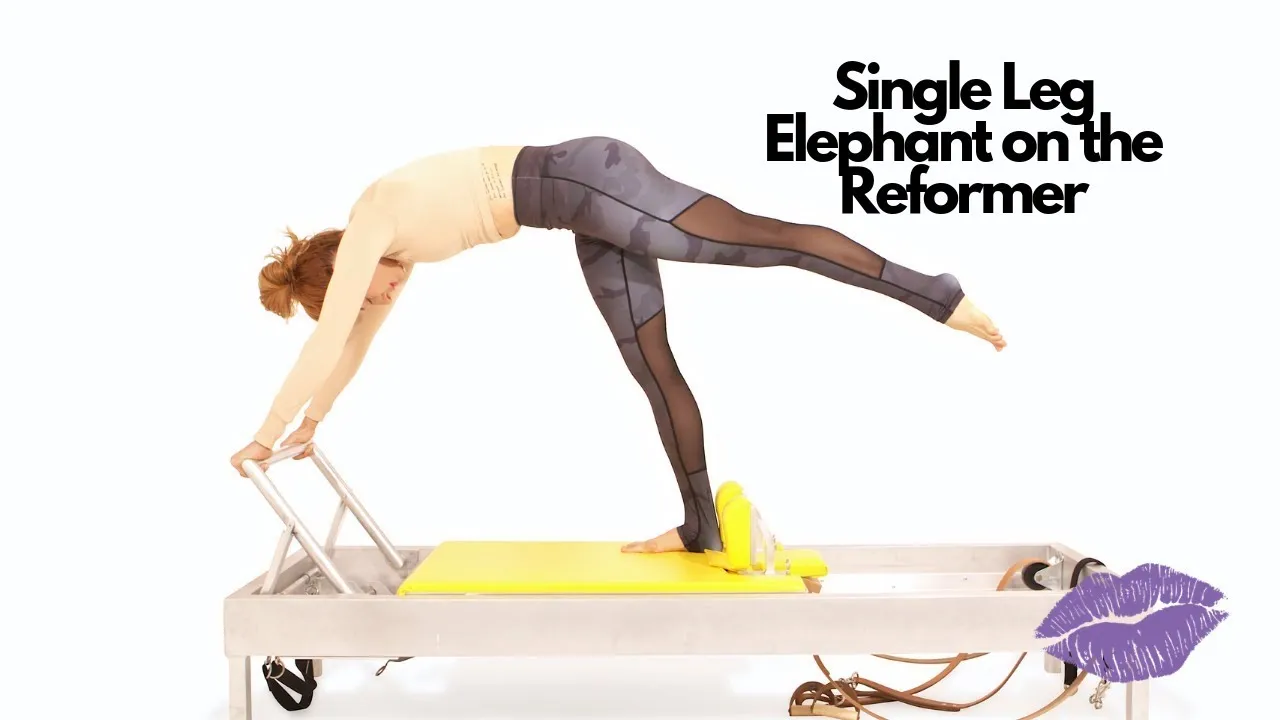
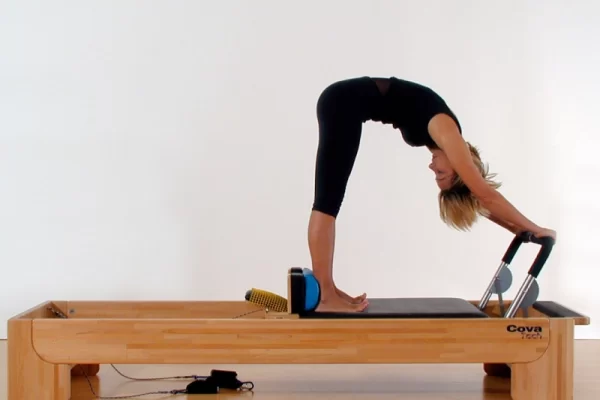
Pilates Single Leg Elephant exercise on the Reformer.
When performing this exercise, you are required to adjust your alignment and move while standing on one leg, helping the body develop better control and balance. For beginners, this movement may feel challenging at first; however, with proper guidance and patience, you will quickly begin to experience its benefits.
In Pilates, balance and stability are essential foundations for building a strong and harmonious body. The Pilates Single Leg Elephant exercise on the Reformer not only develops balance but also supports improved posture and body alignment in daily activities. Mastering this exercise creates a strong foundation for other Reformer exercises and enhances the overall effectiveness of your Pilates training program.
Benefits of Performing the Single Leg Elephant Exercise on the Reformer
The Single Leg Elephant exercise on the Reformer is more than a simple movement-it offers outstanding benefits for both physical performance and overall health.
1. Strengthens and Stabilizes the Core
This exercise emphasizes activating and strengthening the core muscles, improving overall stability and body control. When balancing on one leg, the core must work harder to maintain alignment, helping develop strength and endurance in this area.
2. Improves Leg Strength and Balance
The Pilates Single Leg Elephant exercise on the Reformer requires loading one leg at a time, which enhances leg strength while improving balance and control. This is an important factor in boosting performance in other physical activities and reducing the risk of injury.
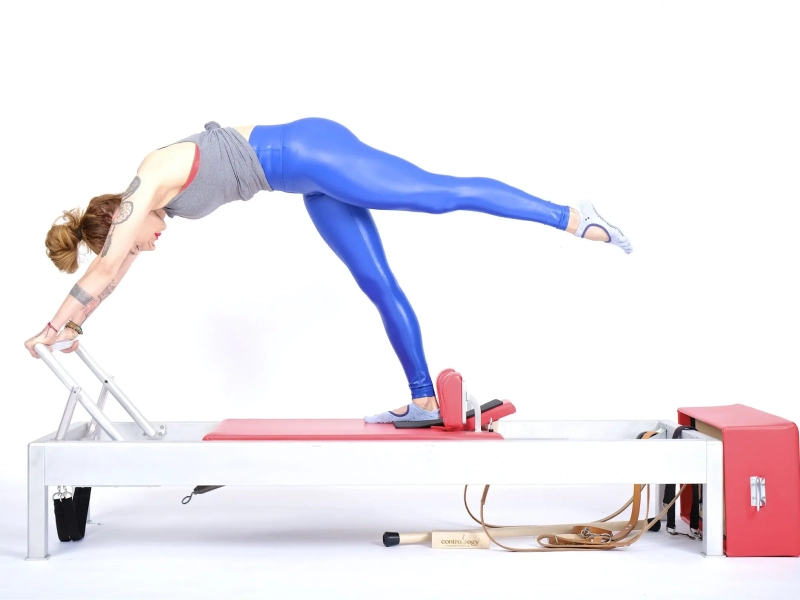
Benefits of the Single Leg Elephant exercise on the Reformer.
3. Enhances Body Alignment and Posture
This exercise increases body awareness, particularly in alignment and posture. While performing the movement, you must maintain proper spinal and joint positioning, which helps improve overall posture and promotes smoother, more coordinated daily movements.
4. Suitable for Multiple Training Levels
Whether you are a beginner or an experienced Pilates practitioner, the Single Leg Elephant exercise can be adjusted to match your level. This adaptability makes it a valuable component of Pilates programs for all practitioners, from entry level to advanced.
Practicing the Single Leg Elephant exercise regularly helps develop balance, strength, and flexibility while enhancing overall quality of daily movement.
How to Perform the Pilates Single Leg Elephant Exercise on the Reformer
The Single Leg Elephant exercise on the Reformer requires focus and correct technique to achieve optimal results. Follow these step-by-step instructions to perform the exercise safely and effectively.
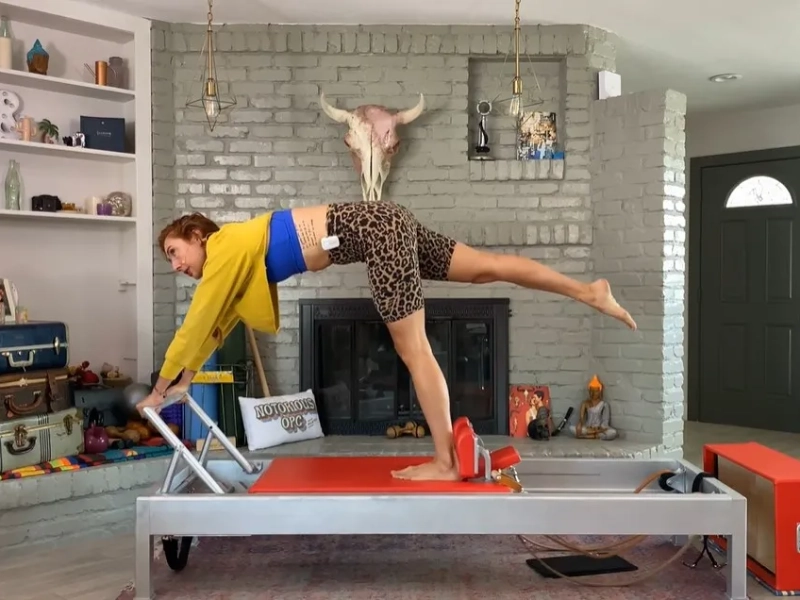
How to perform the Single Leg Elephant exercise on the Reformer.
- Stand behind the Reformer and place both hands on the footbar, keeping your hands shoulder-width apart. Position your feet parallel and hip-width apart. Slightly bend the knees and maintain a neutral spine from the neck through the lower back.
- Gently lift one foot off the floor and place the standing foot onto the carriage. The lifted leg can remain straight or slightly bent at the knee, depending on your flexibility and control.
- Engage the core to maintain stability and slowly push the carriage backward using the standing leg. As the carriage moves, keep the spine and neck aligned, ensuring the standing leg maintains control and the carriage does not move too quickly or unevenly.
- Inhale as you return the carriage to the starting position. Maintain control of the movement and steady balance as the leg returns to the initial stance.
Common Mistakes and How to Avoid Them When Performing the Pilates Single Leg Elephant on the Reformer
- Loss of balance: A common mistake is losing balance as the carriage moves. To prevent this, focus on maintaining a neutral spine and keeping the core fully engaged throughout the exercise.
- Moving too quickly: Performing the movement too fast can reduce control and increase the risk of injury. Execute each phase slowly and with intention to ensure safety and effectiveness.
Important Notes
- Breathing: Inhale as you push the carriage away and exhale as you bring it back. Steady breathing helps maintain focus and stability during the exercise.
- Postural adjustments: For beginners who find balance challenging, reduce resistance or practice with both feet on the carriage before progressing to the single-leg version.
With correct technique and consistent practice, the Pilates Single Leg Elephant exercise on the Reformer will deliver significant benefits for muscle development, balance improvement, and overall physical health. Best of luck with your training!