

Pilates Side Splits Exercise on the Reformer: Technique, Benefits, and Safety Tips
19/01/2026Learn about Pilates Side Splits on Reformer to improve flexibility and body stability. This article provides detailed step-by-step instructions, notable health benefits, and workout tips to help you achieve the best results and prevent injury.
Introduction to the Pilates Side Splits Exercise on the Reformer
The Pilates Side Splits exercise on the Reformer is an advanced movement designed to open and lengthen the hip muscles, inner thighs, and hamstrings. When performing this exercise, the Reformer provides support and controlled resistance, allowing for a deeper and more effective stretch compared to similar movements performed on the mat.
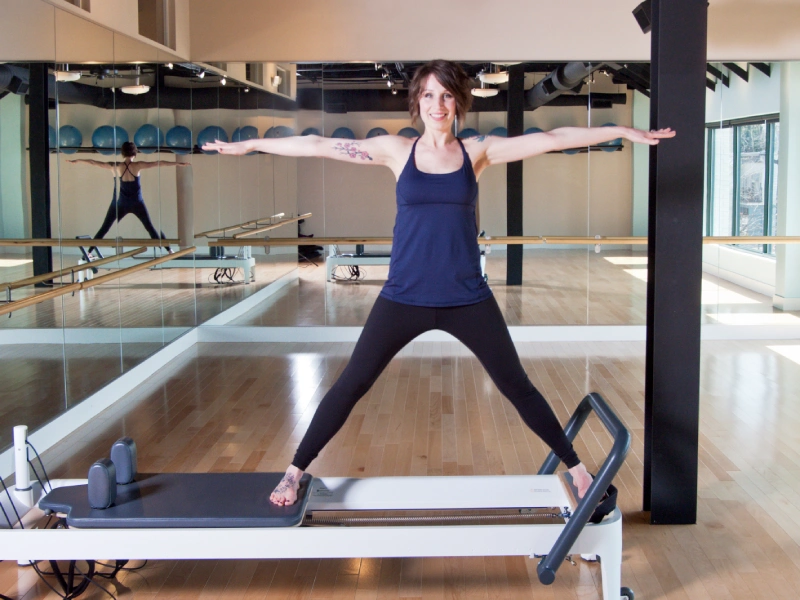
Pilates Side Splits Exercise on the Reformer.
The Pilates Side Splits on the Reformer requires the practitioner to extend the legs out to the sides while maintaining balance and alignment on the machine. This movement not only demands flexibility but also requires strong core stability to maintain proper posture and control throughout the exercise.
Targeted Muscle Groups
- Hamstrings: This exercise helps stretch and release the hamstrings, reducing tension while improving strength and elasticity.
- Hip Flexors: Enhances hip flexibility and mobility, contributing to better balance and overall body control.
- Inner Thighs (Adductors): Lengthens and tones the inner thigh muscles, supporting greater stability during movement.
By using the Reformer, the Side Splits exercise becomes more effective in stretching and strengthening key muscle groups while improving movement control and body awareness.
Benefits of Practicing the Pilates Side Splits Exercise on the Reformer
The Side Splits exercise on the Reformer is not only technically challenging but also offers a wide range of physical benefits. Below are the key advantages of incorporating this exercise into your Pilates routine:
1. Improved Flexibility and Mobility
The Side Splits exercise deeply stretches the hips, inner thighs, and hamstrings, enhancing overall flexibility. Improved flexibility supports more efficient Pilates practice and increases ease of movement in daily activities.
2. Enhanced Core Strength
To maintain control and stability throughout the movement, the core muscles must remain actively engaged. This strengthens the abdominal and lower back muscles, supports better posture, and reduces the risk of injury.
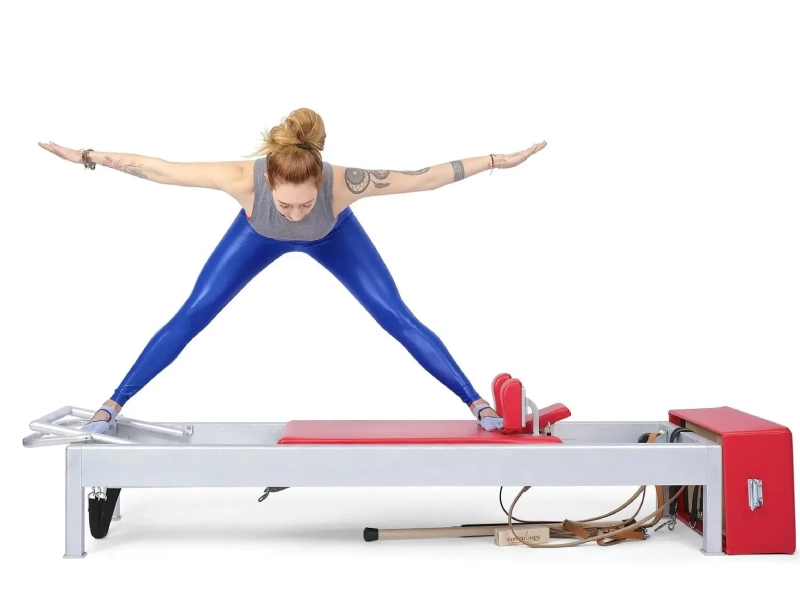
Benefits of Side Splits exercise on Reformer.
3. Better Balance and Stability
Performing Side Splits on the Reformer requires continuous balance and body control. This improves overall stability, which is essential for other Pilates exercises and various physical activities.
4. Reduced Risk of Injury
Stretching and releasing tight muscles helps decrease joint stress and muscular tension, lowering the risk of injury. The Pilates Side Splits exercise on the Reformer also supports muscle recovery and overall physical resilience.
5. Improved Training Performance
Incorporating the Side Splits exercise into your workout routine promotes a balanced development of strength and flexibility. This enhances performance in other Pilates exercises as well as in broader physical training.
Regular practice of the Pilates Side Splits exercise on the Reformer allows you to fully benefit from increased flexibility, strength, and stability, contributing to comprehensive physical development.
Step by Step Guide to Performing the Side Splits Exercise on the Reformer
The Pilates Side Splits exercise on the Reformer can be challenging, but with the detailed instructions below, you can perform it safely and effectively.
Reformer Setup
- Lower the footbar and set the headrest in a high position. Use 1-2 springs depending on your experience and control level. Beginners should start with 2 springs for added stability, then progress to 1 spring as control improves.
- Place a small pad on the Reformer frame to increase traction and protect the feet.
Starting Position
- Step both feet onto the carriage first, then place one foot on the frame to ensure safety and control.
- Keep both feet parallel and hip-width apart, distributing weight evenly across all four corners of each foot.
- Maintain an upright torso with a long spine. Extend the arms out to the sides or place hands on the hips to assist with balance.
Execution of the Side Splits Exercise
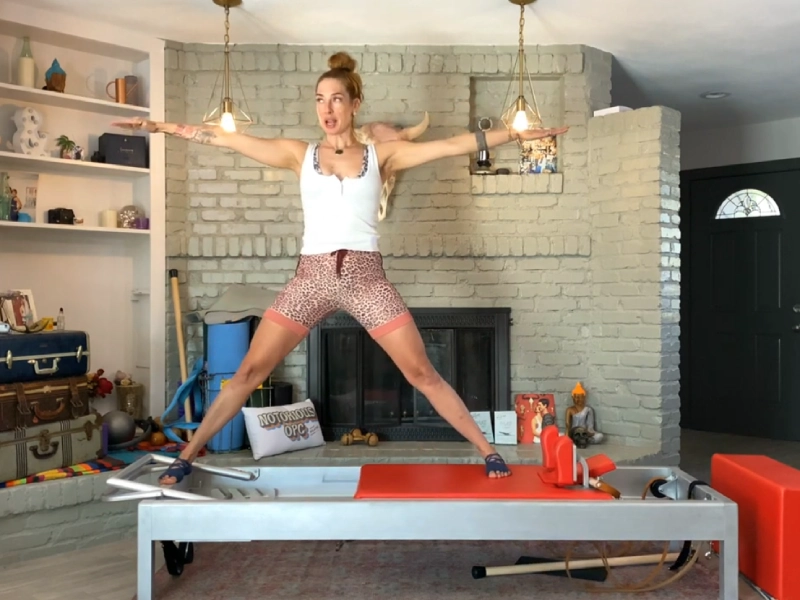
Instructions for performing the Side Splits exercise on the Reformer machine.
- Inhale: Prepare by lengthening the spine, opening the chest, and engaging the core (powerhouse).
- Exhale: Using strength from the leg on the carriage, slowly press the carriage outward, opening the legs to the sides. Keep both legs straight, weight evenly distributed, and avoid shifting the torso to one side.
- Inhale: Pause at the end range where the inner thighs and hips are fully stretched but still under control. Do not allow the carriage to move beyond your ability to control it.
- Exhale: Engage the inner thighs and core to draw the carriage back to the starting position. Keep the spine tall, avoiding rounding the back or pushing the hips backward.
- Repetitions: Perform 3-5 repetitions per side for beginners, or 8–12 repetitions if you are more experienced and seeking greater challenge.
- Switch Sides: After completing the repetitions, take small steps with the heels on the carriage toward the shoulder rests, rotate the body 180 degrees, and repeat on the other side.
Important Safety Notes When Performing the Exercise
When practicing the Pilates Side Splits exercise on the Reformer, keep the following points in mind to ensure safety and maximize effectiveness:
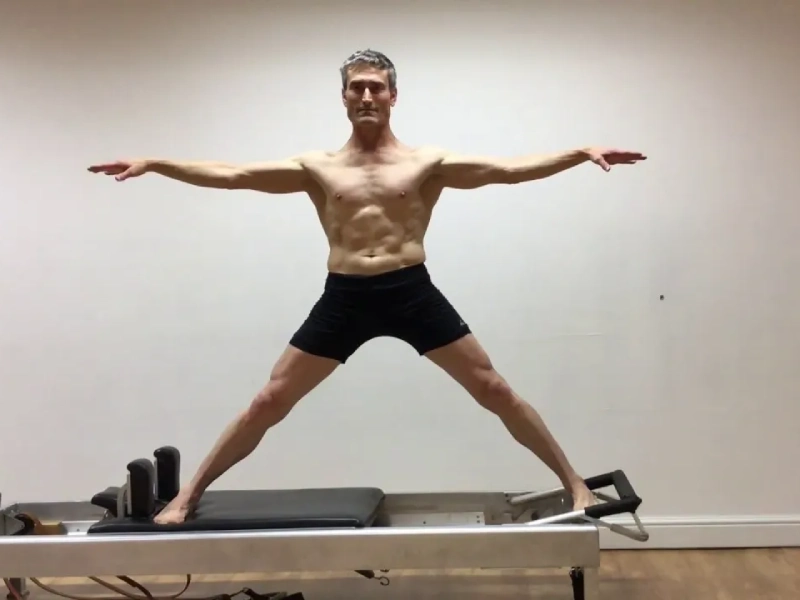
Note the following when performing Pilates Side Splits on a Reformer.
- Control the movement: Move slowly and with full control when opening and closing the legs. Avoid allowing the carriage to move too quickly.
- Maintain a neutral spine: Keep the spine long and neutral, relax the shoulders, and avoid rounding or excessive arching of the back.
- Engage the core: Draw the navel toward the spine before initiating movement to protect the lower back.
- Distribute weight evenly through the feet: Avoid placing excessive pressure on the heels or toes, and prevent ankle or knee collapse.
- Do not lock the knees: Keep the knees soft to reduce joint stress.
- Stay within a controlled range of motion: Do not force the legs into an overly wide position that compromises balance or causes discomfort.
- Check the Reformer setup before training: Ensure springs and components are securely attached to prevent slipping or instability.
- Practice under professional supervision if you are a beginner: A qualified instructor can help correct alignment, ensure safety, and tailor the exercise to your individual condition.
By applying proper technique and following these guidelines, the Pilates Side Splits exercise on the Reformer can help you develop exceptional core strength, flexibility, and control throughout your Pilates practice.