

Pilates Side Kick Exercise: A Complete Guide to Proper Technique and Benefits
05/01/2026Do you want a slim, toned waist? Are you looking to improve your body balance? The Pilates Side Kick exercise may be exactly what you are looking for. This article helps you clearly understand this exercise, its benefits, and how to perform it with proper technique.
What Is the Pilates Side Kick Exercise?
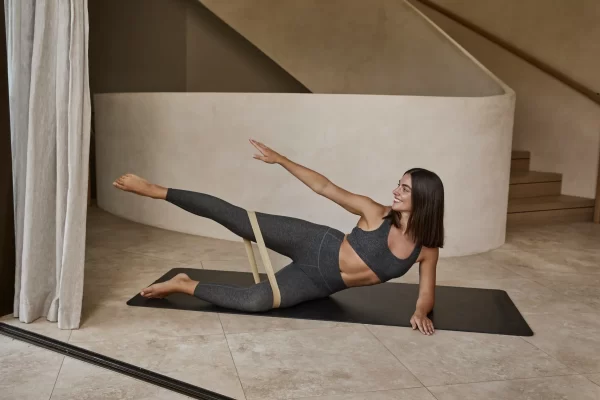
Pilates Side Kick is a fundamental yet highly effective movement in Pilates. It focuses on strengthening and stabilizing the core muscles (the center of the body) and the lateral hip muscles. This exercise not only helps create a slimmer, firmer waist but also improves posture and reduces the risk of lower-back injuries.
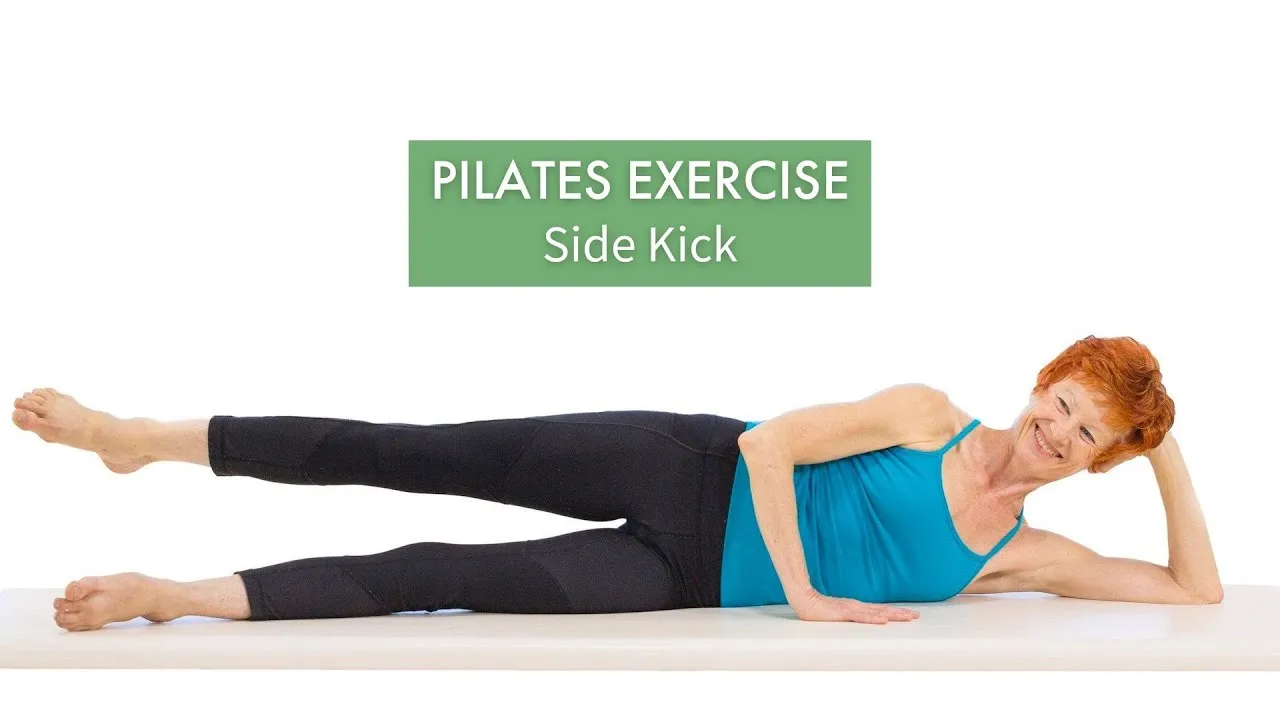
The Pilates Side Kick is a basic yet effective exercise in Pilates.
What Are the Benefits of the Side Kick Movement in Pilates?
Like many Pilates movements, Side Kick is more than just a simple leg-lifting exercise. When performed with correct technique, it delivers deeper benefits.
The movement begins in a side-lying position, with the head supported and the lower body well aligned. This position provides multiple points of support, making balance easier especially for beginners. It is also an ideal moment to practice proper body alignment and learn how to maintain stability and movement control.
In addition, the goal of the Pilates Side Kick exercise is to move the leg without changing the position of the rest of the body. Achieving this helps train effective core control. The exercise also stretches the back of the leg, tones the glutes, and improves overall balance.
Why Is Side Kick an Excellent Training Exercise?
In many other training methods such as walking, running, squats, weightlifting, rowing, or cycling, most movements occur in a single plane the sagittal plane where you move forward and backward.
However, in daily life, we also perform lateral and rotational movements, such as bending to pick something up from the side, reaching for items on a shelf, or stepping sideways. These movements occur in less-trained planes, known as the frontal and transverse planes.
That is why training the body in multiple directions is essential for overall strength, flexibility, and balance not just strength in the front or back.
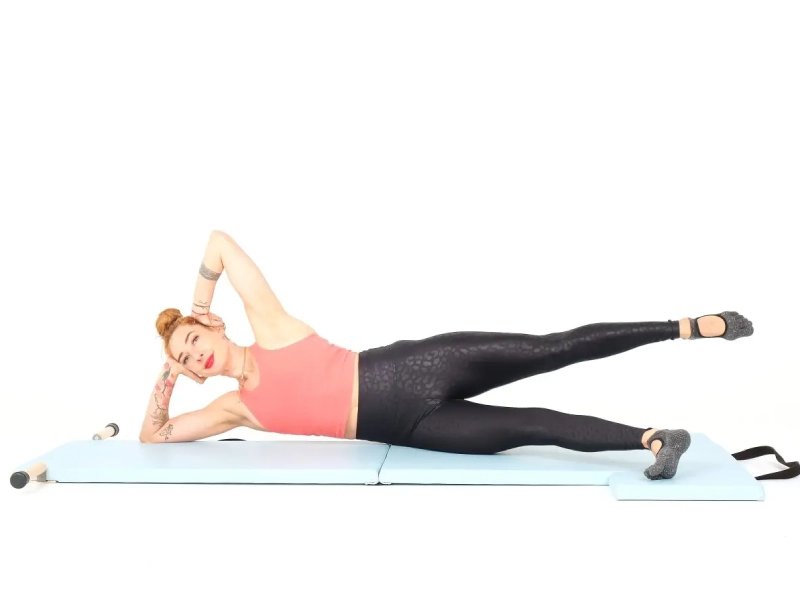
The Pilates Side Kick is a great exercise for strengthening the core muscles.
The Side Kick movement in Pilates is a perfect example of this principle. When practicing this exercise, you maintain balance in a side lying position while moving the leg forward and backward horizontally. Once familiar with the movement, you can add leg rotations, light weights, or explore more challenging variations.
In practice, whether on the Pilates mat or using equipment, there are many exercises that target the lateral body. This is one of the reasons Pilates is considered a comprehensive training method not only for physical strength, but also for improving mental focus and calmness.
How to Perform the Pilates Side Kick Exercise
Preparation:
Lie on your side and align your body along the back edge of the mat. Support your head with one hand and place the other palm on the mat in front of you. Position both legs at a 45-degree angle in front of the body. The feet are slightly turned outward in the Pilates V position.
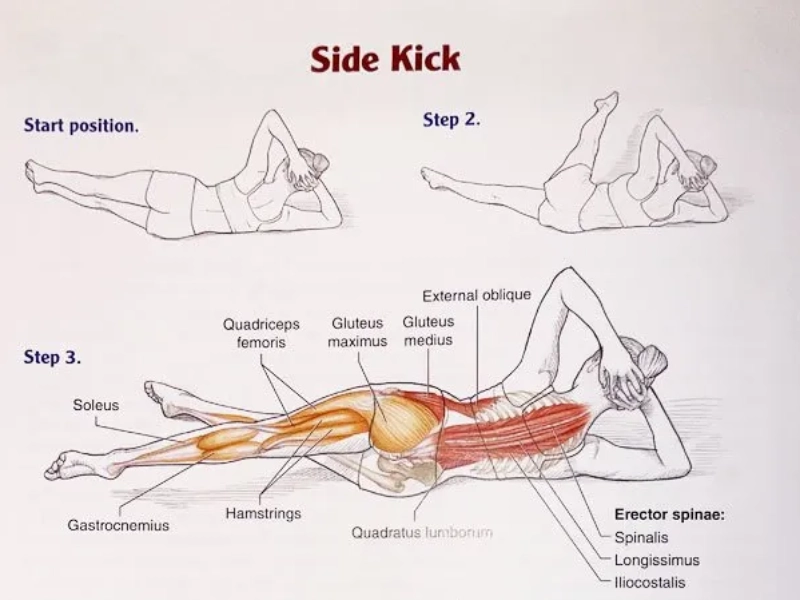
How to perform the Pilates Side Kick exercise.
Steps to Perform:
- Lift the top leg to hip height, rotating it slightly outward from the hip.
- Inhale, draw the navel toward the spine, move the leg forward, and pulse lightly twice as far as possible without rocking the hips. On the second pulse, try to reach a bit farther.
- Exhale and swing the leg backward toward the back corner of the room, gently pointing the toes forward while stretching the front of the hip.
- Repeat 8–10 times on each side. Then bring both legs back to the starting position to prepare for the next exercise in the Up/Down sequence.
Tip:
- To better visualize the Side Kick exercise, imagine your leg swinging like a pendulum while your torso remains completely still.
- If you feel discomfort in the shoulder, wrist, or neck, rest your head on your arm. You may also place a rolled towel under the neck for extra support.
Pilates Side Kick Exercise with Equipment
Side Kick is a classic Pilates movement typically performed on the mat. However, it can also be practiced with supportive equipment such as the Spine Corrector or the Magic Circle.
Pilates Side Kicks on the Spine Corrector
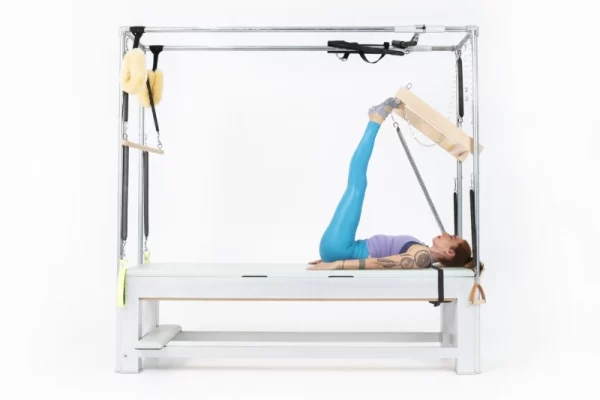
Side Kicks on the Spine Corrector are an interesting variation within the Pilates system. This version enhances lateral muscle strength while improving flexibility and balance. The Spine Corrector is a specialized Pilates apparatus designed to support spinal flexion and extension, helping practitioners better feel and control each muscle movement.
Detailed Instructions for Side Kicks on the Spine Corrector
Follow these steps to perform Side Kicks on the Spine Corrector safely and effectively:
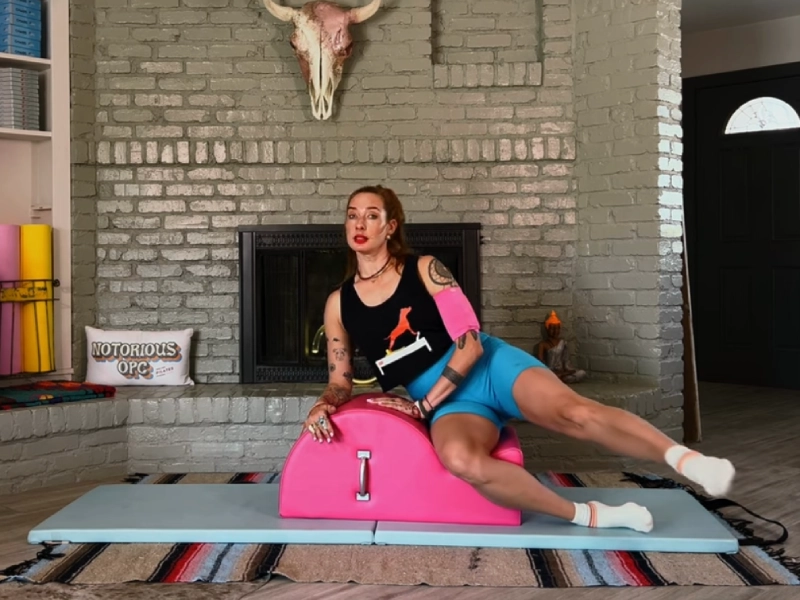
How to perform Pilates Side Kicks on a Spine Corrector.
- Sit on the Spine Corrector with the hips positioned at the highest point of the apparatus. The back and spine gently follow the natural curve of the equipment.
- Place one hand on the apparatus for balance support, while the other hand may rest on the hip to feel the movement. Extend both legs and stack them, with the heels touching to ensure a stable starting position.
- Slowly lift the top leg upward with control. Keep the hips stable and avoid rotating the torso.
- As the leg returns to the starting position, maintain steady breathing and smooth, rhythmic movement.
- Repeat 8-10 times before switching to the opposite side.
Common Mistakes When Performing Side Kicks on the Spine Corrector
Below are common errors and how to avoid them when practicing the Pilates Side Kick exercise on the Spine Corrector:
1. Incorrect posture causing muscle strain or injury
A common mistake is poor alignment rounding the back or rotating the torso leading to spinal instability or uneven hip placement, which creates imbalance and unnecessary strain.
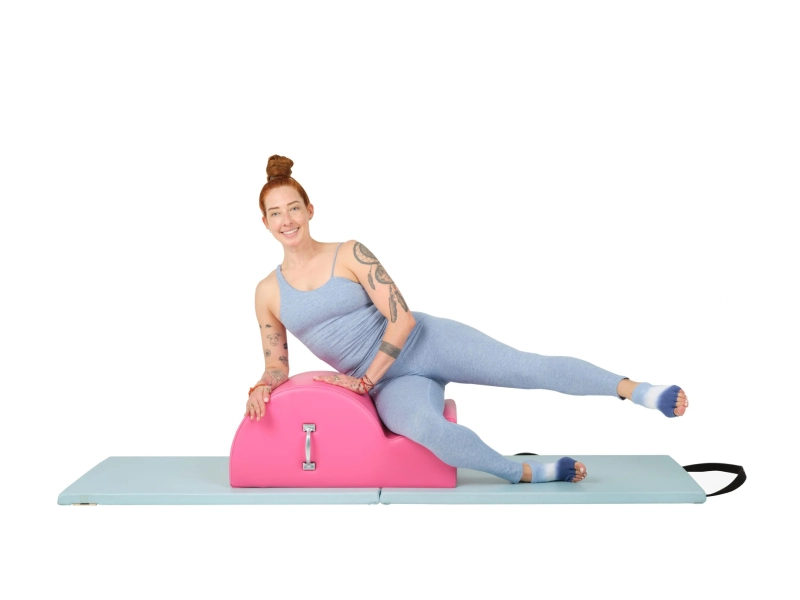
Common mistakes when performing Side Kicks exercises on a Spine.
Correction: Keep the spine neutral, hips parallel to the floor, and firmly supported on the Spine Corrector.
2. Loss of balance during movement
Many practitioners struggle to maintain balance, often leaning too far forward or backward and failing to engage the core.
Correction: Activate the core to stabilize the body and control each leg movement gently, avoiding forceful or uncontrolled kicks.
3. Kicking too fast without control
Performing the movement too quickly reduces effectiveness and increases injury risk.
Correction: Execute the kicks slowly and with control to properly activate the targeted muscle groups.
4. Irregular breathing or holding the breath
Breathing plays a vital role in Pilates, supplying oxygen to the muscles and maintaining core stability. Many people hold their breath during leg kicks, reducing energy and focus.
Correction: Maintain steady breathing inhale to prepare and exhale during the movement.
Pilates Side Kicks with the Magic Circle
Side Kicks with the Magic Circle are a distinctive variation in the classical Pilates repertoire. In this exercise, the Magic Circle is usually placed between the legs or used with the arms to ensure even resistance during leg movements. This variation enhances precision, focus, and control throughout the practice.
How to Perform Pilates Side Kicks with the Magic Circle
1. Starting position:
- Lie on your side on the mat, aligning the head, shoulders, ribs, and hips along the back edge of the mat.
- Extend both legs and angle them toward the front edge of the mat.
- Support your head by bending the elbow, or for added challenge, place the top hand behind the head.
- Place the lower ankle inside the Magic Circle to secure it, with the top leg resting lightly on the upper part of the ring.
- Keep the spine long, lengthen the waist, and gently engage the abdominal muscles to stabilize before starting.
2. Steps to perform the Pilates Side Kicks with the ring:
Step 1: Press the Magic Circle downward (8–10 reps)
- Using the top leg, slowly press the ring downward.
- Avoid letting the leg bounce back. Instead, control the resistance as the ring returns slowly to the starting position.
- If you are hypermobile, slightly soften the knee to better engage the upper inner thigh muscles.
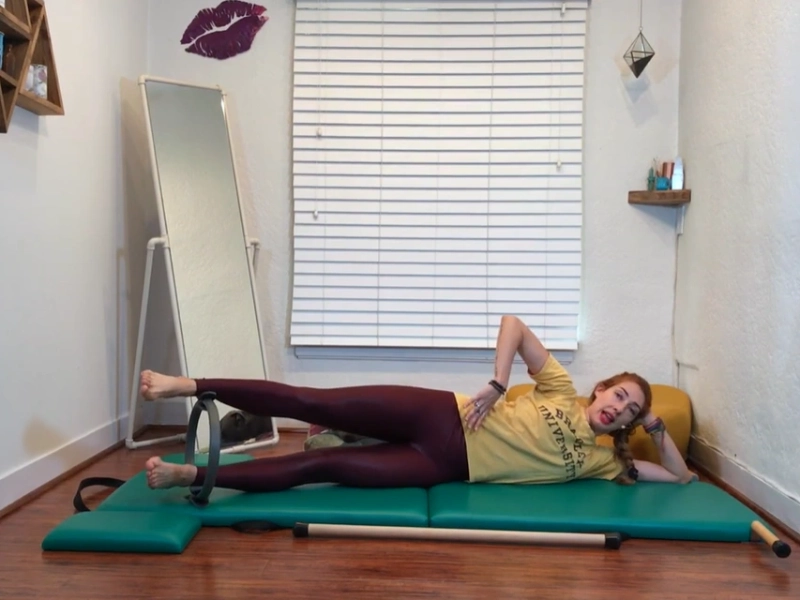
Pilates Side Kicks exercise with Magic Circle.
Step 2: Lift the Magic Circle upward (8-10 reps)
- Move the top leg inside the ring.
- Slowly push the ring upward, then control its return to the starting position.
Step 3: Lift the lower leg (8-10 reps)
- Place the top leg back on the ring without pressing down.
- Slowly lift the lower leg to meet the top leg, then lower it back down.
- Control the movement to keep the ring stable throughout.
Training notes:
- Maintain an upright posture without leaning forward or backward.
- Control your breathing inhale to prepare and exhale during movement.
- Focus on control rather than speed.
You may repeat these steps 2–3 times on each side for optimal results. This exercise can be further adjusted with variations to increase difficulty or target different muscle groups.
The Pilates Side Kick exercise is an excellent choice for improving both physique and overall health. To achieve the best results, practice consistently and combine your training with a healthy diet. Wishing you success on your journey toward a stronger, more balanced body.