

Pilates Short Spine Exercise on the Reformer: Benefits and Step by Step Guide
19/01/2026The Pilates Short Spine exercise on the Reformer not only helps improve spinal health but also strengthens the core muscles and enhances balance. Discover how to perform this exercise and explore the remarkable benefits it offers in the article below.
What Is the Pilates Short Spine Exercise on the Reformer?
The Pilates Short Spine exercise is one of the most basic and popular movements in Reformer Pilates. This exercise focuses on spinal elongation, helping improve flexibility, enhance suppleness, and support better posture. A defining feature of Short Spine is the seamless coordination between breath and fluid movement, creating a deeply relaxing experience while promoting spinal health.
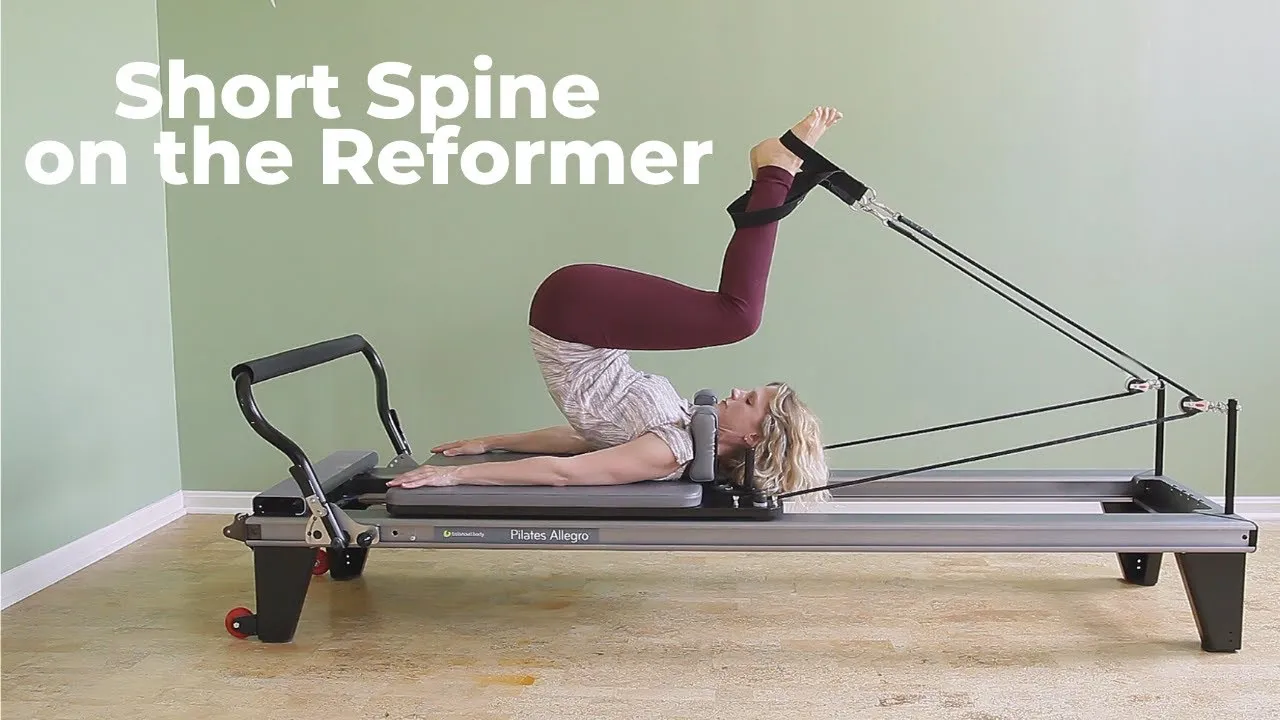
Pilates Short Spine exercise on the Reformer.
In addition, Short Spine stimulates blood circulation and reduces compression on the spine, making it especially suitable for people who sit for long periods or experience back discomfort. It is an ideal exercise for maintaining a healthy, flexible spine and encouraging more optimal posture in everyday life.
Benefits of the Pilates Short Spine Exercise on the Reformer
The Pilates Short Spine exercise on the Reformer delivers a wide range of physical and mental health benefits. Below are the most notable advantages:
1. Improves spinal flexibility and mobility
Short Spine is particularly effective at stretching the entire posterior chain, especially the hamstrings, glutes, and lower back. As you articulate the spine upward and slowly roll down vertebra by vertebra, these muscle groups are lengthened to their full capacity, releasing tension and increasing spinal mobility. This not only reduces the risk of injury but also provides a deep, satisfying stretch, ideal for those who sit frequently or experience lower back tightness.
2. Enhances posture and relieves back pain
When performed with proper technique, the Short Spine exercise helps develop greater postural awareness. Through spinal lengthening and core engagement, it supports improved posture during standing, sitting, and walking. In particular, the Pilates Short Spine exercise on the Reformer can help alleviate chronic back pain by reducing spinal pressure caused by prolonged sitting or improper movement patterns.
3. Strengthens the core and improves balance
Short Spine emphasizes activation of the core muscles, including the abdominals, back, and hips, during the lifting and lowering of the pelvis. This strengthens stability and control in the abdominal and lower back regions, enhances overall balance, and helps prevent potential injuries.
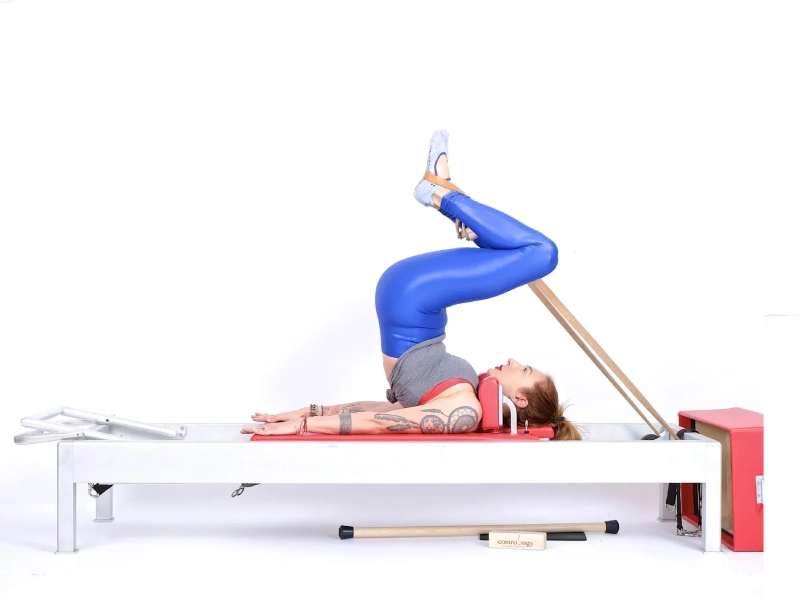
Benefits of Short Spine exercises on the Reformer.
4. Stimulates circulation and reduces stress
This exercise not only promotes relaxation and muscular release but also stimulates blood circulation, improving oxygen delivery throughout the body. The combination of rhythmic breathing and smooth, controlled movement creates a calming effect, helping to reduce stress and mental fatigue after long or demanding workdays.
5. Supports overall Pilates training effectiveness
Pilates Short Spine is not just a standalone exercise it also works effectively as a warm up or finishing movement within a Pilates sequence. It enhances the connection between Pilates exercises, preparing the body with greater flexibility and control to perform other movements more efficiently.
Step by Step Guide to Performing the Pilates Short Spine Exercise on the Reformer
To perform the Pilates Short Spine exercise on the Reformer safely and accurately, it is essential to follow each step carefully and pay close attention to body alignment. Below is a detailed guide to help you practice Short Spine on the Reformer effectively:
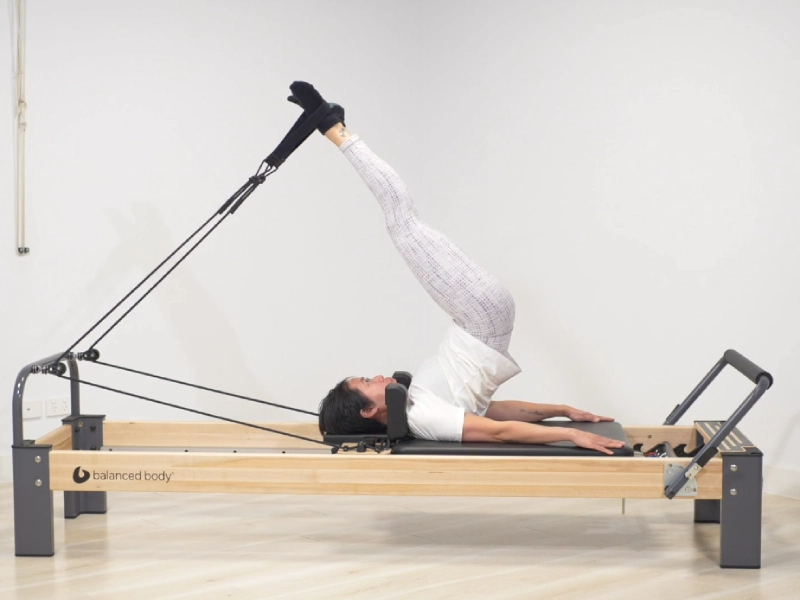
Steps to perform the Pilates Short Spine exercise on a Reformer.
- Lie on your back on the Reformer, with your head resting on the headrest and your hips positioned close to the foot straps.
- Place your feet into the straps so the straps sit around the middle of the feet. Ensure both legs are straight and parallel. Rest your arms alongside your body with palms facing down to help stabilize the torso throughout the movement.
- Slowly lift both legs off the carriage, bringing them straight up toward the ceiling so the hips form a 90-degree angle.
- With the legs vertical, engage the abdominal and hip muscles to lift the pelvis off the carriage slowly and with control. The spine rolls upward naturally, following its curved articulation.
- Gradually lower the spine back down, one vertebra at a time, starting from the upper back, then the mid back, and finally the lower back and pelvis, until the spine is fully resting on the carriage.
- Once the pelvis has lowered, slowly guide the legs back to a horizontal position, parallel to the carriage, returning to the starting position.
- Repeat the movement 5–10 times, depending on your ability and comfort level.
Tip: If you are new to the Reformer or unfamiliar with spinal articulation exercises, practice foundational movements such as Bridging or Mat Roll Down before attempting Short Spine. Once sufficient strength and control are developed, Short Spine will provide a deeply restorative stretch for the entire body.
Important Notes When Practicing
- Throughout the exercise, maintain balance between lifting and lowering the pelvis; avoid moving too quickly or using unnecessary tension.
- Coordinate breathing with movement: inhale as you lift the legs and hips, and exhale as you articulate the spine back down.
- Focus on controlled, precise movement; do not allow the body to collapse or rely excessively on upper body effort.
- Beginners may benefit from guidance by a qualified instructor to ensure proper technique and prevent injury. Practice at a slow pace, listen to your body, and maintain correct alignment throughout the exercise.
Through this article, you now have a clear understanding of how to perform the Pilates Short Spine exercise on the Reformer and the benefits it offers. Practice consistently to keep your spine healthy, your body flexible, and to achieve the best possible results from your Pilates training.