

Pilates Seal Exercise: Benefits, How to Perform, and Variations
07/01/2026In the classical Pilates system, the Seal exercise is one of the movements that seamlessly combines control, breathing, and smooth spinal motion. This exercise not only strengthens the core muscles but also improves balance and coordination. Let’s explore the benefits, execution, and variations of the Pilates Seal exercise in the article below.
What Is the Pilates Seal Exercise?
Pilates Seal is exercise number 30 in the sequence of 34 classical mat exercises developed by Joseph Pilates. This movement mimics the image of a seal rolling on the sand, with the hands holding the feet while the body moves in a smooth, arched motion. The Seal is an excellent exercise for developing balance, flexibility, and especially core strength.
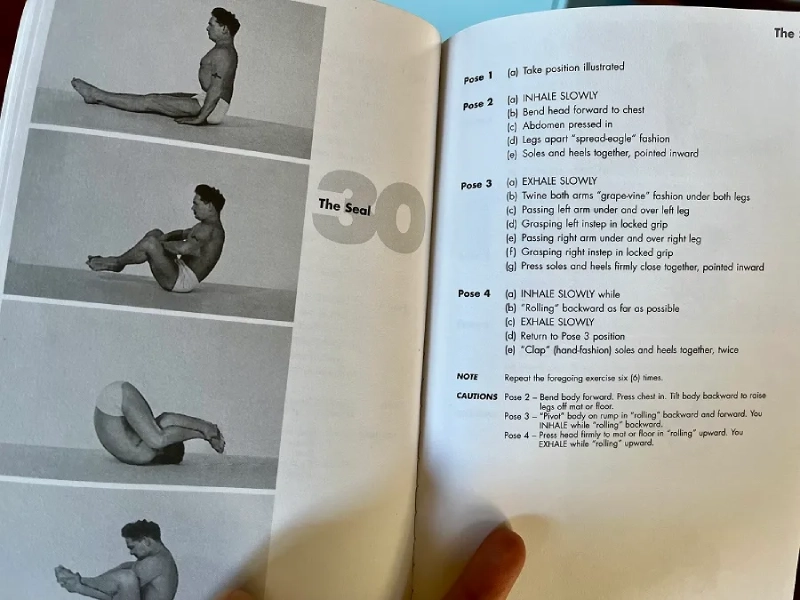
The Seal is one of the 34 original Pilates Matwork exercises by Joseph Pilates.
Seal is a Pilates movement based on Rolling Like a Ball. This stretching and massaging exercise often appears toward the end of a mat workout. Breathing is used to rock the body back and forth, massaging the spine while strengthening the core.
Benefits of the Pilates Seal Exercise
The Seal exercise is not only playful but also offers many valuable physical and mental benefits. Below are the key benefits it provides:
1. Improves Flexibility and Balance
The Seal exercise significantly enhances flexibility, particularly in the spine and hips. As you roll back and forth from a seated position into a rounded shape, the body becomes more supple, helping to reduce tension and increase joint range of motion. In addition, this movement requires focused balance, improving overall balance and coordination skills that are essential in daily life and athletic activities.
2. Enhances Muscle Strength
Seal is an excellent exercise for strengthening the core muscles, including the abdominals, lower back, and hip muscles. When performing this movement, you must rely on core strength to control the motion and maintain balance. This not only builds muscle strength but also improves posture and helps prevent injuries, especially those related to the spine.
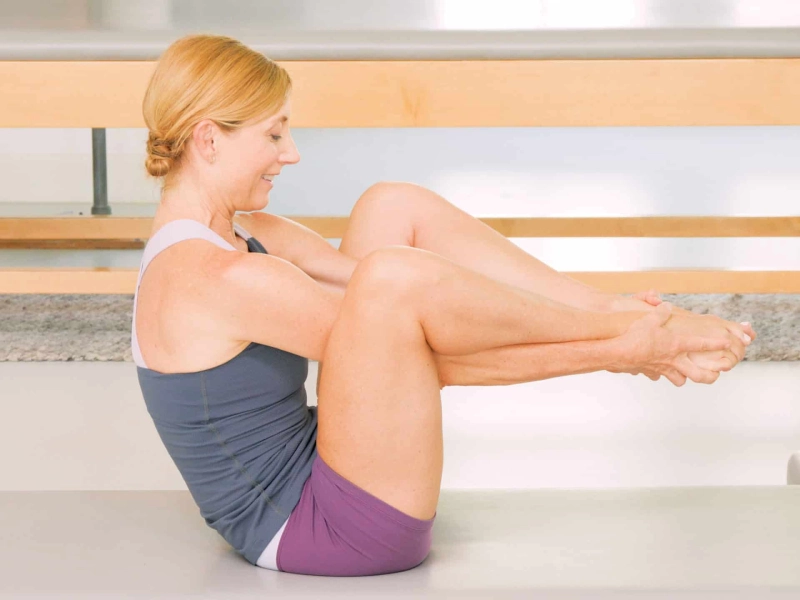
The Seal exercises offer many benefits to the body.
3. Promotes Mind – Body Connection
Pilates in general, and the Seal exercise in particular, emphasizes the connection between body and mind. While performing this exercise, you must focus on breath control and coordinated movement. This helps improve concentration, reduce stress, and enhance mental well being. The Pilates Seal exercise is not just a physical workout but also a form of moving meditation, helping you find calm and balance in daily life.
4. Relieves Stress and Boosts Energy
The Seal exercise is gentle and playful, making it ideal for relieving tension after a long day. The smooth, rhythmic movement helps stimulate circulation and refresh the body with renewed energy. This makes the Seal exercise a great choice for starting the day or relaxing before bedtime.
How to Perform the Seal Exercise
The Seal exercise is typically performed to massage the spinal muscles, build strength, and test balance and coordination. It is often included at or near the end of a mat Pilates session.
Steps to Perform the Pilates Seal Exercise:
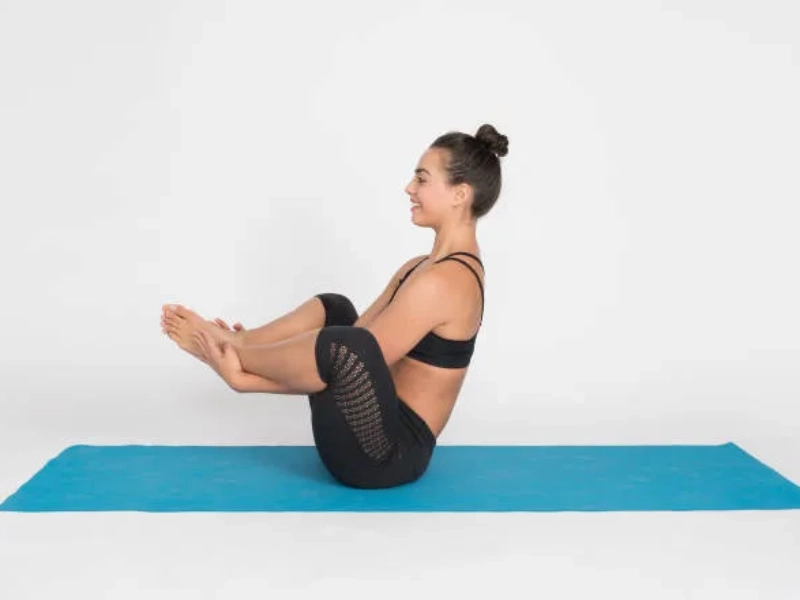
Detailed instructions on how to perform the Pilates Seal exercise.
- Step 1: Sit near the front of your mat with your knees bent toward your chest and heels together. Open your knees to shoulder width. Reach your arms through your legs and hold the outside of your ankles.
- Step 2: Lean back slightly and balance on your tailbone. Lift your feet just off the mat. Keep your knees within your frame and draw your navel deeply toward your spine.
- Step 3: Inhale and roll back while pulling your legs with you. Balance on the base of your shoulder blades. Allow your legs to extend slightly until they move overhead (carefully resting your head on the mat). Clap your heels together three times, like a seal flapping its fins.
- Step 4: Exhale as you roll forward to the starting position, tucking your chin toward your chest. Maintain balance and clap your heels together three times. Your toes should not touch the mat.
- Step 5: Repeat 5–8 times, feeling the massage effect along the muscles of your back.
Variations of the Seal Exercise
The Pilates Seal exercise comes in several variations to suit different fitness levels, from beginners to advanced practitioners. These variations help maximize the benefits of the Seal while ensuring safety and effectiveness during practice.

Bài tập Pilates Seal có nhiều biến thể để phù hợp với các cấp độ tập luyện.
1. Seal with Hands Holding the Shins
- Description: Instead of holding the feet, you can grip the shins or ankles. This reduces the difficulty of the exercise and makes it easier to control the movement.
- Benefits: This variation is suitable for beginners or those with limited hip and hamstring flexibility. It allows practitioners to become familiar with the movement without placing excessive strain on the body.
2. Single Leg Seal
- Description: In this variation, one leg remains in the traditional Seal position while the other leg extends forward. You can alternate legs during the exercise.
- Benefits: Single Leg Seal increases the level of difficulty by emphasizing balance and core strength. It also improves flexibility in the extended leg while challenging overall body control.
3. Seal with Roll Up
- Description: After rolling back, instead of returning directly to the starting position, you add a Roll-Up movement. Once you curl up to sit, continue rolling down and then roll back again.
- Benefits: This variation combines two classical Pilates exercises, enhancing core strength and improving spinal flexibility.
The Pilates Seal exercise is a perfect blend of strength and fluidity, helping you build a strong core and a flexible spine. By applying suitable variations, you will quickly notice progress and fully experience the benefits of the Pilates Seal exercise.