

Pilates Scissors Exercise: Benefits and How to Perform It Correctly
27/12/2025Do you want a toned waist and an upright posture? The Pilates Scissors exercise may be exactly what you’re looking for. Although it appears simple, this movement delivers surprisingly powerful benefits for the body.
What Is the Pilates Scissors Exercise?
The Scissors exercise is one of the 34 original Pilates exercises. It is a fundamental, leg-focused Pilates exercise that primarily strengthens the transverse abdominis and hip flexor muscles. True to its name, Pilates Scissors involves alternately lifting and lowering the legs while engaging multiple core muscles.
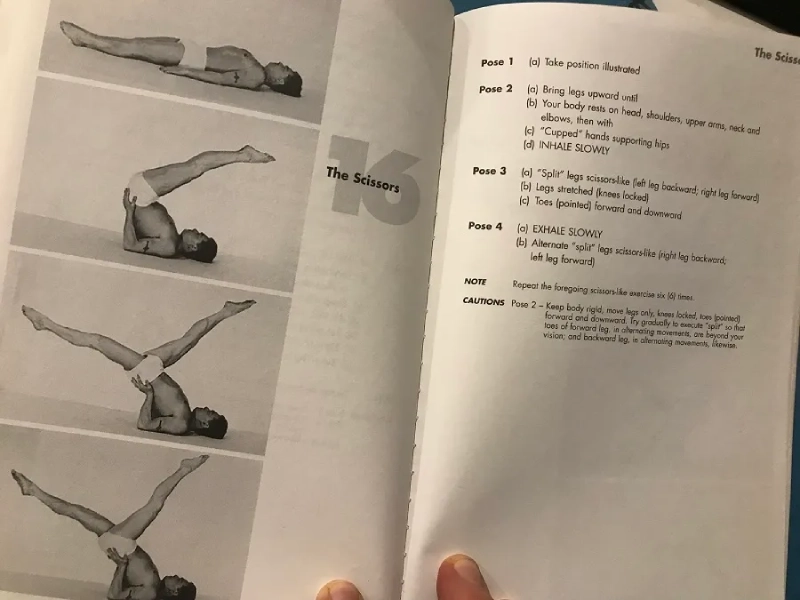
Pilates Scissors exercise are described in detail in the book Return to Life of Joseph Pilates.
Training the abdominal muscles is always worthwhile, as your trunk is responsible for stability, balance, and posture. While performing Pilates Scissors, your core will quickly heat up, but the leg muscles are also fully engaged with each repetition. You may feel your quadriceps and inner thighs working, along with a stretch through the hamstrings as you “kick.” Keeping your legs off the mat also increases lower-body engagement.
Benefits of the Pilates Scissors Exercise
Pilates Scissors is not only a challenging abdominal exercise but also provides comprehensive benefits when practiced correctly and consistently. Below are key reasons to include this movement in your workout routine.
1. Strengthens the Deep Core Muscles
As the deepest and innermost core muscle, the transverse abdominis plays a crucial role in spinal stability and protection. Strengthening this muscle builds a solid foundation for other activities such as walking, running, heavy lifting, and even everyday movements like getting out of bed.
2. Targets the Hip Flexors
Underdeveloped hip flexors are a common muscular imbalance, especially in people who sit for long periods. The hip flexors are not a single muscle but a group of muscles forming the hip flexor complex. These muscles often experience tension and stress, making it essential to include daily exercises such as Pilates Scissors that specifically target them.
3. Improves Muscular Endurance
You’ll feel your core activate and your abdominal muscles warming up almost immediately when performing Pilates Scissors. The scissor-kicking motion builds muscular endurance through time under tension holding specific muscles under load for extended periods. Because Pilates Scissors engages the entire core and hip flexors, you may also notice improved strength in squats, push-ups, deadlifts, and other core-intensive exercises.
4. Supports Better Posture and Reduces Back Pain
When performed on a Spine Corrector, the Pilates Scissors exercise helps lengthen and maintain the spine’s natural curves, contributing to better posture. Using the Spine Corrector allows tight muscles in the back and hips to release while reducing pressure on the spine. For individuals experiencing posture-related back pain, this variation can help alleviate discomfort and improve overall body comfort.
How to Perform the Basic Pilates Scissors Exercise
Steps to perform Pilates Scissors:

Perform the basic Pilates Scissors exercise.
- Lie on your back with your arms relaxed by your sides, palms pressing into the mat. Keep your elbows and lower back in contact with the floor.
- Engage your core by pressing your lower back into the mat and posteriorly tilting the pelvis as you lift both legs about six inches off the floor (approximately a 45-degree angle), with feet either flexed or pointed.
- Lift your right leg to 60 degrees while keeping your left leg suspended in space. (For reference, legs flat on the mat equal 0 degrees, while legs lifted directly over the hips equal 90 degrees.)
- Lower the right leg back to 45 degrees as you lift the left leg. This completes one repetition.
- Continue alternating legs, keeping the knees as straight as possible.
Pilates Scissors Using a Spine Corrector
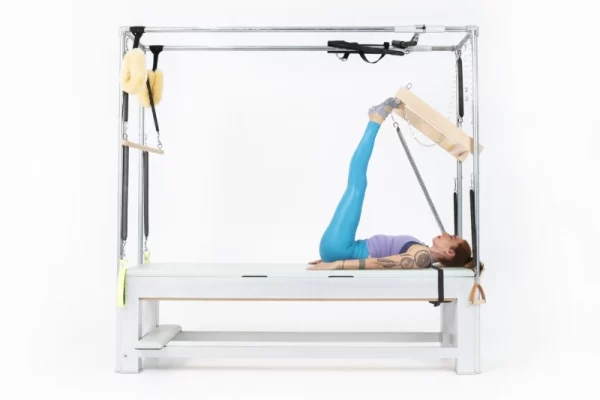
The Spine Corrector is a Pilates apparatus with a distinctive curved shape that supports the lower back and spine during movement. This design allows practitioners to perform flexibility-demanding exercises safely while reducing injury risk. Performing Pilates Scissors on a Spine Corrector not only activates the core but also enhances flexibility, posture alignment, and overall balance.
This variation is suitable for all levels, from beginners to advanced practitioners. It is particularly beneficial for those aiming to improve hip and thigh flexibility or address posture issues and back pain.
Pilates Scissors on the Spine Corrector requires precision and body control for maximum effectiveness. The exercise is performed as follows:
Starting position:
Sit on the Spine Corrector with your lower back supported by the curve of the apparatus. Ensure the tailbone and lower hips are properly supported. Place your hands lightly behind your head to support the neck, with elbows open to the sides.
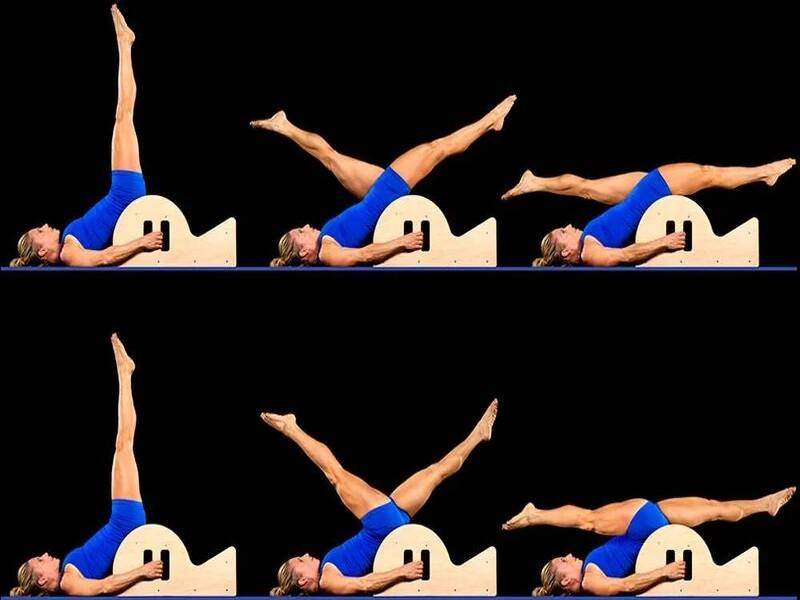
Perform Pilates Scissors on the Spine Corrector.
Steps to perform Pilates Scissors on the Spine Corrector:
- From a reclined position, slowly lift both legs off the floor, creating a 90-degree angle at the hips. Keep the abdominal muscles engaged to support the spine.
- Extend one leg upward toward the ceiling while the other leg reaches straight toward the floor, mimicking a scissor motion.
- When one leg reaches its maximum range, quickly switch legs lowering the raised leg and lifting the other while maintaining core and hip stability.
- After completing the desired number of repetitions (typically 8-10 per side), slowly lower both legs to the floor. Maintain steady breathing and relax the body.
Modifications for the Pilates Scissors Exercise
Although Pilates Scissors is considered an advanced exercise, it can be performed safely and effectively even by those with limited experience. Adjusting the movement to suit your fitness level helps you access the exercise more comfortably while still gaining maximum benefits.
- Raise the legs higher: Position the lower leg slightly higher than 45 degrees. The closer the leg is to the floor, the more challenging the exercise becomes. As you gain strength and confidence, gradually lower the leg.
- Use a towel for support: If your lower back lifts off the mat, place a folded towel under the lumbar curve to provide support and remind you to press the back into the floor.
- Use arm assistance: Lightly hold the leg during transitions for added control. This reduces strain
- on the hip flexors while allowing you to focus on lower abdominal engagement. Lift the upper body: For an added challenge, lift the head, neck, and shoulders off the mat while alternating the legs to increase upper abdominal activation. (Light weights may be used for extra intensity.) Be sure not to arch the back off the mat.
Beginner Tips for the Pilates Scissors Exercise
Because Scissors is an intermediate-to-advanced movement, beginners should modify the exercise to improve effectiveness and safety. The lower you drop your legs, the more resistance and challenge you create for the lower abdominals. Consider the following tips when starting out:
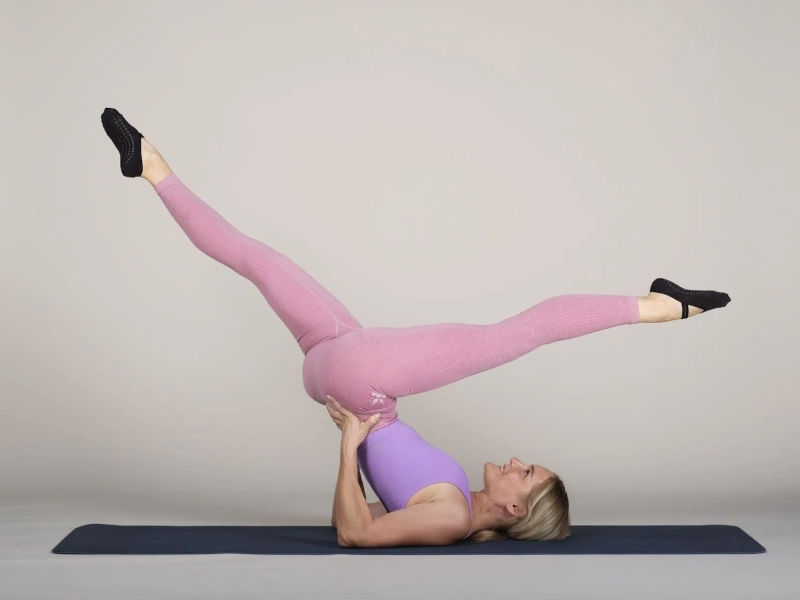
You need to adjust this exercise if you are a beginner to make the training process easier.
- Avoid lowering the legs too much at first. As strength improves, gradually increase the range of motion.
- Keep the knees slightly bent during the exercise to reduce resistance on the hip flexors and prevent arching the lower back.
Although this movement is generally safe, certain individuals including pregnant women and those with neck or back injuries should consult a healthcare professional before performing Pilates Scissors or any abdominal exercise.
Through this article, we’ve explored the Pilates Scissors exercise, from its powerful benefits to detailed execution methods. With this information, you’re now ready to begin your journey toward a stronger core and a more defined waistline. Remember, consistency is the key to achieving lasting results. Wishing you success in your Pilates practice!