

Pilates Russian Squats on the Reformer
28/01/2026Pilates Russian Squats on the Reformer not only strengthen the calves, thighs, and glutes but also improve balance and flexibility. Discover proper technique, key benefits, and injury prevention tips in the following article.
Introduction to Pilates Russian Squats on the Reformer
Pilates Russian Squats on the Reformer are an advanced squat variation that uses the Reformer machine to increase training intensity and effectiveness. This exercise primarily targets the lower body, especially the legs, thighs, and glutes, while requiring precise coordination between strength, control, and balance.
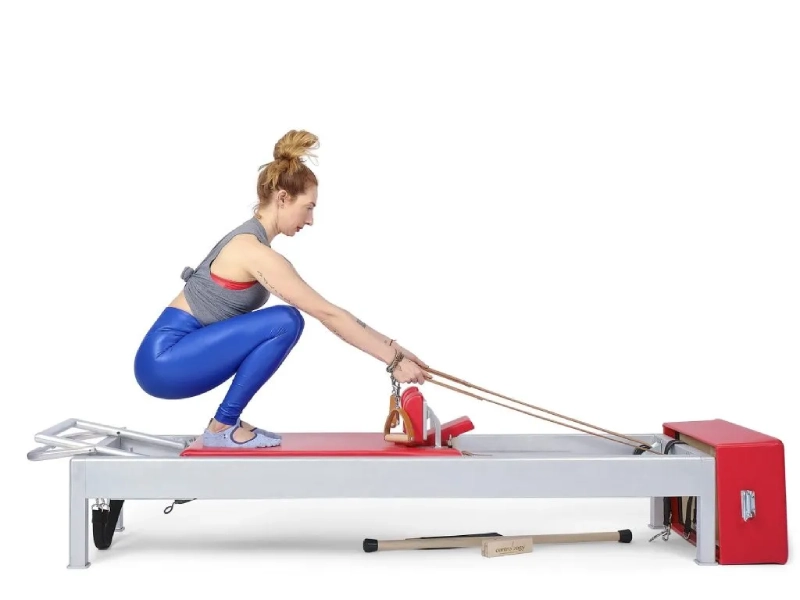
Pilates Russian Squats on the Reformer.
This movement not only builds strength in major muscle groups but also improves balance and flexibility while enhancing the load-bearing capacity of the knees and hips. The combination of the Reformer machine and the squat movement allows practitioners to adjust difficulty levels and easily modify workout intensity according to individual needs.
Russian Squats are commonly used to improve athletic performance and develop foundational strength that supports many other Pilates exercises. Both beginners and experienced practitioners can perform this exercise, as its difficulty can be easily adjusted based on technique and control level.
Benefits of Pilates Russian Squats on the Reformer
Pilates Russian Squats on the Reformer offer outstanding benefits, not only enhancing lower-body strength but also improving flexibility, balance, and overall physical health. Below are the key benefits of this exercise:
1. Strengthens the calves, thighs, and glutes
Russian Squats primarily engage major lower-body muscle groups such as the calves, quadriceps, hamstrings, and gluteus muscles. Performing squats on the Reformer with resistance straps increases the challenge, allowing muscles to work more efficiently and promoting greater strength and muscle tone in the lower body.
2. Improves flexibility and balance
With the support of the Reformer machine, Pilates Russian Squats help improve joint flexibility, particularly in the knees and hips. Continuous, controlled movement enhances joint mobility while significantly improving balance, especially during body-control-focused movements like squats.
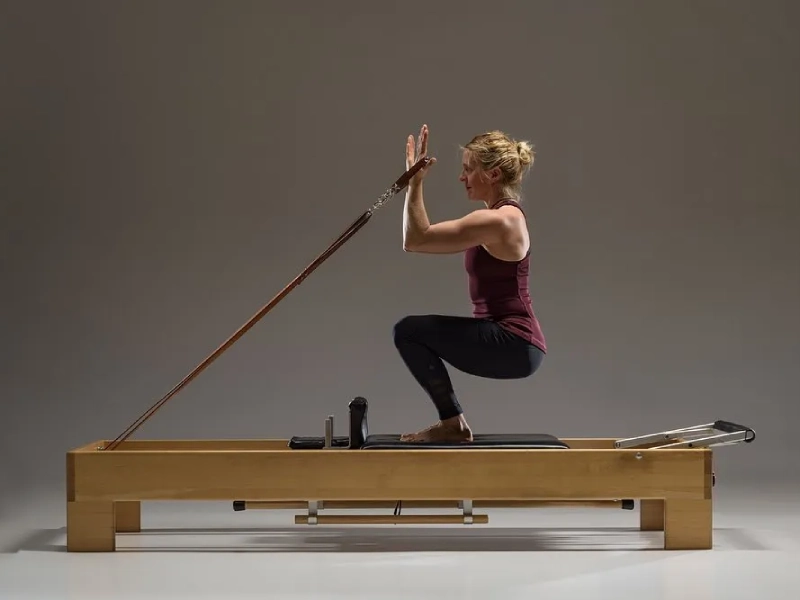
Benefits of Russian Squats on the Reformer.
3. Supports knee and hip joint health
Executing Pilates Russian Squats on the Reformer with correct technique helps reduce stress on the joints, especially the knees and hips. Thanks to the adjustable resistance system of the Reformer, this exercise strengthens the muscles surrounding the joints, improving stability, joint health, and reducing the risk of injury.
4. Enhances posture and overall mobility
Pilates exercises, including Russian Squats, require precise posture and controlled movement. This helps improve overall posture, encouraging better coordination between the spine, back, and surrounding muscle groups. At the same time, muscle and joint flexibility improves, allowing the body to move more freely and perform daily activities with a lower risk of injury.
5. Boosts workout and athletic performance
Regular practice of Pilates Russian Squats on the Reformer helps build core lower-body strength, forming a solid foundation for other exercises and athletic activities. Individuals who participate in sports requiring strong legs, such as running, cycling, or jumping-will notice clear performance improvements after incorporating this exercise into their Reformer workouts.
How to Perform Russian Squats on the Reformer
Pilates Russian Squats on the Reformer are a challenging movement that enhances lower-body strength and flexibility. To perform this exercise correctly, follow the steps below and observe important safety guidelines to avoid injury:
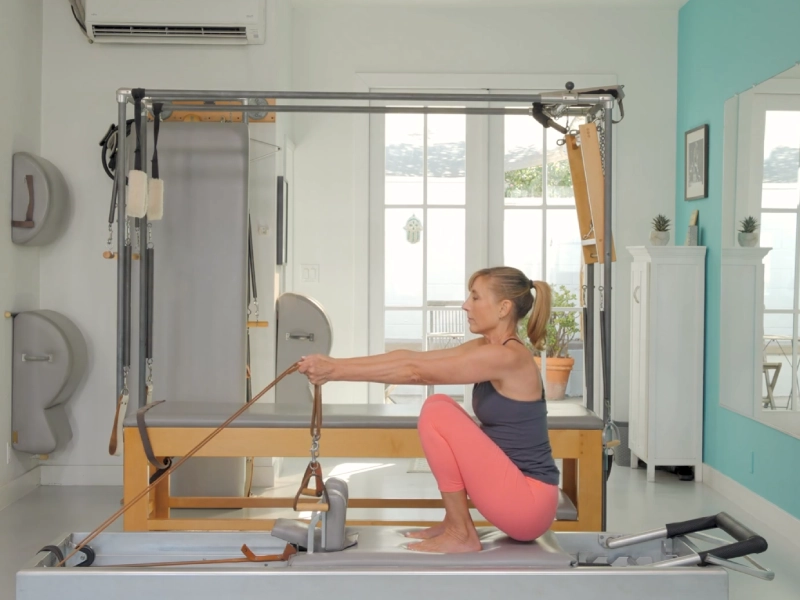
Steps to perform Russian Squats on the Reformer machine.
- Stand on the Reformer with both feet placed parallel on the moving carriage. Lightly hold the footbar or keep your arms relaxed by your sides to maintain balance. Keep your spine straight, knees slightly bent, and gaze forward. This starting position ensures stability and safety.
- From a standing position on the Reformer, slowly lower your body by bending your knees, as if sitting down on an imaginary chair. Lower your hips until your thighs are nearly parallel to the floor. Make sure your knees do not extend beyond your toes.
- As you lower your body, focus on maintaining balance on the Reformer. This requires a combination of muscle strength and body control. You will feel resistance from the Reformer as you descend.
- Engage your legs and glutes to push your body back to the starting position, returning to an upright stance. Press through your heels to activate the hamstrings and glutes, maximizing exercise effectiveness.
- Perform the movement slowly for 5-8 repetitions.
Important Notes When Performing Pilates Russian Squats on the Reformer
To maximize effectiveness and minimize injury risk while performing Pilates Russian Squats on the Reformer, keep the following points in mind:
- Maintain a straight spine throughout the movement and avoid rounding your back. This helps protect the spine and ensures proper muscle engagement.
- Do not perform the exercise too quickly or with excessive force. Controlled movement is essential to prevent loss of balance or excessive pressure on the knees.
- Beginners should start with lighter resistance and gradually increase intensity as the body adapts to the movement.
- If you experience unusual pain or excessive strain, stop immediately and consult a professional instructor.
From strength to flexibility, Pilates Russian Squats on the Reformer effectively support comprehensive lower body development. With the detailed guidance and safety notes provided above, you can confidently practice this exercise and achieve optimal training results.