

Pilates Round Exercise on Spine Corrector
11/02/2026The Pilates Round exercise on the Spine Corrector helps improve spinal strength and flexibility. Let’s explore the benefits and a detailed guide to performing this exercise, which enhances posture and strengthens the lower back.
Introduction to Pilates Round exercise on Spine Corrector
The Pilates Round exercise on the Spine Corrector is a classic Pilates move that utilizes the Spine Corrector (also known as the Small Barrel) to support and increase the effectiveness of stretching and strengthening the spine and abdominal muscles. During this exercise, you sit on the Spine Corrector, your back supported by the curved section of the equipment, and then roll your spine down, vertebra by vertebra, making the most of the ideal curvature of the device to stretch the muscles around the spine and core to the maximum.
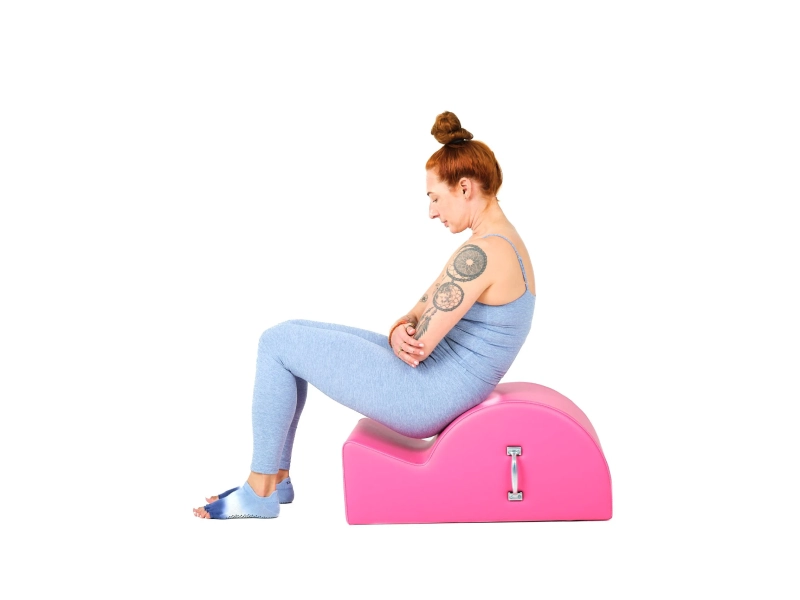
Pilates Round on Spine Corrector.
This movement helps relieve tension and pressure on the vertebrae while enhancing strength, flexibility, and control in the core area. The Pilates Round exercise on Spine Corrector is particularly beneficial for those looking to improve posture, prevent back pain, increase lower back strength, and enhance balance during daily activities.
Benefits of the Pilates Round exercise on Spine Corrector
The Pilates Round exercise on the Spine Corrector offers many incredible benefits for the body, especially in improving spinal health and increasing flexibility. Below are the key benefits of this exercise:
1. Improves Flexibility and Relieves Tension in the Spine
One of the standout benefits of the Pilates Round on the Spine Corrector is its ability to improve spinal flexibility. As you perform the movement on this device, the spine is stretched to its fullest, helping to release tension in the muscles and soft tissues surrounding it. This not only helps alleviate back pain but also enhances the flexibility of both the back and abdominal muscles, thereby improving posture.
2. Strengthens Core Muscles and Enhances Balance
This exercise requires the activation of the abdominal and lower back muscles to maintain balance on the Spine Corrector. By engaging and strengthening these muscle groups, it enhances spinal stability and improves overall body balance. As a result, practitioners will develop a stronger core, which aids in performing complex movements and reduces the risk of injury.
3. Supports Lower Back Stretching and Reduces Pain
The Pilates Round exercise on Spine Corrector is also particularly effective for stretching the lower back muscles, an area that often suffers from tension and discomfort. The Spine Corrector helps create a natural curve for the spine, reducing strain on the lower back and relieving pressure on the vertebrae.
This not only provides comfort but also helps reduce pain and prevent spinal related issues such as herniated discs.
Step by Step Guide to Performing the Pilates Round exercise on Spine Corrector
To perform the Pilates Round on Spine Corrector correctly and achieve maximum results, follow these steps and ensure you have a comfortable space to practice:
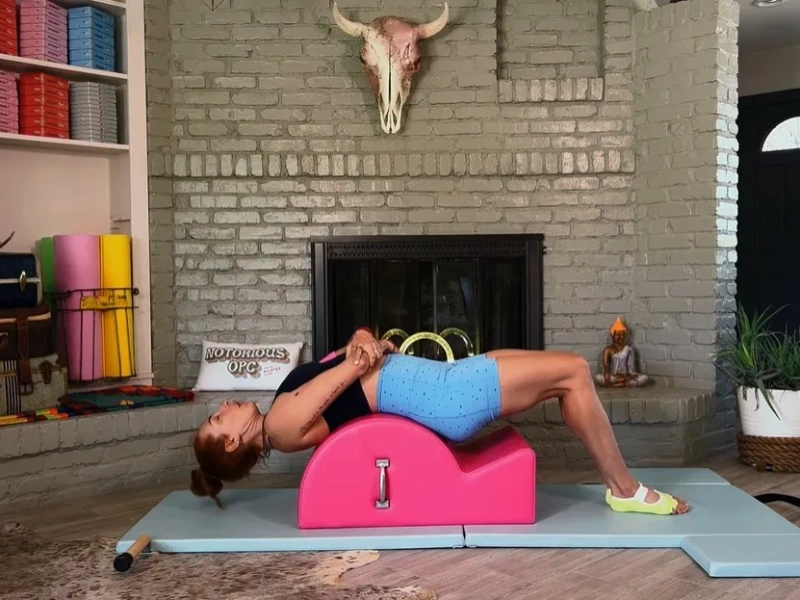
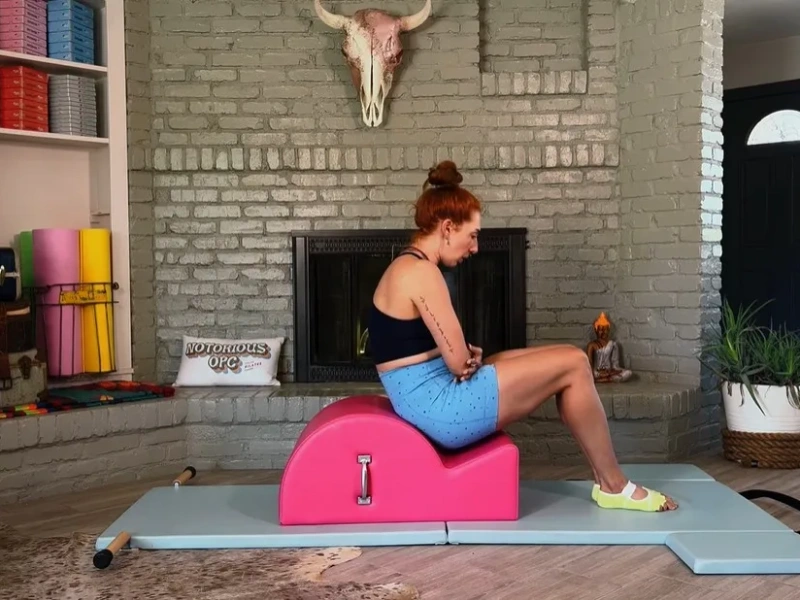
Perform the Pilates Round on Spine Corrector.
- Sit on the Spine Corrector with your back resting against the curved portion of the equipment, your feet placed comfortably in front of you, and your feet parallel to each other.
- Place your hands forward, with palms facing each other, to help maintain balance and create a sense of stability.
- Inhale deeply, then exhale slowly and begin to curl your spine down, creating a natural curve in your back. Focus on stretching each vertebra along the Spine Corrector.
- Hold the position when your back is fully rounded on the Spine Corrector. Breathe steadily and feel the stretch in your back and abdominal muscles. This part of the exercise is crucial for releasing tension and increasing spinal flexibility.
- Inhale and begin to lift your body, curling each vertebra back into the starting position, similar to the way you curled down, but in reverse.
Common Mistakes and How to Correct Them:
- Breathing issues: Sometimes, practitioners forget to adjust their breathing, making the exercise less effective. Remember that exhaling while curling down and inhaling while curling back up helps maintain control and activate the abdominal muscles.
- Uneven curling: A common mistake is uneven curling of the back, which diminishes the stretching effect. To correct this, focus on each vertebra and move slowly to ensure an even curl throughout the spine.
By following the detailed instructions and paying attention to each movement, you can maximize the benefits of the Pilates Round exercise on Spine Corrector, improving spinal health and enhancing your body’s balance.