

Pilates Round Back Exercise on the Reformer
29/01/2026Discover the Pilates Round Back exercise on the Reformer, a movement that improves posture and enhances spinal health. Learn the correct technique, key benefits, and essential tips to achieve optimal results from this exercise.
Introduction to the Pilates Round Back Exercise on the Reformer
The Pilates Round Back exercise on the Reformer is a fundamental movement in the Pilates system, focusing on improving spinal health and strengthening the abdominal muscles. This exercise helps practitioners clearly feel the connection between the upper and lower body while enhancing spinal mobility and movement control. Round Back is suitable for both beginners and advanced practitioners; however, individuals with spinal conditions or osteoporosis should adjust the exercise appropriately.
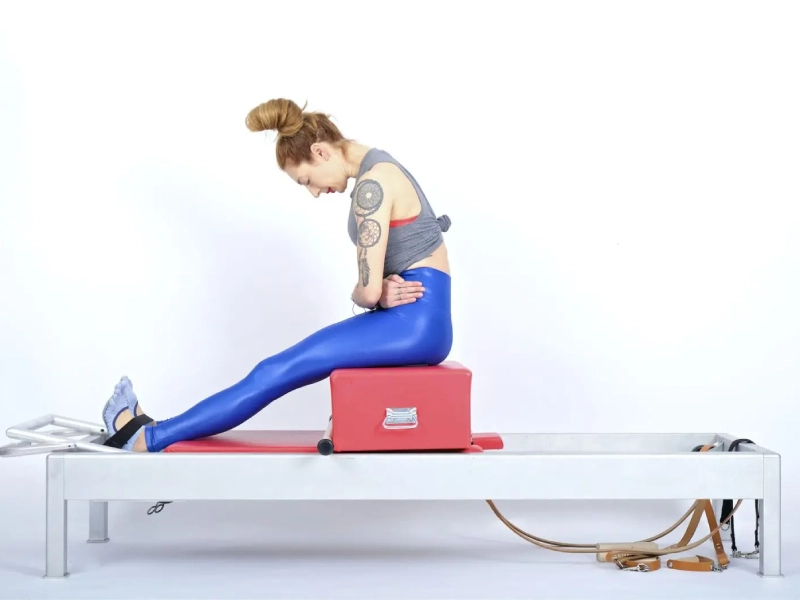
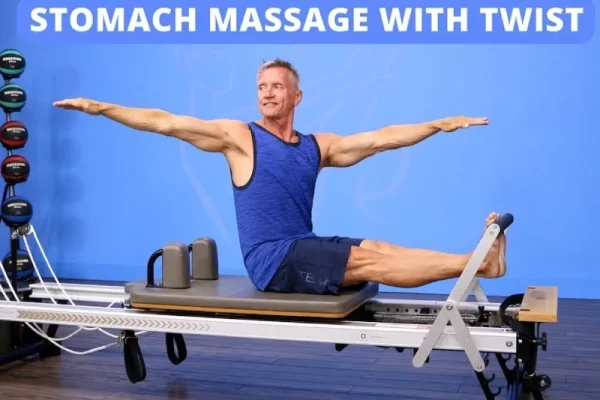
Pilates Round Back Exercise on the Reformer.
In this exercise, practitioners use the Reformer machine, a specialized Pilates apparatus designed with adjustable springs and straps to support controlled movement. The coordination between breath and motion activated key muscle groups, especially the back and abdominal muscles, thereby improving posture and overall physical well being.
Benefits of the Pilates Round Back Exercise on the Reformer
The Pilates Round Back exercise on the Reformer offers comprehensive health benefits, particularly for the spine, abdominal muscles, and lower back. Thanks to the Reformer’s design, this exercise enhances body control, improves flexibility, and effectively strengthens the core muscle groups. Below are the key benefits:
1. Improve Posture and Spinal Health
The Round Back exercise supports proper posture by focusing on spinal elongation and strengthening. During the movement, the spine forms a rounded “C-curve,” activating and gently stretching the vertebrae. This helps reduce spinal compression and lowers the risk of injury.
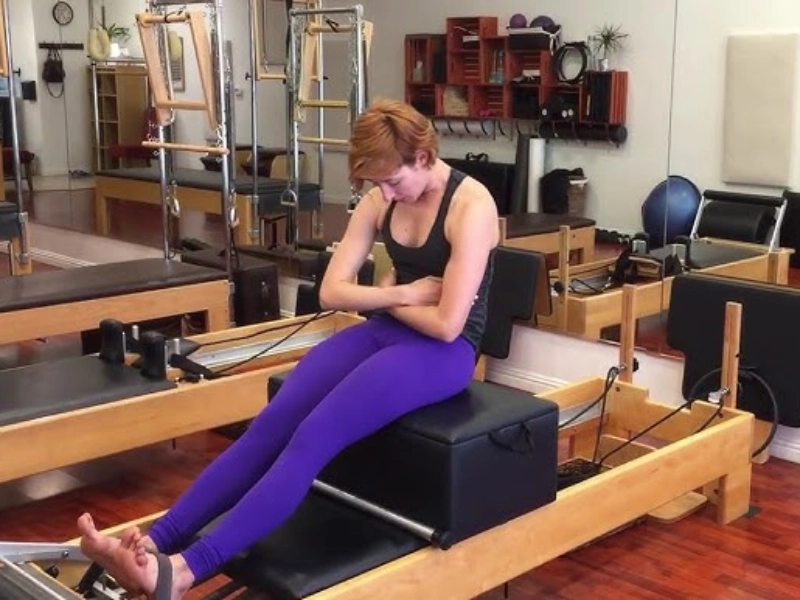
The Round Back exercise on the Reformer helps improve posture and spinal health.
Regular practice can help prevent rounded shoulders or spinal misalignment while improving overall upright posture and body balance.
2. Strengthen the Abdominal and Lower Back Muscles
Round Back is highly effective for strengthening the core, particularly the abdominal and lower back muscles. Maintaining the rounded spinal position requires strong core engagement, helping tone the abdominal area and build lower back strength. This not only improves abdominal appearance but also provides better support for the lower back during daily activities.
3. Reduce Lower Back Pain
The Pilates Round Back exercise on the Reformer is designed to relieve tension and pressure in the lower back, making it especially beneficial for individuals who sit for long periods or have poor posture.
The spinal flexion and stretching involved help release muscular tightness, improve blood circulation, and increase flexibility in both the muscles and vertebrae.
4. Prevent Movement-Related Injuries
Consistent practice of the Round Back exercise enhances body awareness and spinal flexibility, which are essential for injury prevention during other physical activities. A strong core and improved movement control reduce the risk of muscle strain and injuries caused by sudden or improper movements.
How to Perform the Pilates Round Back Exercise on the Reformer
The Pilates Round Back exercise on the Reformer requires precise technique and controlled movement to achieve optimal results. Follow the step by step instructions below to perform the exercise safely and effectively.
Equipment Setup and Starting Position
- Place the Short Box on the Reformer and ensure the headrest is lowered.
- Sit on the box with legs extended forward, securely positioned under the strap near the ankles.
- Wrap the arms around the waist or clasp the hands in front of the chest. Sit upright with relaxed shoulders and gaze forward.
Execution Steps
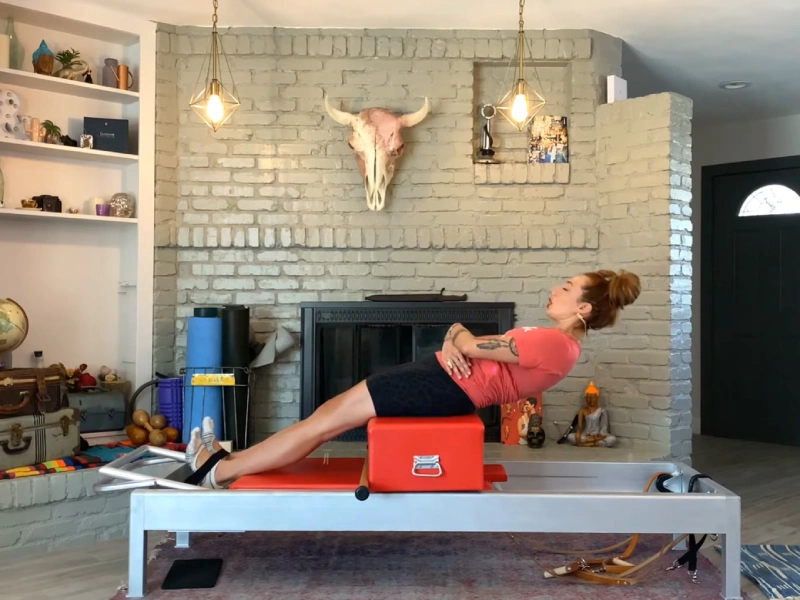
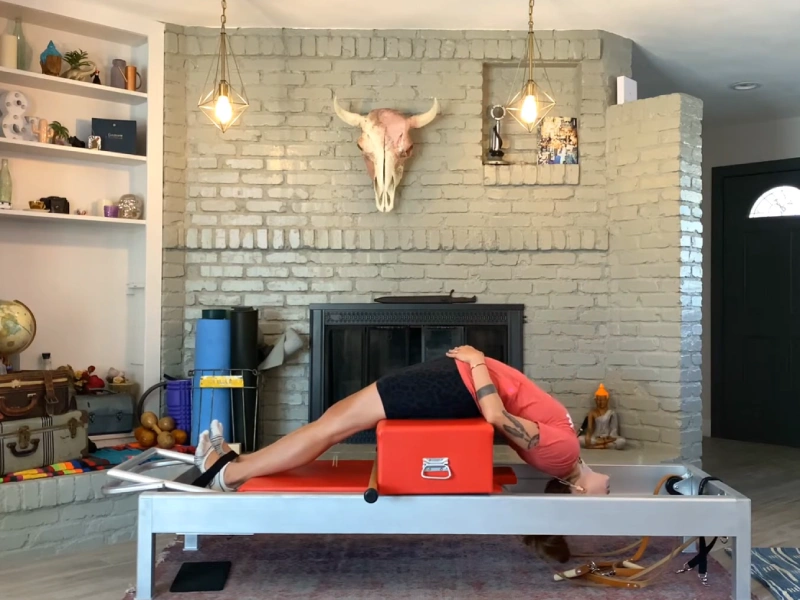
Detailed steps for performing the Pilates Round Back exercise on the Reformer.
- Inhale: Sit tall, lengthen the spine, and engage the core for support.
- Exhale: Begin rounding the spine from the tailbone, rolling backward vertebra by vertebra while keeping the legs secure under the strap and firmly on the box.
- Inhale: Hold the “C-curve” position, maintaining the rounded spine and feeling the stretch along the vertebral column.
- Exhale: Engage the abdominal muscles to return to an upright seated position, with the head coming up last to a neutral alignment.
Common Mistakes and How to Correct Them
During the Pilates Round Back exercise on the Reformer, both beginners and experienced practitioners may encounter common errors. Below are typical mistakes and how to fix them:
- Loss of core engagement: This occurs when focusing only on spinal rounding without abdominal support. Always draw the navel gently toward the spine throughout the movement.
- Insufficient spinal rounding: Many practitioners hinge at the shoulders instead of articulating the spine. Imagine rolling your back over a large ball to create a smooth, natural curve.
- Overusing leg strength: The legs should provide stability only, not push or pull excessively. If the feet lift off the box, recheck the strap placement and adjust the seated position.
The Pilates Round Back exercise on the Reformer not only improves posture and relieves back pain but also effectively strengthens the abdominal muscles. By maintaining proper technique and observing key precautions, you can achieve optimal results from this exercise.