

Pilates Roll Over Exercise: Complete Guide on Proper Technique and Benefits
23/12/2025If you are new to Pilates, the Roll Over exercise is one of the first movements you should try. This is a fundamental Pilates exercise that delivers a wide range of health and fitness benefits. This article provides a clear, step-by-step guide to performing the Pilates Roll Over exercise correctly and safely.
What Is the Pilates Roll Over Exercise?
The Pilates Roll Over exercise is a classical Pilates movement designed to strengthen the core. It is part of the original 34 exercises created by Joseph Pilates. This movement requires controlled muscle engagement rather than momentum to lift the legs up and over the head, then slowly lower them back to the mat. In the traditional Pilates sequence, this exercise is performed after the Pilates Roll Up.
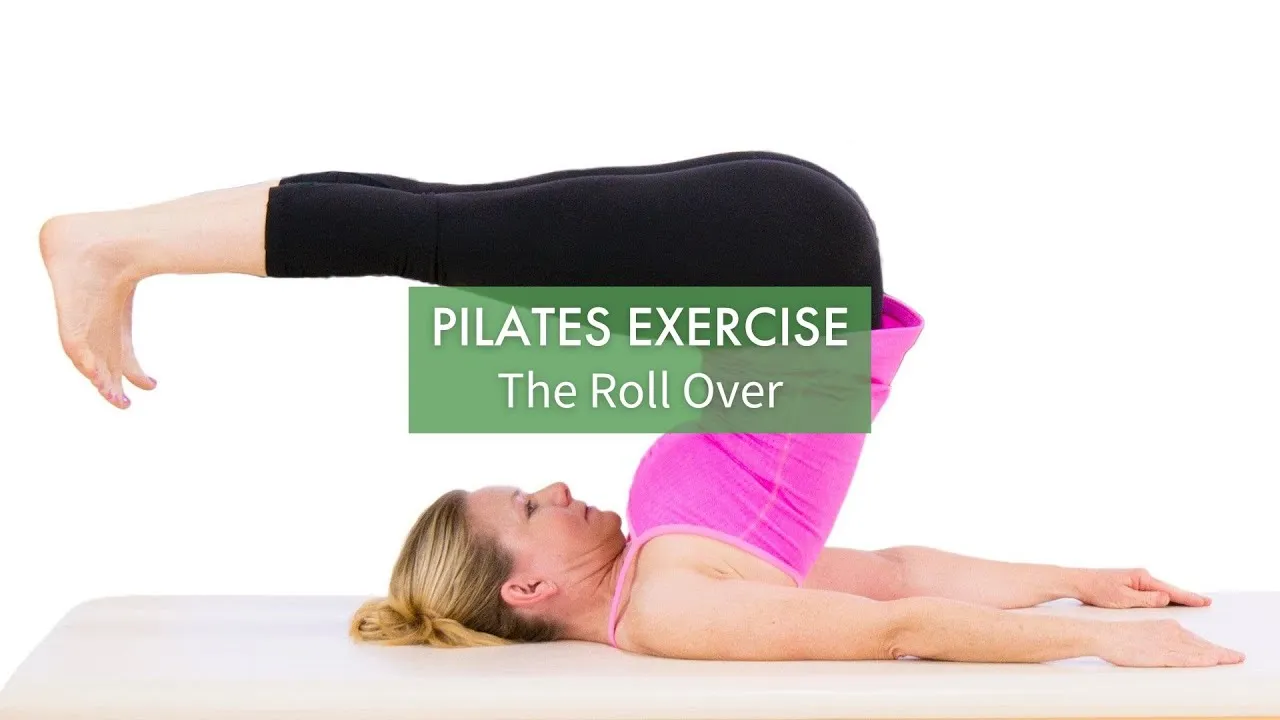
Roll Over Exercise.
Purpose: Stretch the lower back and hamstrings; improve spinal mobility and enhance abdominal control.
Note: If you experience neck pain or lower back pain, you should skip this exercise.
Benefits of the Pilates Roll Over Exercise
The Pilates Roll Over exercise not only promotes relaxation but also supports comprehensive physical improvement from the inside out. Below are the key benefits of this movement:
Effectively Stretches the Back and Hamstrings
Roll Over allows the back muscles and hamstrings to lengthen fully during the spinal articulation. Maintaining slow, controlled movement helps release tension in the lower back and improves posterior-chain flexibility-especially beneficial for office workers or those who sit for long periods.
Strengthens Core Muscles
To perform the Pilates Roll Over exercise correctly, you must engage the entire core muscle group, including the deep abdominal muscles, lower back muscles, and pelvic floor. This helps build a strong foundation for daily movement, improves posture, and reduces the risk of injury.
Improves Spinal Flexibility
Each rolling motion in the Roll Over exercise encourages vertical spinal movement, stimulating natural spinal mobility. Regular practice enhances back flexibility, slows spinal aging, and helps prevent issues such as back pain and spinal degeneration.
How to Perform the Pilates Roll Over Exercise on the Mat
Step-by-Step Instructions for the Roll Over Movement
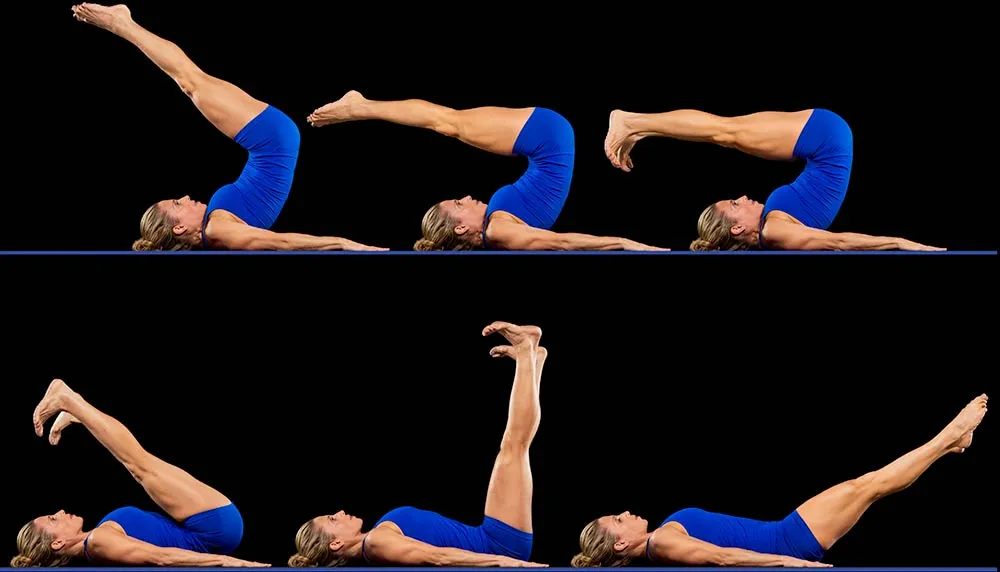
Steps to perform the Roll Over pose.
- Lie on your back on the mat with arms extended alongside the body, palms facing down. Lift both legs to a 60-degree angle.
- Inhale and raise the legs to 90 degrees. Initiate the movement from the abdominals, lifting the legs over the head and peeling the spine off the mat. Keep the arms long and shoulders anchored. Do not place pressure on the neck.
- Exhale, open the legs slightly past shoulder width and flex the feet. Keep the back of the neck long, avoiding compression. Press the arms firmly into the mat. Your body weight should be balanced evenly across the shoulder blades.
- Begin rolling the spine back down, feeling each vertebra lengthen as you lower until the tailbone touches the mat.
- Once the tailbone is down, lower the legs slightly below 90 degrees and bring them back together. Repeat the sequence.
- Perform 3 repetitions with legs together and 3 repetitions with legs open.
Tips for Performing the Pilates Roll Over Exercise
Proper form and biomechanics help you maximize the benefits of the Pilates Roll Over exercise while reducing injury risk. Keep these points in mind:
- Maintain slow, controlled movement throughout the exercise. Avoid using momentum.
- Keep the neck and shoulders relaxed; the movement should originate from the core and spine.
- If you feel neck strain or back discomfort, stop immediately and modify the exercise.
Modifications and Variations of the Pilates Roll Over Exercise
Pilates can be challenging, especially for beginners. Adjustments can be made based on individual ability and physical condition:
- Bent knees: Slightly bend the knees to reduce strain on the lower back and hamstrings.
- Use of props: Placing a cushion or yoga block under the hips provides additional support and reduces the range of motion.
- Single-leg Roll Over: Increase difficulty by lifting and rolling over with one leg straight and one leg bent.
- Leg circles: After completing the roll-over movement, incorporate leg circles with both legs lifted to further engage the hips and core.
Pilates Roll Over Exercise on the Spine Corrector
In addition to mat work, the Pilates Roll Over exercise can be performed using a Spine Corrector. This variation enhances spinal stretching while reducing pressure on the lower back, making it easier to control movement and maintain proper alignment.
Although the Pilates Roll Over on the Spine Corrector appears simple, it requires strong focus and coordinated engagement of the abdominals, back, and hips. This is one of the most effective exercises for toning the abdominal muscles and improving spinal health, especially for those seeking greater overall flexibility.
Step-by-Step Guide to Pilates Roll Over on the Spine Corrector
To perform the Pilates Roll Over exercise on the Spine Corrector safely and effectively, follow each step carefully:
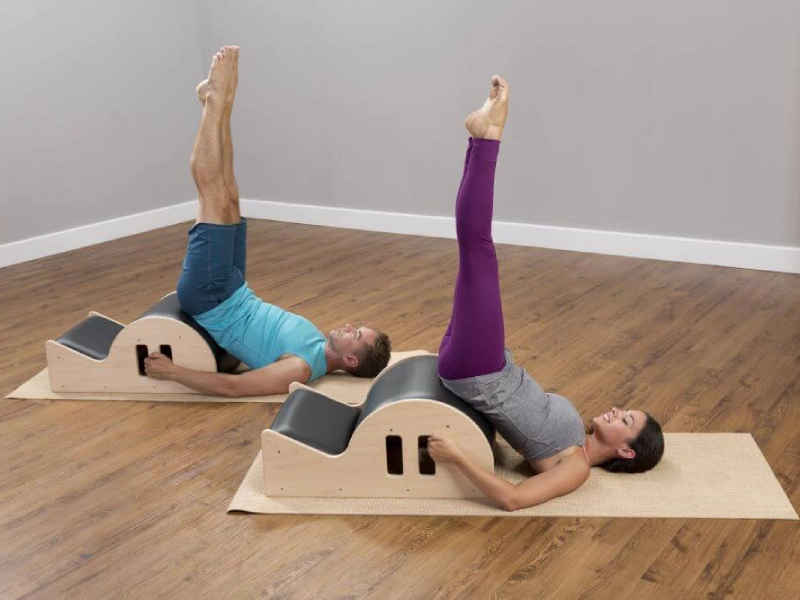
Perform Pilates Roll Over on the Spine Corrector.
- Sit on the Spine Corrector with your back gently supported by the curved surface.
- Extend both legs straight and together in front of you. Place your palms on the floor beside your hips for balance.
- Slowly lift both legs, keeping the abdominals engaged and the back neutral. Extend the legs toward the ceiling, forming a right angle with the body.
- Gradually roll the spine forward, bringing the legs over the head. Articulate the spine one vertebra at a time as the legs move toward the floor behind you.
- Hold the rolled position briefly, feeling the spinal stretch while maintaining abdominal and hip stability.
- Slowly lower the legs back down, moving them over the curve of the Spine Corrector and returning to the starting position. Roll the spine back carefully, vertebra by vertebra.
- Once back in the starting position, relax and breathe deeply. Assess whether you feel tension or discomfort, and adjust alignment in future repetitions if necessary.
Tips and Precautions for Pilates Roll Over on the Spine Corrector
The Pilates Roll Over exercise on the Spine Corrector demands precision and control to ensure safety and optimal results. Keep these tips in mind:
- Control every movement: Move slowly and deliberately to avoid unnecessary strain on the neck and lower back. Engage the abdominals rather than relying on the back.
- Maintain proper alignment: Keep the shoulders and neck relaxed, legs extended and together, and articulate the spine smoothly to enhance stretching and spinal protection.
- Use breath effectively: Inhale to prepare for lifting the legs; exhale while rolling over. Proper breathing improves control and core activation.
- Adjust the range of motion: Do not force flexibility. Work within a comfortable range, especially if you are new to spinal articulation exercises.
- Monitor physical feedback: If you experience pain or excessive tension, stop and modify the exercise. Beginners should master the basic mat Roll Over before progressing to the Spine Corrector version.
The Pilates Roll Over exercise is an excellent movement for improving spinal flexibility and building core strength. By following proper technique and applying modifications when needed, you can progress safely and gradually enjoy the full benefits of this classical Pilates exercise. Practice consistently to experience positive changes in strength, posture, and overall body awareness.