

Pilates Rocking Exercise: How to Perform and Key Benefits
06/01/2026When it comes to Pilates, the Rocking exercise is a must mention. Simple yet effective, this movement enhances flexibility and builds strength. Let’s explore the Pilates Rocking exercise in detail to understand how it supports your health and physique.
What Is the Pilates Rocking Exercise?
The Rocking is one of the 34 original Pilates exercises developed by Joseph Pilates (JP). While all Pilates exercises involve full body movement, Rocking is particularly dynamic and requires:
- Shoulder mobility
- Upper back extension (thoracic mobility)
- Hip extension
- Glute strength
- Flexibility and strength of the entire spine
- Coordination and proprioception
- Control and timing
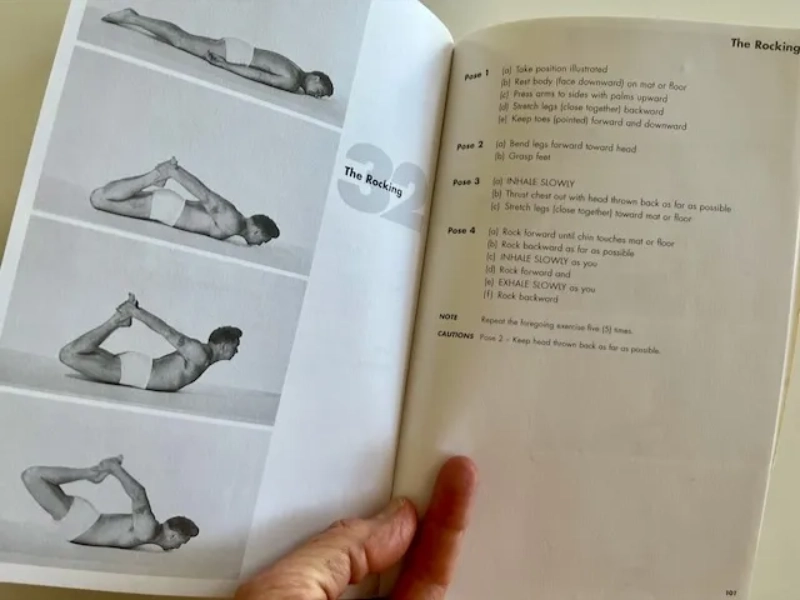
The Rocking is one of the 34 original Pilates exercises developed by Joseph Pilates.
The movement resembles a rocking chair or rocking horse and is designed to strengthen and stretch the muscles along the entire posterior chain, including the hamstrings, glutes, and the full length of the spine.
Due to its complexity, Rocking is classified as an intermediate to advanced exercise. It can be viewed as an inverted version of an advanced Shoulder Bridge with added thoracic and lumbar extension. In addition, it builds upon skills developed in earlier exercises such as Swan, Single Leg Kick, Double Leg Kick, Scissors, and Bicycle.
Benefits of the Rocking Exercise
The Rocking position offers the following benefits:
1. Strengthens the back and hamstrings
The Pilates Rocking exercise focuses on strengthening the back muscles and hamstrings—two essential muscle groups for maintaining stability and posture. During the movement, the spinal
extensors and hamstrings are lengthened and contracted, improving endurance and resilience. This not only supports daily activities but also helps prevent back pain and muscle tension.
2. Improves spinal flexibility
Rocking requires continuous spinal flexion and extension, helping increase spinal flexibility and range of motion. A more flexible spine tolerates complex and unexpected movements better, reducing the risk of injury. This exercise also releases tension accumulated in the vertebrae, promoting overall relaxation and comfort.
3. Enhances balance and stability
Rocking demands strong balance and control. As you move the body back and forth, you must maintain stability, which improves muscular control and proprioception. Regular practice enhances overall balance, allowing smoother movement and reducing the risk of falls or loss of balance in daily life.
4. Reduces tension and improves posture
This exercise stretches and releases the back muscles, easing tension especially in the spine and shoulders. Practicing Rocking consistently helps correct posture, reducing slouching and rounding of the back while improving overall alignment.
How to Perform the Pilates Rocking Exercise
Purpose: The Rocking exercise strengthens the spinal and hip extensors, improves hip flexor flexibility, and stretches the chest.
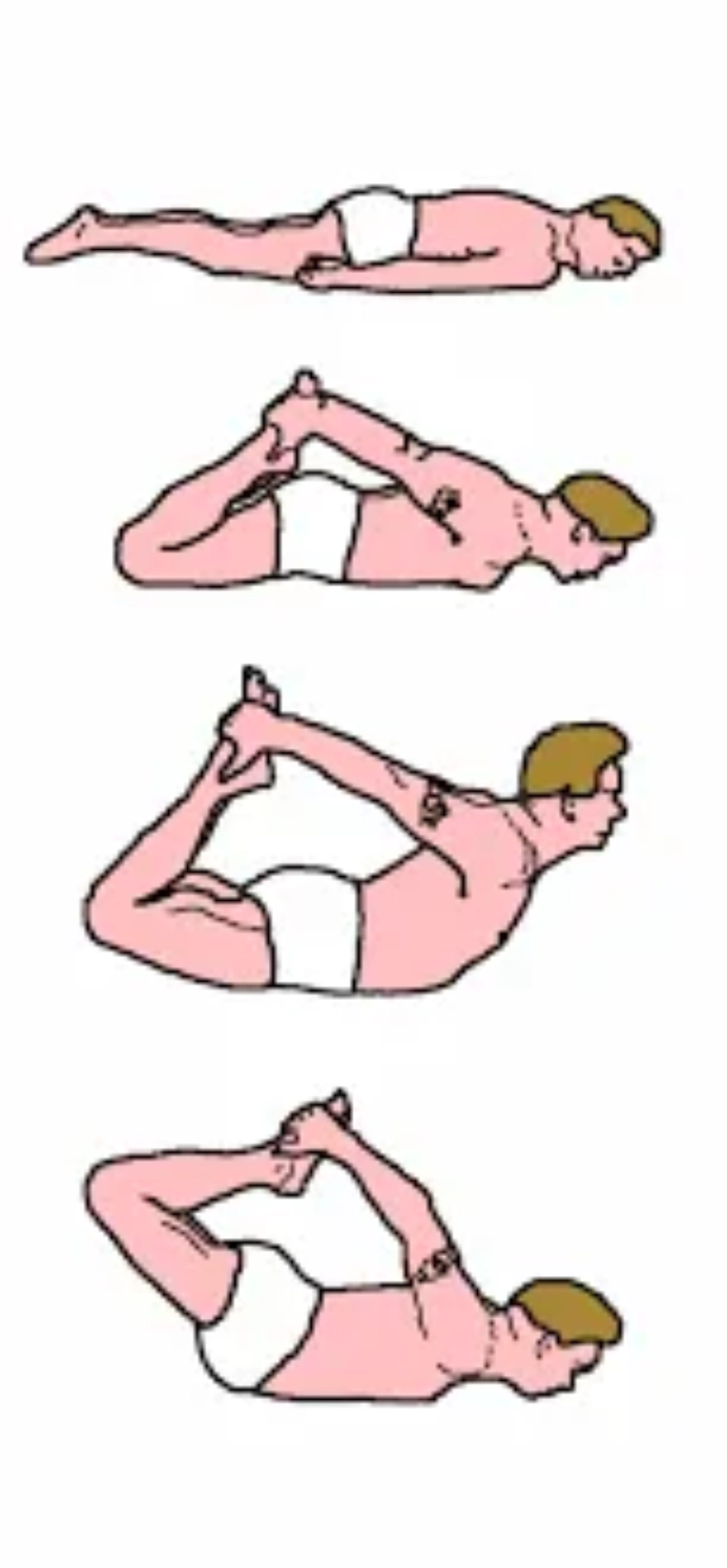
How to perform the Rocking exercise.
How to perform the Pilates Rocking exercise:
- Lie prone. Inhale, bend the knees, reach back, hold the ankles, and lift the torso and legs into an arch.
- Exhale and rock forward.
- Inhale and rock back, lifting the chest and pulling back from the ankles. Keep the navel drawn toward the spine.
- Rock back and forth 5 times.
- Finish by releasing the ankles and sitting back on the heels with arms extended forward, forehead resting on the mat.
Tip: To visualize the movement, imagine yourself as a rocking horse or a boat gently rocking forward and backward over waves.
Important notes during execution:
- Keep the head stable and aligned with the spine.
- Maintain scapular stability throughout; keep the arms straight.
- Create a comfortable rhythm between breath and movement.
- Do not swing the head forward and backward to initiate the rocking motion.
Note: This is an advanced Pilates exercise. If you have knee, shoulder, or rotator cuff injuries, seek guidance from an experienced Pilates instructor or remove this exercise from your routine.
Pilates Rocking with Pilates Equipment
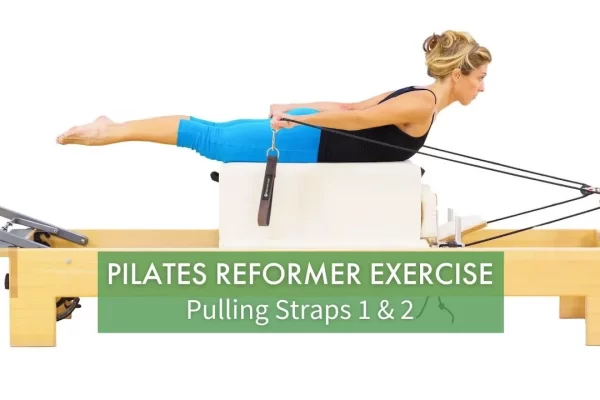
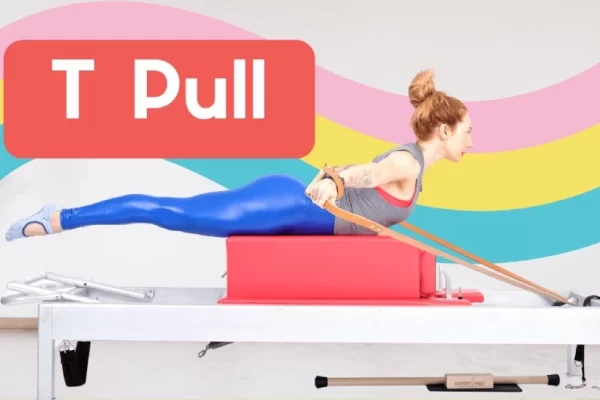
In addition to mat practice, Rocking can also be performed on Pilates equipment such as the Reformer and Spine Corrector to enhance training effectiveness.
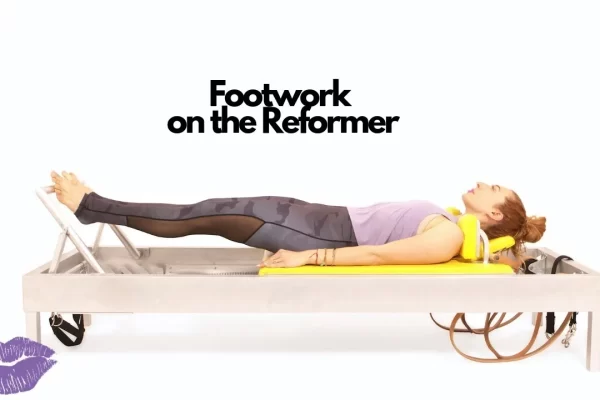
Pilates Rocking on the Reformer
The Rocking exercise on the Reformer is designed to make the movement easier and more precise compared to mat work. The Reformer provides balance, control, and resistance, maximally activating muscle groups and improving results.
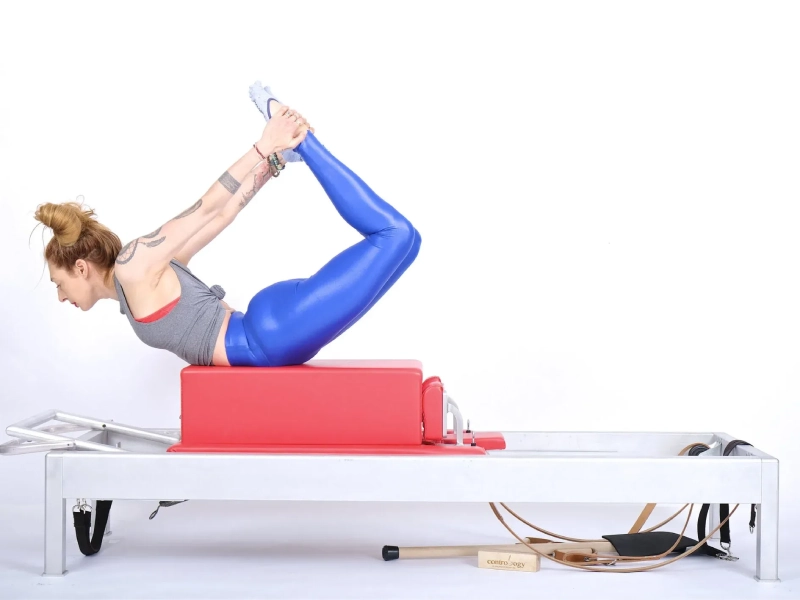
Rocking motion on Reformer.
How to perform Pilates Rocking on the Reformer:
- Lie prone on the Reformer, placing the abdomen on the carriage and holding the handles or straps.
- Extend the legs backward, feet hip width apart. Knees may be slightly bent if needed.
- Lift the upper body off the carriage, using the back and abdominal muscles to press the chest forward. Keep the neck aligned with the spine without excessive extension.
- Kick the legs toward the head, extending them as much as possible while keeping the chest open and the spine long.
- Perform 5-8 repetitions, then gently lower the body and relax.
Tips to avoid injury on the Reformer:
- Always control your movement; avoid sudden or uncontrolled motions.
- Do not force the body if discomfort occurs in the lower back. Start slowly and increase intensity gradually.
- Focus on spinal stability and even alignment throughout the movement.
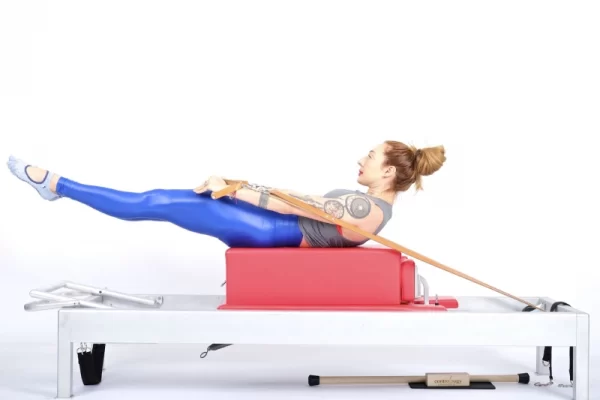
Pilates Rocking on the Spine Corrector
Pilates Rocking on the Spine Corrector helps improve spinal flexibility and strength while enhancing coordination between the back, abdominal, and hip muscles. This exercise supports spinal health and posture and is suitable for both beginners and experienced practitioners.
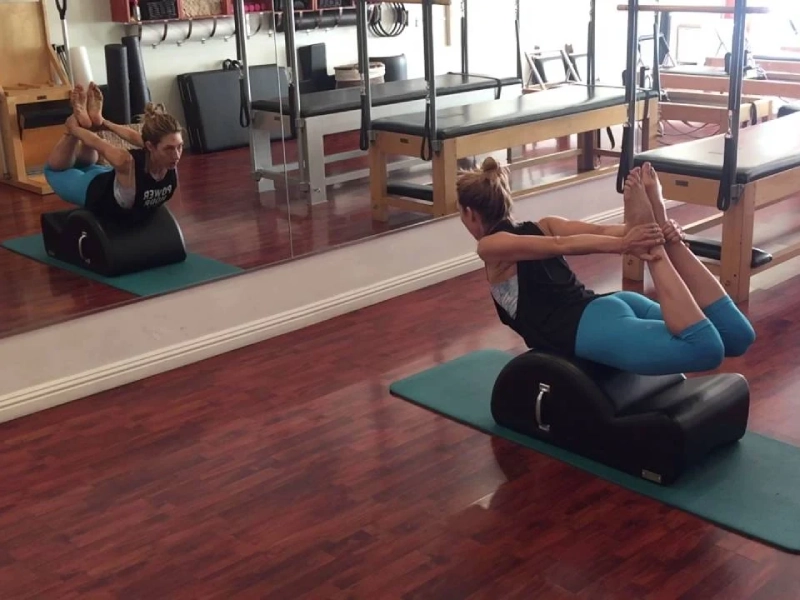
How to perform Pilates Rocking on a Spine Corrector.
Step by step guide to Pilates Rocking on the Spine Corrector:
- Sit on the Spine Corrector with the abdomen and hips placed over the apex.
- Place the arms alongside the body and extend the legs backward. Lightly engage the abdominals for stability.
- Slowly lift the chest off the Spine Corrector while raising both legs, keeping the thighs and abdomen engaged.
- At the highest position, hold for a few seconds to feel the stretch in the back.
- Begin the rocking motion by gently rolling the body forward and backward while maintaining balance and control.
- After 8-10 rocking repetitions, slowly lower the body.
Common mistakes and corrections:
- Mistake 1: Legs lifted too high or chest too low. Correction: Maintain balance between chest and legs; avoid excessive height to reduce lower back strain.
- Mistake 2: Moving too fast or losing control. Correction: Keep a moderate pace, focus on control and balance. Start gently before increasing intensity.
- Mistake 3: Improper breathing. Correction: Inhale as you rock up and exhale as you rock down, maintaining steady breathing to support muscle engagement.
Pilates Rocking is not only an exercise that enhances strength and flexibility, but also an excellent way to release tension in the spine. By practicing proper technique and combining it with other Pilates exercises, you can experience positive changes throughout your body. Incorporate the Pilates Rocking exercise into your routine to improve health and overall mobility.