

Pilates Reach Back with Bar on Spine Corrector: A Comprehensive Guide
10/02/2026Do you often experience back pain and stiff shoulders after long hours of work? Don’t let this condition persist and affect your quality of life. Try the Pilates Reach Back with Bar on Spine Corrector, a simple and effective exercise that helps relieve tension, increase strength, and provide exceptional flexibility for your spine and entire body.
Introduction to the Pilates Reach Back with Bar on Spine Corrector
Pilates is a well known exercise method that enhances overall health, increases flexibility, and maintains balance in the body. Among its many exercises, the Pilates Reach Back with Bar on Spine Corrector is specifically designed to support and stretch the spine. This exercise not only alleviates tension in the back and spine but also improves flexibility in the surrounding muscles.
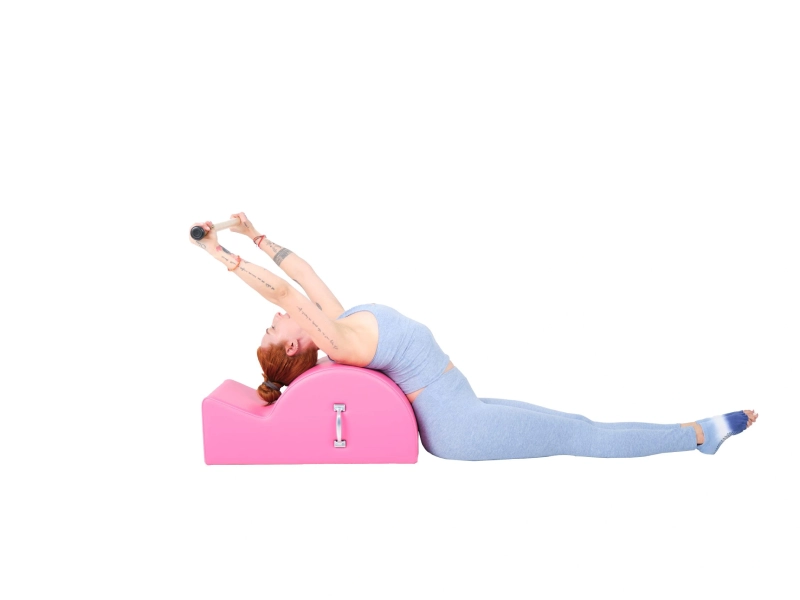
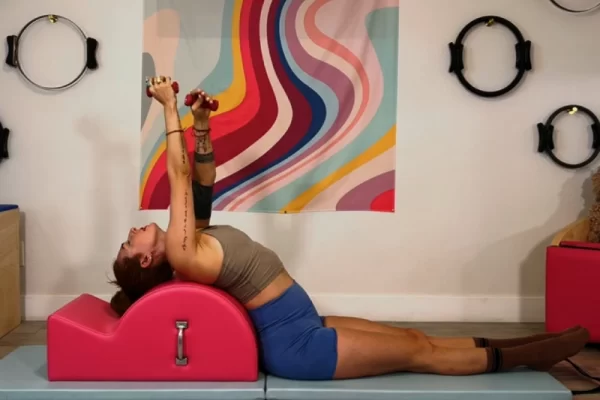
Pilates Reach Back with Bar exercise on Spine Corrector.
The Pilates Reach Back with Bar on Spine Corrector is suitable for individuals of all experience levels from beginners to those with advanced Pilates training. Those with postural issues, spinal problems, or those wishing to improve their body’s flexibility will find this exercise particularly beneficial. It is also an excellent choice for office workers or individuals who sit for long periods, as it helps reduce back and neck tension.
Benefits of Pilates Reach Back with Bar on Spine Corrector
The Pilates Reach Back with Bar on Spine Corrector offers numerous physical health benefits, especially for the spine and back. Here are the key benefits:
Increased Flexibility and Spine Stretching
One of the biggest advantages of the Reach Back with Bar exercise is the use of the Spine Corrector’s natural curve to maximize the stretching of the vertebrae, especially in the upper and mid back regions.
As you perform the back reaching movement with the bar, the spine is extended, and the intercostal and deep back muscles are activated. This helps alleviate stiffness, improve the range of motion, and support recovery after long periods of sitting or poor posture. The stretching also helps release pressure on the discs, reduce the risk of spinal degeneration, and alleviate chronic back pain.
Improves Posture and Body Balance
The coordination between the Spine Corrector and the bar requires the practitioner to control the body’s axis, maintaining shoulder, back, and core stability throughout the movement. This process helps correct common postural imbalances, such as rounded shoulders, misaligned hips, or uneven posture. With consistent practice, noticeable improvements in standing, sitting, and balancing will be evident in daily activities.
Activates and Develops Back, Shoulder, and Core Muscles
The Reach Back with Bar is a full body exercise focusing on the upper back, shoulders, and especially the core (abs, lower back, and glutes). As you extend backward, these muscles must work in unison to control the movement, protect the spine, and maintain stability. Focusing on correctly engaging these muscle groups helps build strength, improve endurance, and prevent injuries caused by weak muscles or poor form.
Supports Recovery and Injury Prevention
For individuals who have experienced mild back, shoulder, or neck injuries, this exercise is ideal for rehabilitation. The gentle stretching combined with controlled movement helps increase blood circulation, reduce muscle tension, and speed up soft tissue recovery. Additionally, strengthening the core and back muscles significantly lowers the risk of injury recurrence or spinal issues.
How to Perform the Pilates Reach Back with Bar on Spine Corrector
The Pilates Reach Back with Bar on Spine Corrector is an exercise designed to stretch the spine and enhance overall body flexibility. Below is a step by step guide to perform the exercise correctly to maximize benefits and prevent injury:
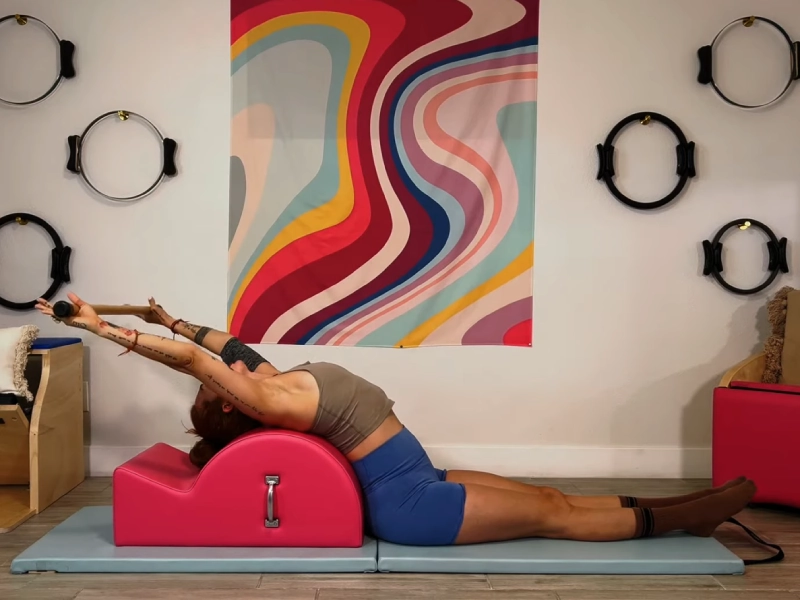
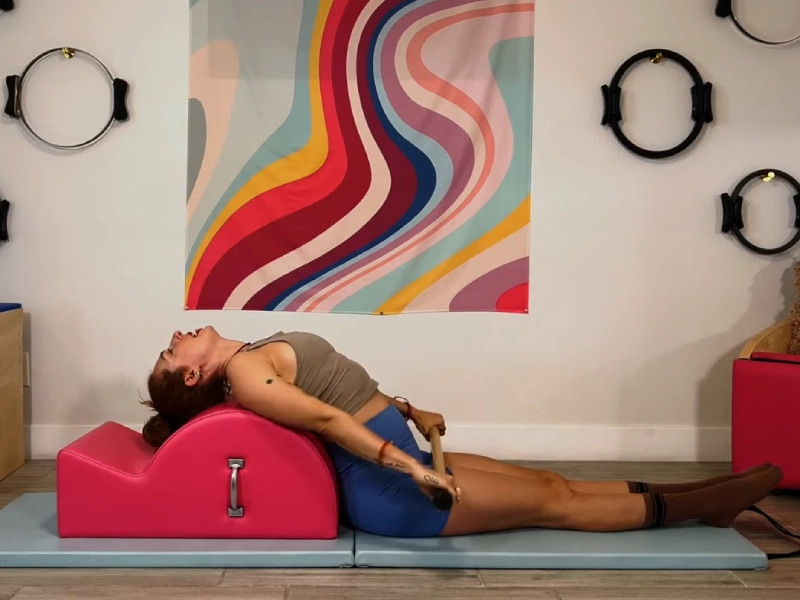
Perform the Pilates Reach Back with Bar on Spine Corrector.
- Positioning: Sit on the Spine Corrector, positioning your hips at the center of the equipment so that the curve of your spine is supported. Grasp the bar behind your head, with arms slightly bent. Ensure that your shoulders remain relaxed and your spine stays in its natural curve.
- Breathing and Movement: Inhale as you begin to move your arms and the bar behind your head. During this motion, the spine and back will naturally stretch along the curve of the Spine Corrector.
- Return: Exhale as you slowly bring your arms back toward the starting position, returning the bar to its original spot. Throughout the movement, maintain core engagement to stabilize the spine.
- Repetition: Perform 5-8 repetitions depending on your strength and control. Focus on elongating the spine and maintaining proper breathing throughout the exercise.
Common Mistakes and Tips for the Reach Back with Bar
- Breathing: Proper breathing is crucial in Pilates. Always remember to inhale as you extend the spine and exhale as you bring the arms back. This breathing pattern helps maintain stability and provides energy to the muscles during the exercise.
- Avoid Overarching the Back: Be mindful not to excessively arch your back or press the spine too hard into the Spine Corrector. The natural curve of the spine should be preserved without excessive pressure. If you feel stiffness or discomfort in the back, stop and adjust your posture.
- Controlled Movements: Don’t rely on your arms to pull the bar with force. Instead, use your core muscles to control the movement. This approach ensures optimal effectiveness and reduces the risk of unnecessary strain.
The Pilates Reach Back with Bar on Spine Corrector is a fantastic exercise to stretch, strengthen, and improve posture. Whether you are a beginner or more experienced, consistent practice will help you feel stronger, more flexible, and healthier. Make Pilates your daily companion to achieve better health, flexibility, and energy.