

Pilates Overhead Exercise on the Spine Corrector
12/01/2026The Pilates Overhead exercise on the Spine Corrector combines strength and flexibility to improve posture and support the core muscles. Explore detailed instructions, health benefits, and helpful tips to practice this exercise safely and effectively.
Introduction to the Pilates Overhead on the Spine Corrector
The Pilates Overhead on the Spine Corrector is an advanced Pilates exercise that focuses on strengthening the abdominal and back muscles while improving spinal flexibility. This exercise is performed on the Spine Corrector, a specialized Pilates apparatus designed to help practitioners control posture and movement while enhancing overall flexibility and balance.

Pilates Overhead exercise on Spine Corrector.
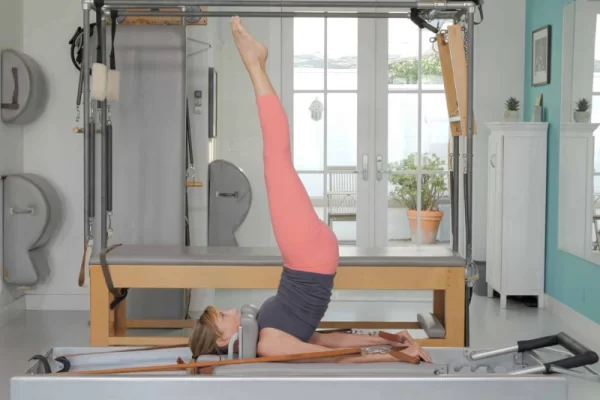
The Spine Corrector features a curved shape that supports safe spinal extension and flexion. During the Overhead exercise, the practitioner lies on the Spine Corrector and lifts the legs and hips over the head, controlling the movement through coordinated breathing and core strength. This movement requires high stability from the lower back and abdominal muscles, helping improve posture and build a strong, stable center.
Benefits of the Pilates Overhead Exercise on the Spine Corrector
The Overhead exercise on the Spine Corrector offers outstanding benefits for the body, particularly for the core and spine. When performed with correct technique, it not only enhances overall fitness but also improves flexibility, strength, and body control. Below are the key benefits of this exercise:
1. Strengthens the back and abdominal muscles
The Pilates Overhead exercise requires close coordination between the abdominal and back muscles to maintain balance and control. As the legs move over the head, the lower back and abdominal muscles work actively to stabilize the spine. This strengthens both areas, improves balance, and reduces the risk of injury.
2. Improves spinal flexibility
The curved design of the Spine Corrector allows the spine to bend and stretch safely. When performing the Pilates Overhead on the Spine Corrector, the spine is extended and lengthened, helping relieve tension and enhance flexibility. This is especially beneficial for individuals experiencing stiffness or limited mobility in the back.
3. Enhances body control and posture
Pilates Overhead requires full body control, from the spine to the core and legs. Coordinating movement with proper breathing improves body awareness and control. Practitioners also learn to maintain stable alignment throughout the exercise, which helps improve standing and sitting posture in daily life.
4. Improves breathing and blood circulation
One of the core principles of Pilates is the integration of breath with movement. The Overhead exercise encourages deep, controlled breathing, which increases oxygen intake and supports healthy blood circulation. Effective breathing not only enhances exercise performance but also helps reduce stress and improve overall mood.
5. Reduces the risk of injury
The Spine Corrector supports complex movements while protecting the spine from excessive strain. During the Pilates Overhead exercise, it helps maintain the natural curvature of the spine and reduces pressure on the low back. Controlled execution further minimizes the risk of muscle and joint injuries.
Detailed Guide to Performing the Pilates Overhead on the Spine Corrector
The Pilates Overhead exercise on the Spine Corrector requires precise technique and controlled movement to achieve maximum benefits and prevent injury. Follow these detailed steps to practice safely and effectively:
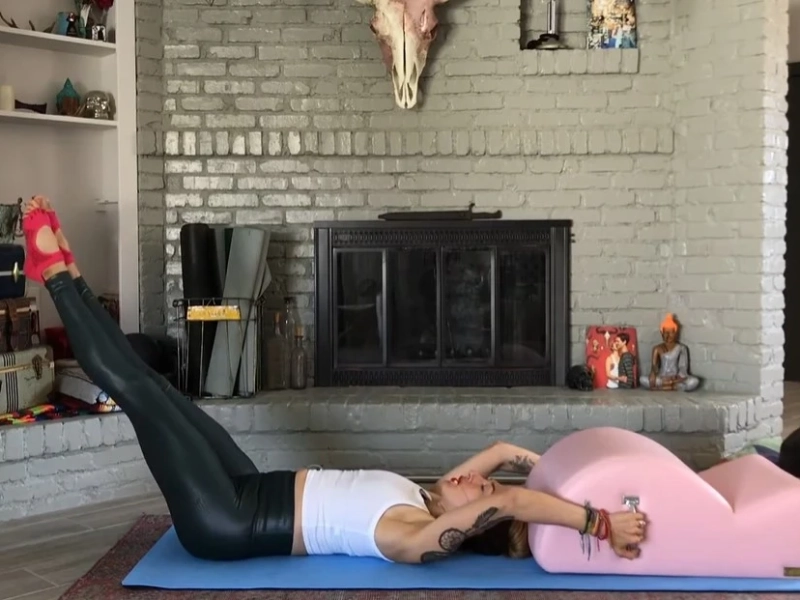

Steps to perform Pilates Overhead on a Spine Corrector.
- Sit on the Spine Corrector with the lower back resting against the curved surface. Extend both legs straight and together, placing the hands gently beside the hips for initial balance.
- Lift both legs off the floor, slightly bending the knees, and raise the arms overhead. Keep the spine long and maintain steady breathing, avoiding excessive arching of the lower back or over bending the knees.
- Inhale deeply, then exhale as you slowly bring the legs over the head, aiming to keep them extended. Lift the legs toward the ceiling and guide them backward to create a straight line through the body.
- Hold the position for a few seconds, maintaining balance and feeling the stretch and control through the core muscles, including the abdominals and back.
- Inhale and slowly lower the legs back to the starting position. Avoid letting the legs drop too quickly, and use controlled breathing to help the body relax.
- Perform 5-8 repetitions, depending on your strength and control. Maintain steady breathing and precise movement throughout each repetition.
Important Notes When Performing the Pilates Overhead on the Spine Corrector
- Breath control: Breathing is essential in Pilates. Inhale to expand the rib cage and exhale as you lift the legs over the head. Proper breathing helps maintain stability and reduces pressure on the spine.
- Focus on core engagement: The abdominal and back muscles play a key role in this exercise. Concentrate on activating the core to support and protect the spine.
- Avoid rushing: This is a slow, controlled exercise. Move deliberately through each step to maintain correct alignment and prevent injury.
Through this article, you now understand how to perform the Pilates Overhead exercise on the Spine Corrector safely and accurately. This advanced movement requires full body coordination, especially strong core muscles and spinal flexibility. Practice patiently, start with foundational control, and progress gradually according to your ability to fully experience the benefits this exercise offers.