

Pilates Long Stretch on the Reformer: A Comprehensive Guide
10/01/2026Within the Pilates Reformer exercise system, Long Stretch is regarded as one of the movements that delivers deep, full body engagement. This exercise requires a high level of focus, control, and coordinated activation among multiple muscle groups. If you are looking for a workout that challenges your body and enhances core strength, Pilates Long Stretch on the Reformer is the perfect choice.
Introduction to Pilates Long Stretch on the Reformer
Within the Pilates Reformer exercise system, Pilates Long Stretch on the Reformer is regarded as one of the movements that delivers deep, full body engagement. This exercise demands a high level of concentration, control, and coordinated activation across multiple muscle groups. If you are looking for a challenging movement to test your limits and strengthen your core, Pilates Long Stretch on the Reformer is an excellent choice.
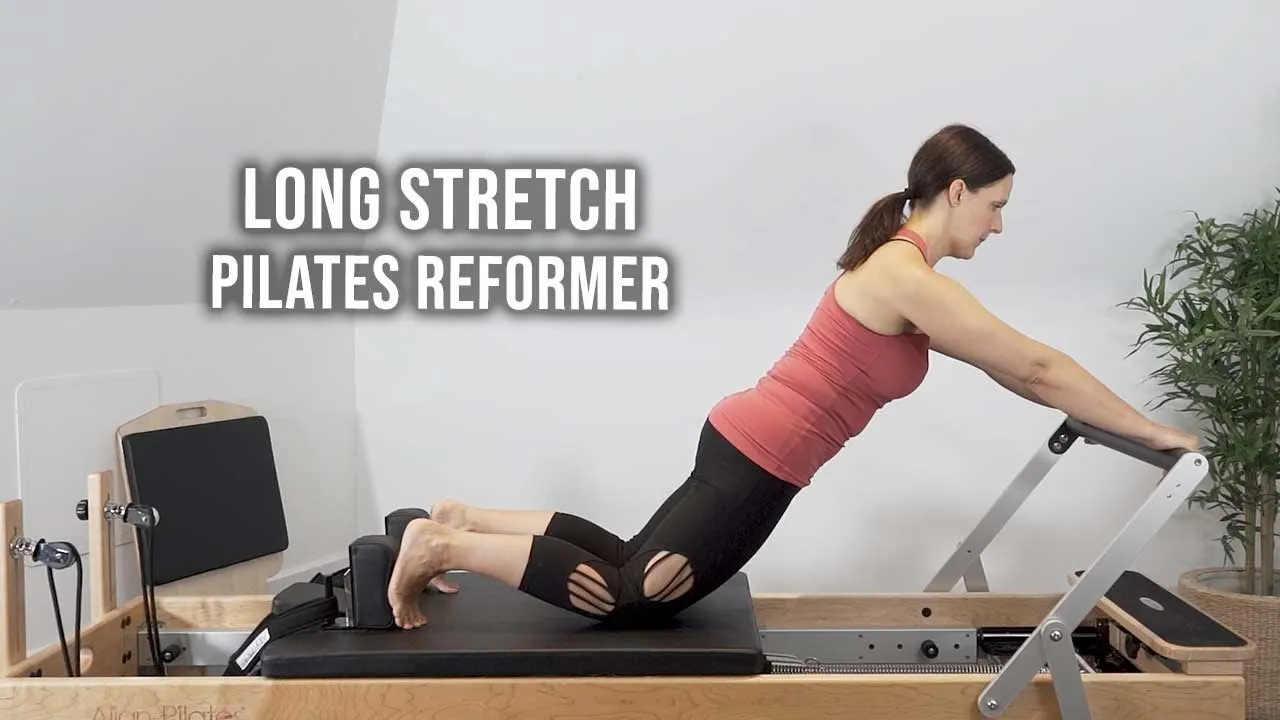
Pilates Long Stretch on the Reformer.
Pilates Long Stretch is a foundational exercise in the Reformer repertoire. It is highly effective for building strength, enhancing flexibility, and promoting overall body balance. The movement is designed to activate the core muscles while simultaneously strengthening the shoulders, back, and hips.
Long Stretch emphasizes the integration of control, breath, and precise alignment to create smooth, fluid movement. This not only improves muscular strength but also enhances body awareness and balance. these reasons, Long Stretch is considered one of the most important exercises in Pilates, especially when performed on the Reformer.
Health Benefits of Pilates Long Stretch on the Reformer
Pilates Long Stretch on the Reformer offers numerous health benefits, extending beyond muscle strengthening to include flexibility, stress reduction, and improved balance. Key benefits include:
- Core strengthening: Long Stretch is particularly effective at strengthening the deep core muscles, helping stabilize the spine and protect the lower back from injury.
- Improved flexibility: The exercise increases joint range of motion, especially in the shoulders and hips, improving overall body flexibility.
- Enhanced balance: Long Stretch requires strong focus and balance control, which improves overall stability and coordination between muscle groups.
- Stress reduction: With its emphasis on breathing and smooth movement, this exercise helps reduce mental tension and promotes a sense of relaxation and balance after training.
Pilates Long Stretch on the Reformer is not only a physical conditioning exercise but also an effective method for maintaining mental clarity and confidence in daily life.
How to Perform the Long Stretch on the Reformer
Exercise objective: Strengthen the abdominal muscles and challenge stability on a moving carriage.
Reformer setup:
Begin with two moderate springs, adjusted according to your desired resistance. Lighter spring tension increases the challenge for the abdominal muscles. The footbar should be set high, and the headrest should be raised.
Steps to Perform Pilates Long Stretch on the Reformer
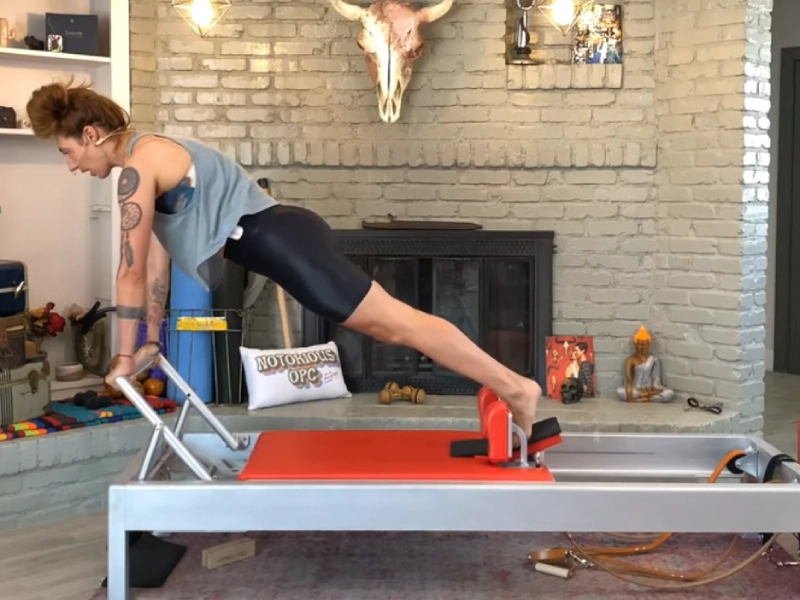
Perform the Long Stretch on the Reformer.
- Place both hands on the footbar, shoulder width apart.
- With the carriage against the stopper, step one foot at a time between the shoulder blocks, positioning the feet at the crease of the headrest (placing a soft pad between the shoulder blocks can help cushion the feet).
- For an alternative foot position, place the heels against the shoulder blocks with the balls of the feet resting on the carriage.
- Actively engage the legs, drawing them toward the midline. Pull the abdominals toward the spine, lengthen the tailbone toward the heels, and press firmly through the arms to prevent the shoulders and upper back from collapsing. Ideally, the body forms a straight line from head to heels, with shoulders stacked over the wrists.
- Movement: Inhale as you push the carriage out, ensuring that movement occurs only at the shoulder joints while maintaining a straight body line.
- Exhale to return the carriage to the stopper, bringing the body back to the starting position.
- Repeat 3-5 additional times.
Common Mistakes and Corrections When Practicing Long Stretch on the Reformer
Pilates Long Stretch on the Reformer is excellent for lengthening the spine and strengthening the back, but beginners often make common mistakes that can reduce effectiveness or lead to injury.
1. Postural Errors and Adjustments
Besides posture errors, there are several other problems that practitioners often encounter when performing the Pilates Long Stretch on a Reformer. Below are some common problems and how to solve them:
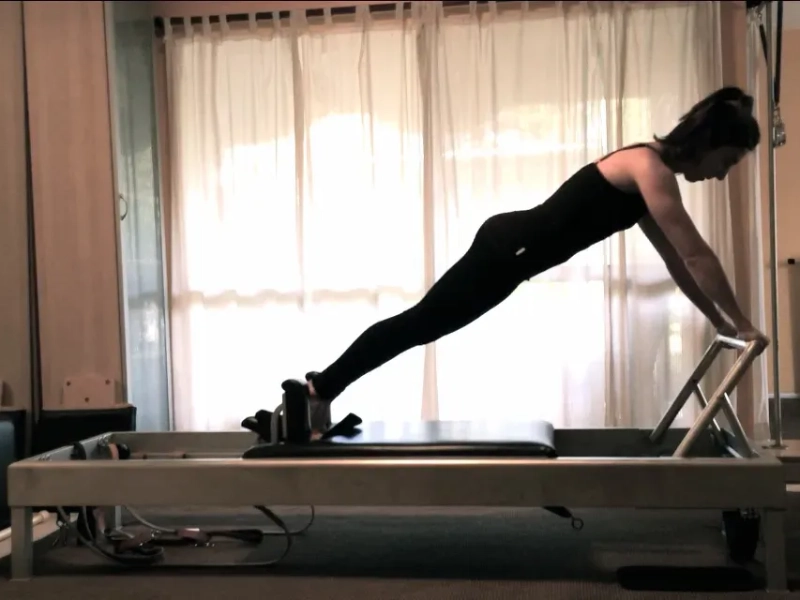
Incorrect posture when performing long stretches on the reformer machine is one of the most common mistakes.
- Rounded or overly arched back: Allowing the spine to collapse or arch excessively reduces effectiveness and increases spinal strain.
- Correction: Focus on maintaining a long, neutral spine from head to heels throughout the exercise.
- Tense shoulders: Holding tension in the shoulders can lead to fatigue in the neck and upper body. Correction: Relax the shoulders and draw them away from the ears, maintaining space between the shoulders and neck.
- Unstable hips: Excessive hip movement or rotation disrupts balance and control.
- Correction: Engage the core muscles to stabilize the hips and maintain controlled alignment.
2. Training Issues and Solutions
Lack of movement control: Difficulty maintaining smooth, controlled motion is common.
- Solution: Slow down the movement and focus on each phase, coordinating breath with controlled core engagement.
- Incorrect spring resistance: Choosing inappropriate resistance can reduce effectiveness or make the exercise too difficult.
- Solution: Beginners should start with lighter resistance and increase gradually as strength improves.
- Lack of focus: Distraction can compromise technique and results.
- Solution: Take a few moments before starting to center your focus, paying close attention to breathing and movement.
- Skipping the warm up: Failing to warm up increases the risk of injury.
- Solution: Spend 5-10 minutes warming up with gentle mobility and stretching exercises before performing Long Stretch.
Who Should Practice Pilates Long Stretch on the Reformer?
Pilates Long Stretch on the Reformer is ideal for individuals with a basic Pilates foundation who want to develop core strength, shoulder stability, and overall body control. Those with good flexibility, particularly in the shoulders and chest, will find this exercise more accessible.
It is also suitable for practitioners seeking to challenge endurance, flexibility, and full body balance.
However, individuals with shoulder injuries, tight chest muscles, or contraindications involving shoulder movement should proceed with caution, as this exercise places significant weight through the arms and shoulders. Thorough warm up and chest stretching before practice can help ensure safety and effectiveness.
Pilates Long Stretch on the Reformer is an excellent choice for challenging and developing full body control. Once mastered, you will notice clear improvements in balance and core strength. Combine Long Stretch with other exercises in the Pilates system to achieve optimal results and maintain a strong, flexible, and well balanced body.