

Pilates Leg Pull Front Exercise: Benefits and How to Perform It Correctly
03/01/2026In Pilates, the Pilates Leg Pull Front exercise is one of the most popular movements thanks to the remarkable benefits it offers. Beyond improving flexibility, this exercise helps build muscular strength especially in the core. To help you better understand the Pilates Leg Pull Front exercise, this article provides detailed insights into its benefits and clear instructions on how to perform the movement correctly and effectively.
What Is the Pilates Leg Pull Front Exercise?
Leg Pull Front is one of the 34 original exercises created by Joseph Pilates in his Matwork series. It is a core strengthening movement that engages the entire body an added advantage for those who value full body workouts and efficiency.
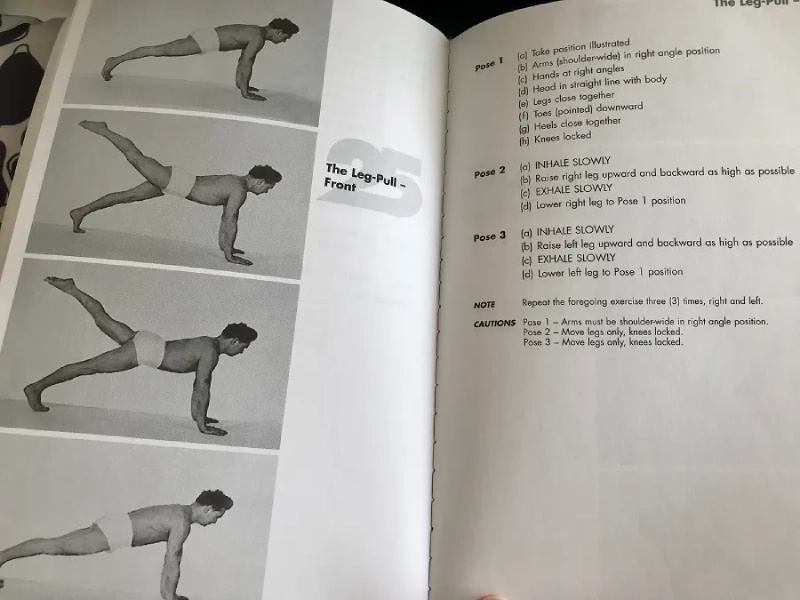
Leg Pull Front is exercise number 25 in Joseph Pilates’ original list of exercises.
Although it activates multiple muscle groups, the Pilates Leg Pull Front exercise is still considered suitable for beginners and can be performed on a mat without any equipment.
Benefits of the Pilates Leg Pull Front Exercise
The Pilates Leg Pull Front exercise offers many important benefits. First, it improves scapular stability, helping maintain good posture and reduce the risk of shoulder injuries. At the same time, this movement enhances trunk stability, allowing the body to maintain balance and controlled mobility.
This exercise is particularly effective at strengthening the abdominal muscles, contributing to a firm and healthy waistline. In addition, the Pilates Leg Pull Front exercise develops arm strength, supporting daily activities and improving performance in other exercises.
Thanks to these benefits, Leg Pull Front plays an essential role in Pilates training programs, delivering comprehensive strength and stability for the entire body.
Target Muscles in Leg Pull Front
When performing the Pilates Leg Pull Front exercise, the body recruits several key muscle groups to maintain stability and execute the movement correctly. The primary target muscles include:
1. Core and Deep Abdominal Muscles
A critical element of Leg Pull Front is the ability to keep the pelvis stable and prevent upper body swaying while lifting one leg. This requires strong activation of the deep abdominal muscles, especially:
- Transverse abdominis: Stabilizes the core, reduces spinal load, and supports balance when one leg lifts off the mat.
- In addition, spinal stabilizers and intercostal muscles work lightly to maintain alignment and firmness through the torso as the leg lifts.
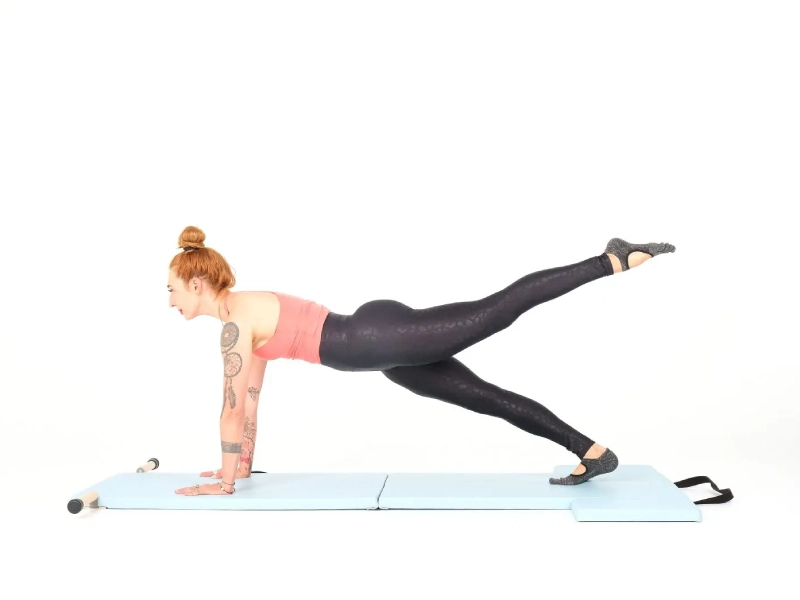
The Pilates Leg Pull Front exercise primarily targets the deep abdominal muscles.
2. Hip Extensor Muscle Groups
When the leg extends backward and lifts off the floor, the hip extensors are the primary movers, including:
- Gluteus maximus: Plays a leading role in generating force and lifting the leg backward.
- Hamstrings: Help guide smooth leg movement without shifting the pelvis.
- Extensor portion of the adductor magnus: Controls the motion and keeps the leg aligned.
How to Perform the Pilates Leg Pull Front Exercise
Follow these steps to perform the Pilates Leg Pull Front exercise correctly:
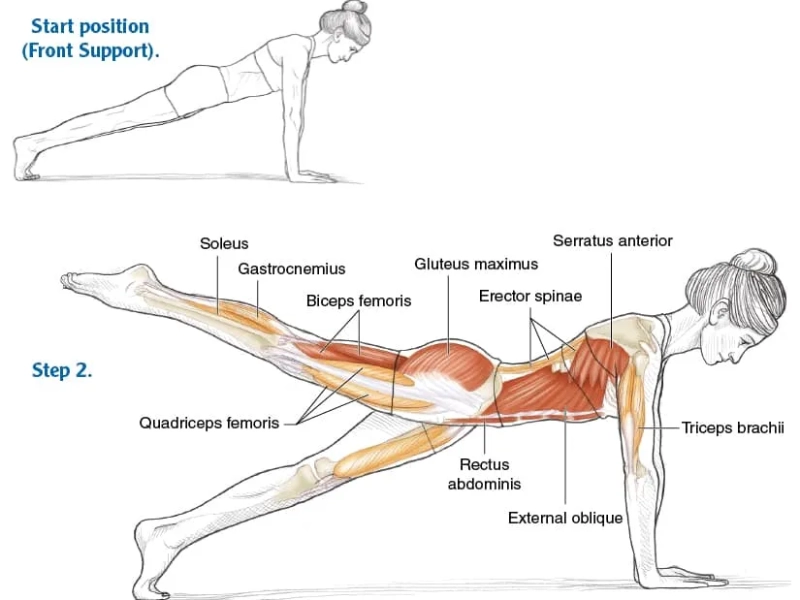
Steps to perform the Pilates Leg Pull Front exercise.
- Begin in a kneeling position with your hands placed on the floor in front of you, fingers pointing forward. Arms are straight with elbows unlocked. Knees align under hips, and wrists align under shoulders.
- Press the chest away from the mat, engage the shoulders, and ensure the shoulder blades do not lift toward the ceiling.
- Engage the abdominals (draw the navel toward the spine) and lengthen the spine (imagine the crown of the head reaching forward) as you lift the knees off the mat. Step one foot back at a time into a plank position.
- With the abdominals lifted, extend both legs straight behind you and bring them together. Curl the toes so part of the body weight rests on the balls of the feet.
- Check alignment: ears, shoulders, hips, and heels should form a straight line.
- Further engage the core and extend one leg from the hip, lifting the foot a few centimeters off the mat. Remember, the movement is initiated from the core, not just the back of the leg.
- Focus on length rather than height of the lifted leg to keep the abdominals engaged and avoid collapsing into the lower back.
- Lower the leg back to the mat and switch sides.
- Repeat the lift five to seven times on each side.
Important Notes When Practicing Pilates Leg Pull Front
When performing the Pilates Leg Pull Front exercise, maintaining body control is essential to ensure effectiveness and prevent injury. Pay close attention to the following points:
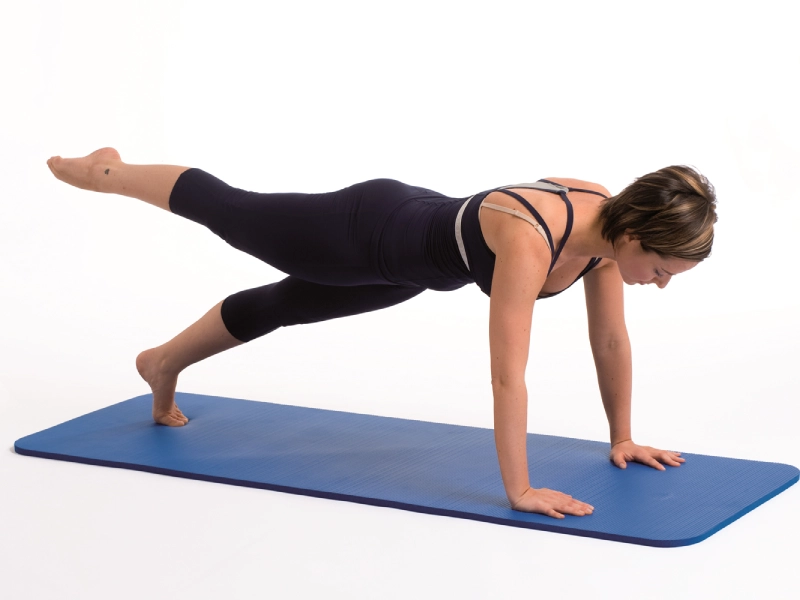
Not everyone is suitable to perform the Pilates Leg Pull Front exercise.
- Neck and head: Keep the neck long and neutral; avoid bending or craning. Slight chin tuck is acceptable to prevent neck strain.
- Pelvis: Keep the pelvis stable; avoid rocking when lifting the leg and prevent lower back arching.
- Arms and shoulders: Actively press the hands into the mat, lift through the shoulders, and avoid sinking weight into the elbows.
- Legs: Activate the glutes before lifting the leg; do not kick the leg sideways; keep the torso still during the lift.
- If you experience wrist discomfort, place a towel under the wrists or lower down onto the forearms while performing the exercise.
- Be careful not to let the lower back sag or curve toward the mat.
- Avoid practicing during the middle and later stages of pregnancy.
By observing these guidelines, you can maintain proper alignment, activate the correct target muscles, and protect vulnerable areas such as the lower back, neck, and shoulders throughout the Pilates Leg Pull Front exercise.
Who Should and Should Not Practice Leg Pull Front?
The Pilates Leg Pull Front exercise is an advanced movement that strengthens the core and
improves stability and body control. However, it may not be suitable for everyone.
You should practice if you:
- Have a basic Pilates foundation and are comfortable with plank or weight bearing arm exercises.
- Want to strengthen deep abdominal muscles and improve trunk and pelvic stability.
- Can control spinal alignment and hold a plank position for a short duration.
You should avoid this exercise if you:
- Have shoulder or wrist issues, or are recovering from injuries to the shoulder, neck, or lower back.
- Have been advised not to brace or strongly engage the abdominal muscles (for example, certain abdominal conditions or late stage pregnancy).
- Experience pain or discomfort during weight bearing exercises on the hands.
The Pilates Leg Pull Front exercise not only supports a strong and balanced body but also promotes mental relaxation and comfort. Combine this exercise with a healthy diet and an active lifestyle to achieve optimal results, and begin your wellness journey today with Pilates Leg Pull Front to experience its positive effects.