

Pilates Leg Circles on the Reformer: Technique, Benefits, and Safe Practice Guide
30/01/2026Pilates Reformer has become one of the most popular training methods today thanks to its ability to improve overall health, build strength, and enhance flexibility. Among these exercises, the Pilates Leg Circles on the Reformer is an excellent choice for developing mobility, movement control, and core strength. This article provides a comprehensive overview of the Pilates Leg Circles on the Reformer, covering the concept, benefits, step by step instructions, and essential safety tips for effective practice.
Introduction to Pilates Leg Circles on the Reformer
Pilates Leg Circles on the Reformer is an exercise that focuses on hip mobility and leg strength. It is one of the classic Pilates movements, helping to improve range of motion while strengthening the muscles of the legs and hips, especially the thighs, hip muscles, and glutes.
What Is the Leg Circles Exercise on the Reformer?
Leg Circles are typically performed on the Pilates Reformer machine. During the exercise, the practitioner lies on their back on the Reformer carriage, places both feet into the straps, and moves the legs in circular motions in the air. The goal is to maintain control and stability throughout the movement while engaging the core and hip muscles to support balance and strength.
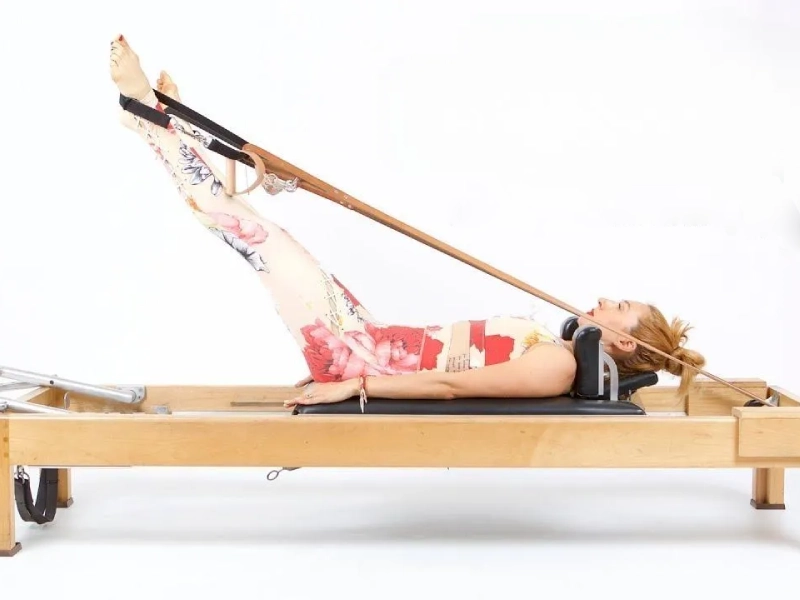
Leg Circles Exercise on the Reformer.
This exercise not only improves hip flexibility but also enhances spinal stability and strengthens supporting muscle groups. It contributes to postural alignment, reduces tension, and helps prevent injuries related to daily activities or sports.
Who Should Practice Leg Circles?
Pilates Leg Circles on the Reformer is suitable for a wide range of individuals, from beginners to advanced Pilates practitioners. It is especially beneficial for:
- Individuals looking to strengthen and improve flexibility in the hips, thighs, and glutes
- Those who need better core control and pelvic stability.
- People recovering from mild back or hip injuries (under professional guidance).
- Athletes and active individuals seeking improved performance and injury prevention.
However, individuals with serious back or hip conditions or those who have recently undergone surgery should consult a healthcare professional before practicing.
Primary Muscle Groups Engaged
Leg Circles challenge the deep core muscles, hip flexors, the front and back of the thighs (quadriceps and hamstrings), as well as the gluteal muscles and inner thighs, which work to keep the legs aligned. Because the movement involves circular motion rather than simple lifting and lowering, the legs move away from the body’s center of gravity, significantly challenging pelvic control, coordination, and motor control.
How to Perform Pilates Leg Circles on the Reformer
To achieve optimal results and ensure safety, it is essential to understand proper preparation, execution, and key considerations when performing Pilates Leg Circles on the Reformer.
Starting Position
- Lie on your back on the Reformer with your spine in a neutral, comfortable position. Keep your head and shoulders supported on the carriage. Your arms can rest alongside your body for balance or hold the shoulder blocks if needed.
- Place both feet into the straps or against the footbar, depending on your Reformer setup. Ensure the legs are straight and aligned, forming approximately a 90 degree angle with the upper body.
Execution Steps
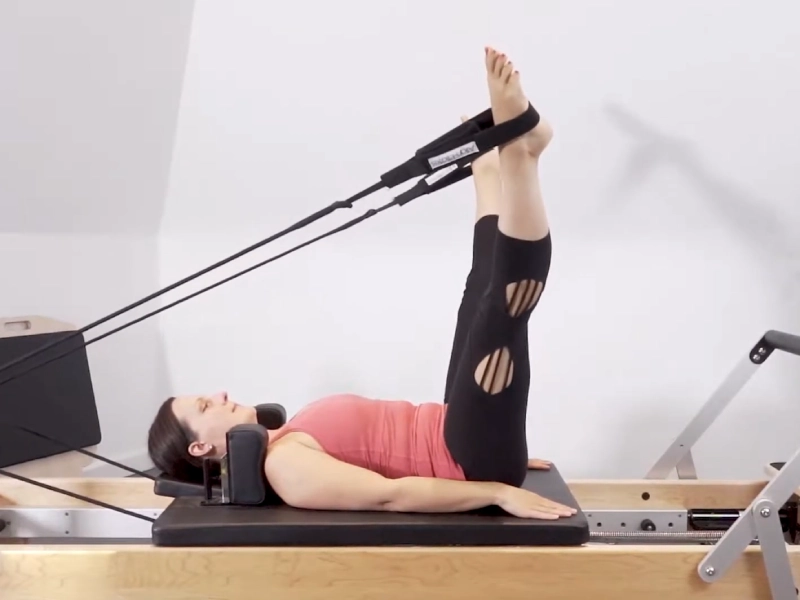
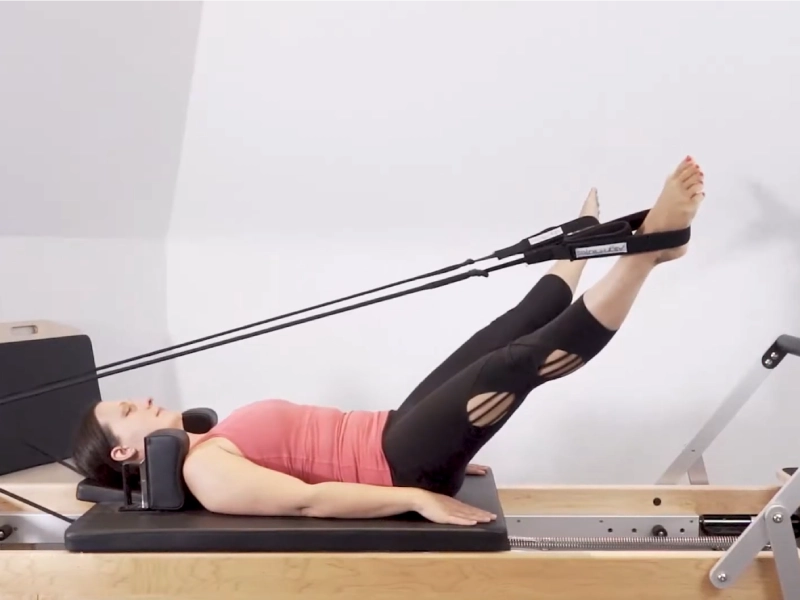
Perform Pilates Leg Circles on the Reformer.
- Extend both legs upward toward the ceiling, with heels gently touching or positioned nip-width apart depending on the variation. Keep the pelvis stable, avoiding excessive arching or pressing the lower back into the carriage. Inhale to prepare.
- Begin moving both legs together in a large circular motion: open the legs outward, lower them down, then draw them back together to the starting position.
- After several repetitions in one direction, reverse the movement and circle the legs in the opposite direction.
- Perform 5-8 repetitions in each direction, maintaining slow, controlled movements without using momentum.
Important Practice Notes
- Keep the spine neutral and relaxed throughout the exercise. Avoid excessive arching or tension in the lower back to reduce injury risk.
- Maintain core engagement and pelvic stability, preventing unnecessary rocking or shoulder lifting.
- Avoid moving too quickly. Precision and control are more important than speed.
- Do not rely solely on leg strength; allow the core and hip muscles to support balance and stability.
- If you feel strain in the lower back, reduce the size of the circles or increase spring support.
- Beginners may start with Single Leg Circles for better control before progressing to both legs.
Benefits of Pilates Leg Circles on the Reformer
Pilates Leg Circles on the Reformer is not only a fundamental Pilates exercise but also offers numerous physical benefits when practiced correctly.
1. Improves Hip and Leg Flexibility
This exercise helps release tension in the hip and leg muscles, enhancing flexibility and mobility in the hip joints. Improved flexibility supports smoother movement in other Pilates exercises and everyday activities.
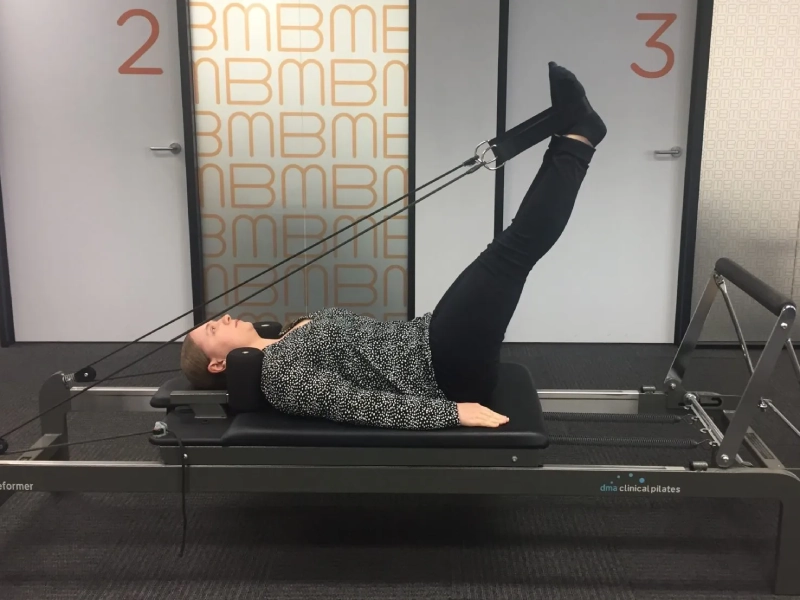
Leg Circles exercises on the Reformer offer many benefits to the user.
2. Strengthens the Core and Hip Muscles
Pilates Leg Circles require continuous core engagement to maintain stability, strengthening the abdominal muscles and lower back. This support helps protect the spine and improve posture. The exercise also strengthens the glutes and hip muscles, contributing to overall lower body strength.
3. Enhances Balance and Coordination
Performing controlled circular movements requires muscular coordination, improving balance and neuromuscular control. Better coordination can reduce injury risk and enhance athletic performance.
4. Supports Postural Alignment and Reduces Back Pain
By strengthening the core and reducing tension in the lower back, this exercise helps improve posture and alleviate back discomfort. Better alignment and stability can lower the risk of injuries in both daily life and physical activities.
5. Improves Body Control and Training Performance
Practicing controlled leg movements in Pilates Leg Circles enhances overall body awareness and control, leading to improved performance in other Pilates exercises and sports activities.
Pilates Leg Circles on the Reformer is a key Pilates movement that delivers significant benefits in strength, flexibility, and movement control. Incorporate this exercise into your regular Pilates routine, focus on proper technique, and enjoy the long term health and fitness benefits it provides.