

Pilates Hip Circles on Spine Corrector
23/02/2026Learn about the Pilates Hip Circles on the Spine Corrector, an effective exercise to improve hip and core strength and flexibility. This article will explain the benefits, proper technique, and tips to optimize results from this exercise.
Introduction to Pilates Hip Circles on the Spine Corrector
Pilates Hip Circles are an advanced variation of the traditional Leg Circles exercise, performed on the Spine Corrector. This unique piece of equipment features a specially curved design that supports the spine and helps practitioners maintain proper posture throughout the movement.
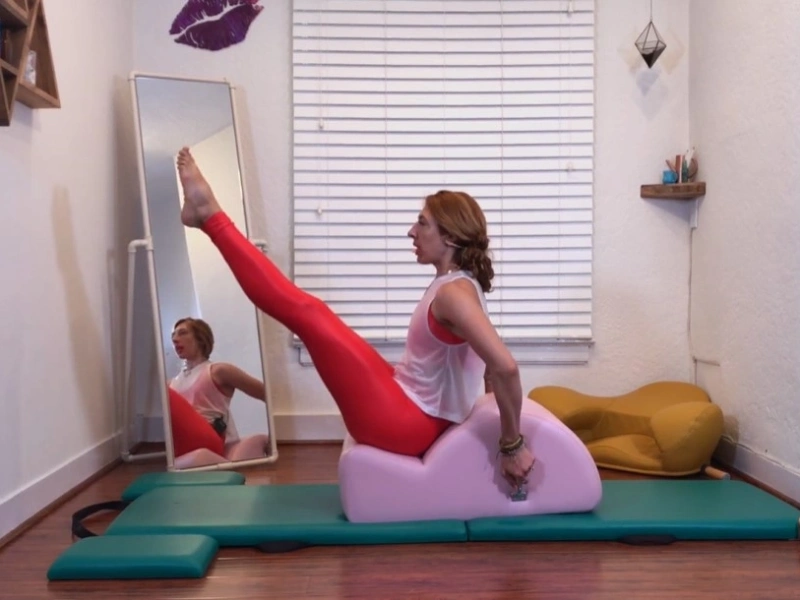
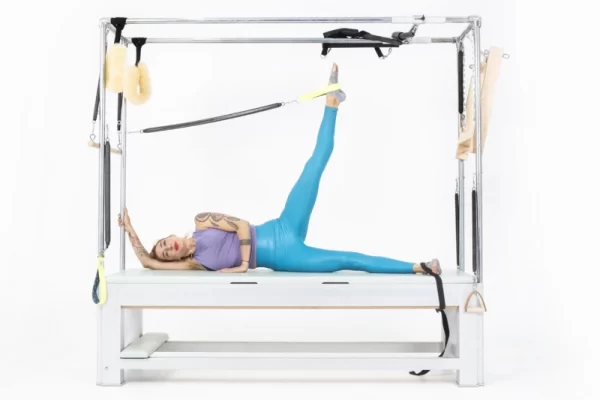
Pilates Hip Circles exercise on Spine Corrector.
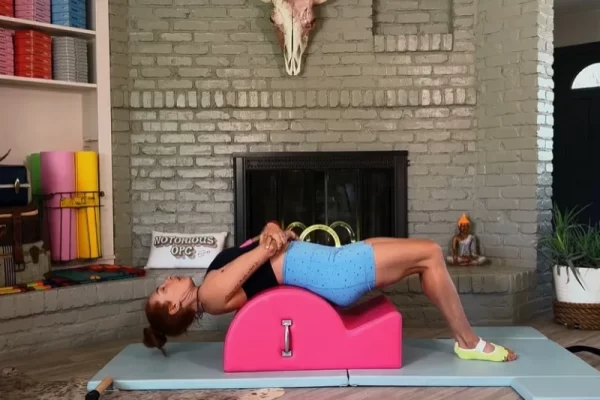
In the Hip Circles exercise, the practitioner lies on the Spine Corrector with their back supported by the curve of the tool. The legs are lifted, and the circles are drawn using the hips. The goal of the exercise is to create flexible movement and control from the hip muscles, reduce stress in the lower back, and improve overall body balance.
Benefits of Pilates Hip Circles on the Spine Corrector
Pilates Hip Circles on the Spine Corrector is one of the most effective exercises for enhancing hip and core strength and flexibility. This movement not only releases tension in the hip muscles but also offers long-term benefits, particularly for those looking to develop their core muscles and improve overall flexibility.
1. Strengthens and Improves Flexibility in the Hip Muscles
The Pilates Hip Circles on the Spine Corrector require the hip muscles to perform continuous circular movements. This engages and works deeply into the major muscle groups around the hips, including the quadriceps, glutes, and iliopsoas muscles. This movement helps to increase flexibility in the hip region while simultaneously strengthening the muscles, supporting daily activities, and reducing the risk of strains or injuries.
2. Enhances Core Control and Balance
To perform the Hip Circles exercise correctly, practitioners need to stabilize their core and abdominal muscles throughout the rotation. This control helps to develop better balance and strengthens the abdominal and lower back muscles. The deep core muscles and obliques are activated continuously, helping the waist area become firmer and stronger.
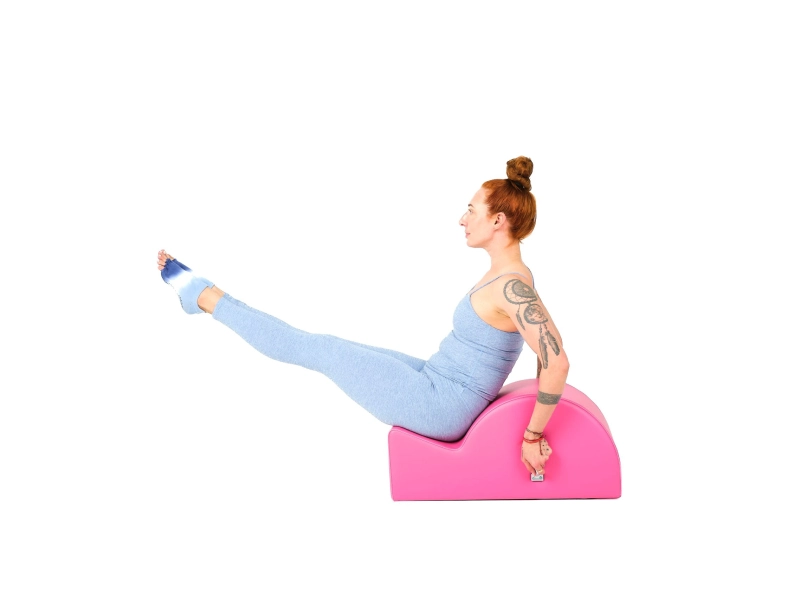
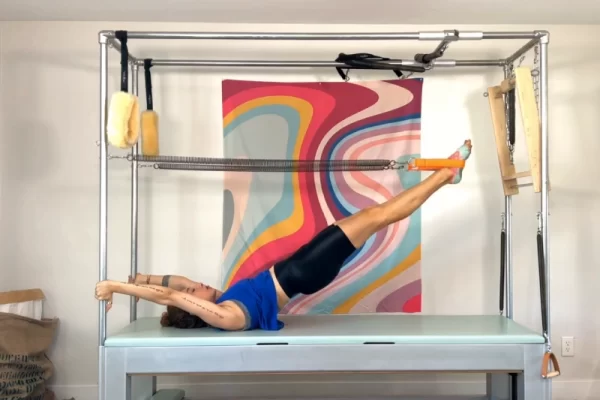
Benefits of Hip Circles exercises on a Spine Corrector.
3. Reduces Tension and Stiffness in the Lower Back
The Hip Circles exercise doesn’t just target the hips and waist; it also helps alleviate stress in the lower back. As the hips are freed and the abdominal muscles work to maintain balance, pressure on the lower back is reduced, which helps to prevent pain and stiffness. This is particularly beneficial for those who spend long hours sitting or working in an office environment.
4. Supports Posture and Gait
This exercise also contributes to better posture and walking habits. As the hips and waist become more flexible and stronger, the body is better able to maintain balance and distribute weight more evenly. This helps you stand taller, reducing issues such as spinal curvature or poor sitting posture.
5. Strengthens Overall Core Health
The Hip Circles exercise engages multiple muscle groups around the hips and waist, especially the core. By controlling the circular motion of the hips, the abdominal and lower back muscles work continuously to stabilize the body. This improves muscle tone and helps combat issues like back pain or weak abdominal muscles.
How to Perform Pilates Hip Circles on the Spine Corrector
Pilates Hip Circles on the Spine Corrector requires control and focus to maximize the benefits of the movement. To perform this exercise, you need to maintain core stability while moving your legs in a circular motion. Follow these step-by-step instructions to perform Pilates Hip Circles correctly:
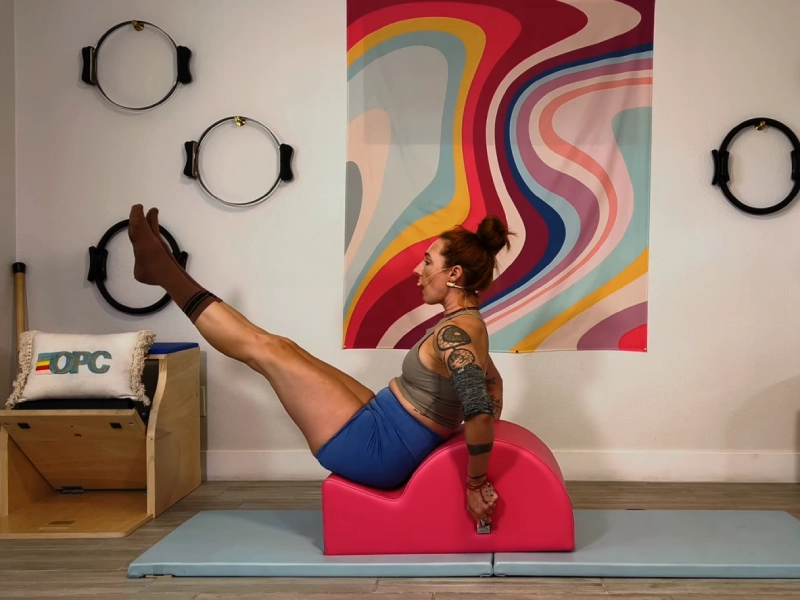
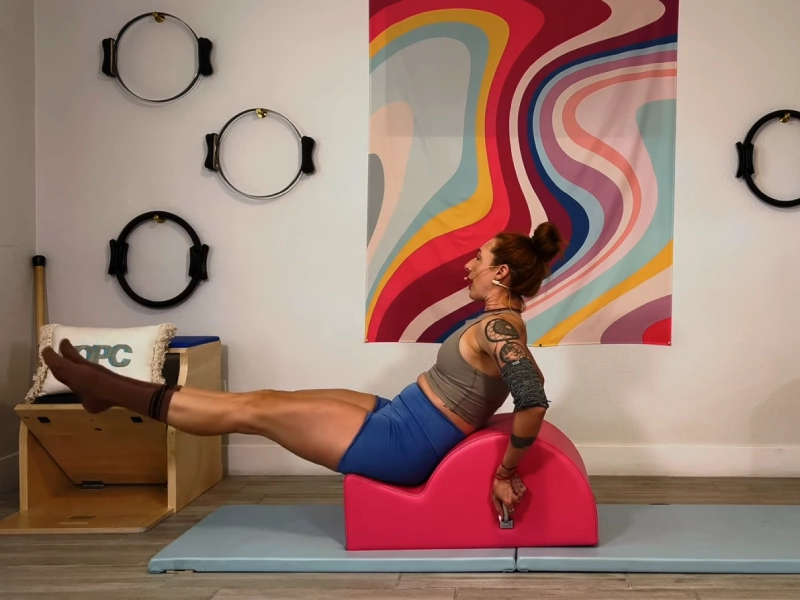
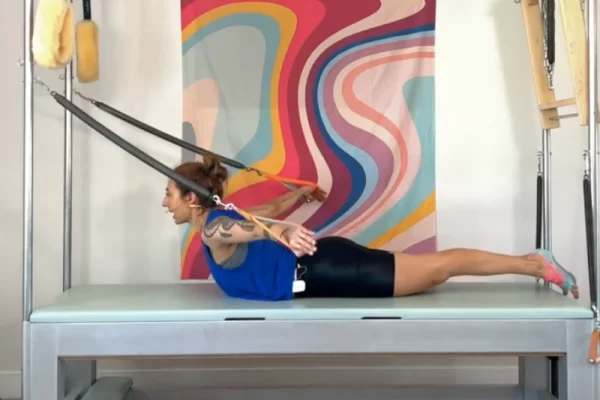
Perform Pilates Hip Circles on the Spine Corrector.
- Sit on the edge of the Spine Corrector and gently lower your body so your back rests on the curve of the equipment. Keep your shoulders and head stable on the floor or close to the Spine Corrector. Your hands can either rest on your hips or grip the edge of the tool to help with balance.
- Lift both legs up, keeping them straight or slightly bent at the knees, and ensure your feet are parallel to each other.
- Begin moving your legs in circular motions in the air. Start with small circles, gradually increasing the size as your body gains control.
- After completing the required number of circles in one direction, stop and reverse the direction. This ensures balance in both sides of the hip muscles.
- Once you’ve completed the circles in both directions, slowly lower your legs back down and sit up gently. Don’t forget to stretch the hip and thigh muscles after finishing the exercise to relieve tension in the muscles.
Tips for Effective Execution
To get mind: the most out of Pilates Hip Circles on the Spine Corrector, keep the following tips in
- Avoid arching or straining your lower back during the circles. While the Spine Corrector provides support, you should still focus on controlling your core muscles.
- For beginners, start with smaller circles to get familiar with the motion and maintain stability.
- Regularly adjust your breathing rhythm to help you better control your core and increase the effectiveness of the exercise.
With numerous benefits for the hips, waist, and core, Pilates Hip Circles on the Spine Corrector should be an essential part of your workout routine. Incorporate it today to improve strength, balance, and flexibility.