

Pilates High Bridge Exercise on the Spine Corrector
03/02/2026The Pilates High Bridge exercise on the Spine Corrector helps strengthen the back, abdominal muscles, and improve spinal health effectively. With the support of the Spine Corrector, this exercise not only enhances flexibility but also increases endurance, making it ideal for those with experience.
Introduction to the Pilates High Bridge Exercise on the Spine Corrector
The Pilates High Bridge on the Spine Corrector is an advanced exercise designed to strengthen and improve flexibility in the back, abdominal muscles, and spine. The Spine Corrector is a supportive device that ensures the safe execution of the spine-bending motion.
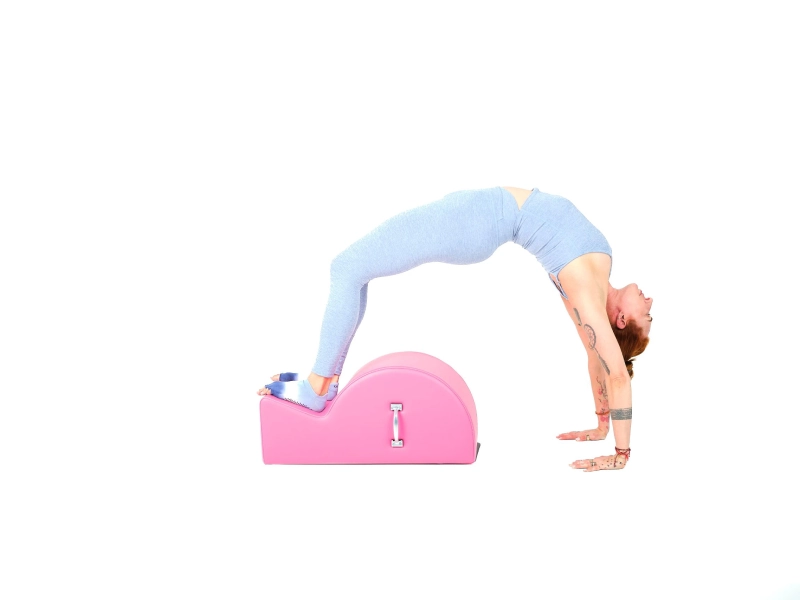
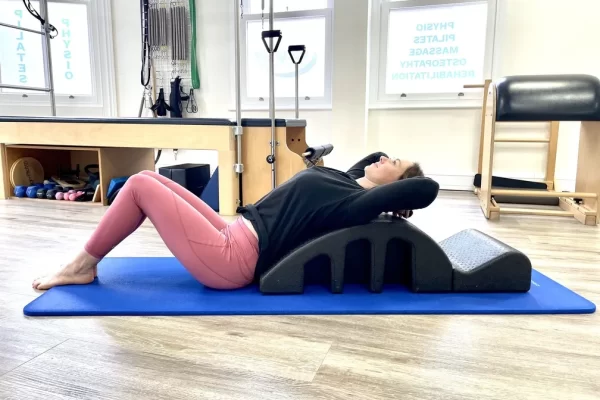
Pilates High Bridge exercise on the Spine Corrector.
This exercise not only enhances posture but also helps improve back and abdominal strength, making it an ideal choice for those with experience in Pilates. It is especially beneficial for individuals looking to increase back strength and flexibility, as well as those dealing with posture issues, back pain, or muscle tightness. However, beginners or those with serious spinal issues should consult a professional before attempting this exercise.
Benefits of the Pilates High Bridge exercise on the Spine Corrector
The Pilates High Bridge on the Spine Corrector enhances the strength and flexibility of the spine, back, and abdominal muscles. The Spine Corrector helps perform this exercise safely and effectively, optimizing spinal elongation and bending without placing excessive strain on the body. Below are the specific benefits of this exercise:
1. Improves Spine Flexibility and Strength
The Pilates High Bridge exercise on the Spine Corrector stretches the spine and opens up the lower back region, increasing spinal flexibility. This move is particularly helpful for individuals who spend long periods sitting or have a sedentary lifestyle, as it helps relieve tension and improves the flexibility of the muscles surrounding the spine. Additionally, the exercise strengthens these muscle groups, supporting the spine and improving overall balance.
2. Strengthens the Lower Back and Abdominal Muscles
The Pilates High Bridge not only targets the spine but also focuses on developing the strength of the lower back and abdominal muscles. These muscle groups play a crucial role in maintaining balance and supporting the spine during everyday activities. With consistent practice, the abdominal and lower back muscles will become firmer and stronger, preventing back pain and spinal problems.

Benefits of the High Bridge exercise on the Spine Corrector.
3. Supports Individuals with Back Pain or Muscle Tension
Thanks to the support of the Spine Corrector, the High Bridge exercise can be performed safely without applying too much pressure on the lower back. For individuals with chronic back pain or muscle tension, this exercise helps alleviate pain, relax tight muscles, and promote the healing process. The combination of stretching and strengthening muscles improves posture and reduces the risk of recurring back issues.
4. Improves Posture and Balance
The Pilates High Bridge exercise on the Spine Corrector helps practitioners develop better posture in daily life. As the back and abdominal muscles become stronger, the spine is better supported, reducing the likelihood of misalignment or pain caused by poor posture. Additionally, this exercise enhances balance, boosting confidence during other physical activities or sports.
How to Perform the Pilates High Bridge on the Spine Corrector
The Pilates High Bridge exercise on the Spine Corrector is an advanced exercise that requires proper technique and body control. To perform this exercise correctly and achieve optimal results, it is essential to follow the proper steps, from preparation to execution and finish.
Preparation Position:
- Place the Spine Corrector on a firm, stable surface.
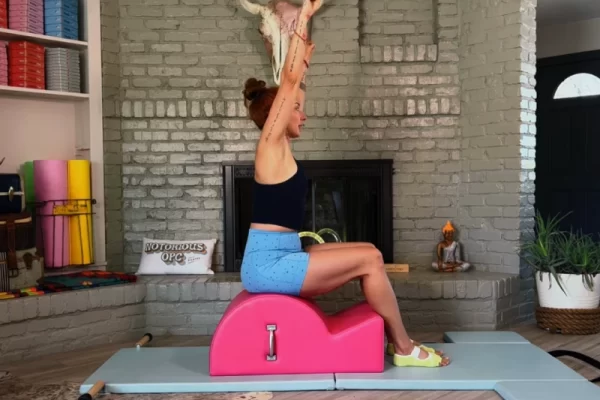
- Sit on the curved part of the Spine Corrector, with your back resting against the arch, feet firmly placed on the step in front, knees bent.
- Place your hands flat on the floor, shoulder-width apart, fingers pointing toward your feet or slightly turned outward, depending on wrist comfort.
How to Perform the Movement:
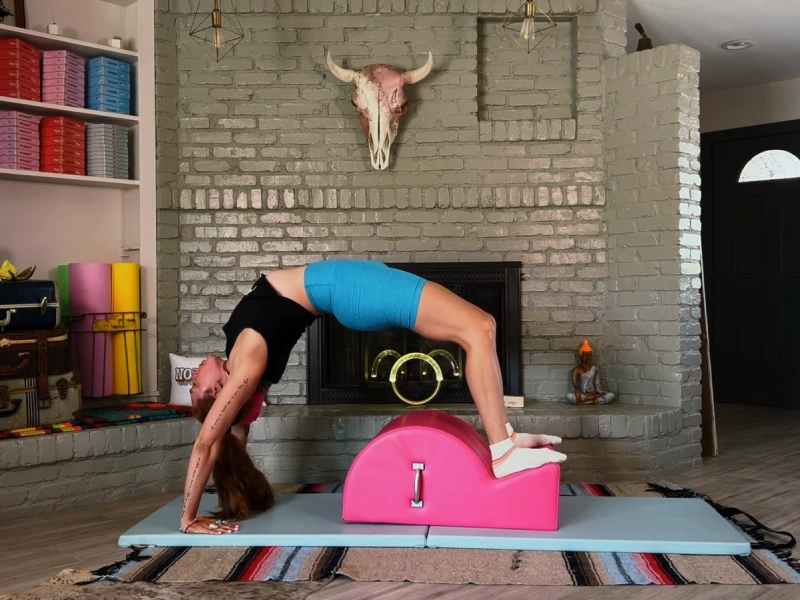
Perform the Pilates High Bridge on the Spine Corrector.
- From the lying position on the Spine Corrector, inhale deeply and press your feet into the floor. Slowly raise your hips off the ground, forming a bridge shape. Feel your spine elongate as you lift your hips.
- As you raise your hips, engage your abdominal muscles and push your chest forward. At this point, your shoulders, back, and hips should form a curve, with your chest expanding upward toward the ceiling. Keep your neck and head relaxed, without applying pressure to your neck.
- Hold the High Bridge position for a few seconds, feeling the stretch in your abdominal and lower back muscles. Maintain steady and controlled breathing throughout the hold.
- Exhale and slowly lower your hips, keeping the spine elongated and returning to the starting position on the Spine Corrector. Ensure control as you lower your hips, avoiding any sudden drop.
- Perform 5-8 repetitions of the exercise, depending on your ability and fitness level. Focus on controlling your breathing and spinal movement during the exercise.
Advanced Variation of the High Bridge on the Spine Corrector: Once you have mastered the basic movement, try lifting one leg at a time off the step, extending it forward, and then switching sides. This variation increases the challenge for the back muscles and enhances body control.
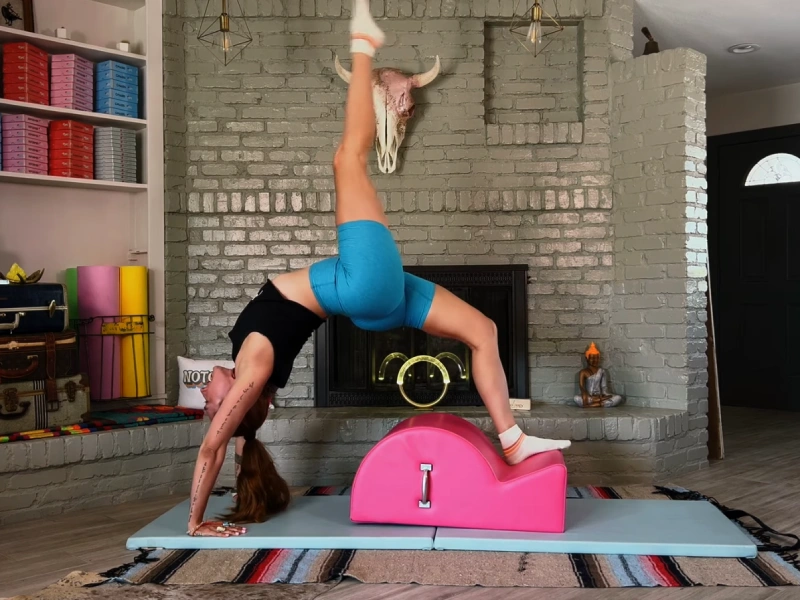
An advanced variation of the High Bridge movement on the Spine Corrector.
Precautions When Performing the Pilates High Bridge
To get the best results from the Pilates High Bridge exercise on the Spine Corrector, here are some important tips to keep in mind:
- Breathe rhythmically, inhaling as you lift your hips and exhaling as you lower them. Proper breathing helps stabilize the core muscles and supports the spine.
- Avoid putting too much pressure on the neck during the movement. Allow the back and abdominal muscles to perform the hip lift, while keeping the neck and head relaxed.
- The core muscles play a vital role in maintaining balance and supporting the spine. Focus on engaging your abdominal and back muscles to maintain proper posture.
The Pilates High Bridge exercise on the Spine Corrector is a fantastic exercise that improves strength, flexibility, and posture. With the support of the Spine Corrector, this exercise provides comprehensive benefits, making it particularly suitable for those with Pilates experience.