

Pilates High Bridge Exercise on the Reformer
28/01/2026Discover the Pilates High Bridge exercise on the Reformer, an advanced movement that enhances core strength, lower back stability, and overall body balance. This article provides detailed execution guidance, key benefits, and important safety considerations.
Introduction to the Pilates High Bridge Exercise on the Reformer
The Pilates High Bridge exercise on the Reformer is an advanced variation of the traditional Bridge exercise in Pilates, performed using the Reformer machine. This movement focuses on strengthening the core muscles, lower back, and hip area while simultaneously improving flexibility and overall body balance.
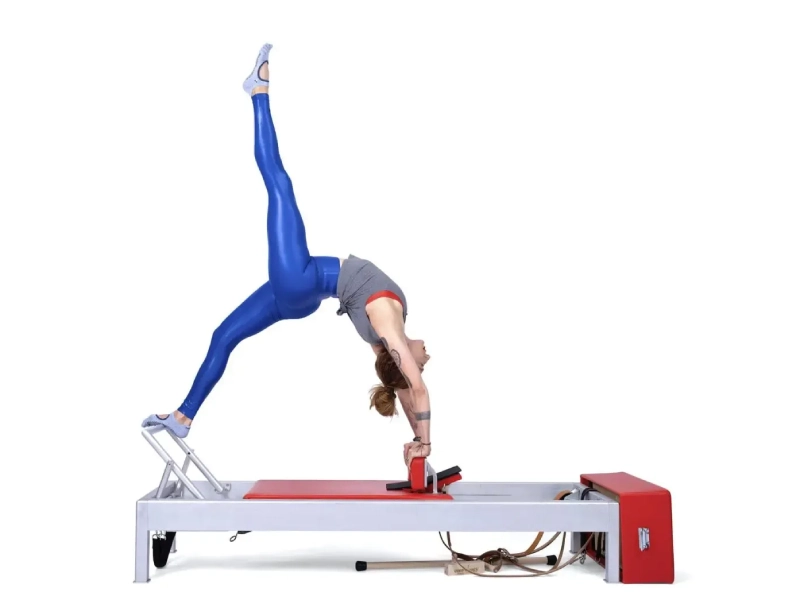
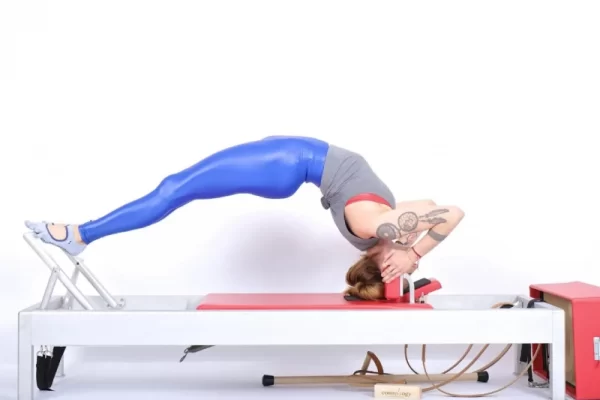
Pilates High Bridge exercise on the Reformer.
With the support of the Reformer machine, practitioners can control the difficulty level by adjusting the springs and carriage, creating a safer and more effective training environment.
The High Bridge exercise on the Reformer requires strong body control and precise coordination between muscle groups, especially the abdominal, back, and thigh muscles. This exercise is ideal for improving lower back load-bearing capacity, supporting postural alignment, and enhancing muscular endurance, helping practitioners develop comprehensive strength.
Benefits of the High Bridge Exercise on the Reformer
The Pilates High Bridge exercise on the Reformer offers numerous outstanding benefits for both health and physique, with a strong focus on muscular development and flexibility. Below are the key benefits of this exercise:
1. Strengthens the Abdominal and Lower Back Muscles
The High Bridge on the Reformer helps strengthen the abdominal and lower back muscles—two areas that are prone to weakness and injury if not trained correctly. Lifting the body on the Reformer requires these muscle groups to work intensively to maintain balance, thereby building strength and improving control.
2. Improves Flexibility and Mobility
This exercise stretches large muscle groups such as the hips, thighs, and spinal muscles. When performed with proper technique, the body becomes more flexible, helping to reduce muscle stiffness, particularly in the lower back and hip area.
3. Supports Recovery After Back Injuries
The Pilates High Bridge exercise on the Reformer is a safe and effective option for individuals recovering from back injuries. The adjustable resistance of the Reformer allows practitioners to control intensity, protecting the lower back while gradually restoring strength and load tolerance.
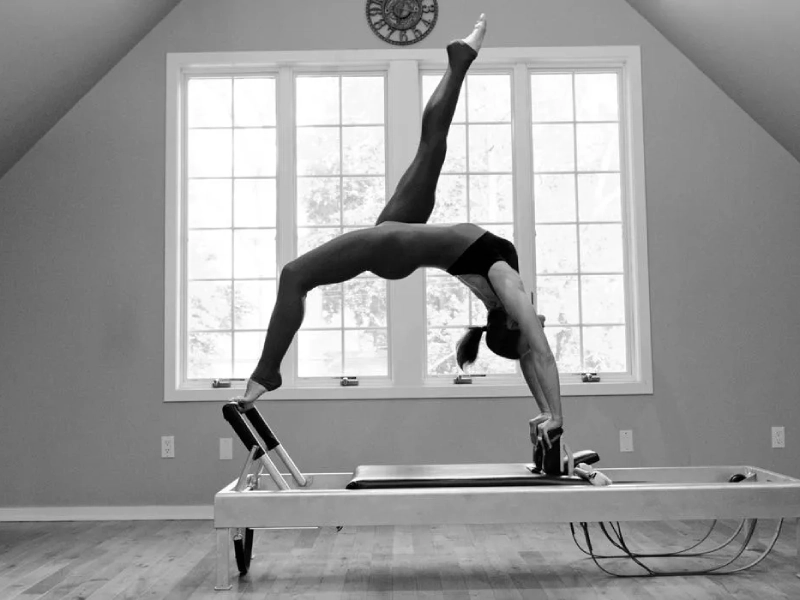
Benefits of the High Bridge exercise on the Reformer.
4. Enhances Core Strength
The core is the center of all movement, and the Pilates High Bridge exercise on the Reformer strongly emphasizes core development. During the bridge position, the abdominal, back, and hip muscles must work together to maintain stability and balance, resulting in a stronger and more resilient core, improved posture, and reduced injury risk.
5. Improves Posture and Balance
The elevated bridge position requires practitioners to maintain a straight and stable alignment while lifting the body. This not only helps correct posture but also enhances overall balance, especially during daily functional movements.
How to Perform the Pilates High Bridge Exercise on the Reformer Correctly
To achieve maximum effectiveness and avoid injury when performing the Pilates High Bridge exercise on the Reformer, it is essential to follow proper technique. Below is a detailed step-by-step guide:
Starting Position
- Lie on your back on the Reformer, place both feet on the footbar, knees bent, and arms resting alongside the body.
- Ensure the lower back is in a neutral position and the body is fully relaxed before starting.
- Distribute body weight evenly through both feet, keeping them hip-width apart.
Steps to Perform the Pilates High Bridge Exercise on the Reformer
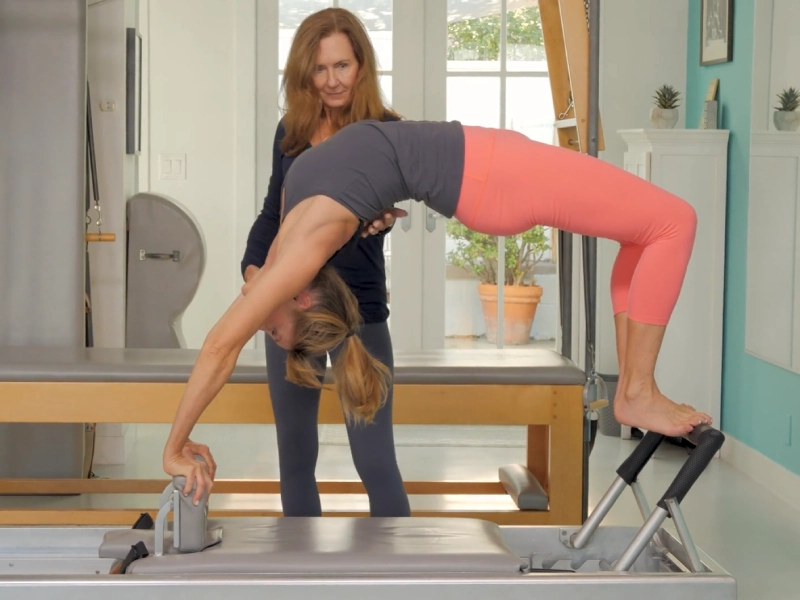
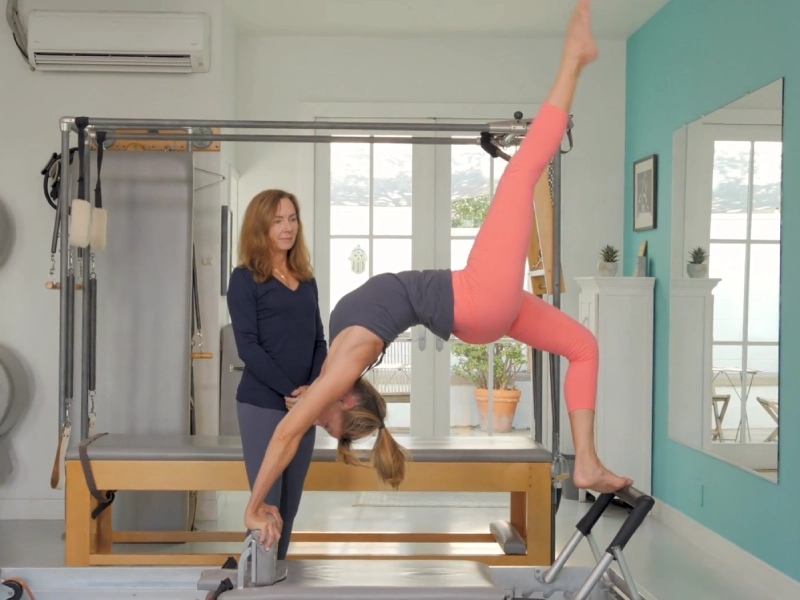
Perform the Pilates High Bridge Exercise on the Reformer.
- Inhale deeply and slowly lift the pelvis off the Reformer carriage. Engage the abdominal and glute muscles to raise the body gradually, articulating the spine one vertebra at a time, starting from the lower back, then mid-back, and upper back.
- When reaching the bridge position, create a straight line from the knees to the shoulders. Avoid excessive arching of the lower back and maintain core control.
- Hold the highest bridge position for a few seconds, focusing on engaging the abdominal and glute muscles to maintain stability.
- Exhale slowly and begin lowering the body back onto the Reformer, articulating the spine down from the upper back to the mid-back and finally the lower back.
- Once returned to the starting position, rest briefly before repeating the exercise.
Important Notes When Performing the High Bridge on the Reformer
Although the Pilates High Bridge exercise on the Reformer offers many benefits, it can pose risks if performed incorrectly or beyond one’s control capacity. Keep the following safety guidelines in mind:
- Always have assistance when practicing for the first time or performing advanced variations.
- Do not perform this exercise if you have existing back, shoulder, or neck injuries, or experience unusual pain.
- Distribute force evenly between the hands and feet, avoiding excessive pressure on the neck or lower back.
- Control the movement; do not move too quickly or extend beyond your ability.
- Maintain steady breathing to support rhythm and balance throughout the movement.
- Perform only 1–2 repetitions per session, prioritizing quality over quantity.
Frequently Asked Questions About the High Bridge Exercise
Many beginners have common concerns when first approaching this exercise. Below are some frequently asked questions:
- Who should perform the High Bridge exercise on the Reformer? This exercise is suitable only for advanced Pilates practitioners who have strong body control and no issues with the back, shoulders, or neck.
- How often should this exercise be performed? It is recommended to perform it only 1-2 times per session, focusing on movement quality and control.
- Can this exercise be practiced at home? It is not recommended to practice independently without experience. Training under the supervision of a qualified instructor or spotter is advised to ensure safety.
With its outstanding benefits for strength and balance, the Pilates High Bridge exercise on the Reformer is an excellent choice for advanced practitioners seeking comprehensive physical improvement. Hopefully, this article has helped you better understand the benefits and correct execution of this exercise.