

Pilates Headstand Facing Up Exercise on the Reformer
27/01/2026The Pilates Headstand Facing Up exercise on the Reformer is a challenging position that requires strong physical strength and refined technique. This article provides detailed instructions, health benefits, and important considerations to help you achieve the best results. Introduction to the
Pilates Headstand Facing Up Exercise on the Reformer
If you are already familiar with Pilates Reformer training and want to challenge yourself at a higher level, the Pilates Headstand Facing Up exercise on the Reformer is an ideal choice. This is an advanced variation of the traditional headstand, performed on the Reformer machine.
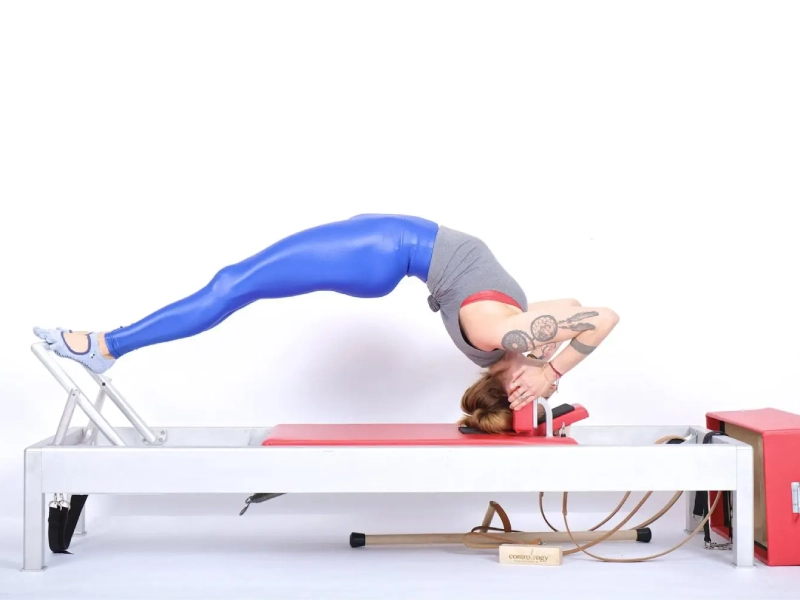
Pilates Headstand Facing Up exercise on the Reformer.
This exercise not only tests core strength and body control but also requires precise coordination between muscle groups, strong mental focus, and controlled breathing techniques.
The Pilates Headstand Facing Up exercise on the Reformer requires the practitioner to lift the entire body weight, maintain balance, and control each movement with precision. When performed correctly, it helps strengthen the abdominal and back muscles while improving shoulder and spinal stability. In addition, the exercise enhances concentration and breath control, allowing practitioners to achieve harmony between physical strength and mental focus.
This is an ideal exercise for experienced Pilates practitioners who want to push their limits. However, it is not suitable for beginners or those who lack sufficient body control on the Reformer.
Benefits of the Headstand Facing Up Exercise on the Reformer
Below are the key benefits of the Pilates Headstand Facing Up exercise on the Reformer:
1. Strengthens Core Muscles
The Pilates Headstand Facing Up exercise on the Reformer demands high levels of strength and control from the abdominal, back, and hip muscles. Holding the body in a headstand position activates the entire core, improving both strength and endurance.
2. Improves Flexibility and Balance
When performing Headstand Facing Up, you must maintain balance while executing movements that require flexibility. The Reformer provides controlled support while still demanding excellent body awareness, helping enhance balance and increase joint and muscle flexibility.
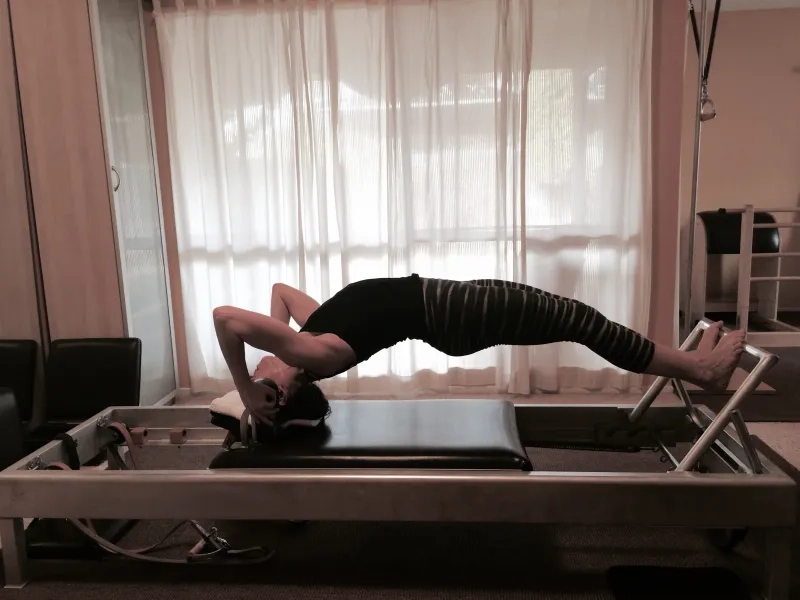
The Headstand Facing Up exercise on the Reformer offers many benefits to the body.
3. Supports Shoulder and Spinal Stability
The Pilates Headstand Facing Up exercise on the Reformer strengthens and stabilizes the shoulders, neck, and spine. Supporting body weight in this inverted position requires the surrounding muscles to work intensively, helping protect and reinforce areas prone to injury.
4. Enhances Concentration and Breath Control
Headstand Facing Up requires a high level of focus to maintain balance and control movement. Coordinating breathing throughout the exercise improves body awareness, strengthens the mind-body connection, promotes relaxation, and enhances mental concentration.
5. Builds Endurance and Overall Strength
This exercise not only develops strength but also improves muscular endurance. Holding the headstand position for an extended period forces muscles to work continuously, increasing overall stamina and resilience.
6. Improves Posture and Confidence
Practicing Headstand Facing Up on the Reformer strengthens the back and spinal muscles, helping improve posture and build confidence in standing, sitting, and daily movement patterns.
How to Perform the Pilates Headstand Facing Up Exercise on the Reformer
The Pilates Headstand Facing Up exercise on the Reformer is an advanced movement that requires strong core control and muscular strength. To perform it safely and effectively, follow these steps carefully:
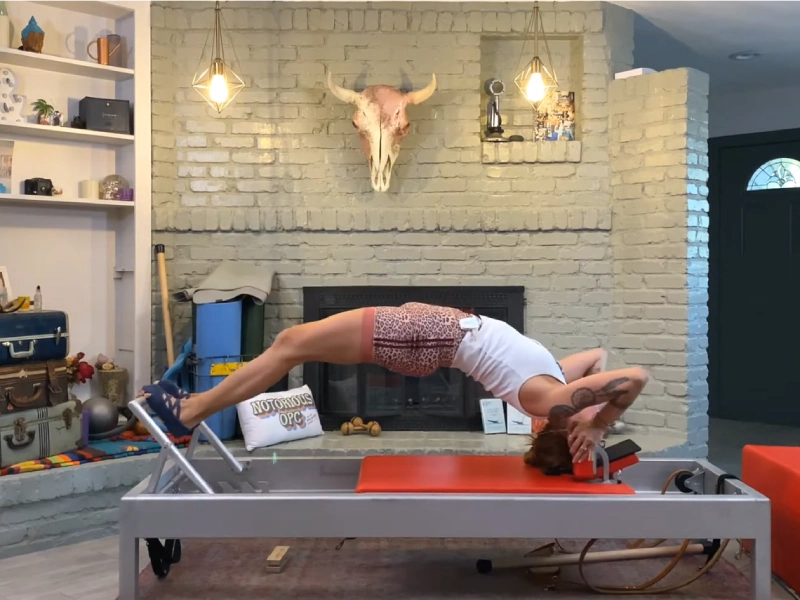
Instructions on how to perform the Pilates Headstand Facing Up exercise on a Reformer.
- Place your feet on the footbar, face upward, and lie on your back on the Reformer. Hold the shoulder rests or Reformer straps with your hands, palms facing down. Maintain a comfortable position and focus on steady breathing.
- Gently lift your feet off the footbar, extend your legs straight, and hold them at a 90-degree angle to your body. Engage your abdominal muscles to support the lower back and maintain balance.
- Inhale deeply, then slowly exhale as you lift your hips and back off the Reformer. Use the strength of your abdominal and lower back muscles to raise your lower body while keeping your neck and shoulders relaxed.
- Continue lifting until your body is fully vertical, similar to a traditional headstand position. Maintain stability and balance, keeping the neck aligned to avoid injury.
- Hold the Headstand Facing Up position for 10-15 seconds, or longer if you are experienced. Maintain steady breathing, inhale through the nose and exhale through the mouth while keeping the core fully engaged.
- After holding the position, slowly lower your hips and legs, returning your back to the starting position on the Reformer. Perform the movement with control to avoid loss of balance.
Safety Tips for Practicing Headstand Facing Up on the Reformer
To minimize the risk of injury, keep the following important guidelines in mind before performing the Pilates Headstand Facing Up exercise on the Reformer:
- This is an advanced exercise that requires adequate physical preparation and should only be performed by experienced Pilates practitioners.
- The exercise is not suitable for beginners or individuals with a history of neck, shoulder, or back injuries, high blood pressure, cardiovascular conditions, or pregnancy.
- Always warm up thoroughly, ensuring major muscle groups, especially the back, shoulders, neck, and hips are properly prepared.
- Maintain full concentration throughout the exercise to avoid losing balance and causing injury.
- Do not strain the neck or shoulders; keep the neck neutral and avoid placing weight on the head.
- If you experience difficulty, seek assistance from a qualified Pilates instructor to ensure safety.
The Pilates Headstand Facing Up exercise on the Reformer is an excellent opportunity to challenge yourself and advance your Pilates practice. With proper technique, detailed guidance, and safety awareness, you can perform this exercise effectively and safely.