

Explore the Pilates Flying Eagle Exercise on the Cadillac and Wunda Chair
24/02/2026Prolonged sitting, shoulder and neck pain, a hunched back, and poor posture are common issues for many people today. If you’re looking for a gentle yet effective solution to improve these, the Pilates Flying Eagle exercise is definitely worth trying. With its ability to deeply target the back, chest, core, and spine, Flying Eagle on the Cadillac and Wunda Chair will not only help you become stronger but also more toned every day. Let’s explore how to perform the Pilates Flying Eagle exercise in the following article.
What is the Pilates Flying Eagle Exercise?
The Pilates Flying Eagle is a dynamic movement in the Pilates system that helps expand the chest, stretch the spine, and strengthen the middle back and shoulders. This exercise is modeled after the image of an eagle spreading its wings. While lying prone, practitioners stretch their arms out, lift the chest, and open the chest area during the movement.
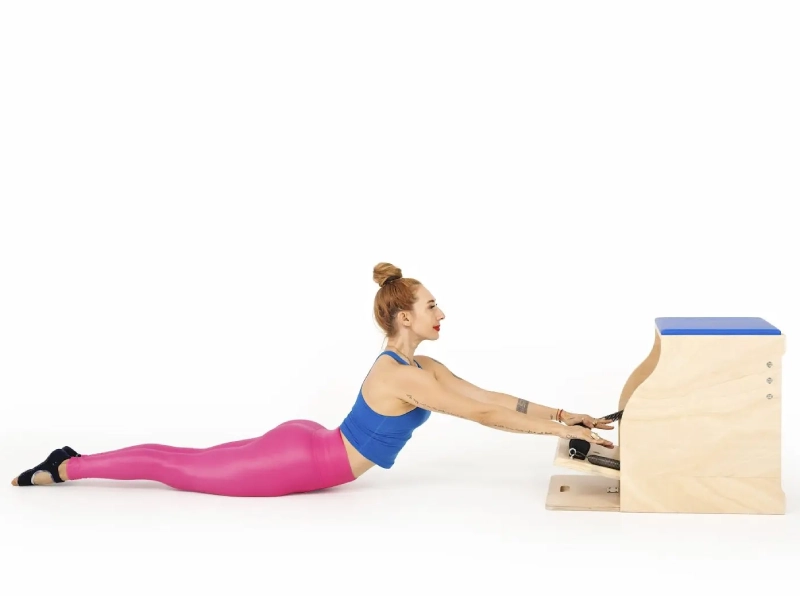
The Flying Eagle exercise is performed on the Wunda Chair.
The Pilates Flying Eagle exercise can be adapted for use with various Pilates equipment, such as the mat or specialized tools like the Wunda Chair or Cadillac. Each piece of equipment mimics the eagle’s flight in a unique way, offering different adjustments for range of motion, resistance, and target audience (from beginners to advanced practitioners).
Who is the Pilates Flying Eagle Exercise Suitable For?
The Pilates Flying Eagle is a versatile exercise that can be modified for different levels and needs, including:
- Office workers: Helps open the chest and relieve tension in the shoulders and upper back.
- Intermediate to advanced Pilates practitioners: Enhances control and strengthens the core muscles.
- Athletes or those recovering from injuries: When performed under professional guidance.
- Anyone seeking improved posture and breathing habits.
Surprising Benefits of Pilates Flying Eagle
Regular practice of the Flying Eagle exercise offers numerous benefits, such as:
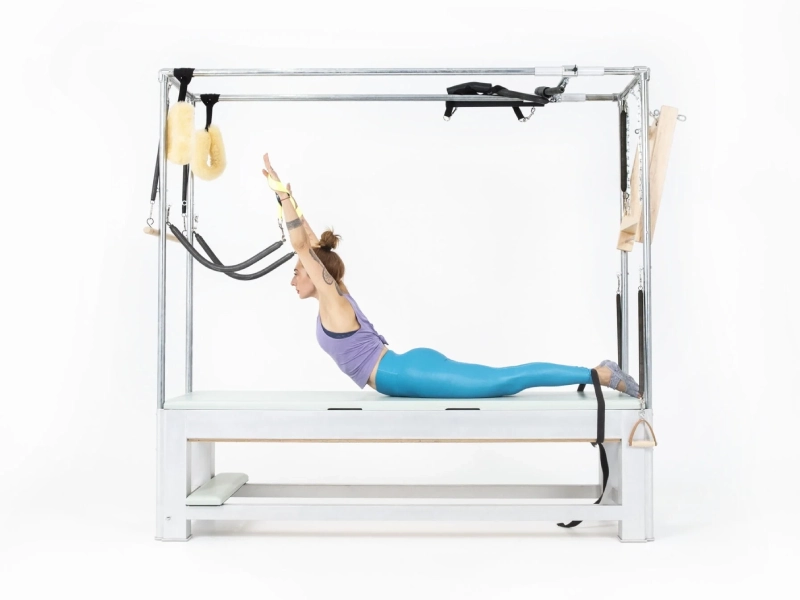
When practiced regularly, the Flying Eagle exercise offers numerous health benefits.
- Improved Posture: When performed with proper technique, this exercise helps maintain a neutral spine, reduces back pain, and promotes a balanced standing or sitting posture.
- Core and Back Strength: The exercise strongly engages core muscles, especially the abdominal and back muscles, enhancing spinal support and preventing injuries.
- Increased Spinal Flexibility: The backbend and chest opening movement stretches the vertebrae, relieving pressure on the spine. This is especially beneficial for individuals who sit for long periods and experience stiffness and discomfort.
- Core Strengthening: Maintaining balance throughout the movement engages the core muscles continuously.
How to Perform the Pilates Flying Eagle Exercise on the Wunda Chair
The Flying Eagle exercise on the Wunda Chair is typically a mid level to advanced exercise, best suited for those with a foundational understanding of Pilates. This movement showcases the versatility of the Wunda Chair, offering both support and challenge to enhance control and body awareness.
Steps to Perform the Pilates Flying Eagle Exercise on the Wunda Chair:
- Prepare the Position
- Set a medium spring tension on the Wunda Chair.
- Lie face down on the floor, facing the pedal.
- Place your heels on the pedal (avoid using the tips of your toes), and extend your arms forward.
- Ensure your shoulders are relaxed, and if your shoulders are tight, practice the Swan exercise on the Cadillac first.
- Extend your legs, keeping them together.
- Rotate your inner thighs slightly upward, direct your tailbone toward the floor, and relax your neck.
- Check your position to avoid “hanging” on your arms.
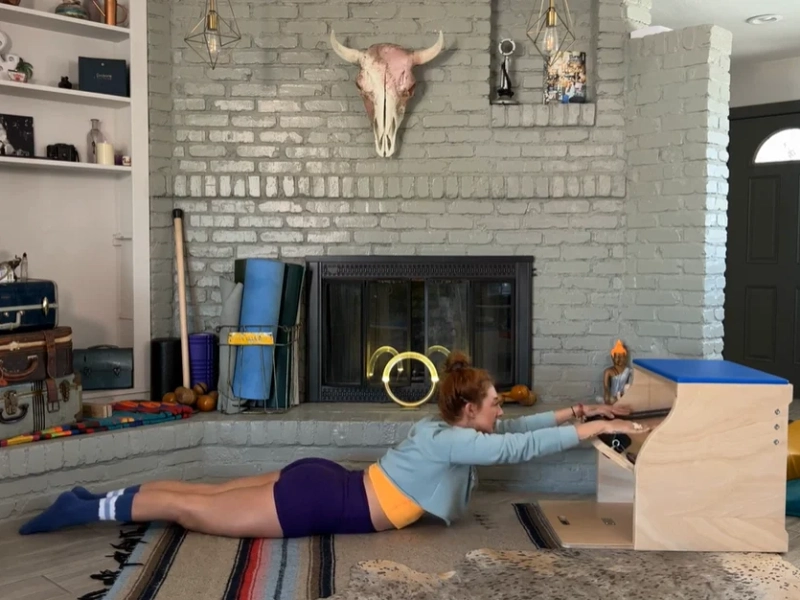
Perform the Pilates Flying Eagle Exercise on the Wunda Chair.
- Lift Your Body
- Press down on the pedal using your heels while lifting your head and upper body toward the front.
- Focus on “moving forward” through your upper back, not just lifting the body.
- Allow the pedal to move down as long as your upper back continues to extend forward.
- Lower Your Body
- When your spine stops moving, stop the pedal.
- Slowly lower your body while maintaining the forward stretch.
- Keep your arms engaged with your back to maintain a long and stable position as you return to the floor.
- Repeat the Exercise
- Perform 3-5 repetitions.
Tip: Focus on control and precision in each movement rather than concentrating solely on the pedal. The main goal is to maintain a smooth, fluid motion.
How to Perform the Pilates Flying Eagle Exercise on the Cadillac
The Pilates Flying Eagle on the Cadillac requires a higher skill level. Using the springs and straps provides additional support and smoothness to the movement. The Cadillac also offers safety and assistance for beginners, helping them control their body alignment more easily.
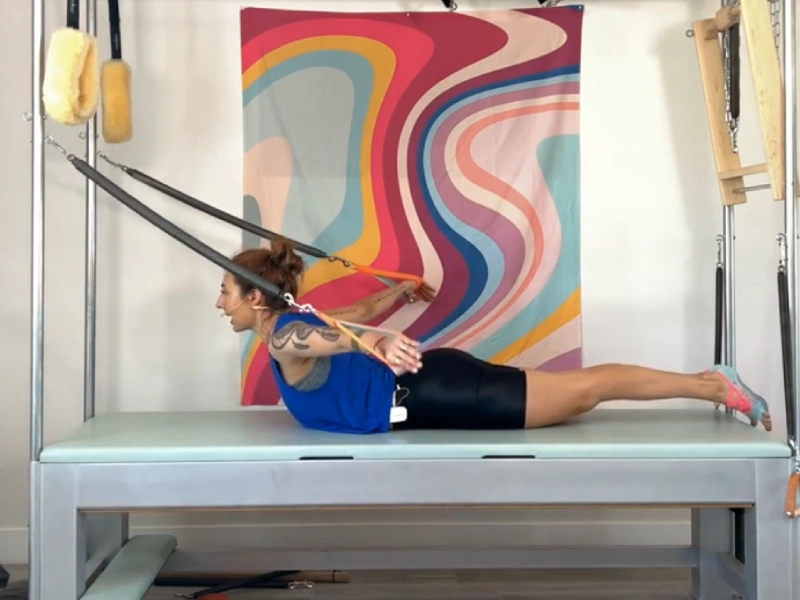
erform the Pilates Flying Eagle Exercise on the Cadillac.
Steps to Perform the Pilates Flying Eagle Exercise on the Cadillac:
- Stand or kneel in front of the Cadillac bar. Place both hands on the bar, keeping shoulder width distance.
- Lie prone with a straight back, looking forward. Place your feet firmly on the floor, hip width apart.
- Inhale, then extend your arms forward while arching your lower back and opening your chest.
- Continue exhaling as you pull yourself forward, extending your arms into the eagle wings position.
- At the final position, your body should form a smooth curve with the spine and back fully stretched. Hold for a few seconds, maintaining steady breathing and feeling the stretch in your back and spine.
- Inhale as you slowly return your arms close to your body, bringing your back to a neutral position.
- Exhale as you return fully to the starting position, releasing tension in your body.
- Perform 5-8 repetitions, gradually increasing as you become more comfortable with the movement.
Precautions for Performing the Pilates Flying Eagle on the Cadillac
While the Pilates Flying Eagle offers many benefits, to achieve the best results and prevent injuries, practitioners should be mindful of the following:
- Avoid Tensing the Neck: Many people mistakenly use their neck instead of their upper back, leading to neck strain.
- Breathe and Control: Make sure your breathing is synchronized with your movements. Deep breathing supplies oxygen to the muscles and improves balance.
- Avoid Overarching the Back: Over bending the spine can put excessive strain on it. Focus on keeping the back comfortable and avoid forcing the body into extremes.
- Maintain Balance: When pulling your body forward, ensure you don’t lose balance. Engage your abdominal muscles to support the core and prevent misalignment.
- Start Slowly: Beginners should start with fewer repetitions and gradually increase difficulty as their body adapts to the exercise. Don’t overexert yourself in the beginning.
The Pilates Flying Eagle exercise is an excellent method for strengthening the back, improving posture, and opening the chest. By practicing on both the Wunda Chair and Cadillac, you can fully maximize the benefits of this exercise. Always focus on proper technique and listen to your body to achieve the best results.