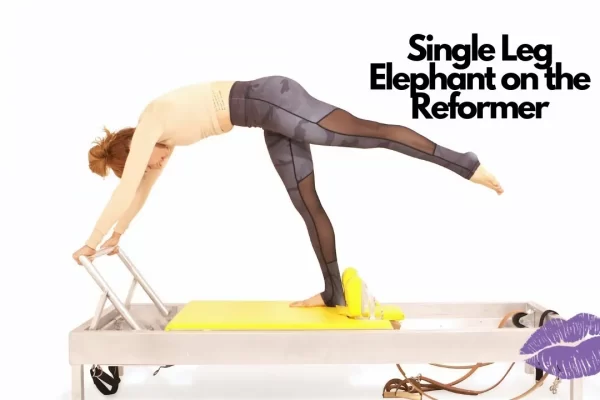


Pilates Elephant Exercise on the Reformer: Complete Technique & Key Benefits
14/01/2026The Pilates Elephant exercise on the Reformer is one of the core movements designed to enhance strength and flexibility throughout the body. With the support of the Reformer machine, this exercise not only lengthens the spine but also improves posture and balance. Let’s explore in detail how to perform the exercise correctly and the outstanding benefits it offers in the article below.
Overview of the Pilates Elephant Exercise on the Reformer
The Pilates Elephant exercise on the Reformer is a fundamental movement that delivers many essential benefits within the Pilates system. Elephant focuses on lengthening the body especially the muscles of the back, hips, and hamstrings while improving flexibility and muscular control.

Pilates Elephant Exercise on the Reformer.
This exercise is typically performed on the Reformer, a signature Pilates apparatus that allows practitioners to execute movements safely and effectively. Elephant is ideal for beginners due to its simplicity and effectiveness, while also remaining an essential component in the training programs of experienced Pilates practitioners.
Through the combination of controlled movement and deep stretching, the Elephant exercise supports improved posture, enhanced body awareness, and overall physical strength.
Benefits of the Pilates Elephant Exercise on the Reformer
The Pilates Elephant exercise on the Reformer offers significant benefits for both physical health and flexibility. It is one of the Pilates exercises that effectively enhances muscular strength while increasing mobility and body control. Below are some of its key benefits:
1. Improves Muscle Strength and Flexibility
The Elephant exercise focuses on stretching and strengthening essential muscle groups, particularly the core muscles, back muscles, and hamstrings. The continuous lengthening and engagement of these muscles throughout the movement not only builds strength but also enhances overall flexibility.
This is especially important for maintaining a strong, adaptable body and reducing the risk of injury during everyday activities.
2. Enhances Posture and Body Control
Elephant is highly effective for posture improvement. Maintaining correct alignment during the exercise helps lengthen the spine and supports an upright, balanced posture. This contributes to reducing common spinal issues such as back pain and postural imbalances, while also improving overall stability.
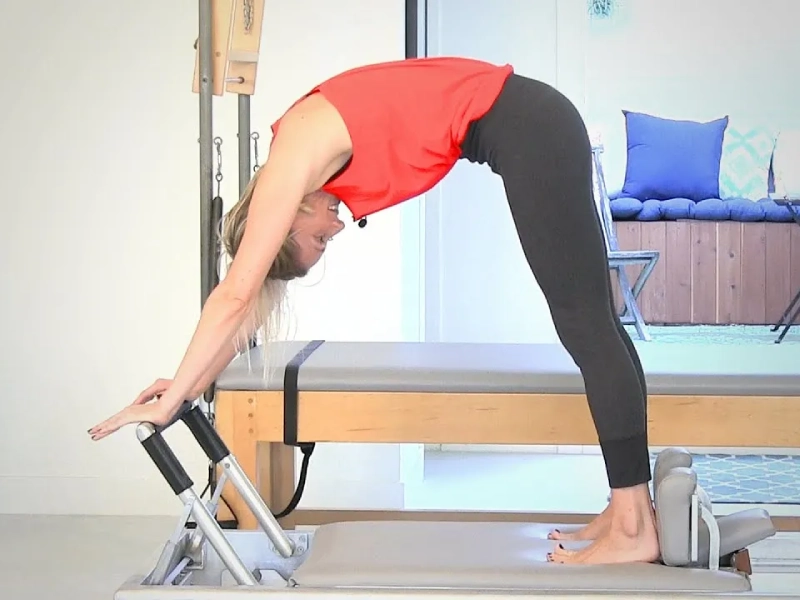
The Elephant exercise on the Reformer offers many benefits to the body.
Additionally, the Pilates Elephant exercise on the Reformer requires precise control in every movement, increasing body awareness and enhancing postural adjustments in daily life.
3. Positive Impact on the Spine and Hips
This exercise gently lengthens and decompresses the spine while releasing tension in the lower back and hip area. Stretching the surrounding muscles helps relieve back discomfort and improves hip mobility, allowing for smoother and more comfortable movement.
This benefit is particularly valuable for individuals who sit for long periods or experience stiffness in the back and hips.
4. Develops Focus and Breathing Awareness
One of the fundamental principles of Pilates is the integration of movement and breath. The Elephant exercise enhances not only movement control but also concentration and breath regulation.
Coordinating breath with movement optimizes exercise effectiveness while promoting relaxation, reducing stress, and easing mental tension.
Step-by-Step Guide to Performing the Elephant Exercise on the Reformer
The Pilates Elephant exercise on the Reformer is a basic movement that requires focus and controlled execution for optimal results. Follow the steps below carefully:
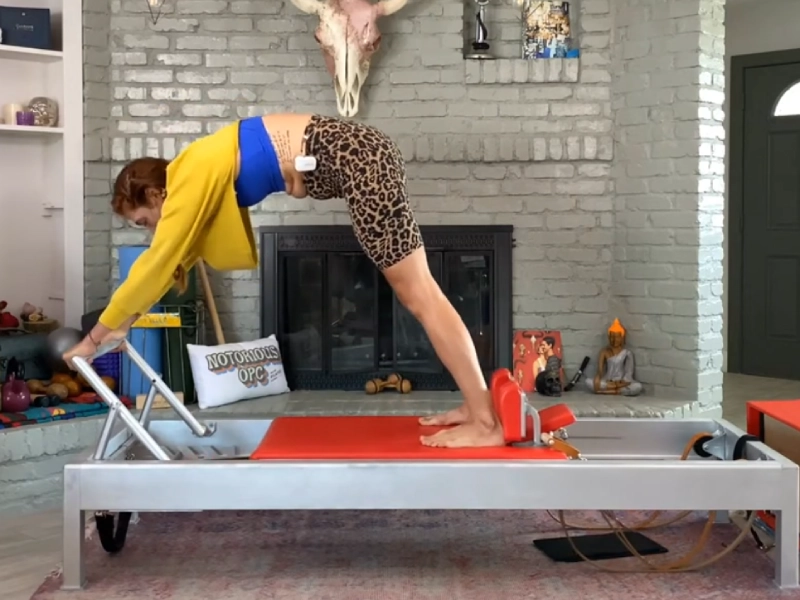
Steps to perform the Elephant exercise on the Reformer.
- Step 1: Attach two heavy springs to the Reformer.
- Step 2: Place your heels on the carriage, resting against the shoulder blocks. Position your hands on the footbar.
- Step 3: Begin with a deep inhale, rounding your spine and tipping the pelvis forward, creating a smooth curved shape from the back to the head.
- Step 4: As you exhale, gently press the legs backward to move the carriage while maintaining a rounded spine and aligned posture.
- Step 5: Inhale as you draw the carriage back to the starting position by pulling the hips forward, feeling the stretch in the hamstrings and relaxation in the lower back.
- Step 6: Repeat the movement 8-10 times, maintaining control and focusing on breath. Ensure proper alignment throughout each repetition without over-straining the body. Important Notes
When Performing the Pilates Elephant Exercise on the Reformer
To maximize effectiveness and ensure safety during the Pilates Elephant exercise on the Reformer, keep the following guidelines in mind:
- Maintain a gentle spinal curve; avoid flattening or excessively arching the back.
- Perform the movement slowly and with control. Avoid pushing the carriage too quickly or losing control during the return. Focus on continuous connection between movement and muscular engagement.
- Coordinate movement with breathing exhale as the carriage moves back and inhale as it returns.
- If you have existing issues with the back or hips, or limitations in spinal flexion or core engagement, consult a qualified professional or instructor before performing this exercise.
After exploring the Pilates Elephant exercise on the Reformer in detail, it is clear that this movement plays a vital role in any Pilates training program. With its wide range of benefits, this exercise can effectively support your journey toward improved posture, flexibility, and overall physical well being.