

Pilates Control Balance Exercise: Complete Guide, How to Perform, and Benefits
06/01/2026Control Balance is one of the most advanced Pilates exercises, requiring a high level of focus and optimal body control. This movement not only challenges flexibility but also demands significant muscular strength and precise balance. In this article, we explore how to perform the Pilates Control Balance exercise correctly and examine the health benefits it offers.
What Is the Pilates Control Balance Exercise?
The Pilates Control Balance exercise is a highly challenging movement that focuses on strengthening the core, improving balance, and enhancing full body coordination. This exercise is ideal for intermediate to advanced fitness enthusiasts who want to develop greater strength and flexibility.
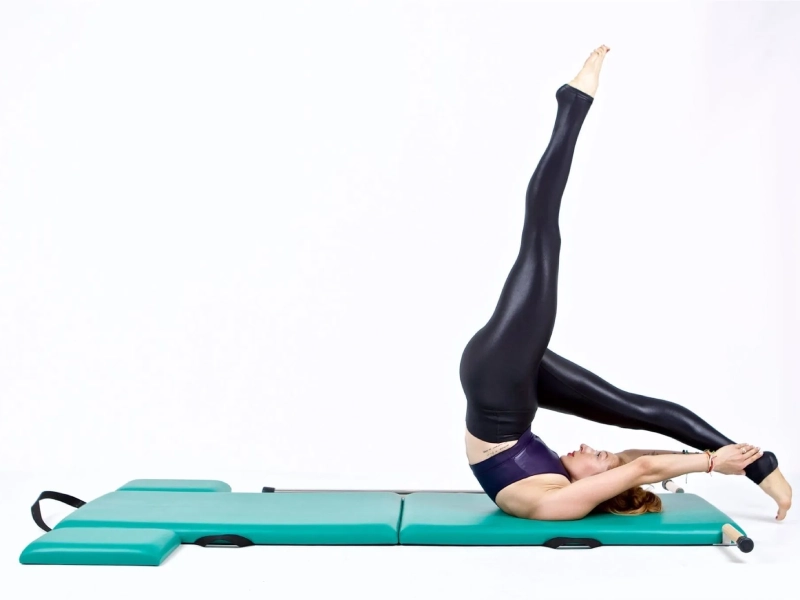
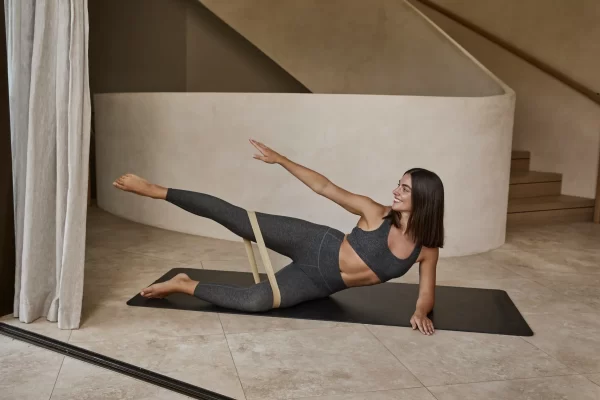
Pilates Control Balance Exercise.
By practicing this exercise, individuals can improve body control, enhance posture, and build a lean, toned physique.
How to Perform the Pilates Control Balance Exercise
To perform the Pilates Control Balance exercise safely, follow these steps carefully:
- Starting position: Lie on your back with your legs extended diagonally; arms reach overhead with palms facing upward.
- Inhale, perform Roll Over: Flex at the hips to bring the legs toward the torso, then articulate the spine off the mat from the tailbone to the upper back. Lift the legs high, parallel to the mat.
- Exhale: Extend both legs toward the ceiling, keeping the weight on the upper back in a Jack Knife position. Inhale and hold.
- Exhale: Extend one leg overhead toward the mat, toes pointing downward. Gently grasp the ankle.
- Inhale: Switch legs, passing through the center in the air; pull. Keep the pelvis and torso as stable as possible.
- Perform 3-5 repetitions per leg.
- To finish: Inhale, bring both legs back toward the ceiling. Exhale and articulate the spine down to the mat one vertebra at a time, returning the legs to the diagonal position.
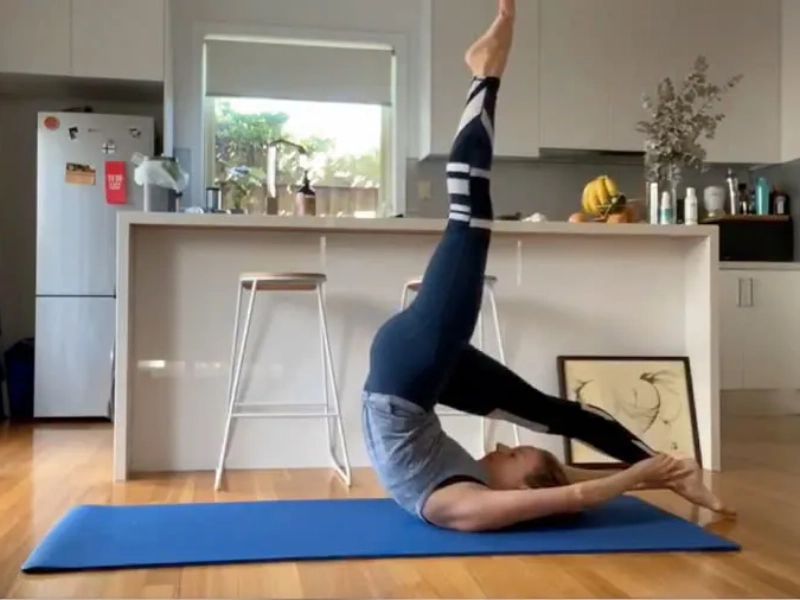
How to perform the Control Balance pose.
Tip: To visualize the Pilates Control Balance exercise more easily, imagine your legs as the arms of a protractor. The lower leg remains still like the fixed arm, while the upper leg moves vertically like the rotating arm.
Important Notes During Execution
Keep body weight centered on the shoulders, not the neck (cervical spine).
- Maintain a stable pelvis and torso while performing the scissoring leg movement.
- Engage the abdominal muscles continuously to prevent loss of balance or pelvic rotation.
Pilates Control Balance on the Spine Corrector
In addition to the classic mat version, the Pilates Control Balance exercise can also be performed on the Pilates Spine Corrector. This variation is considered an advanced exercise within the Pilates method, emphasizing precise control and sustained balance.
When practicing Control Balance on the Spine Corrector, practitioners must control every movement while maintaining balance on the apparatus, which helps strengthen the abdominal muscles, lower back, and hips.
The Pilates Control Balance exercise on the Spine Corrector is suitable for experienced Pilates practitioners or those seeking to further enhance balance and body control.
How to Perform the Pilates Control Balance Exercise on the Spine Corrector
The Control Balance exercise on the Spine Corrector requires intense concentration, precise technique, and strong body control. Follow these detailed steps for safe and effective practice:
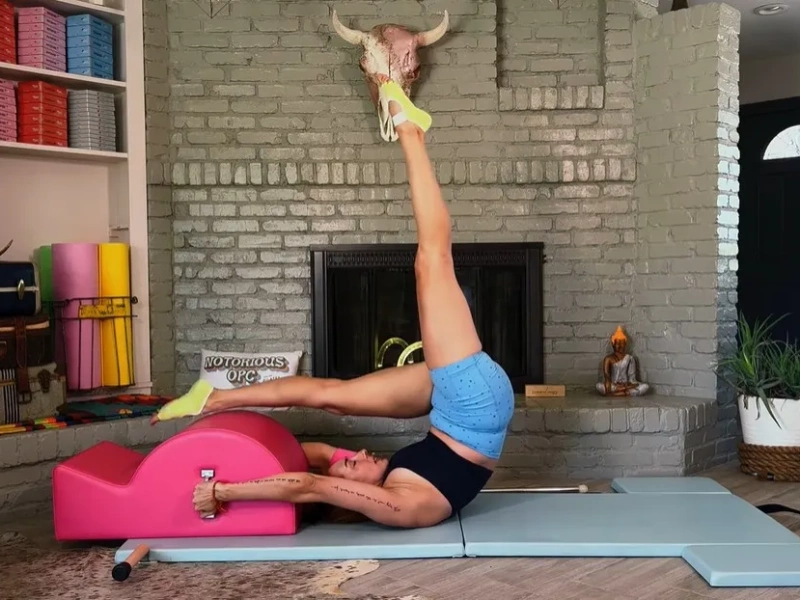
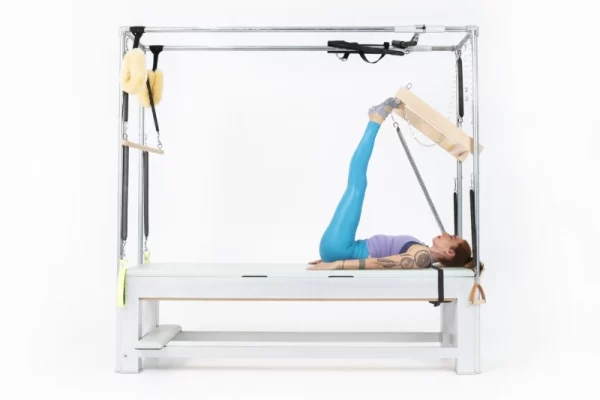
Steps to perform Pilates Control Balance exercises on a Spine Corrector.
- Begin by lying on your back on the Spine Corrector. Ensure that the pelvis rests on the curved surface of the device, while the head and shoulders remain aligned and relaxed.
- Extend both legs straight toward the ceiling, forming a 90-degree angle with the body.
- Reach both arms overhead with fingers pointing toward the feet. Keep the abdominal muscles engaged to control movement and avoid excessive spinal arching.
- Slowly move the legs toward the head while keeping the upper body stable on the Spine Corrector.
- When the legs touch or nearly touch the floor, hold the position for a few seconds. Inhale and feel the stretch through the back and abdominal muscles.
- Exhale and slowly return the legs to the starting position, maintaining balance and control throughout the movement.
Important Tips to Prevent Injury
- Breathe deeply and evenly to help the body relax and maintain focus. Coordinate breath with each movement to ensure stability.
- Ensure the spine does not over arch and the shoulders remain relaxed. The abdominal muscles must stay engaged throughout the exercise to support the spine.
- All movements should be slow and precise to maximize effectiveness and minimize the risk of injury.
Benefits of the Pilates Control Balance Exercise
The Control Balance posture offers the following benefits:
1. Improved Core Strength and Stability
Pilates balance and control exercises on the mat emphasize activation of deep core muscles. By targeting the transverse abdominis, multifidus, and pelvic floor muscles, practitioners build a strong foundation that enhances spinal alignment, posture, and overall stability.
2. Enhanced Body Awareness and Control
The precise nature of the Pilates Control Balance exercise improves body awareness and mindful movement. By focusing on proper alignment and breath coordination, practitioners learn to move efficiently, promoting better coordination, balance, and graceful movement patterns in daily activities.
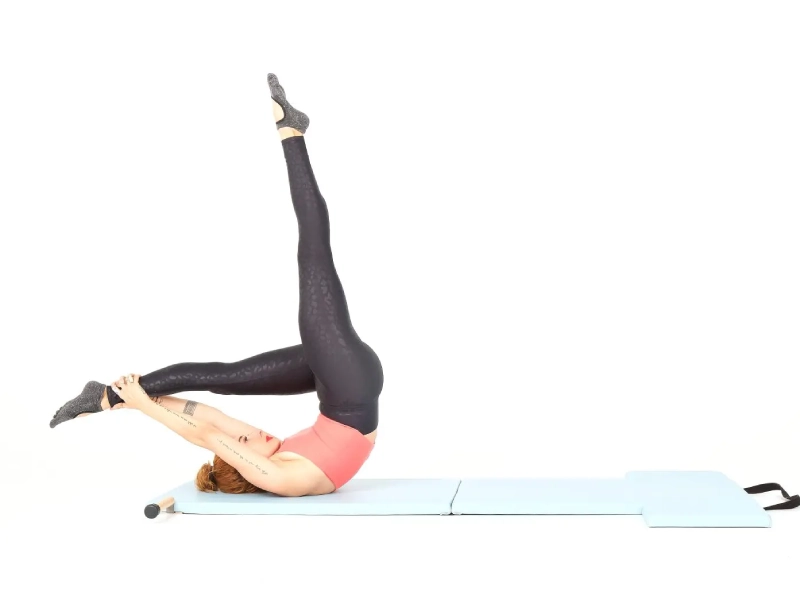
Control balance exercise offer numerous benefits to the body.
3. Increased Flexibility and Mobility
Control Balance incorporates controlled stretching that promotes joint mobility and flexibility. By combining fluid movement with mindful stretching, practitioners achieve a greater range of motion while maintaining stability and control. This improved flexibility helps prevent injuries and enhances overall physical performance.
4. Stress Relief and Mind Body Connection
Pilates is well known for supporting mental well being and reducing stress. The Control Balance exercise on the mat encourages a strong mind body connection through focused attention and concentration. This mindful approach releases tension, promotes relaxation, and enhances mental clarity.
5. Suitability and Accessibility
The Pilates Control Balance exercise on the mat is suitable for a wide range of practitioners, from beginners to advanced levels. It is particularly beneficial for:
- Beginners: Pilates balance and control exercises on the mat provide a solid foundation to develop strength, stability, and body awareness before progressing to more advanced movements.
- Post rehabilitation clients: The low impact nature of mat Pilates makes it ideal for individuals recovering from injury or seeking rehabilitation, helping to strengthen weak muscles and restore mobility.
- Athletes and fitness enthusiasts: Pilates Control Balance complements other training methods by improving core strength, balance, and flexibility, supporting performance enhancement and injury prevention.
Pilates Control Balance exercise is an essential movement for anyone seeking to develop balance and refined body control. With its wide ranging benefits, incorporating the Pilates Control Balance exercise into your training routine can help you achieve comprehensive physical goals. Challenge yourself with this advanced Pilates movement and experience the difference after each session.