

Pilates Breaststroke on the Reformer: Benefits and Step by Step Guide
19/01/2026The Pilates Breaststroke on the Reformer is one of the advanced exercises that helps strengthen the back muscles, improve posture, and significantly enhance overall body control. Below is the clearest, most detailed guide to help you confidently perform this exercise.
What Is the Pilates Breaststroke on the Reformer?
The Pilates Breaststroke on the Reformer is an exercise within the Pilates system performed on the Reformer machine a signature apparatus in Pilates training. This exercise focuses on strengthening the back muscles, improving posture, and supporting proper breathing technique.
1. Introduction to the Breaststroke on the Reformer
Pilates Breaststroke is designed to simulate the breaststroke swimming motion on land, with the primary goal of targeting the back muscles especially the erector spinae along with the shoulders and core muscles. When performed on the Reformer, this exercise not only builds strength but also improves flexibility, balance, and overall body control.
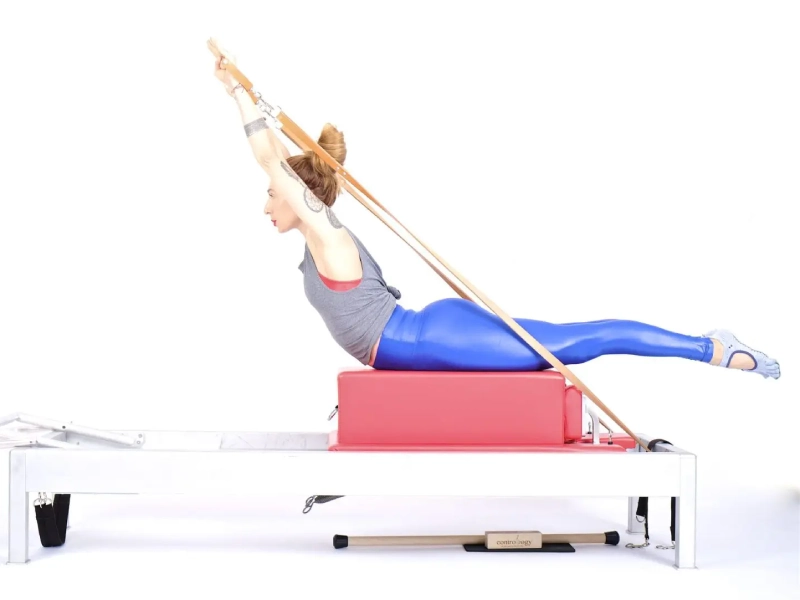
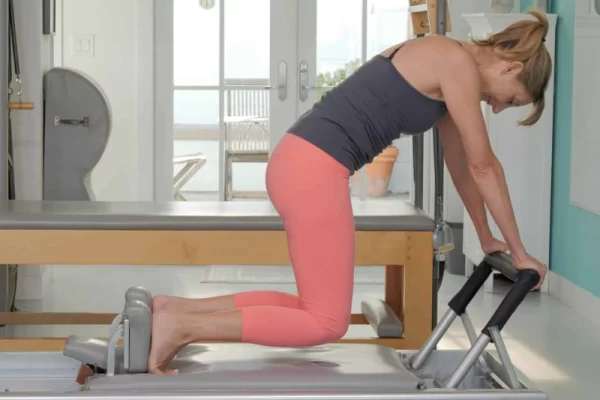
Pilates Breaststroke on the Reformer.
2. Benefits for Back Muscles and Posture
The Pilates Breaststroke on the Reformer is particularly beneficial for those seeking to improve back health and posture. Regular practice of this exercise can help:
- Strengthen and improve flexibility of the back muscles
Breaststroke on the Reformer strongly activates the back muscle group, especially the spinal extensors, glutes, and hamstrings. The lifting and lengthening of the upper body during the movement helps strengthen the lower back, supports spinal health, and effectively prevents back pain.
- Improve posture and restore spinal balance
This exercise opens the chest and lengthens the spine and shoulders, helping counteract rounded shoulders and hunched posture caused by prolonged sitting or desk work. With consistent practice, you will notice a more upright spine, open shoulders, and greater confidence in both standing and sitting posture.

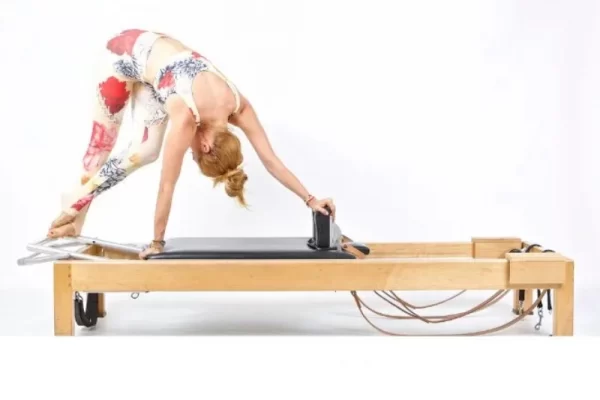
The Breaststroke exercise on the Reformer helps strengthen back muscles and improve posture.
- Develop core strength and central stability
Beyond being a back exercise, Breaststroke requires engagement of the deep abdominal muscles and pelvic floor, helping stabilize the core, protect the lower back, and improve overall movement control. This is a foundational element for safe and effective physical activity.
- Increase mobility and overall flexibility
The reaching and opening movements in Breaststroke significantly improve flexibility in the shoulders, spine, and hips. This not only supports daily functional movement but also enhances athletic performance and reduces the risk of injury caused by stiffness or limited range of motion.
- Support breathing technique and lung capacity
The exercise encourages deep, rhythmic breathing coordinated with movement, improving lung capacity, breath control, and respiratory health. This is a key factor in maintaining energy and focus throughout your workout.
Detailed Instructions for Performing the Pilates Breaststroke on the Reformer
To achieve optimal results and avoid injury, the Breaststroke on the Reformer must be performed with correct technique. Follow these step by step instructions:
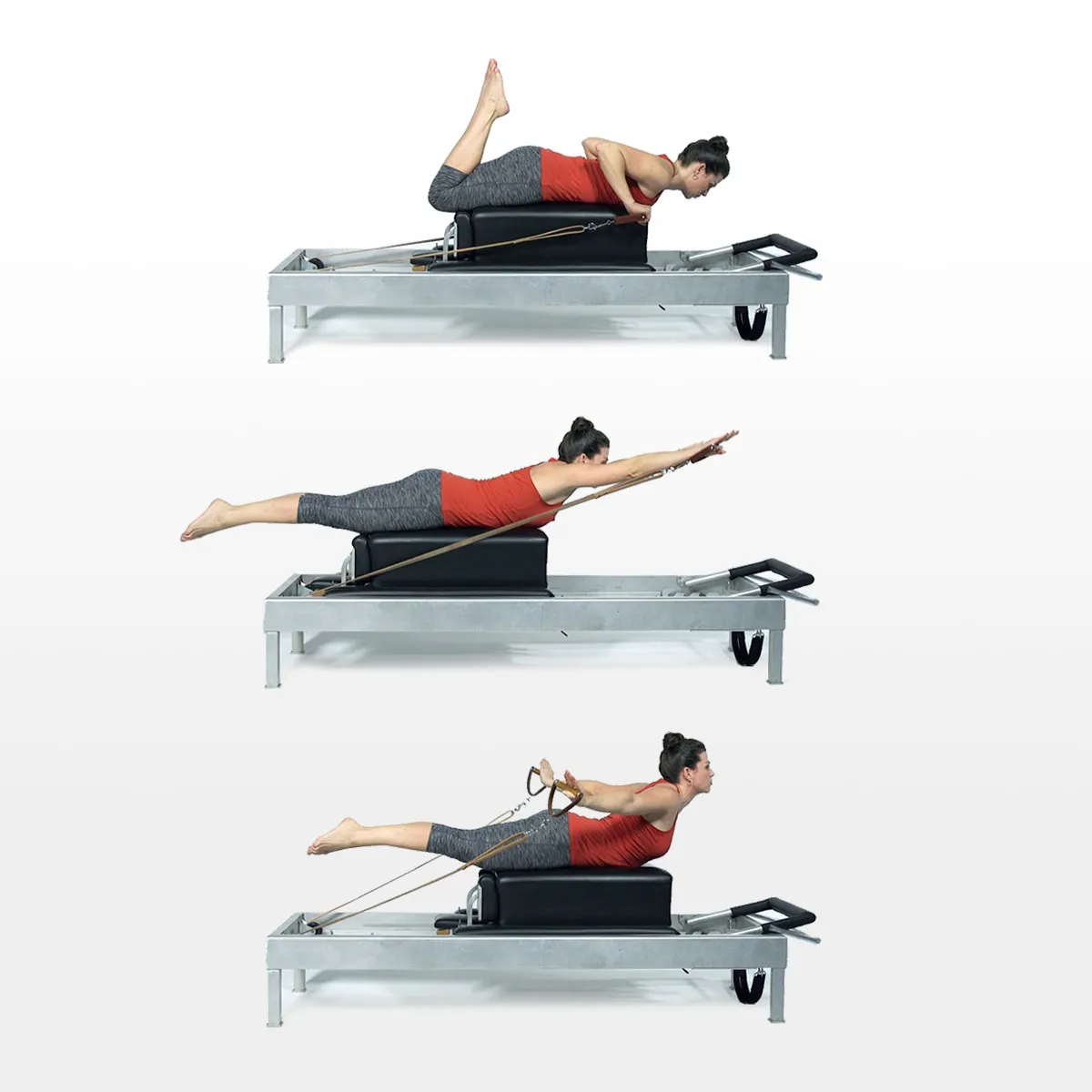
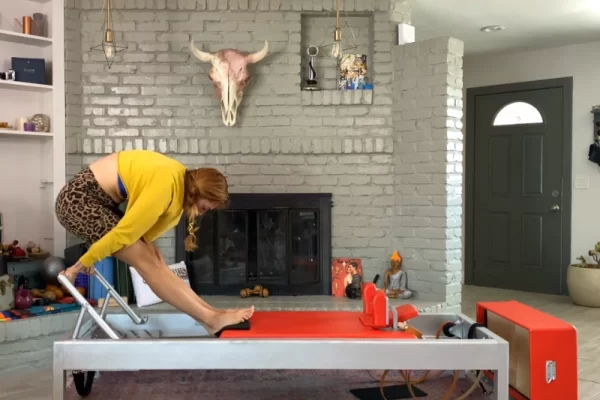
How to perform the Pilates Breaststroke exercise on a Reformer.
- Place the long box on the Reformer and lie prone on the box with your chest centered, head facing the springs, and knees positioned near the edge of the box.
- Hold the straps or handles firmly with arms extended forward; legs are long and together.
- Inhale: Bend the knees and kick the heels toward the glutes three quick times, keeping the hips grounded on the box.
- Exhale: Extend the legs back while reaching the arms forward, lifting the chest and lengthening the spine (feel the expansion through the chest and upper back).
- Open the arms out to the sides, circle them back, and return to the starting position, keeping the chest lifted and the abdominals engaged.
- Perform three continuous repetitions, then reverse the arm pattern: open the arms to the sides first, circle them forward, and lower the body back to the starting position.
Pilates instructor tip: Imagine lengthening like a swimmer gliding through water your spine elongates, chest opens, and arms sweep powerfully. Focus less on lifting higher and more on creating length and strength from the center of the body to the fingertips and toes.
Common Mistakes When Practicing Breaststroke and How to Correct Them
Although the Pilates Breaststroke on the Reformer is highly effective for strengthening the back and improving posture, incorrect execution can reduce its benefits and even cause injury. Below are common mistakes and how to fix them:
1. Excessive spinal arching
A common error is over-arching the back when lifting the upper body, which creates unnecessary pressure on the spine and may lead to back pain.
Correction: Maintain a neutral spine while performing the Pilates Breaststroke on the Reformer. Focus on lengthening the spine rather than lifting too high.
2. Using arm strength instead of back muscles
Many practitioners rely on arm strength to pull the body up instead of engaging the back muscles, reducing effectiveness and placing strain on the shoulders and arms.
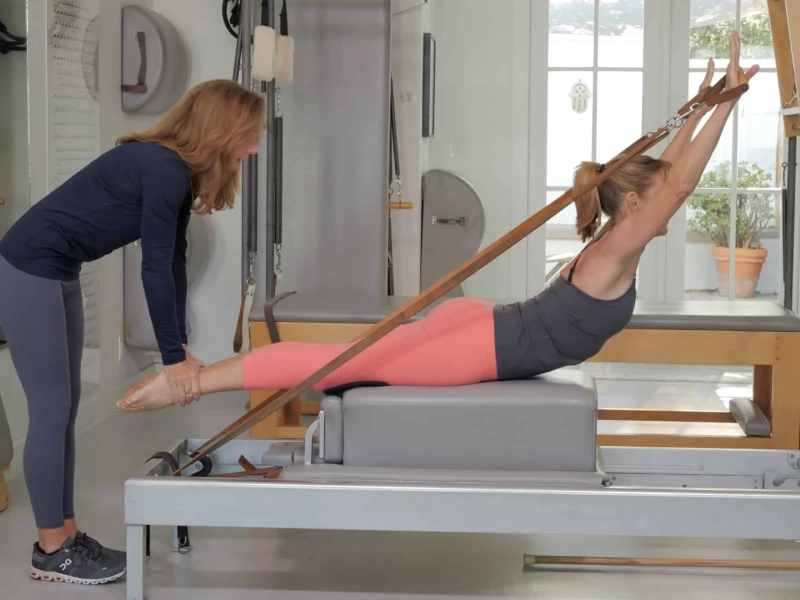
Common mistakes and how to correct them when performing Pilates Breaststroke on a Reformer.
Correction: Initiate the movement by activating the lower back and core before moving the arms. Focus on spinal length and using the muscles surrounding the spine to lift.
3. Improper breathing
Irregular breathing or holding the breath during the exercise can decrease effectiveness and increase tension in the body.
Correction: Inhale deeply during preparation and when reaching the arms forward; exhale as you lift the body and draw the arms back. Maintain steady, deep breathing throughout.
4. Lifting the shoulders toward the ears
Allowing the shoulders to rise toward the ears when pulling the arms back can strain the neck and shoulders.
Correction: Keep the shoulders relaxed and drawn down away from the ears to maintain stability and reduce neck and shoulder tension.
5. Moving too quickly
Rushing through the movement often leads to loss of control and reduced effectiveness.
Correction: Perform each movement slowly and with control, paying close attention to technique and muscular engagement.
Identifying and correcting these mistakes will help you maximize the benefits of the Pilates Breaststroke on the Reformer, minimize injury risk, and enhance training effectiveness. Always prioritize proper technique and listen to your body to achieve the best results.