

Pilates Boomerang Exercise: How to Perform It Correctly and Effectively
07/01/2026The Pilates Boomerang exercise is one of the movements that requires a refined combination of technique, strength, and flexibility. Designed to strengthen the abdominals, back, and thighs, this exercise not only helps improve your physique but also enhances focus and body control. Let’s explore how to perform the Pilates Boomerang exercise correctly to gain its full benefits.
What Is the Pilates Boomerang Exercise?
Boomerang is one of the original 34 Matwork exercises created by Joseph Pilates. This exercise is taken from the book Return to Life Through Contrology, first published in 1945. Boomerang is the 29th exercise, positioned near the end of the sequence.
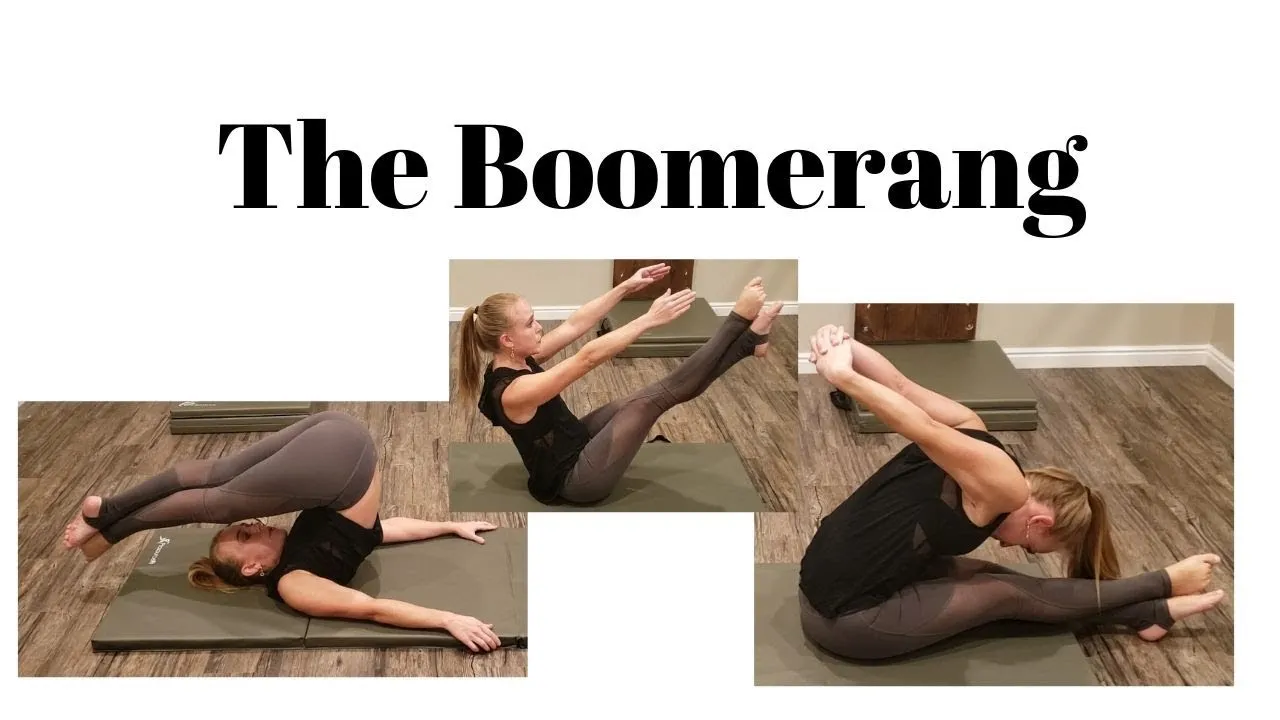
Boomerang is one of the 34 original Matwork exercises by Joseph Pilates.
The Boomerang is an advanced Pilates exercise in which practitioners roll the spine, lift the legs, maintain balance, and fold the body forward. All movements are performed continuously, with control and without interruption. This exercise is a composite of several well-known Pilates movements such as The Hundred, Roll Over, Teaser, and Double Leg Kick, requiring strong core engagement, spinal flexibility, and a high level of mental focus.
It can be said that the Pilates Boomerang creates a fluid sequence of movements, much like a Pilates dance. This exercise not only improves posture and strength but is also an excellent way to stabilize the hips, massage the spine, and strengthen the abdominal muscles.
Benefits of the Pilates Boomerang Exercise
When practiced regularly, the Pilates Boomerang exercise offers comprehensive benefits for the body:
1. Strengthens the Core Muscles
Boomerang requires significant core strength and helps further develop the deep core muscles. The transverse abdominis and other deep stabilizing muscles are fully engaged throughout the entire movement.
2. Improves Hip Stability
While holding the Boomerang position, the psoas major and hip flexors work together with the transverse abdominis to lift the legs. The psoas wraps from the lower thoracic spine, around the pelvis, and runs down the front of the hip to attach to the head of the femur.
From the Boomerang position, the hip and core muscles coordinate to lower the legs back toward the mat with control, without collapsing. Once on the mat, the forward flexion position keeps the core activated while stretching the hamstrings and the back of the hips. This balance between stretching and strengthening creates a stable pelvic region.
3. Massages the Spine
Back pain is a common condition among adults. Rolling Pilates exercises such as Boomerang improve mobility and flexibility. Rolling along the spine can help release muscle tension, similar to a massage. These benefits play an essential role in maintaining good posture over the years. The better your posture and spinal health, the lower your risk of chronic back pain or acute back injuries.
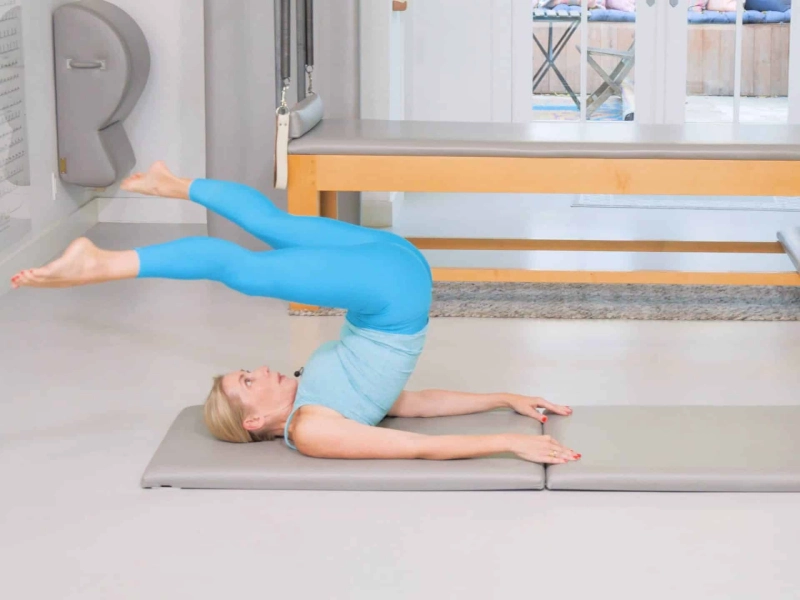
The Pilates Boomerang exercise helps massage the spine and reduce muscle tension.
4. Enhances Coordination
One of the most notable benefits of the Pilates Boomerang exercise is its ability to train smooth coordination among muscle groups throughout the body. As the body learns to link small movements seamlessly, you not only improve body control but also enhance focus and motor responsiveness. This is why Boomerang is often included in advanced training programs to improve overall flexibility and coordination.
How to Perform the Boomerang Exercise
The Pilates Boomerang exercise is challenging due to its continuous sequence of movements, making it easy to perform incorrectly. Many people attempt Boomerang without fully understanding its mechanics. However, when broken down into individual movement skills and practiced step by step, the exercise becomes more accessible. Below is a detailed guide on how to perform the Pilates Boomerang exercise.

Perform the Boomerang pose.
- Step 1: Start in an upright seated position with your legs extended forward and your feet flexed. Keep your arms relaxed at your sides, palms flat on the mat.
- Step 2: Cross your right ankle over your left ankle. Inhale to sit tall and draw the abdominals inward.
- Step 3: Exhale and begin to roll down through the spine, one vertebra at a time, until your hips align with your shoulders, keeping the legs extended. Your arms remain long on the mat, palms facing down.
- Step 4: Inhale and open the legs into a wide position, with the toes reaching just outside the mat. Switch the legs so the left ankle crosses over the right. Perform this movement with quick breaths as you open and close the legs.
- Step 5: Exhale to roll the torso back up until the legs form a 45-degree angle to the floor. Return to the crossed-ankle position and clasp your hands behind your back.
- Step 6: Lower the legs toward the mat and exhale as you hinge forward, bringing the head toward the chin. Extend the arms straight back.
- Step 7: Release the arms, circle them forward, and relax into the stretch. Release and repeat on the other side.
Tips to Make the Boomerang Exercise Easier
To master the Pilates Boomerang exercise, it is recommended to practice foundational Pilates exercises first to develop the necessary skills. Below are supporting exercises, arranged from easier to more advanced, to help your body gradually adapt:
- Develop spinal flexion (C-Curve): Boomerang is a rolling exercise that requires strong spinal flexion, known in Pilates as the C-Curve. Exercises that help you articulate the spine smoothly include: C-Curve > Assisted Roll-Up > Rolling Like a Ball > Open Leg Rocker > The Roll-Up > Neck Pull.
- Practice lifting the legs overhead: Since Boomerang includes a leg movement similar to Roll Over, practicing exercises such as Crab > Roll Over > Seal Puppy helps you become familiar with this motion without placing excessive strain on the neck and back.
- Improve balance control: The Hundred and Teaser appear within the Boomerang sequence and require strong abdominal engagement and balance. Mastering these exercises helps prevent loss of alignment during transitions.
- Increase shoulder flexibility: When the arms need to circle behind and interlace, adequate shoulder extension is required. Exercises such as Rowing on the Reformer, shoulder stretches with a TheraBand, and Reverse Push-Through on the Cadillac can support this requirement.
- Stretching: The final position of Boomerang is a forward fold. Exercises such as Spine Stretch Forward, Saw, The Roll-Up, and Neck Pull help lengthen the hamstrings, calves, and spinal extensors―essential for deep forward flexion without stiffness.
Regular practice of these preparatory exercises will help you gain better control over each component of the Boomerang, allowing you to perform the exercise more smoothly, safely, and effectively.
The Pilates Boomerang exercise is not only a physical challenge but also a test of control, patience, and body awareness. As you master each movement, you will notice clear improvements in flexibility, muscular strength, and overall body control. Practice progressively, from foundational exercises to advanced movements, and you will confidently master the Pilates Boomerang exercise.