

Pilates Arm Circles Exercise on the Reformer
15/01/2026When it comes to Pilates, the combination of strength, flexibility, and body control is essential for achieving optimal results. Pilates Arm Circles Exercise on the Reformer is a classic exercise that not only enhances shoulder function but also promotes overall balance and stability. Let’s explore this exercise in detail in the article below.
Introduction to the Pilates Arm Circles Exercise on the Reformer
Arm Circles on the Reformer is a Pilates exercise designed to improve shoulder mobility and strength. This exercise uses the Reformer-one of the signature Pilates machines to create circular arm movements that enhance stability and muscular control around the shoulder joint.
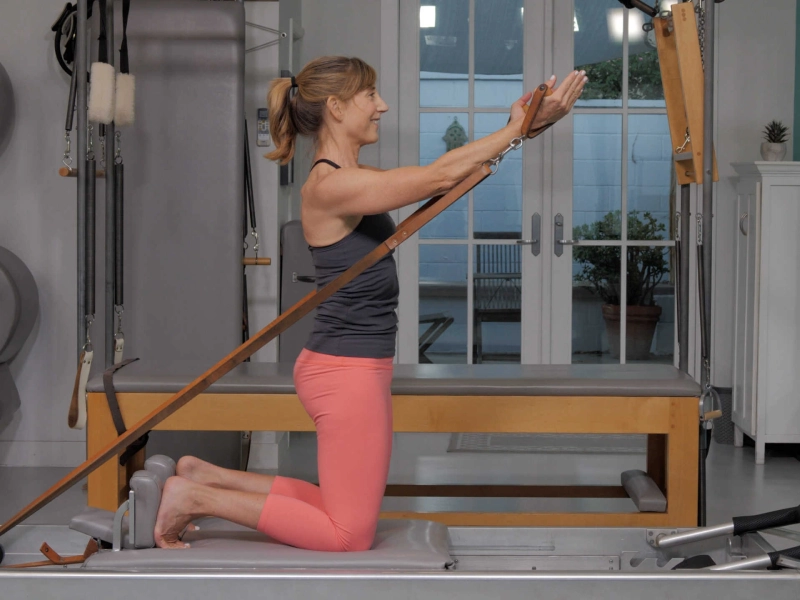
Pilates Arm Circles Exercise on the Reformer.
During Arm Circles, you lie on your back on the Reformer while holding the straps or handles. With the assistance of the springs, your arms move in large circular patterns from shoulder width down alongside the body, up overhead, and back to the starting position. This controlled movement requires continuous muscular engagement, strengthening the shoulders, arms, and core muscles.
Benefits of Practicing Arm Circles on the Reformer
Pilates Arm Circles on the Reformer offer numerous benefits for both physical performance and body awareness. Below are some of the key advantages of this exercise:
1. Improves shoulder flexibility
The Pilates Arm Circles exercise on the Reformer helps enhance shoulder flexibility by gently stretching and warming the muscles surrounding the shoulder joint. Circular arm movements maintain and expand the shoulder’s range of motion, which is essential for preventing stiffness and reducing injury risk.
2. Strengthens the upper body
While performing Arm Circles, the shoulders, arms, and chest must work continuously to maintain control and stability. This helps build upper-body strength, improves muscular endurance, and supports everyday functional movements.
3. Enhances core stability and control
Arm Circles do not only target the shoulders and arms; they also require active core engagement to maintain balance and control on the Reformer. This improves core stability, supports spinal alignment, and contributes to better overall posture.
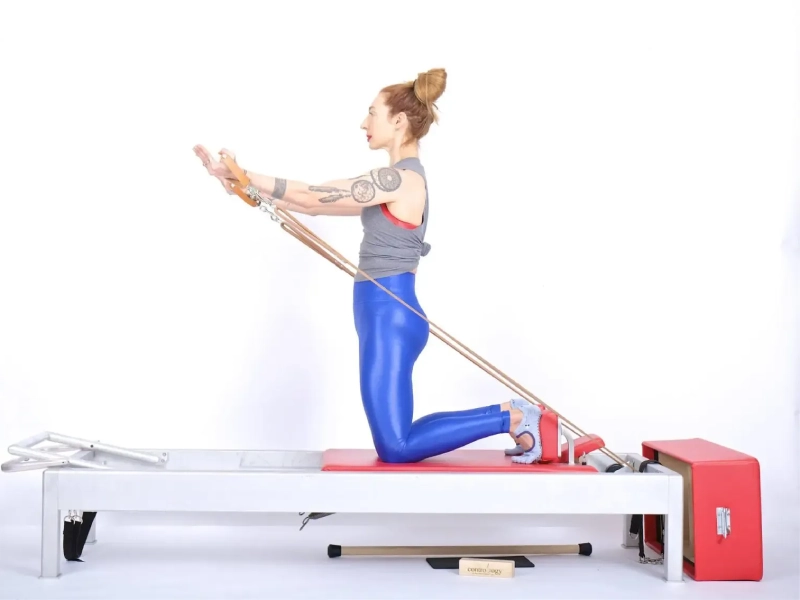
Benefits of performing Arm Circles exercises on a Reformer.
4. Improves coordination and body awareness
This exercise demands precise coordination between arm movement and full-body stability. As a result, it enhances body awareness and concentration, helping practitioners perform other Pilates exercises more effectively.
How to Perform the Pilates Arm Circles Exercise on the Reformer Correctly
Proper technique is essential to gain maximum benefits from Arm Circles on the Reformer. Follow the detailed steps below to execute the exercise correctly:
Starting position
- Kneel on the carriage, facing the spring end of the Reformer.
- Bend your legs with your feet placed on the footbar, or extend them and rest them on the platform, depending on your comfort and stability level.
- Hold the straps or handles firmly, extend both arms toward the ceiling, and keep the palms facing each other.
Initiating the movement
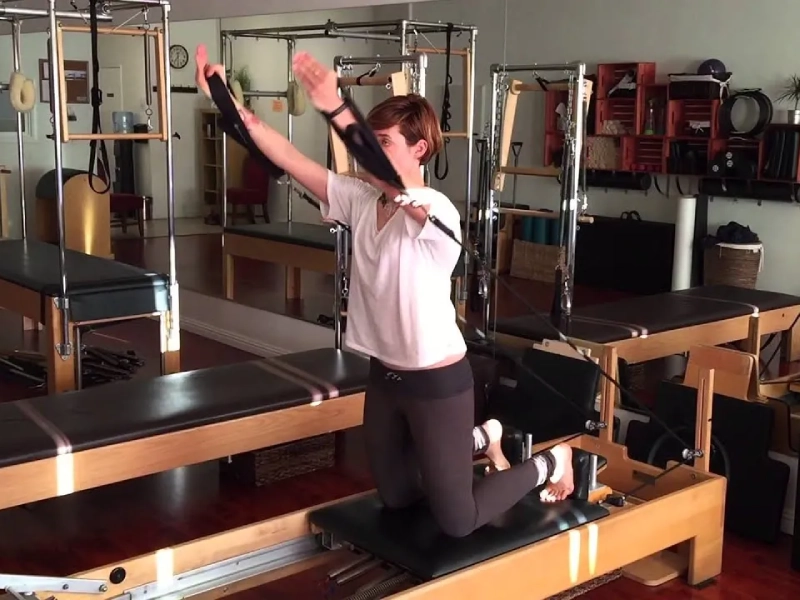
How to perform the Arm Circles on the Reformer exercise.
- Slowly open your arms out to the sides, keeping them straight and evenly controlled throughout the movement.
- As the arms lower alongside the body, continue guiding them in a circular path toward the head.
- Once the arms reach the top position, continue the motion to return them above the chest. Completing the circle
- Move the arms smoothly and with control, maintaining a slow and steady tempo to ensure full-body stability.
- At the end of the circle, return the arms to the starting position with palms facing each other.
- Perform a suitable number of repetitions based on your fitness level, typically 8–10 circles in each direction.
Important Notes When Performing Pilates Arm Circles on the Reformer
Below are key considerations to help you maximize effectiveness and avoid common mistakes during practice.
Common mistakes to avoid
- Bending the arms: Keep the arms straight throughout the movement to maintain proper muscle engagement.
- Using excessive force: Avoid moving too quickly or forcefully; maintain a slow, controlled pace for better precision.
- Neglecting core engagement: Always activate the core to stabilize the spine and prevent strain on the lower back.
Modifications for beginners
- Reduce spring resistance: Beginners should lower the spring tension on the Reformer to better control the movement.
- Limit the range of motion: Start with smaller arm circles to build confidence and control before gradually increasing the range.
By following proper technique and paying attention to these key points, you can practice Pilates Arm Circles Exercise on the Reformer safely and effectively, improving shoulder strength and flexibility while minimizing injury risk. Wishing you a successful and enjoyable Pilates practice!