

Mat Pilates Explained: Benefits and Simple Pilates Mat Exercises You Can Do at Home
18/12/2025Have you ever tried practicing Pilates at home? With just a simple exercise mat, you can perform effective Pilates mat exercises to burn calories, improve your body shape, and enhance overall health. In this article, we introduce the Mat Pilates method and guide you through several Pilates mat exercises that you can easily do at home.
What Is Mat Pilates?
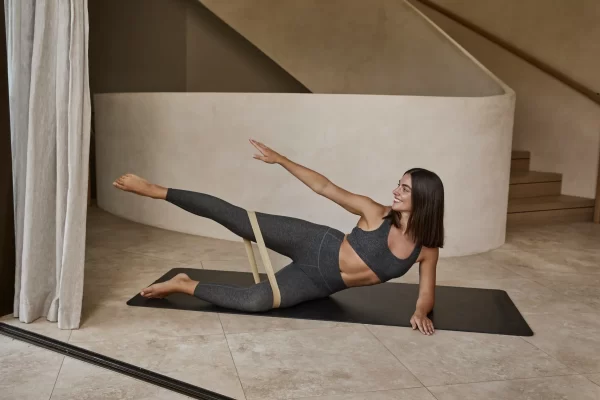
Mat Pilates is a form of Pilates practiced on a mat, inspired by Yoga but using a larger, thicker mat with a smoother surface than a traditional Yoga mat. This method helps develop core strength while enhancing arm and leg strength.
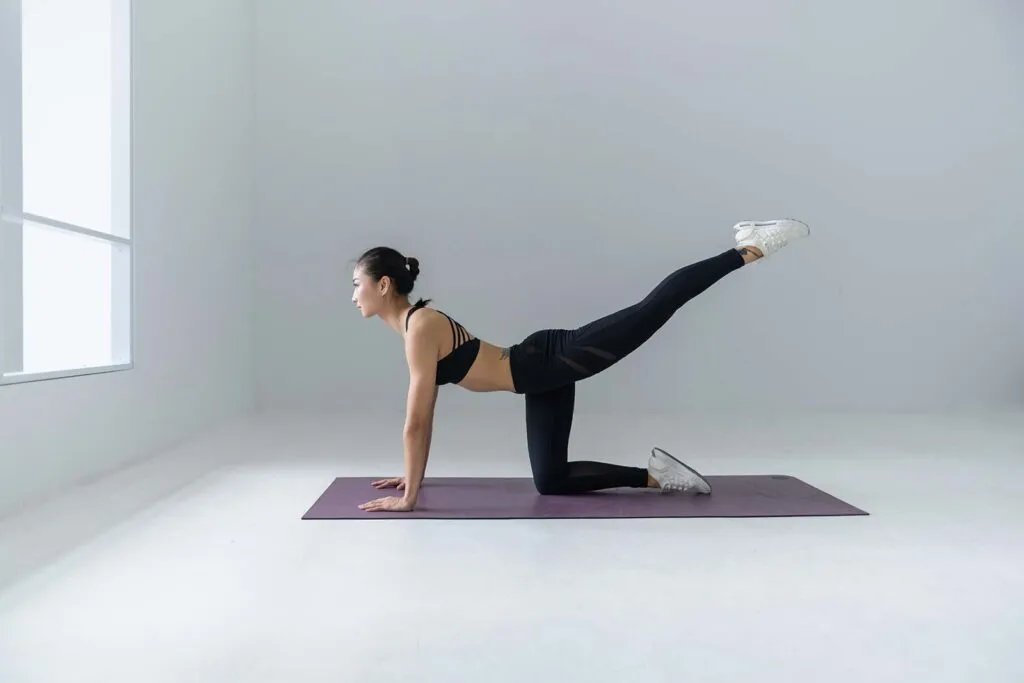
Mat Pilates is a form of Pilates practiced on a mat.
Mat Pilates appeared before any Pilates equipment developed by Joseph Pilates. The Mat Pilates exercises were originally created by Joseph Pilates in his youth to strengthen his body and resist illness.
One major advantage of Mat Pilates is that it can be practiced anywhere with just a mat. With a wide variety of Pilates mat exercises available, you can easily choose routines that suit your needs and goals. However, it is important to note that without springs, cables, or specialized equipment, you must rely on your own body control and strength to perform each movement correctly.
Benefits of Mat Pilates:
- Builds a strong foundation for practicing Pilates and other training methods
- Improves posture
- Enhances flexibility
- Promotes better breath control
- Supports fat burning and calorie expenditure
- Helps align the spine
- Strengthens the immune system
- Reduces stress and anxiety
How to Perform 10 Simple Pilates Mat Exercises
Below are 10 Pilates mat exercises you can practice at home to strengthen your body and improve overall health.
Exercise 1: Hundreds
Targeting the abdominal muscles, arms, and glutes, Hundreds is a classic exercise suitable for both beginners and advanced practitioners.
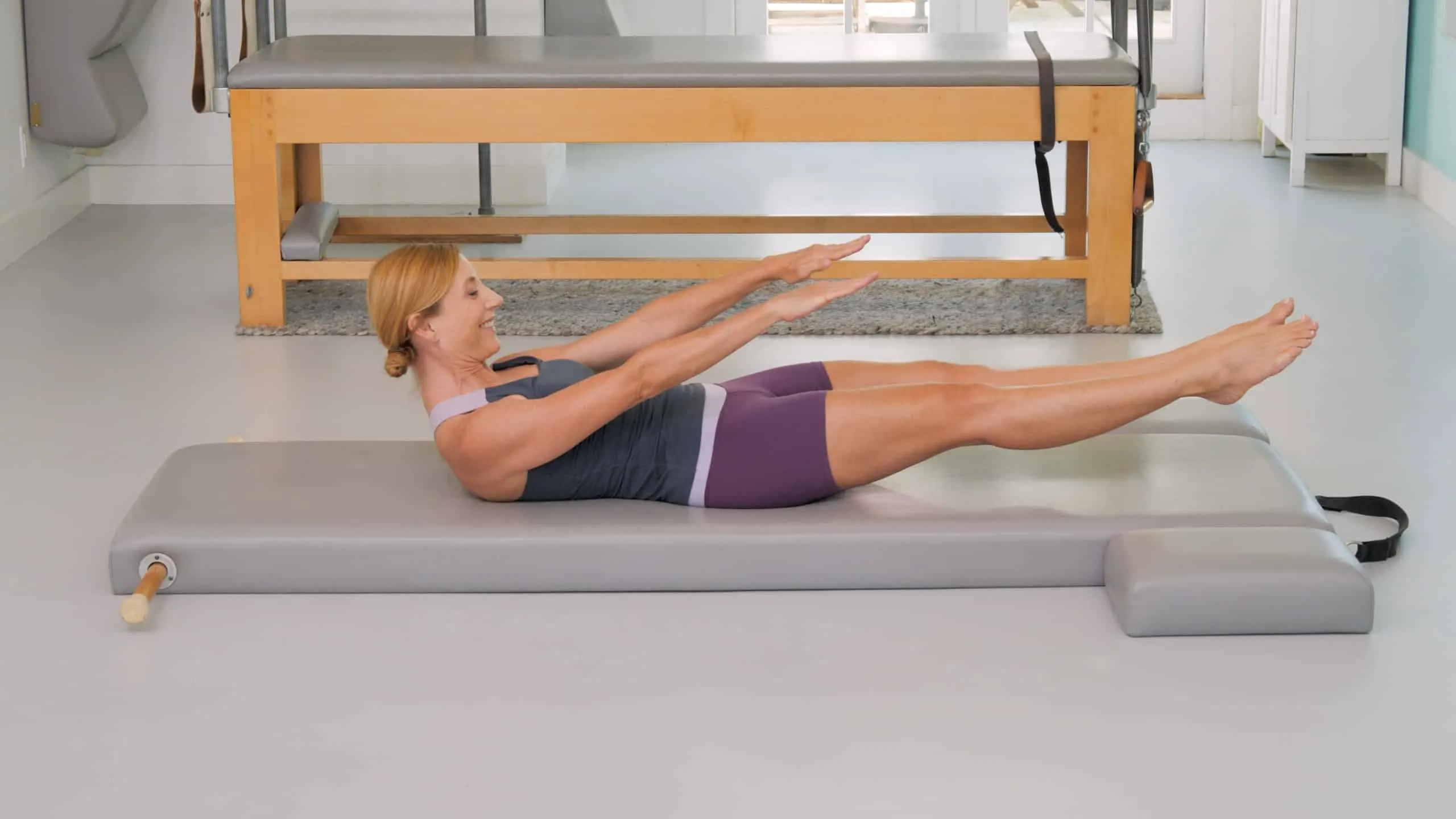
Hundreds exercise.
How to perform:
- Lie on your back and bend your knees into a tabletop position. Extend your arms forward, lift your head and neck off the mat, and engage your core.
- Keep the legs bent or extend them to a 45-degree angle, heels together and toes slightly turned outward.
- Pump the arms from the triceps and lat muscles. Inhale for five counts and exhale for five counts. Repeat the cycle ten times to complete 100 pumps.
Exercise 2: Double Leg Stretch
This Pilates mat exercise targets the deep core, arms, and legs.
How to perform:
- Lie on your back and hug your knees toward your chest. Lift your head and neck off the mat.
- Inhale as you extend your arms and legs away from each other, keeping the head and neck lifted.
- Exhale as you circle the arms and bend the knees back to the starting position, focusing on engaging the core.
Exercise 3: Plank
Plank is a full body exercise that improves endurance and strength.
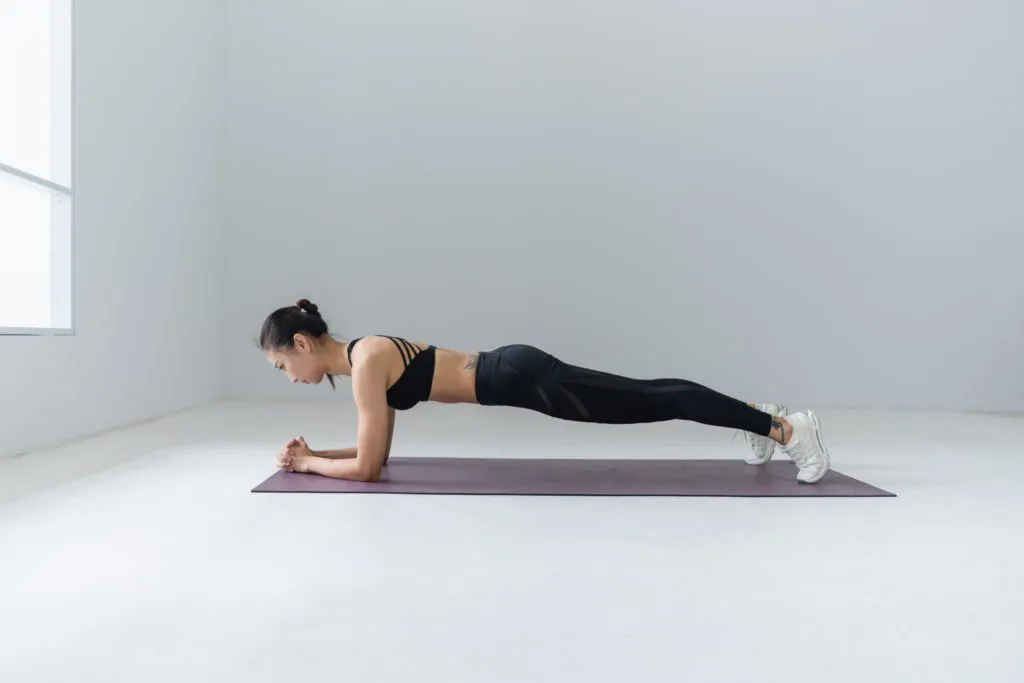
Plank exercise.
How to perform:
- Place your palms or forearms on the floor, engaging the pelvis, core, and legs.
- Keep the body aligned like a plank, hands spread wide, and gaze slightly forward to maintain a neutral spine.
Exercise 4: Leg Circles
- Leg Circles is a Pilates mat exercise that strengthens the legs and improves body awareness. How to perform:
- Lie on your back with one leg extended or bent on the mat, and lift the other leg straight toward the ceiling.
- Perform controlled circles with the raised leg, avoiding movement in the hips, pelvis, or lower back.
- Reverse the direction of the circles, then switch sides.
Exercise 5: Teaser
Teaser is a classic Pilates exercise that targets the deep core muscles.
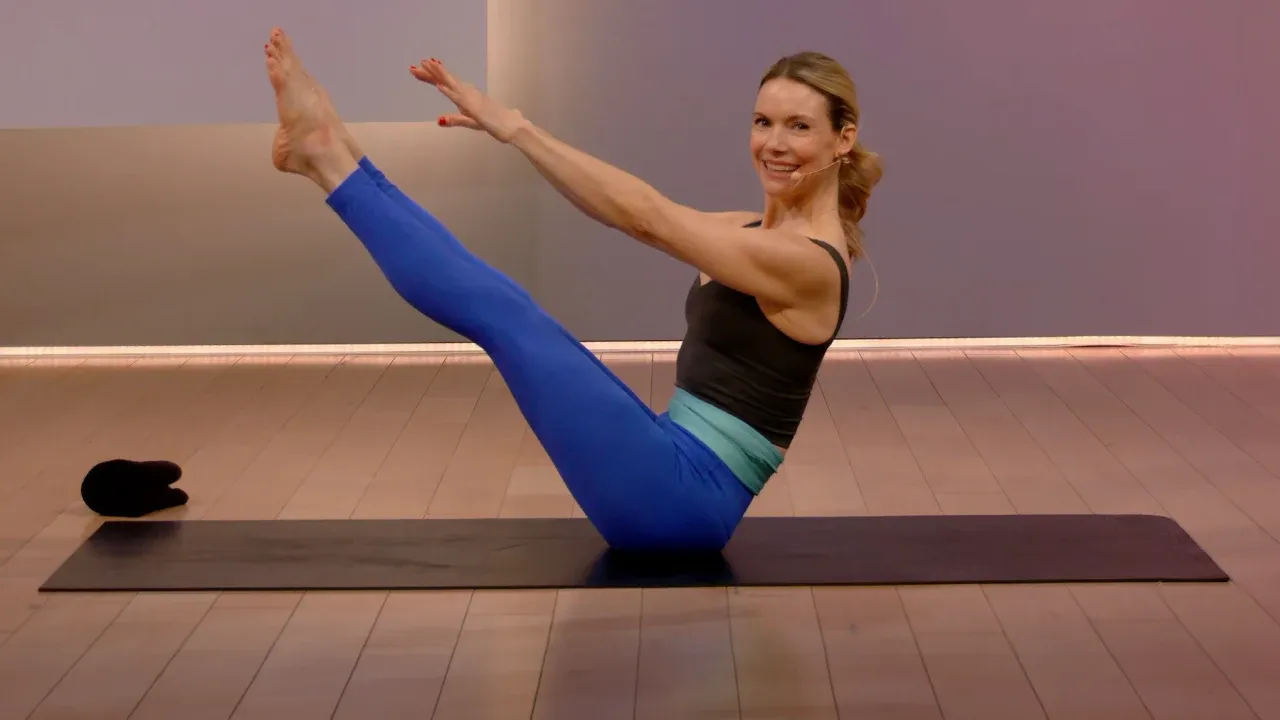
Teaser exercise.
How to perform:
- Lie on your back with arms and legs extended.
- Inhale and lift your body into a “V” shape, reaching the arms toward the toes.
- Exhale and slowly lower back down to the mat with control.
Exercise 6: Toe Taps
Toe Taps strengthen the core and hip flexors.
How to perform:
- Lie on your back with knees bent in a tabletop position, pelvis stable, arms by your sides or reaching toward the ceiling.
- Keep the knees at a 90-degree angle, tap the toes to the floor, then return to tabletop.
- Increase difficulty by bringing the legs closer together or lifting the head, neck, and shoulders off the mat.
Exercise 7: Criss Cross
Criss Cross is the Pilates version of the bicycle crunch, targeting the abdominals and oblique muscles.
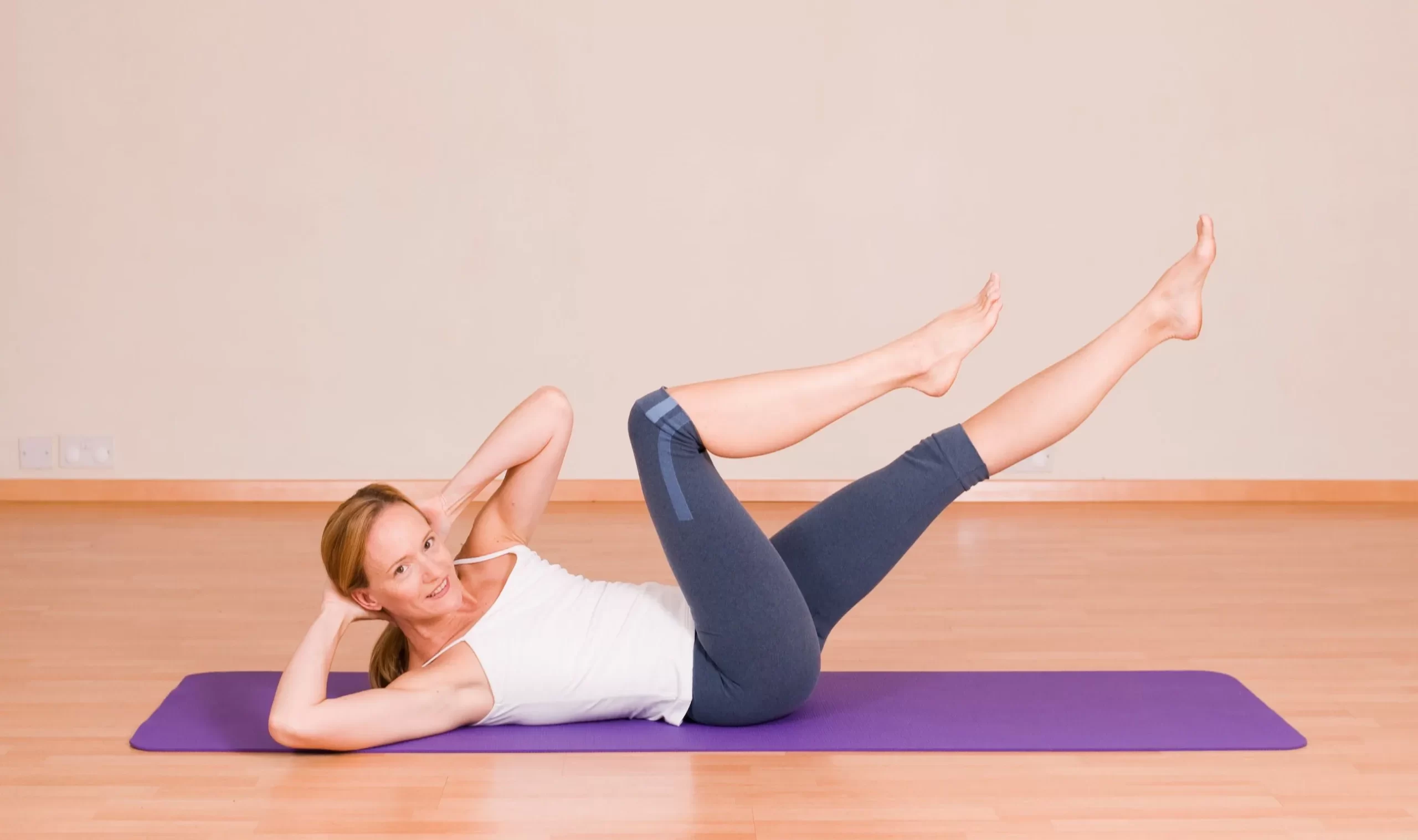
Criss Cross exercise.
How to perform:
- Lie on your back with hands placed behind your head.
- Lift one elbow toward the opposite knee, alternating sides with slow, controlled movements.
Exercise 8: Swimming
Swimming is a Pilates mat exercise that targets the glutes, lats, arms, and abdominal muscles.
How to perform:
- Lie face down with arms extended forward.
- Lift the chest off the mat and draw the lower abdominals inward.
- Lift one arm and the opposite leg, alternating sides to create a swimming motion.
Exercise 9: Articulating Bridge
Articulating Bridge mobilizes the spine and activates the lower abdominals and hip extensors.
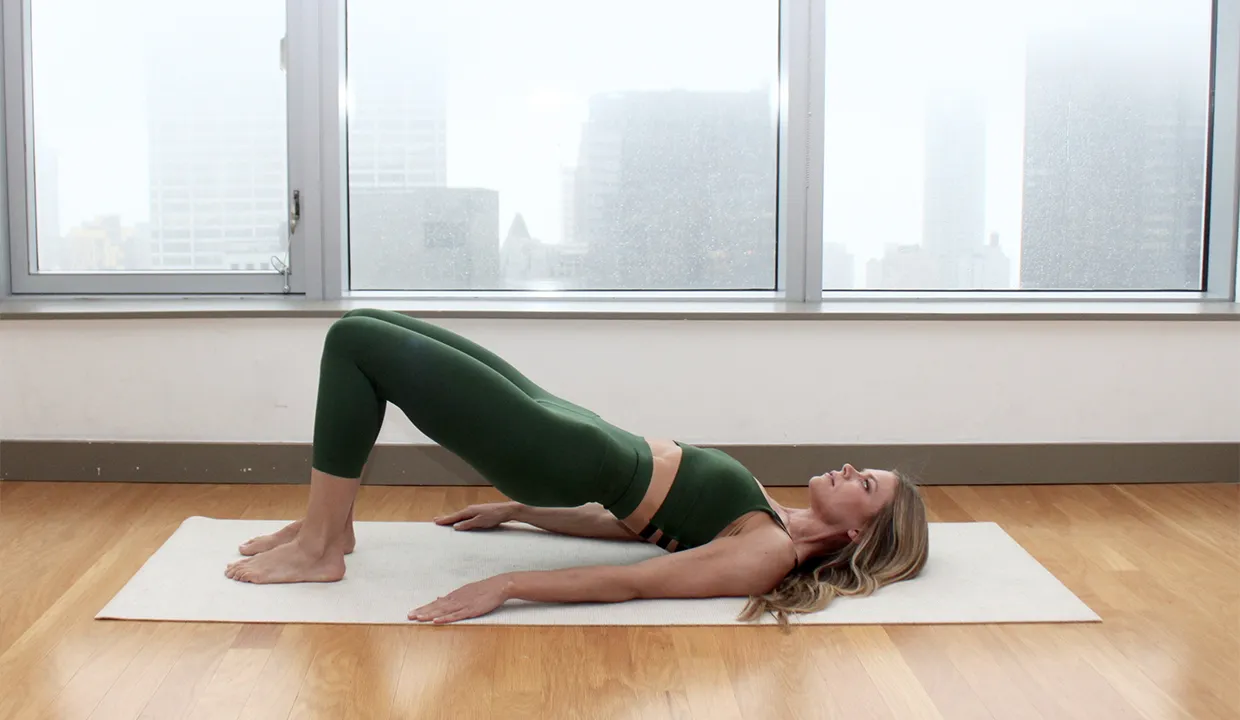
Articulating Bridge exercise.
How to perform:
- Lie on your back with knees bent and feet flat on the mat, keeping the pelvis neutral.
- Tuck the tailbone and lift the spine one vertebra at a time.
- Inhale at the top of the bridge, then slowly roll down through the spine.
Exercise 10: Knee Stirs
Knee Stirs gently mobilize the hips and promote relaxation.
How to perform:
- Lie on your back with a neutral spine and pelvis. Bend the knees and relax the lower legs and feet.
- Slowly move the knees in circular motions, allowing the thigh bones to settle deeply into the hip sockets. Repeat in the opposite direction.
Tips for Practicing Mat Pilates
For beginners, joining Mat Pilates classes is an excellent way to receive professional guidance and support from well trained Pilates instructors. In addition, you can practice Pilates mat exercises at home with just a mat and enough space. Learning resources such as books, videos, or streaming services can also be helpful.
Pilates requires focus and consistent practice. Pay attention to even the smallest movements to release energy and connect the mind with the body. Do not pressure yourself to be perfect from the beginning. Relax your mind, lay out your mat, and start with simple exercises at home or enroll in a reputable class.
Practicing Pilates is a process that requires patience and persistence. Do not feel discouraged at the beginning, as your body needs time to adapt to new movement patterns. Many people rush into advanced exercises for faster results, but this may distract from the true purpose of the practice.
Start by clearly defining your training goals. Then consult reliable resources or instructors to select exercises that match those goals. Perform movements slowly and with control, remembering that Pilates emphasizes stabilizing one part of the body while moving another.
This article has shared an overview of Mat Pilates and a selection of Pilates mat exercises for you to practice. With outstanding benefits such as improved posture, enhanced core strength, and increased flexibility, Mat Pilates supports a healthy and balanced lifestyle. Experience it yourself and feel the positive changes Mat Pilates can bring to your life.